Black vets lean on one another to cope with traumatic effects from the Vietnam War, 51 years after its official end
By D. Kevin McNeir Special to The AFRO First in a two-part series Since our nation’s first war, the American Revolution, African Americans have fought in all of the United States’ major military conflicts, whether they enlisted voluntarily, or were drafted. Despite this historical fact, there are many today who callously refuse to acknowledge the service […] The post Black vets lean on one another to cope with traumatic effects from the Vietnam War, 51 years after its official end appeared first on AFRO American Newspapers.
 Black News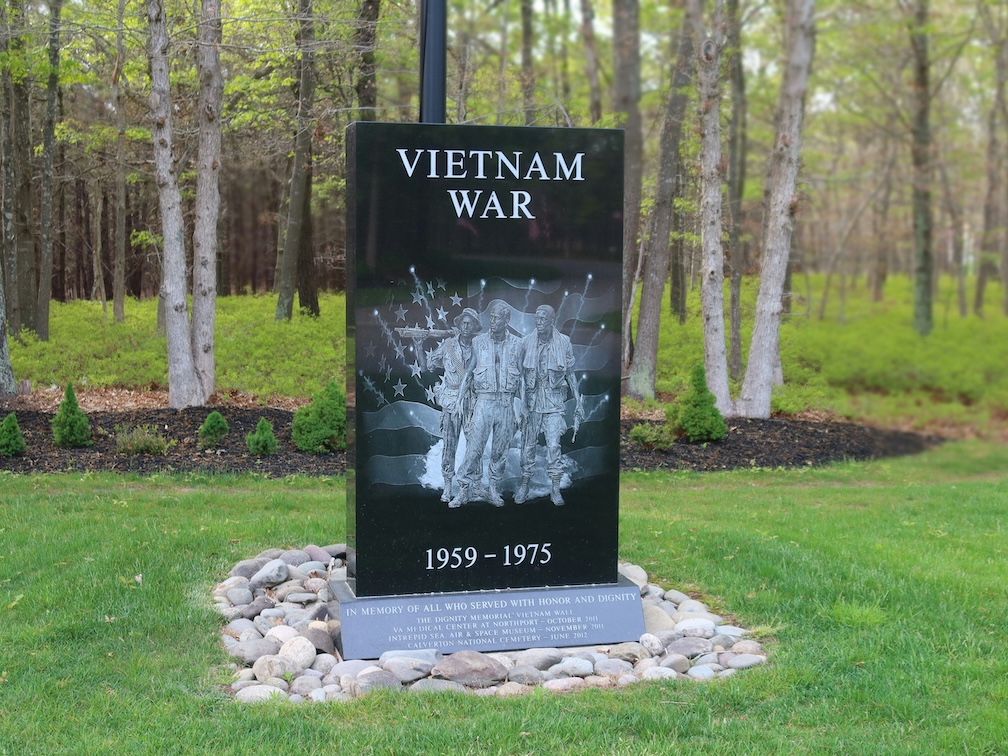

By D. Kevin McNeir
Special to The AFRO
First in a two-part series
Since our nation’s first war, the American Revolution, African Americans have fought in all of the United States’ major military conflicts, whether they enlisted voluntarily, or were drafted.
Despite this historical fact, there are many today who callously refuse to acknowledge the service and sacrifices made by Black veterans. And, instead of honoring those Black men and women, some of whom died fighting to uphold democracy abroad, efforts to whitewash history and dishonor the contributions of African Americans are now commonplace.
But as Americans remember April 30, 1975, the 51st anniversary of the end of the Vietnam War, several proud Black veterans spoke with the AFRO about their time behind enemy lines, their years of service in the armed forces, and the psychological impacts of war which continue to haunt them today.

Photo : AFRO photos / James Fields
Former Maryland Delegate Clarence “Tiger” Davis, 83, was born in Georgia but grew up in Baltimore, where he graduated from Paul Laurence Dunbar School. He enlisted in the U.S. Air Force and served from 1960 to 1964. Davis then matriculated at Morgan State University, where he earned both bachelor’s and master’s degrees.
Today, still living in Baltimore and with a plethora of accomplishments to his name, Davis said he’s honored to serve as the chairman of the National Association for Black Veterans (NABVETS).
“Besides my family and my years of service in the Maryland Legislature, I guess you could say fighting for disabled veterans has been my mission for the latter part of my life,” Davis said. “After a four-year stint as the coordinator of Veteran Affairs at Catonsville Community College back in the ‘70s, I moved to the U.S. Veterans Affairs (VA) Department. It was an eye-opener.
“The disparities in treatment which frequently occurred seemed to be based on race,” he continued. “Black veterans rarely received the kind of service and attention that their White counterparts did.”
Davis said since 1998, when NABVETS was certified by Congress to process claims for veterans against the VA, he has realized how the prevalence of racism continues to negatively impact Black veterans in need of medical assistance.
“We fought to eradicate racism and to receive equality in America, and we’ve put our lives on the line. But we feel abandoned.” — Clarence “Tiger” Davis
“Black soldiers tend to have higher rates of lung cancer than Whites and die more often, presumably because they’re diagnosed later than Whites,” Davis said. “They’re struggling with PTSD but can’t get the help they need when they need it. We fought to eradicate racism and to receive equality in America, and we’ve put our lives on the line. But we feel abandoned. We need Black leadership to plead our cause and support us.”
The numbers tell the story
While 1955 is recognized by historians as the standard start of the Vietnam War, it was not until 1965 that U.S. officials approved a policy of intense involvement in the conflict. However, as troop numbers increased, so did unrest at home, partly because of crackdowns on Americans marching in support of the Civil Rights Movement and protesting both the draft and the war itself.
According to the Library of Congress, approximately 300,000 African Americans served in the Vietnam War. However, Blacks were disproportionately overrepresented. In 1965, Blacks comprised 31 percent of the ground combat battalions while the percentage of African Americans in the general population was 12 percent. In that same year, African Americans suffered 24 percent of the U.S. Army’s fatal casualties.
The Rev. Dr. Martin Luther King Jr., who vehemently opposed the war, reportedly referred to the Vietnam War as “a White man’s war, a Black man’s fight.”

Dr. Joe Ponds is a Black veteran of the Vietnam War, where he served as a helicopter pilot. After being part of a reduction in force at the end of America’s involvement in the war and leaving active duty, Ponds became one of only six Blacks chosen as a direct commissioned aviator in U.S. Coast Guard history. This photo was taken in 1984 during his service with the Coast Guard. He has published a book about his war time experiences, “The 600 m.o.l. – Black Helicopter Pilots in Vietnam.”
Credit: Photo courtesy Dr. Joe Ponds
Dr. Joe Ponds, 81, who served as a helicopter pilot during his seven-and-a-half years in the U.S. Army, said while more Blacks were being sent to the frontlines, opportunities for Blacks in coveted positions like his were purposely kept to a minimum.
“Between 1961 and 1975, of the estimated 45 to 60,000 helicopter pilots in the Army, only around 600 – 2 percent – were Black,” said Ponds who now lives in Beverly Hills, Fla., and works as a pastor.
“When Black soldiers reported for duty at flight school, our instructors told us we should flip a coin because if there were more than two of us, only one would make it. We more than met the qualifications – we had to. But they only wanted to graduate the minimum number of Black candidates. I became that one.”
Ponds said racism wasn’t the only thing that Black soldiers regularly endured.
“When America withdrew from the war, they didn’t need helicopter pilots anymore – there were thousands of us. So, I was ‘RIF’d’ – a term used by the military which means a reduction in force. I was sent to Ft. Rucker, Alabama, after the war where I was reintroduced to the ‘N’ word. Despite being an officer and having served my country in the war, back home, both on and off military facilities, I faced discrimination because of the color of my skin.”
Eventually, Ponds found an opportunity to continue his service as a direct commissioned aviator in the U.S. Coast Guard in 1976. At that time, he was one of only six Black pilots who had ever served in that capacity.
Ponds agreed with Davis on the lack of essential services provided by the VA for Black veterans.
“After I was diagnosed with PTSD, I looked to the VA for help,” he said. “I can’t say all Black vets didn’t get the support they needed, but I certainly didn’t. The counselors they assigned to my case had never faced action in any war, much less Vietnam. They didn’t understand what I’d been through.
“Some wanted to give me psychotropic drugs which I immediately refused,” Ponds continued. “If it had not been for my relationship with almighty God through Christ, I’m pretty sure I would have been dead a long time ago.”
That relationship continues to sustain him in his current work and his personal life.
“Today, I work with seniors, first responders, and veterans at Memory Quest – a nonprofit organization that facilitates memory improvement,” Ponds said. “My wife and I have raised three children and we have three grandchildren. Because of God’s grace and mercy, I survived Vietnam.”
A brief recap of America’s involvement in Vietnam
Throughout the 1950s, U.S. military advisors became increasingly involved in the Vietnam War. But it wasn’t until 1965 when active combat units were introduced, serving as the principal ally of South Vietnam. By 1969, more than 500,000 U.S. military personnel were stationed in Vietnam.
Unable to match the military support and strength of the Soviet Union and China, and with costs and casualties that became too much to bear as the war raged on, U.S. combat units withdrew from Vietnam following the Paris Peace Accords in 1973.
Two years later, on April 30, 1975, the Vietnam War officially ended as South Vietnam fell to a full-scale invasion by the North.
In part two of this series, The AFRO will share intimate reflections from Black veterans who braved the frontlines during the Vietnam War – some who witnessed death on all sides. They will also share their personal struggles upon being discharged from the military and returning home to a country in which racism and prejudice remained alive and well.
The post Black vets lean on one another to cope with traumatic effects from the Vietnam War, 51 years after its official end appeared first on AFRO American Newspapers.