Chimurenga Does Not Belong to Thomas Mapfumo: When a Legend Mistakes Legacy for Ownership
There is a Shona saying that feels particularly appropriate to the increasingly uncomfortable public dispute surrounding Thomas “Mukanya” Mapfumo and his nephew, Kurai Makore: “Gudo guru peta muswe.” The bigger and older the baboon, the greater the expectation that it should know when to tuck in its tail. Thomas Mapfumo is unquestionably one of Zimbabwe’s […] The post Chimurenga Does Not Belong to Thomas Mapfumo: When a Legend Mistakes Legacy for Ownership appeared first on NewZimbabwe.com.
 Black News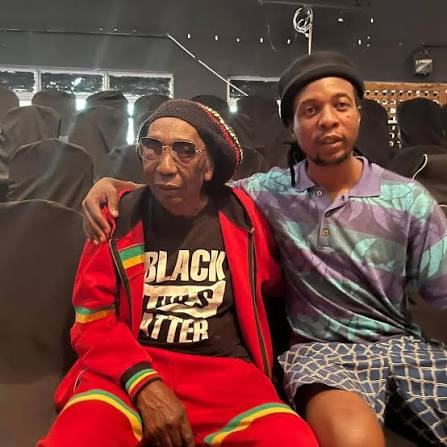

There is a Shona saying that feels particularly appropriate to the increasingly uncomfortable public dispute surrounding Thomas “Mukanya” Mapfumo and his nephew, Kurai Makore: “Gudo guru peta muswe.” The bigger and older the baboon, the greater the expectation that it should know when to tuck in its tail.
Thomas Mapfumo is unquestionably one of Zimbabwe’s greatest musicians. His contribution to the development, popularisation and international recognition of Chimurenga music is monumental. Nothing written here should diminish that achievement.
But respecting a legend does not require surrendering our critical faculties.
And perhaps the most important distinction in this entire controversy is this: Thomas Mapfumo can own Thomas Mapfumo’s songs. He cannot own Chimurenga.
That is not merely my argument. Remarkably, Mapfumo himself has said essentially the same thing.
In 2025, discussing reports that Kurai Makore was being presented as his heir, Mapfumo told the Herald: “Chimurenga music does not have an owner; even I don’t own it — it’s for the people.” That statement should be framed and placed at the centre of the present controversy.
Copyright Is Not the Same as Owning a Genre
Two separate questions are being unnecessarily mixed.
The first concerns copyright.
If particular songs were written by, or are legally controlled by, Thomas Mapfumo or his company, there may well be legitimate questions about licensing, royalties, and who may commercially perform those compositions. Those are legal questions, and they should be dealt with through the appropriate copyright mechanisms.
The second question is much bigger: Who owns Chimurenga music? Nobody.
Mapfumo did not manufacture Zimbabwean musical culture in a laboratory.
Chimurenga grew from a much deeper cultural soil: mbira traditions, Shona rhythms, call-and-response, oral history, folk songs, resistance consciousness and generations of Zimbabwean musical expression. Mapfumo’s genius was in developing a powerful modern musical language from those traditions and giving it an unmistakable political voice.
He deserves enormous credit for that.
But the architect of an influential expression does not thereby become the owner of the cultural soil from which it grew.
You can own a composition. You can own a recording. You can own publishing rights.
You cannot copyright a people’s cultural inheritance.
And there is an additional irony here. The Herald reported in September 2025 that Makore was performing both Mapfumo classics and his own compositions, and specifically reported Mapfumo as saying that Chimurenga had no owner.
So what exactly has changed?
Yesterday, Kurai Had the Blessing. Today, He Is the Problem?
This is where the present position becomes difficult to reconcile with the public record.
In April 2023, Makore publicly said he had received his uncle’s blessing and that Mapfumo had promised to advise him musically.
Then, in February 2024, The Sunday Mail reported that Mapfumo had given Makore permission to perform his songs live, with Makore saying that this was intended to help preserve Mapfumo’s legacy.
In September 2024, Makore again publicly credited his uncle’s recommendation and said Mapfumo believed in his talent. Importantly, Makore also emphasised that he wanted to be original rather than simply impersonating his uncle.
By September 2025, he was being celebrated as an “heir apparent” to Chimurenga while performing his own songs alongside Mapfumo’s classics.
Now we are presented with a cease-and-desist dispute and suggestions that Makore has somehow improperly attached himself to Mapfumo’s musical inheritance.
People are entitled to change their minds. Copyright owners are entitled to clarify permissions. Families are entitled to renegotiate arrangements.
But when yesterday’s blessing becomes today’s condemnation, the public is entitled to ask what changed.
And that question becomes even more pressing when the disagreement is conducted publicly.
Gudo Guru Peta Muswe
This is where gudo guru peta muswe becomes relevant. Mapfumo is 81. He is the elder. He is the internationally recognised icon. Kurai Makore is his nephew.
Whatever disagreements exist between uncle and nephew, surely there must have been a more dignified way of addressing them than allowing the matter to develop into what the media now describes as a Chimurenga “civil war.”
Where are the elders?
Where is dare remhuri?
Where is hukama?
Where is that African philosophy we so frequently invoke when criticising younger generations for abandoning traditional values?
If Kurai has offended his uncle, call him home. Sit him down. Tell him where he has crossed the line.
Establish which songs he may perform, which require licences and which permissions have been withdrawn.
Put agreements in writing.
Shake hands.
Then eat together.
That is family.
Dragging a nephew through newspapers while allegations of jealousy, copyright robbery, family interference and betrayal fly backwards and forwards does not protect the dignity of the Mapfumo legacy.
It diminishes it.
Kurai Makore Is Not Simply a Mapfumo Karaoke Act
There is another uncomfortable fact that must be acknowledged.
Kurai Makore appears capable of standing musically on his own feet.
He has released multiple albums and original compositions. The Herald has previously praised his original material and musicianship; its 2025 coverage of his third album described his instrumentation, arrangements and vocal styling as evidence of an artist establishing himself within Chimurenga rather than merely reproducing Mapfumo’s catalogue.
His earlier work received similar praise.
That matters.
Because there is a profound difference between protecting one’s intellectual property and appearing to erect a fence around an entire musical tradition when another artist begins flourishing within it.
Kurai does not need to become Thomas Mapfumo.
Zimbabwe already had Thomas Mapfumo.
Kurai Makore needs to become the best Kurai Makore he can possibly become.
And from what I have heard of the young man’s music, he possesses considerable talent.
Then There Is the Question of Consistency
Recent events inevitably make the optics worse.
Mapfumo’s reported acceptance of a lucrative arrangement involving businessman Wicknell Chivayo has already generated fierce public debate because of Mapfumo’s previous political posture and criticisms. That controversy is separate from the Makore copyright dispute and should not be presented as proof of anyone’s motives.
But timing matters in public perception.
When a revered elder makes a dramatic change of position in one highly publicised controversy and is then associated with another apparent reversal concerning a nephew he had previously encouraged, people will naturally ask questions about consistency.
That does not prove jealousy.
Nor can outsiders know all that has happened privately inside the Mapfumo family.
But the sequence creates an appearance of inconsistency that Mapfumo and his representatives should address rather than dismiss.
And that is why I would hesitate to declare as fact that Mapfumo is jealous, entitled or arrogant.
I would instead say something more troubling: The handling of this dispute risks making him appear jealous, entitled and unnecessarily territorial over something he himself previously acknowledged belongs to the people.
For a man of his stature, that appearance alone should be concerning.
Protect the Songs, Not the Sky
If Kurai is performing copyrighted Thomas Mapfumo compositions without permission where permission is legally required, resolve that issue.
If promoters are falsely advertising Kurai as Thomas Mapfumo’s officially appointed successor, correct them.
If royalties are being lost, enforce the rights.
Those are perfectly legitimate concerns.
But Chimurenga itself? No.
Chimurenga is bigger than Thomas Mapfumo.
Indeed, that should be the greatest compliment one can pay him.
The true measure of Mapfumo’s greatness is not that Chimurenga should die when he stops performing. It is that the musical language he helped shape has become strong enough to outlive him, evolve beyond him and inspire musicians who may not even have been born when Hokoyo! first shook Rhodesia.
A great teacher does not fear the student becoming excellent.
A great father does not extinguish the son’s torch because it begins burning brightly. And a great cultural figure should understand the difference between legacy and possession.
Let Kurai Play
My advice to Kurai Makore would therefore be simple:
Respect legitimate copyright.
Respect your uncle.
Respect the enormous road Thomas Mapfumo travelled before you.
But do not surrender Chimurenga.
Write.
Compose.
Experiment.
Play the mbira.
Play the traditional rhythms.
Rework genuinely public-domain folk material where appropriate.
Build your own catalogue.
And take Chimurenga somewhere Thomas Mapfumo never took it.
Because the greatest tribute to a musical tradition is not imitation.
It is evolution.
And my appeal to Mukanya is equally simple: Gudo guru, petai muswe.
You have already won your place in Zimbabwean history.
Nobody can take Hokoyo, Corruption, Mamvemve, Disaster and the extraordinary Mapfumo catalogue away from you.
Protect what legally belongs to you.
But do not appear to confuse ownership of your songs with ownership of the river from which everybody drinks.
Resolve the family dispute as family.
Bless the next generation where blessing is deserved.
Correct them privately where correction is necessary.
And remember your own words: Chimurenga has no owner. It belongs to the people.
That may ultimately be the most important statement Thomas Mapfumo ever made about his own legacy.
The post Chimurenga Does Not Belong to Thomas Mapfumo: When a Legend Mistakes Legacy for Ownership appeared first on NewZimbabwe.com.