Colombia’s 2021 National Strike violence was coordinated with illegal armed groups
A landmark ruling by the Superior Tribunal of Bogotá has delivered one of the strongest judicial rebukes yet of the narrative surrounding Colombia’s 2021 National Strike, concluding that some of the most destructive episodes of violence during the protests were not spontaneous acts of social unrest but part of a coordinated criminal strategy involving illegal […]
 Black News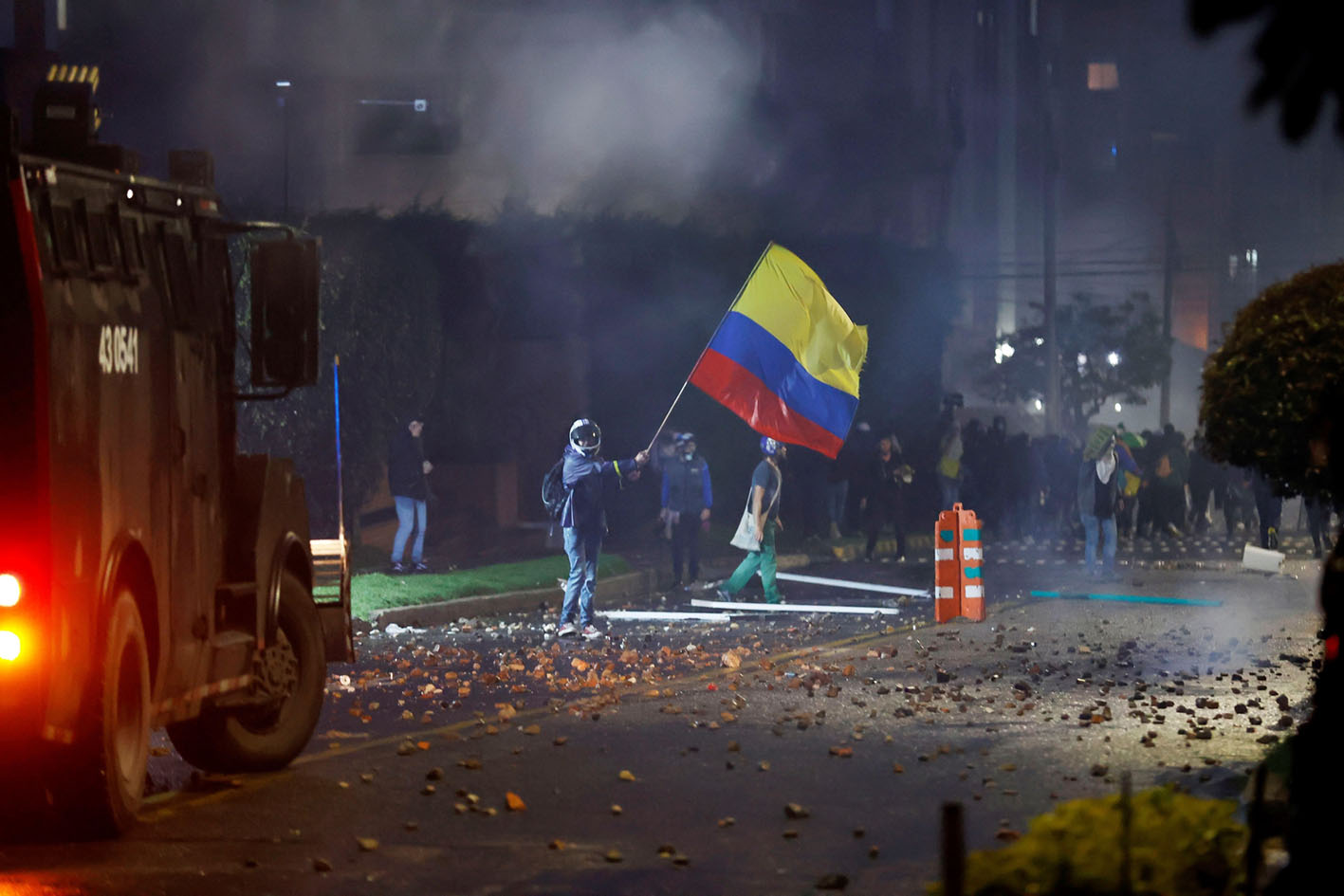
A landmark ruling by the Superior Tribunal of Bogotá has delivered one of the strongest judicial rebukes yet of the narrative surrounding Colombia’s 2021 National Strike, concluding that some of the most destructive episodes of violence during the protests were not spontaneous acts of social unrest but part of a coordinated criminal strategy involving illegal armed groups.
The decision, issued by the Criminal Chamber of the tribunal under magistrate Jaime Andrés Velasco Velasco Muñoz, found that several of those prosecuted for violent acts in the capital maintained operational ties with cells linked to the Second Manuel Marulanda Vélez, a dissident faction of the Revolutionary Armed Forces of Colombia – FARC.
For years, much of the public debate framed the violence of the so-called Paro Nacional as the uncontrolled overflow of legitimate citizen protests sparked by social inequality, police abuse, unemployment and widespread anger over the government of then-President Iván Duque.
But after reviewing wiretaps, surveillance records, testimonies and digital communications, the court concluded that several of the attacks that paralyzed Bogotá followed a clear operational structure, with leadership roles, territorial coordination and instructions issued in advance.
According to the ruling, some defendants acted in coordination with illegal armed actors to organize attacks on police command posts, TransMilenio stations, commercial establishments and strategic road corridors across the capital.
“For the magistrates, these were not isolated or improvised actions,” the ruling stated. “There existed an organized structure with assigned functions, defined leadership and a chain of command.”
The 2021 protests initially erupted after Duque introduced a controversial tax reform proposal during the height of the COVID-19 pandemic. The measure, widely criticized for placing additional burdens on the middle and working classes during an economic crisis, quickly ignited nationwide demonstrations.
Although the government later withdrew the reform, the protests escalated into weeks of nationwide unrest, marked by deadly confrontations between demonstrators and security forces, the burning of police stations, attacks on public transport infrastructure and prolonged road blockades that crippled supply chains across Colombia.
In Bogotá alone, dozens of TransMilenio stations were vandalized or destroyed, CAI neighborhood police posts were torched, and mobility across major avenues such as Las Américas, Carrera Séptima and Autonorte was severely disrupted.
Elsewhere, especially in southwestern Colombia, blockades led to shortages of fuel, medical oxygen and basic food supplies, with business leaders warning of millions of dollars in economic losses and humanitarian consequences for vulnerable communities.
The tribunal’s ruling argues that at least part of that violence was not the natural escalation of protest, but the result of deliberate planning.
Investigators identified several WhatsApp groups allegedly used to coordinate simultaneous actions across the city. Among the names cited in the judicial file were groups linked to strategic corridors such as “Américas,” “Carrera Séptima,” “Autonorte,” “Autosur” and “Caracas.”
According to prosecutors, these digital channels were used to organize blockades, assign responsibilities and plan attacks against public infrastructure.
The court also found that some young defendants had been tasked with recruiting new members and expanding influence within university environments, both public and private, strengthening support networks and facilitating operational logistics.
One of the most significant findings involved intercepted communications that allegedly referenced support from higher-ranking commanders connected to FARC dissidents.
For the magistrates, this reinforced the conclusion that there was external coordination behind the violence, rather than a purely spontaneous citizen uprising.
The ruling now sharply challenges the long-promoted narrative of the unrest as exclusively peaceful social protest and instead reframes part of the National Strike as coordinated urban sabotage carried out under the cover of legitimate public discontent.
It also revives scrutiny of the national strike committee and senior left-wing political leaders, including current President Gustavo Petro, who strongly supported the demonstrations and positioned himself as one of the loudest critics of Duque’s handling of both the protests and the pandemic.
Critics argue that political backing from opposition leaders helped legitimize actions that moved far beyond peaceful protest, allowing criminal actors to operate behind the shield of social mobilization while deepening institutional instability.
The protests also unfolded at one of the most fragile moments of the COVID-19 emergency, when Colombia was still facing high ICU occupancy, strict mobility restrictions and biosecurity measures intended to limit mass contagion.
Large demonstrations and road blockades directly violated those restrictions, and critics maintain that the protests contributed to additional infections and unnecessary strain on an already overwhelmed public health system.
For opponents of Petro and sectors of the business community, the ruling is less a revelation than a delayed institutional acknowledgment of what many citizens experienced firsthand: burned police stations, destroyed public transport, food shortages and entire cities brought to a standstill.
After evaluating the full body of evidence, the court sentenced three of the principal defendants to 19 years in prison for terrorism and criminal conspiracy. A fourth defendant received a 10-year prison sentence.
The tribunal also imposed fines exceeding 1 billion pesos, reflecting the severe damage caused to both public and private infrastructure.
Far from closing the chapter on the National Strike, the ruling reopens one of Colombia’s deepest political wounds: whether the country witnessed a legitimate social uprising, or whether parts of it were, from the beginning, a calculated strategy of destabilization supported by organized criminal networks.
For many Colombians, the answer may shape how the country remembers 2021—and who must ultimately be held responsible.