Spirit Airlines Is Closed: The Abrupt Shutdown That Left Thousands of Travelers Scrambling
The budget carrier’s overnight collapse on May 2, 2026, stranded thousands across the country. Here’s the full breakdown of why it happened, who’s moving into the space, and one woman’s firsthand story of finding out mid-vacation that her flight home no longer existed. At 3:00 AM Eastern on May 2, 2026, Spirit Airlines ceased all...
 Black News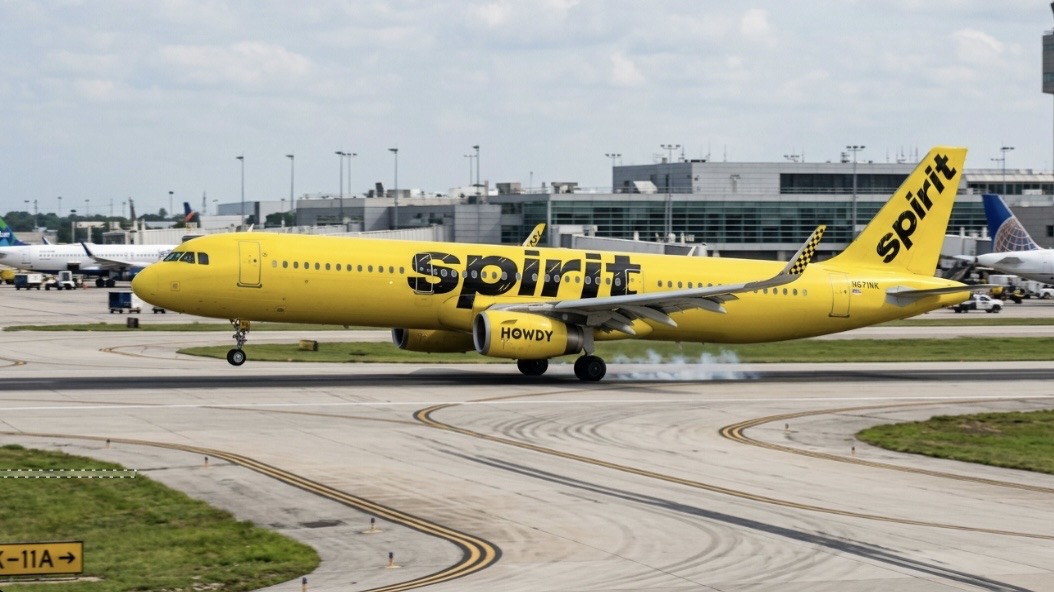
The budget carrier’s overnight collapse on May 2, 2026, stranded thousands across the country. Here’s the full breakdown of why it happened, who’s moving into the space, and one woman’s firsthand story of finding out mid-vacation that her flight home no longer existed.
At 3:00 AM Eastern on May 2, 2026, Spirit Airlines ceased all operations. No warning to passengers. No customer service lines to call. Just yellow kiosks going dark in terminals across the country, and an email that thousands of travelers would not read until it was already too late.
The shutdown marks the first collapse of a major U.S. airline since Midway Airlines folded in the immediate aftermath of September 11, 2001. What followed was a cascade: 17,000 workers out of jobs, approximately 9,000 flights canceled from the schedule, and travelers left to fend for themselves at airports from Fort Lauderdale to LaGuardia.
“It is with great disappointment that on May 2, 2026, Spirit Airlines started an orderly wind-down of our operations, effective immediately.” — Spirit Airlines
For millions of budget travelers, Spirit was the only math that made sense. Its ultra-low-cost model held fares down across the industry, pressuring larger carriers to offer their own stripped-down tickets. That era is over.
HOW WE GOT HERE
A Decade of Cracks, One Final Break
Spirit’s collapse did not happen overnight, though it ended that way. The airline had been hemorrhaging money since the start of the pandemic, losing more than $2.5 billion between 2020 and 2024. It filed for Chapter 11 bankruptcy in late 2024, emerged briefly under a restructuring plan, then filed again in August 2025.
A proposed acquisition by JetBlue, blocked by the Biden-era Justice Department, was widely seen after the fact as a turning point the airline never recovered from. Transportation Secretary Sean Duffy called the blocked merger a ‘massive mistake’ in remarks following the shutdown.
The final blow came from an unexpected direction. When the U.S.-Israeli military conflict with Iran triggered a closure of the Strait of Hormuz in early 2026, global oil supply contracted sharply. Jet fuel prices spiked. For an airline operating on razor-thin margins with no financial cushion, the math became impossible.
The Trump administration floated a $500 million federal bailout, which would have given the government a 90% ownership stake. Bondholders, including Citadel and Ares Management, rejected the terms. A counterproposal from creditors was declined by the government. With cash reserves nearly depleted, Spirit had no path forward.
Spirit’s final flight landed at Dallas-Fort Worth International Airport before dawn. Air traffic controllers signed off with: ‘It was a pleasure working with you guys, and I wish you the best.’

ONE WOMAN’S STORY
Cammie Was Already on the Ship When the News Hit
Cammie had been completely off the grid for a reason. She and her husband had booked a Carnival Sunrise cruise to the Grand Cayman Islands, a five-day western Caribbean sailing from Miami running April 27 through May 2. Cammie works in healthcare. Time off is rare and protected. She intentionally skipped the internet package. She wanted the experience of being unreachable.
When Cammie’s cruise ship docked, and passengers began making their way off, the news was already circulating. Spirit Airlines was gone. Her flight home had been on Flight 604, departing Fort Lauderdale’s FLL at 8:55 PM, Gate F6, Terminal 4, bound for Philadelphia International, Terminal D, Gate E3. The confirmation number started with QM, and the flight status read: CANCELLED.
Spirit had sent an email the morning of May 2 informing passengers that all flights were cancelled. By the time Cammie learned about it, she was standing at the port exit with luggage, a husband, and a return flight that no longer existed.
There was a Spirit agent at the airport that morning, someone who had shown up for a shift without seeing the closure announcements. That employee was visibly shaken, telling passengers how shocked and devastated she was to have lost her job without warning. It was the first human confirmation that the situation was real.
For passengers who booked directly through Spirit, the path forward was steep. The airline confirmed automatic refunds to the original payment method, but those refunds process over days, not immediately. That gap, between the canceled flight and the returned funds, meant travelers without a financial cushion had to book replacement flights out of pocket before knowing when, or whether, that money would come back.
Cammie was one of the fortunate ones. Her trip had been booked through a travel agent, and that made all the difference. Her agent reached out proactively, handled the rebooking, and walked her through the process before she had to navigate any of it alone. She got home.
But her experience was not the standard. Across airports nationwide, passengers who booked directly, through third-party apps, or using Spirit loyalty points had no equivalent lifeline. At Fort Lauderdale, travelers were still being dropped off at curbside for flights that no longer existed. At LaGuardia, check-in counters sat empty with no agents to answer questions. Many did not learn what happened until they were already at the gate.
‘The same number of people want to travel this summer, and there are fewer available seats for them,’ one travel industry analyst told NBC News. ‘And that is a recipe for price increase.’
Whether you made it home smoothly or not came down to one thing: who booked your flight and how.
WHAT COMES NEXT
Frontier Is Already Moving In. JetBlue May Not Be Far Behind.
Frontier Airlines, which operates more than 100 routes previously flown by Spirit, announced systemwide rescue fare discounts immediately after the shutdown. The airline is adding nine new routes and 15 additional daily flights across 18 former Spirit markets this summer. Its GoWild All-You-Can-Fly Summer Pass is available at an introductory $199.
JetBlue announced $99 rescue fares for affected Spirit travelers with proof of a cancelled itinerary on the same route, and capped Blue Basic fares at $299 on nonstop routes between Fort Lauderdale and San Juan through May 8. The airline also announced plans to add 11 new destinations from Fort Lauderdale to help absorb displaced travelers. Southwest, American, and United also announced price ceilings and rescue seating to help displaced passengers get home.
Who Books Your Flight Matters More Than You Think
Spirit built its entire model on the idea that you could strip away every comfort and still deliver a seat from point A to point B for less. It worked, until it didn’t. And when it stopped working, the passengers who had relied on it the most, those with the least margin for error in their own finances, were the ones most exposed.
Cammie came home from what was supposed to be a peaceful week off the grid. She made it, and her travel agent is a large part of why. But thousands of others did not have that buffer. They arrived at empty terminals, made calls to disconnected customer service lines, and had to front the cost of a new flight while waiting on a refund from an airline that no longer existed.