How 'The Devil Wears Prada 2' Blends Realism and Fashion Fantasy
How could any film top the iconic The Devil Wears Prada, especially in terms of production design? Exactly 20 years after the original fashion-forward feature made Anne Hathaway an A-lister and the coveted world of Runway has reopened with a timely sequel that tackles the shrinking media industry and the pressures of fast fashion, all while still delivering a luxe, aspirational aesthetic.“I knew it had to feel bigger, better, more glamorous and glossier,” Prada production designer Jess Gonchor, who worked on both the original film and its sequel (in theaters May 1), exclusively told PAPER. “Fortunately, we had the resources to make that happen.”Those resources led to collaborations for exclusive Venetian fabrics from famed house Rubelli, hand-painted tablecloths for a Milan gala dinner, licensing a Wayne Thiebaud painting for Miranda’s townhouse, and of course, clothing the lead stars — including core foursome Hathaway, Streep, Emily Blunt, and Stanley Tucci, plus franchise newcomer Simone Ashley — in stunning fashion that complemented the set design.“We understood that the fashion set dressing was very important to this film and it had to be spot on,” set decorator Stephanie Bowen tells PAPER. “We worked closely with costume designer Molly TK, and it truly was a team effort. [Production designer Gonchor] is such an amazing designer and a great collaborator. I quickly discovered that he loves beautiful things as much as I do, so it was fun to see his excitement over some of our furniture selections and fabrics. We wanted [the sets] to feel beautiful but also be functional, layered, and authentic. Great care went into the details; each book, each lamp, and every piece of art which was thoughtfully curated for each set. The design choices felt instinctive putting together mood boards for these larger-than-life characters. We were also fortunate to have the support of some coveted and emerging fashion brands that were willing to loan out clothing for filming. It was quite the collection, and a feast for the eyes enjoyed by us all.”The larger-than-life quality that makes DWP — and its fellow early 2000s rom-coms — timeless is not the only thing that has carried over to its sequel: The production team was able to incorporate select pieces from the original set dressing from the first film such as Miranda's desk chair, her bar cart and an antique mirror for her office to be included alongside a layered curation of Gustavian antiques and mid century pieces. The sequel even includes a return to Miranda’s original townhouse, the one where her twin daughters coax Andy Hathaway into walking up the stairs while hand delivering the mock-up of the latest Runway issue, otherwise known as “the book.” “It was really exciting when we got the news that we could return to Miranda's townhouse from twenty years ago. There was much uncertainty if this could happen,” Bowen recalled, citing how it was producer Wendy Finerman’s networking that led to production bringing the Priestly family back to that apartment. “It certainly was nostalgic seeing it for the first time. The original wallpaper and window treatments were still there. We wanted to revisit some of the details from the original film like the blue rug and that incredible staircase, but embrace the time passage of 20 years. We must have looked at at least 25 blue fabrics and rugs before landing on the perfect ones!” While we all know the legacy of the spiral staircase with blue rugs and the cerulean sweater, the Prada signature red was also incorporated into the sequel for a meta callback to the titular devil shade. The red hue was a central motif for the Milan fashion show that later becomes the backdrop for Runway corporate espionage in the film.Sandro Piccarozzi, the set decorator for the Italian production team, deemed the fashion show and subsequent gala dinner the two most “challenging” aspects of the feature. “Both were highly ambitious, high-impact sets that had to be executed within extremely tight production windows,” Piccarozzi tells PAPER. “The real challenge was maintaining a very high aesthetic standard while working within strict production constraints, where every decision had to be made quickly but always remained consistent with the film’s visual language. There also was an ongoing dialogue with the costume department to ensure a visual coherence between the environments and the characters, when needed. The aim was to create a single, seamless visual flow that felt both coherent and cinematic in its naturalness. This required extreme attention to detail and very close coordination across all departments involved.”Piccarozzi, who says he was “of course familiar with the original film” prior to joining its sequel, credited Prada for having “built a fashion universe that is both highly distinctive and subtly ironic.” The massive undertaking for the sequel was to top the first feature. “Rather than replicating anything, the goal was to evolve that universe tw
 Black News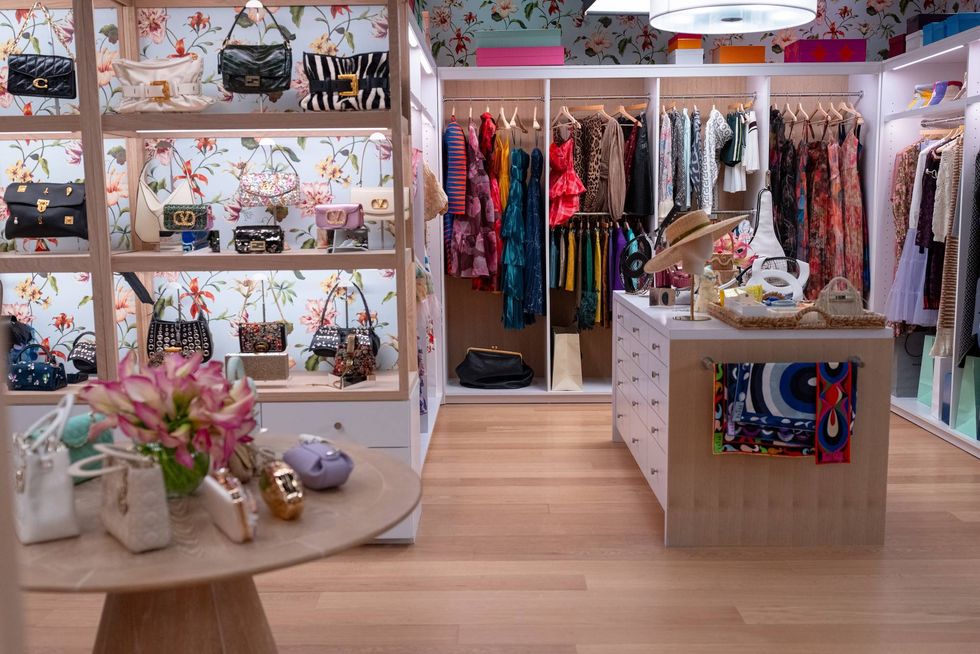
How could any film top the iconic The Devil Wears Prada, especially in terms of production design?
Exactly 20 years after the original fashion-forward feature made Anne Hathaway an A-lister and the coveted world of Runway has reopened with a timely sequel that tackles the shrinking media industry and the pressures of fast fashion, all while still delivering a luxe, aspirational aesthetic.
“I knew it had to feel bigger, better, more glamorous and glossier,” Prada production designer Jess Gonchor, who worked on both the original film and its sequel (in theaters May 1), exclusively told PAPER. “Fortunately, we had the resources to make that happen.”
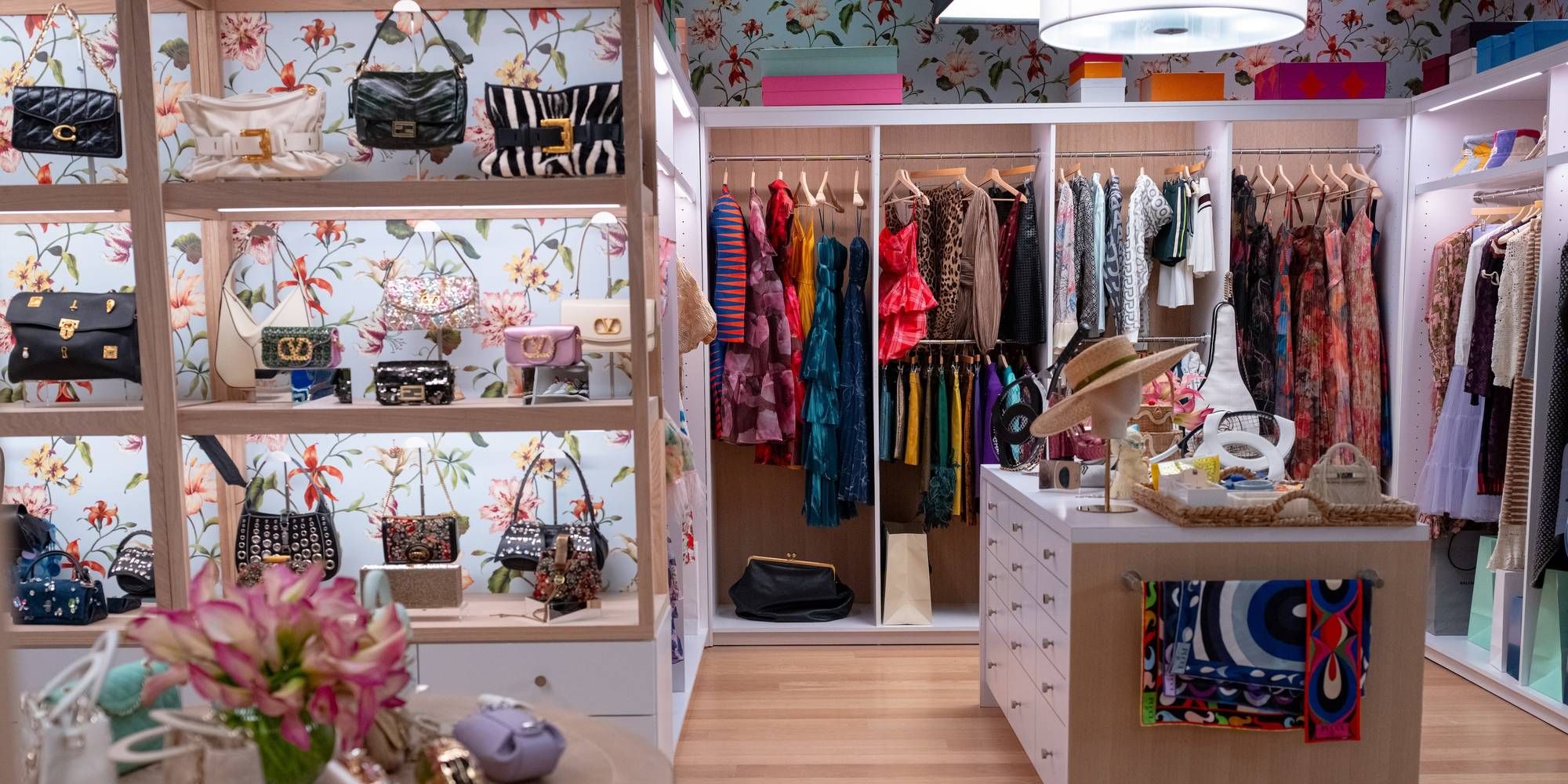
Those resources led to collaborations for exclusive Venetian fabrics from famed house Rubelli, hand-painted tablecloths for a Milan gala dinner, licensing a Wayne Thiebaud painting for Miranda’s townhouse, and of course, clothing the lead stars — including core foursome Hathaway, Streep, Emily Blunt, and Stanley Tucci, plus franchise newcomer Simone Ashley — in stunning fashion that complemented the set design.
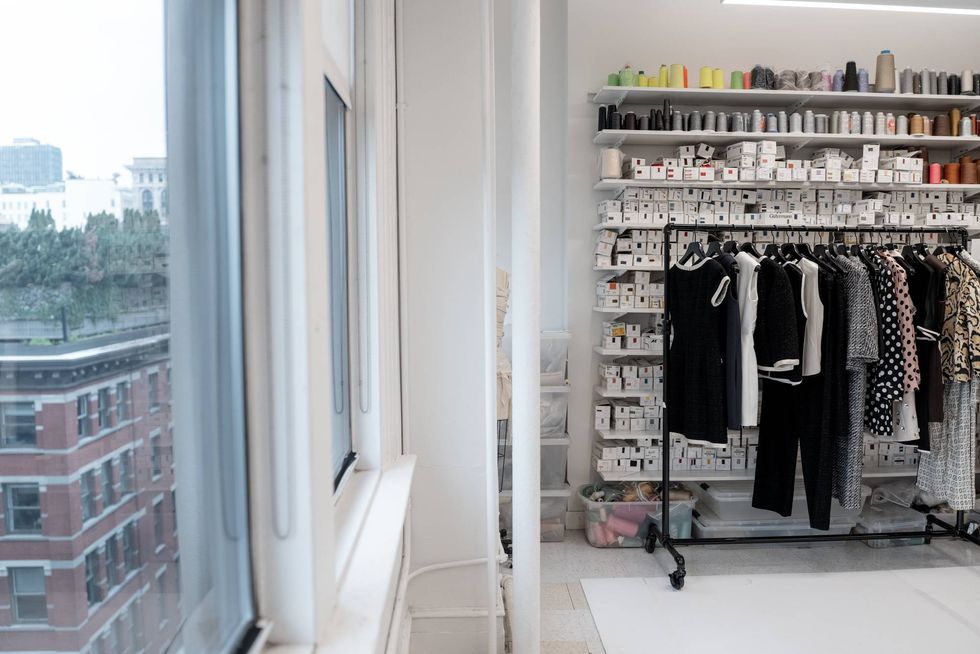
“We understood that the fashion set dressing was very important to this film and it had to be spot on,” set decorator Stephanie Bowen tells PAPER. “We worked closely with costume designer Molly TK, and it truly was a team effort. [Production designer Gonchor] is such an amazing designer and a great collaborator. I quickly discovered that he loves beautiful things as much as I do, so it was fun to see his excitement over some of our furniture selections and fabrics. We wanted [the sets] to feel beautiful but also be functional, layered, and authentic. Great care went into the details; each book, each lamp, and every piece of art which was thoughtfully curated for each set. The design choices felt instinctive putting together mood boards for these larger-than-life characters. We were also fortunate to have the support of some coveted and emerging fashion brands that were willing to loan out clothing for filming. It was quite the collection, and a feast for the eyes enjoyed by us all.”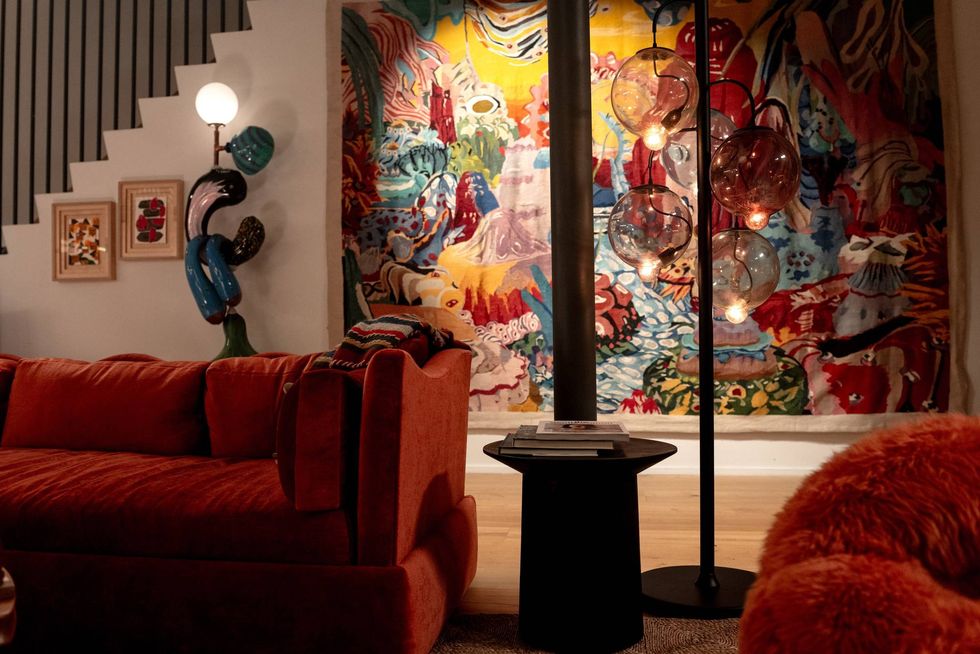
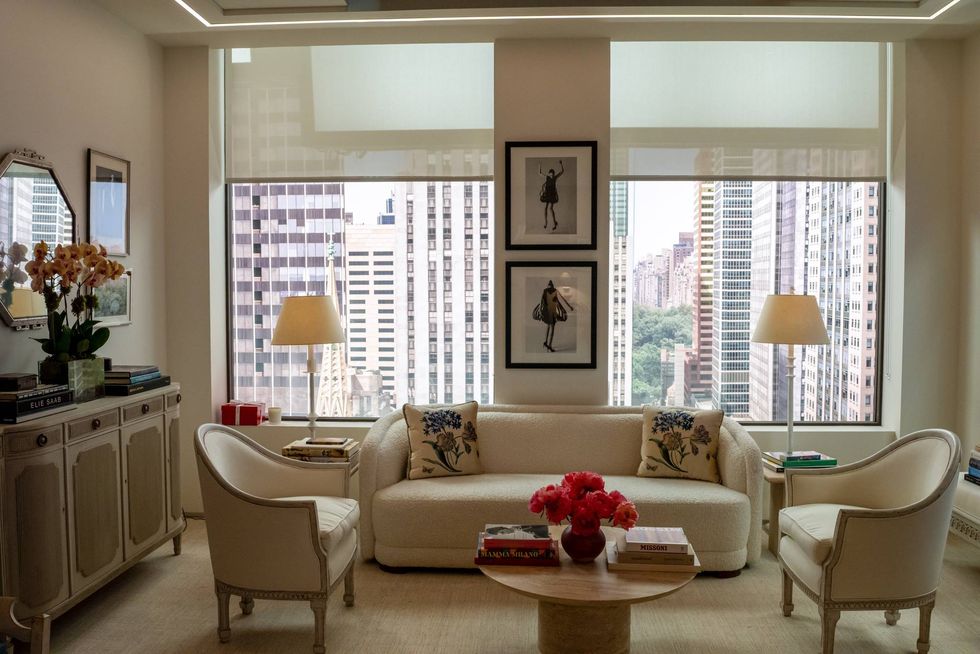
The larger-than-life quality that makes DWP — and its fellow early 2000s rom-coms — timeless is not the only thing that has carried over to its sequel: The production team was able to incorporate select pieces from the original set dressing from the first film such as Miranda's desk chair, her bar cart and an antique mirror for her office to be included alongside a layered curation of Gustavian antiques and mid century pieces. The sequel even includes a return to Miranda’s original townhouse, the one where her twin daughters coax Andy Hathaway into walking up the stairs while hand delivering the mock-up of the latest Runway issue, otherwise known as “the book.”
“It was really exciting when we got the news that we could return to Miranda's townhouse from twenty years ago. There was much uncertainty if this could happen,” Bowen recalled, citing how it was producer Wendy Finerman’s networking that led to production bringing the Priestly family back to that apartment. “It certainly was nostalgic seeing it for the first time. The original wallpaper and window treatments were still there. We wanted to revisit some of the details from the original film like the blue rug and that incredible staircase, but embrace the time passage of 20 years. We must have looked at at least 25 blue fabrics and rugs before landing on the perfect ones!”
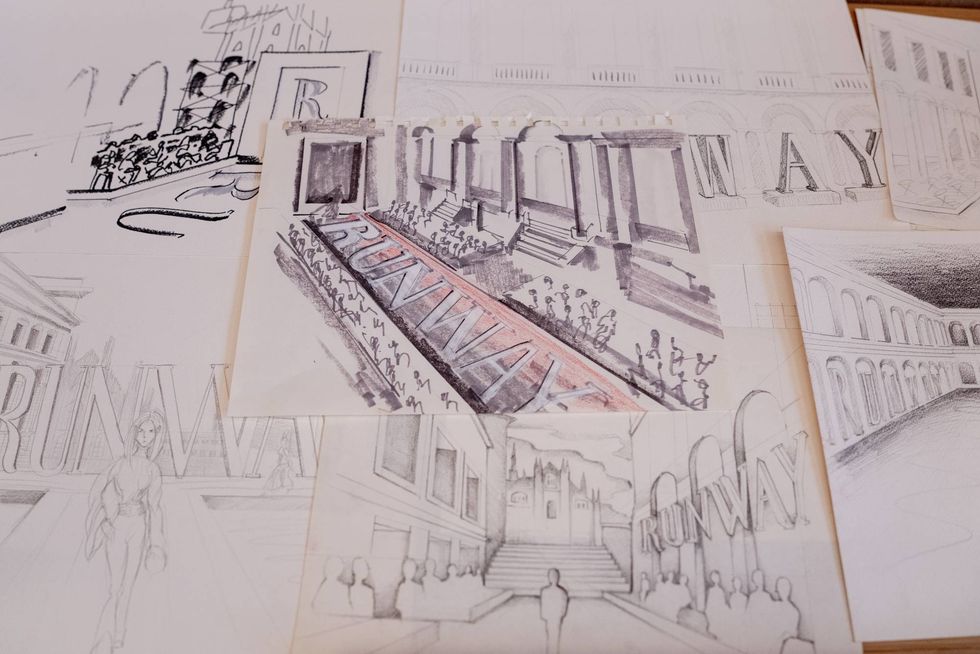
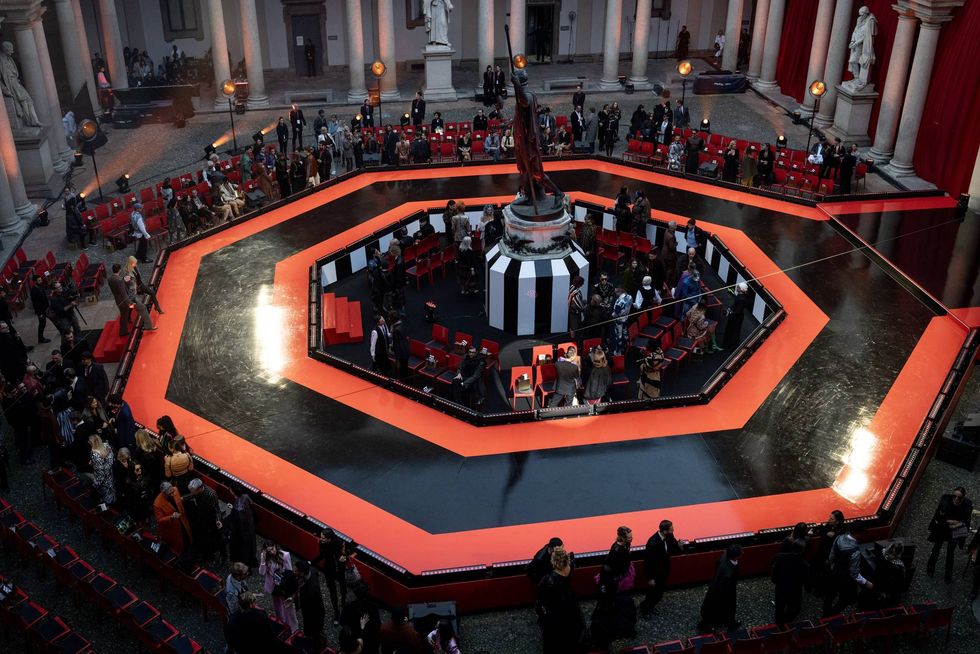
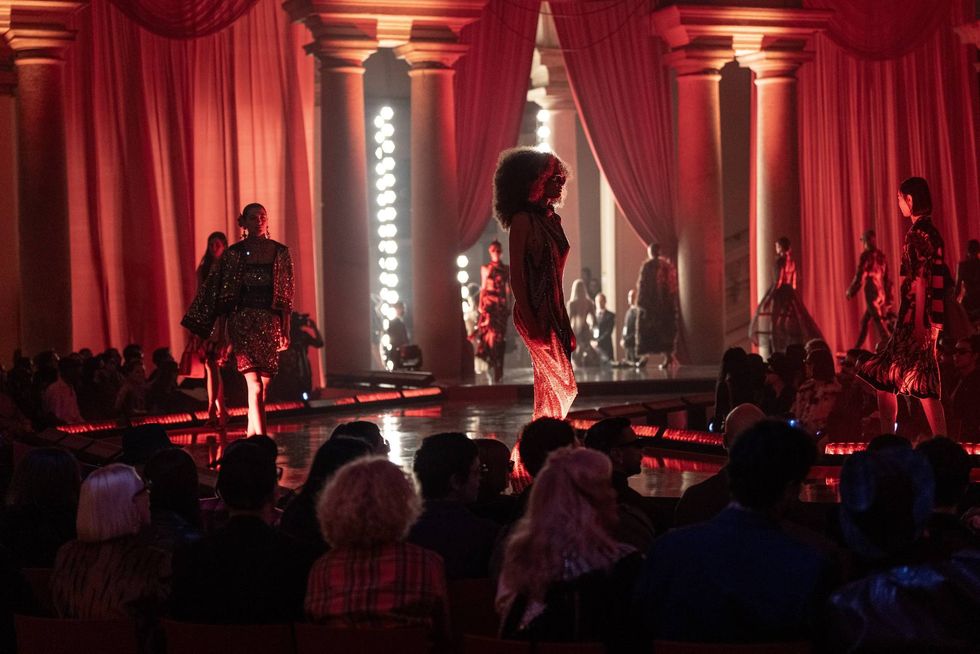
While we all know the legacy of the spiral staircase with blue rugs and the cerulean sweater, the Prada signature red was also incorporated into the sequel for a meta callback to the titular devil shade. The red hue was a central motif for the Milan fashion show that later becomes the backdrop for Runway corporate espionage in the film.
Sandro Piccarozzi, the set decorator for the Italian production team, deemed the fashion show and subsequent gala dinner the two most “challenging” aspects of the feature. “Both were highly ambitious, high-impact sets that had to be executed within extremely tight production windows,” Piccarozzi tells PAPER. “The real challenge was maintaining a very high aesthetic standard while working within strict production constraints, where every decision had to be made quickly but always remained consistent with the film’s visual language. There also was an ongoing dialogue with the costume department to ensure a visual coherence between the environments and the characters, when needed. The aim was to create a single, seamless visual flow that felt both coherent and cinematic in its naturalness. This required extreme attention to detail and very close coordination across all departments involved.”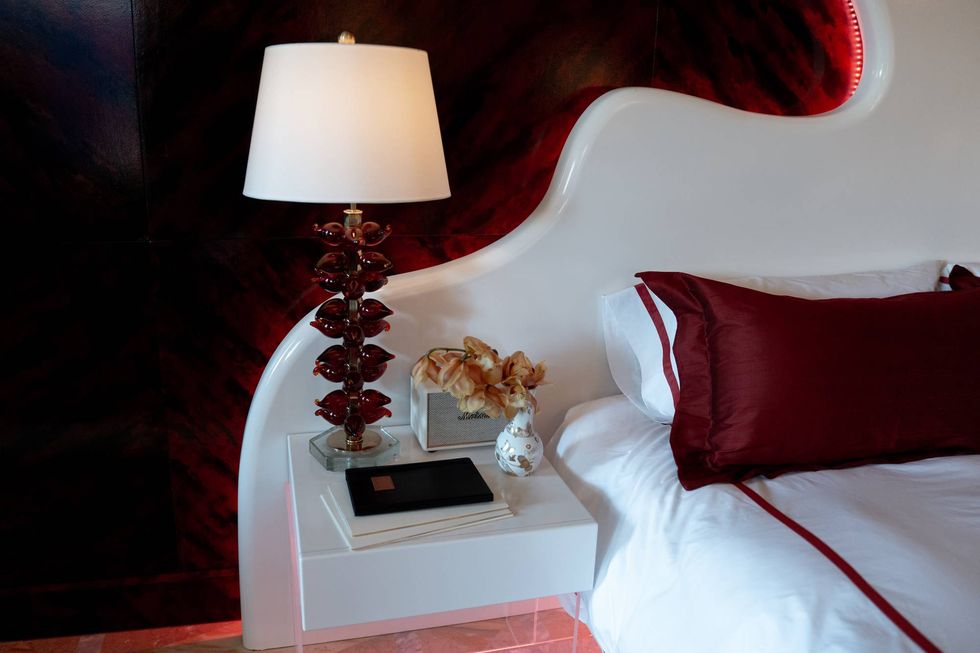
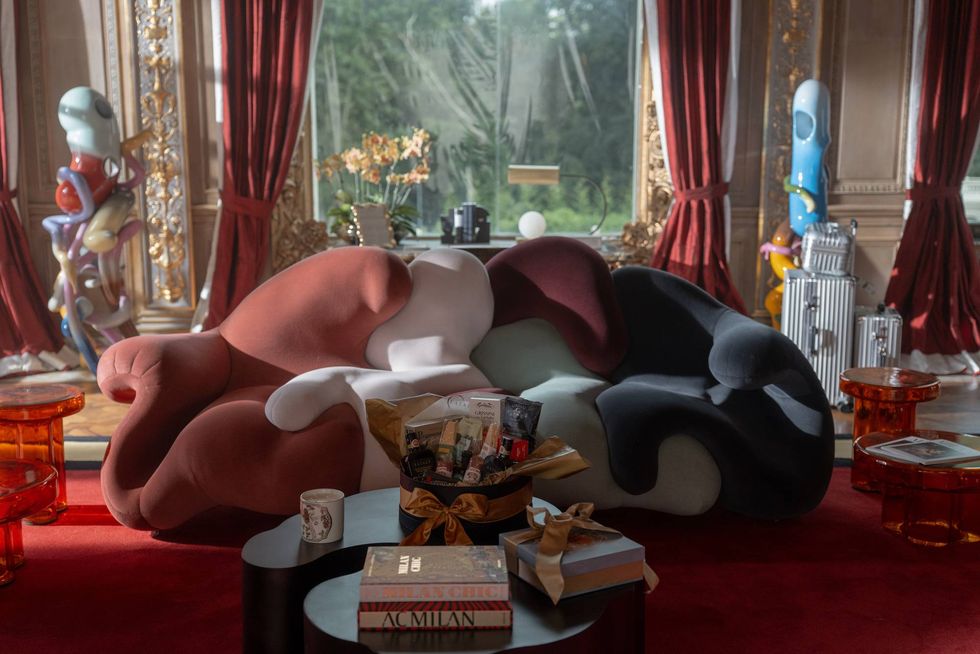
Piccarozzi, who says he was “of course familiar with the original film” prior to joining its sequel, credited Prada for having “built a fashion universe that is both highly distinctive and subtly ironic.” The massive undertaking for the sequel was to top the first feature. “Rather than replicating anything, the goal was to evolve that universe twenty years after the first film, preserving its spirit while translating it into a more contemporary aesthetic that was in tune with the present moment,” Piccarozzi said.
And the best scenes that show off the production design, according to Piccarozzi, are the ones that put fashion first.
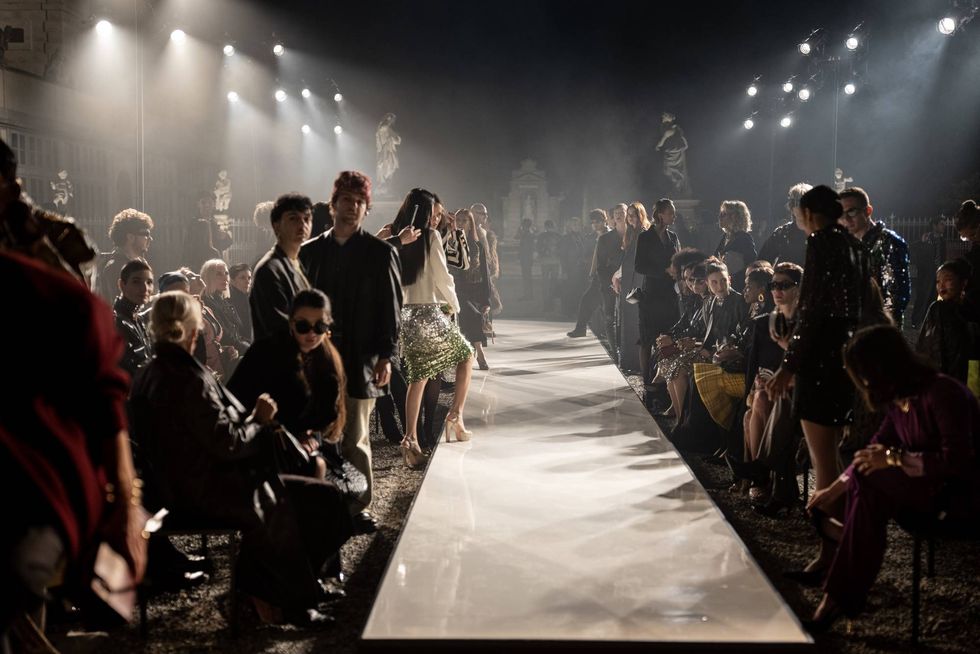
“Every element contributed to shaping the rhythm and energy of the fashion world portrayed in the film,” Piccarozzi said. “Our main challenge was to create a world of opulence and exclusivity. The Runway fashion show was one of the most complex and stimulating environments I worked on. The goal was to design a space that allowed for a continuous flow of movement — models, lights, and choreography — while also reflecting the essence of the fashion world depicted in the film. The stage itself was the centerpiece of the scene. We used a combination of glossy, transparent, and reflective materials, paired with bold lighting and the color red, all of which were meant to emphasize the spectacle and energize the entire sequence. We selected exclusive fabrics, such as velvets and metallic materials, that would reflect the light. We meticulously attended to every detail, ensuring that nothing distracted from the heart of the scene — the fashion.”
The gala dinner sequence — which is one of the most crucial scenes in the film — in turn “had to exude luxury and refinement” to further add to the spectacle of the fashion show, “but at the same time feel authentic, as if it were a truly prestigious event,” Piccarozzi added.
The inspirations for the look of the sequel didn’t just come from garments, though. Production designer Gonchor recalled attending Lady Gaga’s Mayhem tour as one of the many perks of returning to the legendary franchise that helped lead to how the fashion show stage was designed. “[Director] David Frankel managed to get all of us into Lady Gaga’s concert at Madison Square Garden. The show was incredible, and for me, it was especially exciting to see how the stage was designed and executed,” Gonchor said.
Gaga was the music supervisor for the film, and released the single “Runway” — named after Vogue magazine stand-in that Miranda Priestley (Meryl Streep) helms — featuring Doechii as part of the soundtrack. Gaga was also in attendance at the April 20 world premiere at David Geffen Hall in New York City.
Gonchor adds that “Afterward, we were invited backstage, which was an experience in itself. They ushered us through tunnels and checkpoints, took our phones, and kept telling us it would be any moment before we met her. We ended up waiting for hours, and finally saw her around 2:00 in the morning—which, for most of us, was far later than any of us were used to staying up!”
While Gonchor admitted that he didn’t entirely “stay in the fashion world” after working on the first Prada feature — he was busy being the production designer for a wide range of films such as Little Women, Saturday Night, and A Quiet Place Part II also starring Prada actress Blunt — it was “fun to dust off those fashion instincts again” for the sequel.
“The best moment [from the set]? The first time I saw Emily Blunt again, she took one look at me and said, ‘I guess you’re in fashion now,’” Gonchor quipped.
Images courtesy of Disney and 20th Century Studios
©2026 20th Century Studios