Denise Oliver-Velez, Young Lords leader and Black Panther Party member, dies at 78
Denise Oliver-Velez, a famed member of both the Young Lords and the Black Panther Party and a prominent contributor to Daily Kos, died on July 15. She was 78. The post Denise Oliver-Velez, Young Lords leader and Black Panther Party member, dies at 78 appeared first on New York Amsterdam News.
 Black News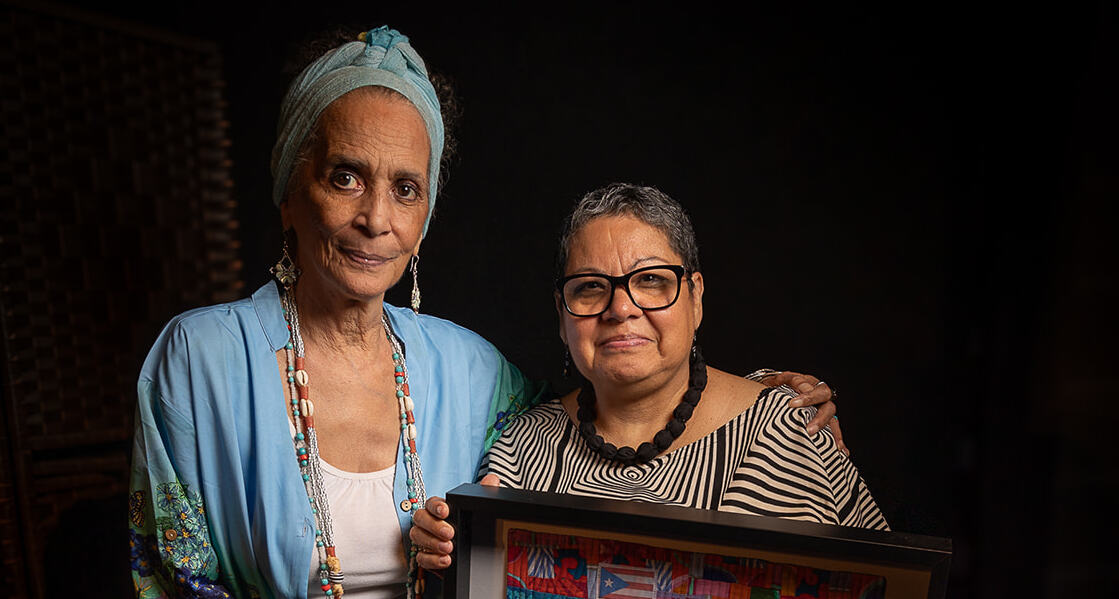

Denise Oliver-Velez, a famed member of both the Young Lords and the Black Panther Party and a prominent contributor to Daily Kos, died on July 15. She was 78.
“Denise lived and encompassed this very special connection between Puerto Ricans and Black Americans in New York City that was forged out of struggle,” said Erica González, director of Power 4 Puerto Rico, who noted that Oliver-Velez moved with a New York attitude that demanded respect.
Oliver-Velez was the first woman elected to the Young Lords’ Central Committee and later became the party’s minister of economic development. She also joined the Black Panther Party; helped establish Pacifica Radio’s first minority-controlled station, Washington, D.C.’s WPFW-FM; worked in AIDS research, and taught college-level classes. Toward the end of her life, she was a prominent writer for progressive news website Daily Kos.
Born Denise Roberts Oliver on Aug. 1, 1947, in Brooklyn, Oliver-Velez grew up in a politically conscious Black family. Her father, George B. Oliver, was an actor, a Nassau Community College professor of dramatic literature, and a Tuskegee Airman; her mother, Marjorie Roberts Oliver, was a New York City public school teacher.
Mariposa Fernandez, the activist poet and educator, told the AmNews she has known Oliver-Velez since around 2009, they met at the fortieth-anniversary celebrations and activities of the Young Lords. She remembers Oliver-Velez always spoke of having been raised to know about the history of Black resistance. That grounding shaped how she taught, wrote, and organized.
At age 16, Oliver-Velez joined the 1963 protests in South Jamaica, Queens, that called for the hiring of Black workers at the all-white construction site developing Rochdale Village. Fernandez said one of the stories Oliver-Velez loved to tell was that she had met Fannie Lou Hamer when she came to New York City on a fundraising tour.
Hamer’s persona was so impactful that it pushed Oliver-Velez to leave Hunter College’s then-Bronx campus and enroll at Howard University, where she became active in the Student Nonviolent Coordinating Committee (SNCC).
Oliver-Velez, Fernandez said, faithfully defended voting rights and, for the rest of her life, had little patience for those who would say voting was meaningless because she knew what people like Hamer had gone through to be able to vote.
“She was very adamant that we use the ballot and that we fight to protect our voting rights,” Fernandez said. “She was very concerned about everything that’s going on around voting. And she didn’t have patience for anyone suggesting that we not exercise our right to vote or that voting was a waste of time. That drove her crazy. She was very adamant that that’s not the answer, and she would often point to Fanny Lou Hamer as an example of this.
“So, everything that we’re facing, that we’re seeing now the gerrymandering and the other types of interference we’re seeing with this administration,” Fernandez continued, “she would want people to just be vigilant and to really put their energy into what we’re going to do to fight for the future in this country.”
Building a new movement
Mickey Melendez, co-founder and former head of security for the New York Young Lords, said he met Oliver-Velez before the Young Lords were formed, when she joined the East Harlem anti-poverty organization Real Great Society after leaving Howard. The two later attended what is now SUNY Old Westbury, where Puerto Rican and Black students organized politically and eventually helped build the New York Young Lords.
“I had no political consciousness when I met her, but I will tell you that Denise Oliver was the first feminist I met,” Melendez told the AmNews. “And whatever you had in your head, it was very clear that you had to respect this woman.”
Demanding respect was a feature of Denise’s leadership. The Young Lords challenged city neglect, police violence, inadequate healthcare, poor sanitation, and housing injustices in East Harlem and the South Bronx. They organized free breakfast programs, health initiatives, tenant actions, and major protests like the takeover of East Harlem’s First Spanish United Methodist Church and the 12-hour takeover of Lincoln Hospital in the Bronx. Oliver-Velez’s role in the push for militant change in impoverished communities also led her to demand changes in the organizations she was part of. The original Young Lords platform had featured language about “revolutionary machismo,” but Oliver-Velez and other women rejected that. “Machismo will never be f—ing revolutionary,” she famously said.
Melendez said one of his favorite memories of her comes from the documentary “Takeover,” where Oliver-Velez described the Young Lords’ approach to community struggle.
“We came from a place of love and respect, but we didn’t take any sh*t from anybody,” he recalled her saying. “And that really captures who she was. I mean, she was beautiful, she was brilliant, and you couldn’t get away with any bullsh*t toward her, because she would just, you know, throw it back in your face.”
By 1970, Oliver-Velez had become one of the highest-ranking women in the Young Lords. She helped frame how the organization dealt with a range of issues, particularly in Pa’lante, the Young Lords’ newspaper.
“She had artistic skills,” Melendez said. “Without her and Richie Pérez our paper would not have come out as consistently as it did.” He compared her to Emory Douglas, the famed Black Panther Party artist, who helped shape the Panthers’ visual language.
Oliver-Velez had trained as an art student at the High School of Music & Art and drew many of the cartoons and graphics that circulated through Young Lords campaigns. The artwork connected to the Lincoln Hospital struggle, like the “Lincoln Hospital Butcher Shop” image, was signed “D.O.” or “D. Oliver.”
She stepped away from the Young Lords when leadership decided to move toward a Puerto Rico-focused strategy; objecting because she thought it was a political mistake for New York organizers to enter Puerto Rico with a ready-made agenda instead of letting the leadership on the island direct their own struggles.
“You can’t parachute into someone else’s community with your own agenda for their salvation,” Fernandez said Oliver-Velez had pointed out. Mickey Melendez agrees that history proved Oliver-Velez’s analysis was right. The move, he said, was “almost like this, you know, chauvinist, para-trooping into our homeland — like, ‘We’re going to save you!’” The Young Lords ran through their resources trying to organize in Puerto Rico and ended up crippling their offices.
Oliver-Velez then joined the Black Panther Party, continuing her work in communications and political education. Robyn C. Spencer-Antoine, a historian who has written extensively on Black women’s leadership in the Black Panther Party, said Oliver-Velez’s wider impact was in her ability to be present across generations.
“She was somebody who was from the generation that [my students] venerated or had questions about: the Civil Rights/Black Power generation,” Spencer-Antoine said. “But she was someone that you could engage with. And I think that made her a unique figure. I think that kind of communication was part of her legacy for sure.”
At one point, Spencer-Antoine brought Oliver-Velez to speak at Lehman College for a Black History Month event on health activism and community building in the Bronx. She wanted to show students that the Young Lords and Panthers fought against police brutality and U.S. foreign policies, while working on issues like air quality, food, and access to hospitals. “We brought her to campus to represent that history, and she did so powerfully,” Spencer-Antoine said.
Later years
After participating in 1960s and 1970s movements, Oliver-Velez helped start WPFW-FM in Washington and later led the Black Filmmaker Foundation. She also taught anthropology and women’s studies at SUNY New Paltz and studied HIV/AIDS programs in Puerto Rican communities.
In 2008, she became a contributing editor at Daily Kos, where she wrote on Black politics, Puerto Rico, the Caribbean, music, women’s history, elections, and the continuing responsibilities of movement work. Daily Kos founder Markos Moulitsas wrote in a July 15 tribute that because she was a movement veteran, important editorial and political decisions often came down to one question: “What is Denise going to think about this?”
Mariposa Fernandez said Oliver-Velez treated blogs, social media, video, music, cartoons, and comment sections as extensions of the movement press. After Hurricane Maria, Fernandez said Oliver-Velez posted daily about issues in Puerto Rico like the ongoing lack of a hospital on Vieques. Oliver-Velez used new media to reach younger audiences and to teach the need for political consistency.
Erica González says that discipline was at Oliver-Velez’s core. “What I think we take away from Denise is consistency, urgency, and honesty,” González said. “She was very candid, consistent, like this wasn’t work that she took a pause from.”
In 2024, Power 4 Puerto Rico Education Inc. recognized Oliver-Velez with its “Best Ally” award at the “Boricuas Holding It Down” ceremony. The award, made by artist Sylvia Hernández, was accepted by Oliver-Velez in Yemaya colors to symbolize her role as a priestess of Yemaya in the Afro Cuban Lucumí Orisha tradition.
González said choosing Oliver-Velez for the award was obvious because she was constantly writing about Puerto Rico and Puerto Rican issues. “I don’t think a week went by where she wasn’t writing about Puerto Rico or mentioning issues for our community here,” González said. Oliver-Velez was able to receive it with former Young Lords and Black Panthers members in the audience. “She was so elated,” González said. “I’m glad that we were able to do that while she was fully able to be present because she deserved to enjoy that moment.”
Mickey Melendez said Oliver-Velez’s final instruction to her husband, Phillip Nadhiyr Velez, was to reach out to him about making arrangements for her eulogy to be held at the People’s Church. He mentioned that the final details are still being worked out, but the service is expected to take place later this September.
“I really want people to know that she was unapologetically feminist,” Mariposa Fernandez said. “She would often talk about the work they did with the Young Lords––because she was a Young Lord and a Black Panther, and she had the context of being a woman and being in leadership in both of those organizations––and that the work they were doing to challenge sexism and so-called ‘revolutionary machismo’ predates second-wave feminism.”
A GoFundMe page has been set up to assist with funeral costs for Oliver-Velez.
The post Denise Oliver-Velez, Young Lords leader and Black Panther Party member, dies at 78 appeared first on New York Amsterdam News.