DRC to deploy 3000 armed guards to secure its mines with the help of the US and UAE
The Democratic Republic of the Congo (DRC) is taking a dramatic move to protect its massive mineral wealth by announcing plans to build a new paramilitary force to police its mining sector.
 Black News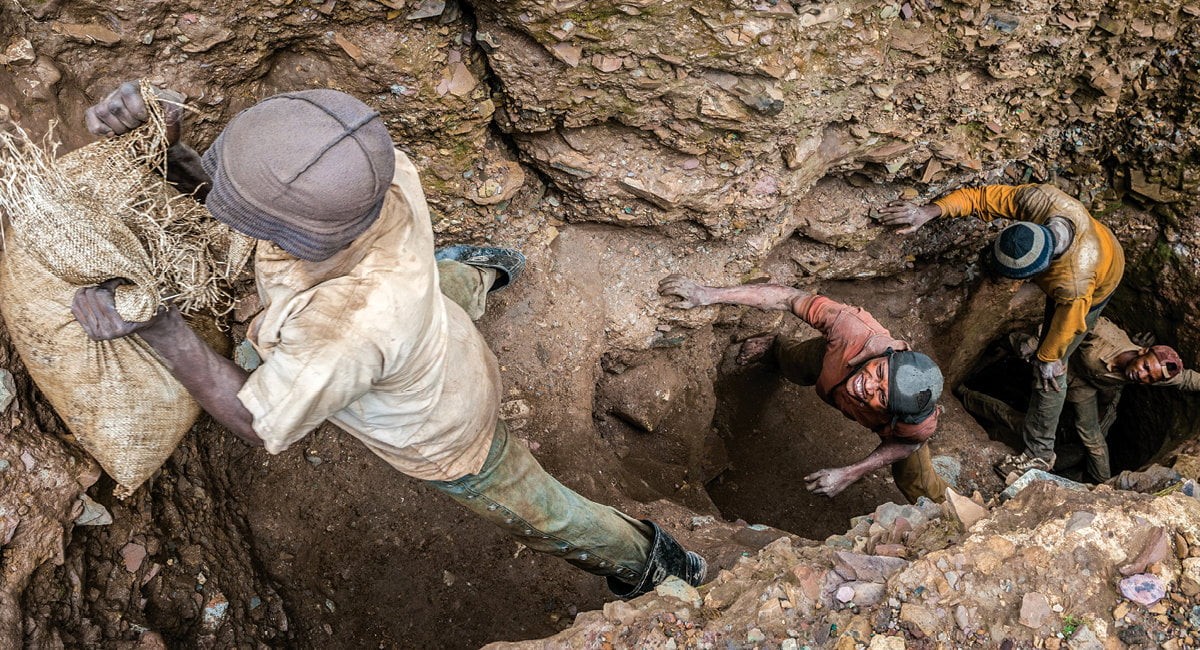


The Democratic Republic of the Congo (DRC) is taking a dramatic move to protect its massive mineral wealth by announcing plans to build a new paramilitary force to police its mining sector.
- The Democratic Republic of the Congo plans to create a paramilitary force to police its mining sector, supported by US and UAE funding.
- An initial $100 million will fund 3,000 armed recruits by December, with goals to grow to 20,000 mining guards by 2028.
- Rising foreign interest in Congo's minerals, especially metals essential to global industries, has driven new partnerships.
- Recent deals give US companies preferential access to Congo’s copper, cobalt, lithium, and tantalum, aiming to counter China’s dominance.
According to the country's General Inspectorate of Mines, the project would be supported by funds from both the United States and the UAE.
An initial $100 million investment will enable the deployment of up to 3,000 armed recruits by December, with long-term goals of increasing the force to 20,000 "mining guards" nationally by 2028, as seen on Bloomberg.
The force will secure production, ensure traceable transport of minerals, and replace “defense forces currently deployed in mining zones,” according to the statement.
While the majority of mining operations are presently patrolled by police personnel, military and presidential guard officers have been observed at various sites, often in contravention of the national mining code.
The General Inspectorate of Mines (IGM) has officially informed Bloomberg that this newly established force is intended to eventually supersede the police in these roles.
The IGM further specified that the initial deployment of these guards will occur within the Katanga region, an area characterized by its substantial copper and cobalt deposits, as well as zinc, lithium, gold, tin ore, and tantalum ore.
The move reflects increasing foreign interest in Congo's mineral riches, especially as global demand for vital metals rises.
This development is the latest in a series of deepening ties between the three countries.
In February, the Democratic Republic of the Congo announced plans to sell copper to Saudi Arabia and the United Arab Emirates via a US-backed cooperation with Mercuria Energy Group Ltd.
The agreement is widely regarded as part of Washington's larger effort to undermine China's dominant position in the world supply of vital minerals.
Just a month before, Congo had presented the United States with a list of priority mining projects, paving the way for increasing American involvement in its resource sector.
This follows a historic strategic minerals cooperation struck in December, which gave US corporations preferential access to some of the country's most valuable reserves, such as copper, cobalt, lithium, and tantalum.
While specific projects were not announced at the time, the deal marked a significant geopolitical change, establishing Congo as a vital battleground in the war for control of critical resources.
According to a recent Visual Capitalist analysis, the Democratic Republic of the Congo has the fourth-largest copper deposits in the world, making it Africa's largest holder of the metal.
As global powers strive for access to these resources, Congo's choice to militarize mine protection shows both the importance of its natural wealth and the difficulties in safeguarding it.