East Africa’s aviation ambitions grow as Uganda Airlines signs $985 million deal with US plane maker Boeing for 10 aircraft
Uganda Airlines has agreed to acquire 10 Boeing aircraft in a Shs3.7 trillion ($985 million) deal, a major expansion that could more than double the state-owned carrier’s fleet and strengthen its position in East Africa’s aviation market.
 Black News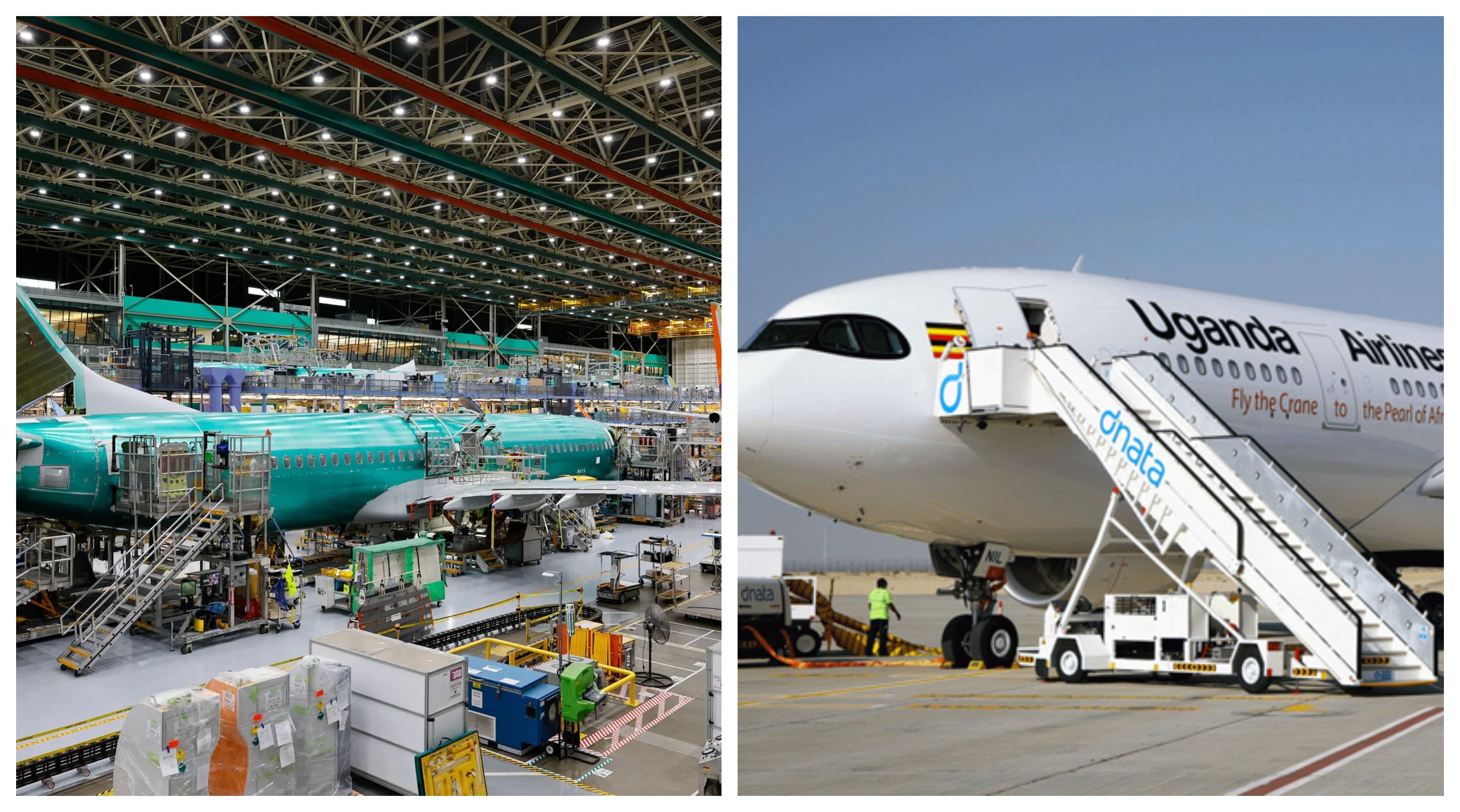

Uganda Airlines has agreed to acquire 10 Boeing aircraft in a Shs3.7 trillion ($985 million) deal, a major expansion that could more than double the state-owned carrier’s fleet and strengthen its position in East Africa’s aviation market.
- This acquisition aims to reduce reliance on regional transit hubs and improve direct air connections to Uganda.
- The deal includes eight passenger planes and two converted freighters, with an initial payment of over Shs460 billion.
- Uganda Airlines has agreed to purchase 10 Boeing aircraft, worth $985 million, to expand its passenger and cargo services.
- The investment is significant for Uganda, with Boeing offering technical support as the airline seeks to boost direct international connectivity and attract investors.
The agreement, signed in the presence of President Yoweri Museveni on June 10, covers eight passenger aircraft, each capable of carrying 294 travellers, and two converted freighters.
The cargo aircraft will comprise a Boeing 767 wide-body converted freighter and a Boeing 737 Boeing Converted Freighter, according to Ugandan officials.
According to local reports, Uganda Airlines Acting Chief Executive Officer Girma Wake signed on behalf of the carrier, while Boeing Executive Vice President and Head of Sales for Africa Anbessie Yitbarek represented the US manufacturer.
The airline will make an initial payment of more than Shs460 billion ($122 million) to begin implementing the agreement.
The first phase will cover four large passenger aircraft, although officials have not disclosed the full delivery schedule.
“It is a very expensive project, but the President said that we have no other option. We need to build our own airline. That is how Uganda can be connected to the rest of the world,” Works and Transport Minister Fred Byamukama said.
Uganda targets a larger regional role
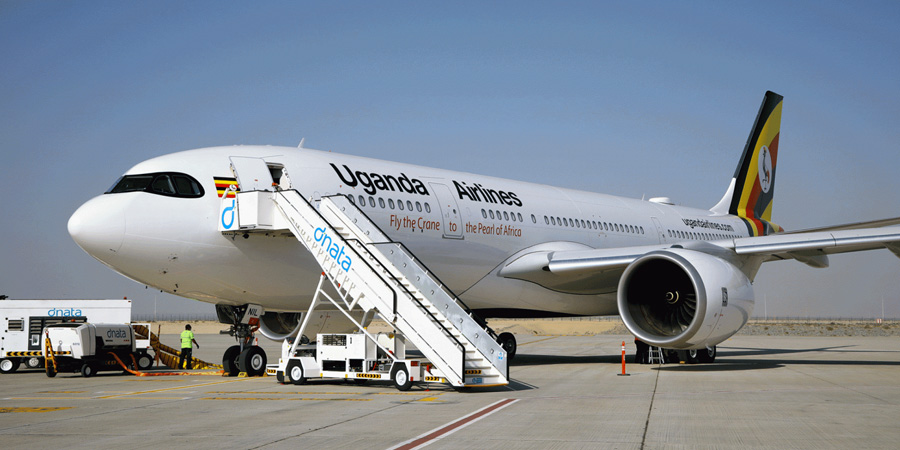
Uganda Airlines remains one of East Africa’s smaller national carriers. Industry data listed its fleet at about seven aircraft in early June, compared with 147 operated by Ethiopian Airlines, Africa’s largest carrier.
Kenya Airways also operates a substantially larger network and is seeking fresh capital to restore and expand its fleet.
Uganda’s 10-aircraft order could therefore narrow the gap with mid-sized regional carriers, although it would remain far behind Ethiopian Airlines.
The deal is also larger than Kenya Airways’ recent fleet additions. The Kenyan carrier added a Boeing 737-800 in February 2025 and has focused on leasing aircraft and returning grounded planes to service.
Ethiopian Airlines, meanwhile, agreed in April 2026 to buy six additional Boeing 787-9 Dreamliners, taking its firm 787 order to 26 aircraft for delivery from 2028.
Together, the investments highlight intensifying competition among East African airlines seeking a larger share of passenger and cargo traffic.
Fleet shortages raise urgency
Uganda’s purchase follows months of operational disruption caused by aircraft shortages.
In February, Uganda Airlines cancelled flights to Nigeria, London and Mumbai after mechanical problems grounded some aircraft. Two Airbus A330neo jets used on long-haul routes were withdrawn for unscheduled maintenance.
The airline temporarily secured a Boeing Dreamliner from Ethiopian Airlines to restore some long-distance services, underscoring the risks of relying on a small fleet.
Byamukama said the new planes would reduce Uganda’s dependence on transit hubs and support direct links with investors and tourists.
“This means Uganda will be connected directly to the rest of the world. We shall bring many investors directly to Uganda,” he said.
Boeing also pledged technical support, training and capacity-building programmes. However, the commercial success of the deal will depend on delivery schedules, route economics and Uganda Airlines’ ability to convert the additional capacity into sustainable revenue.