Erin Jackson On Pressure, Training For Milan 2026, And Advocating For The Next Generation
Everytime Erin Jackson steps onto the ice, it serves as another opportunity to make history. The Florida native’s journey to the top wasn’t typical, to say the least. She grew […] The post Erin Jackson On Pressure, Training For Milan 2026, And Advocating For The Next Generation appeared first on Essence.
 Black News
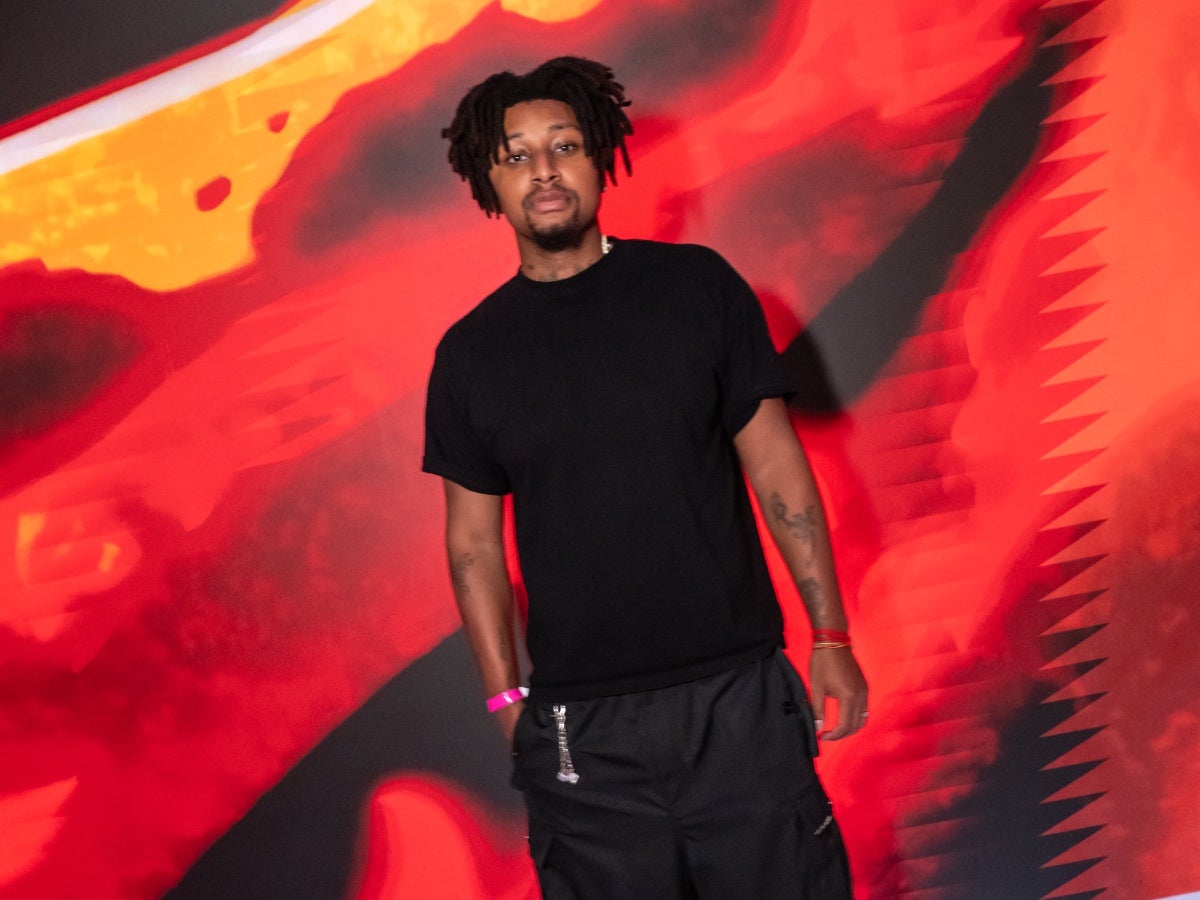
 Erin Jackson at the Team USA Media Summit. Photo Credit: Al Bello
Everytime Erin Jackson steps onto the ice, it serves as another opportunity to make history.
The Florida native’s journey to the top wasn’t typical, to say the least. She grew up on wheels, learning balance and speed on roller skates long before she ever touched ice. After college she finally tried long-track speed skating and, with only a few seasons of experience, qualified for the 2018 Winter Olympics. Four years later, she returned stronger and faster, and won gold in the 500 meters at Beijing. In doing so, she became the first Black woman to win an individual Winter Olympic title, breaking barriers as she crossed the finish line.
Now 33, Jackson is preparing to defend her crown once again. Also, she recently made headlines as one of Team USA’s flag bearers, becoming the first Black woman to hold that role at a Winter Olympic Games. That recognition reflects both her standing in the sport and the respect she commands among her peers, and it sets the tone for what could be her biggest Games yet.
 06 February 2026, Italy, Mailand: Olympia, Olympic Winter Games Milan Cortina 2026, Opening Ceremony in Milan, San Siro, the team from the USA is led by flag bearer Erin Jackson. Photo: Michael Kappeler/dpa (Photo by Michael Kappeler/picture alliance via Getty Images)
“It’s really exciting,” Jackson says. “I feel like each of my Olympic appearances have been so unique, because the first time around I really didn’t see it coming. The second time I came in expected to win, and then ended up having that really nice, fairytale ending. Now, it’s really different again because I’m coming in to defend. There’s a target on my back, there’s a lot of pressure, but I really like that feeling. I feel like the pressure really gets me going.
In recent years, Erin has adapted her training to protect her body and sharpen her technique, even while managing a litany of physical challenges common to elite athletes. Off the ice, she uses her platform to expand access and visibility for athletes of color in winter sports, speaking with families, mentoring young skaters, and advocating for change.
In her conversation with ESSENCE, Jackson talks about her career, preparation, and finding ways to extend her time at the top. She also remains focused on what her presence means for young athletes who rarely see themselves in winter sports, partnering with groups that help widen access and opportunity.
ESSENCE: As you gear up for Milan 2026, how has training been any different this time around?
Erin Jackson: Training has been super different. I wouldn’t say I’m old, but I’m kind of old in my sport. I’m the oldest person I race other than one of my teammates and close friends. But yeah, I’m a bit older in the sport and I have three disc herniations in my lower back. So, I’ve been trying to train a lot smarter rather than harder lately. That’s been the main thing—just really paying attention to my back and cutting out a lot of exercises, switching to different exercises, stuff like that.
The life of an athlete.
Yeah.
When you look back on your journey, you’ve had so many career milestones—what do you think most prepares you for your career in sports?
Personal mindset. I would say that I’m really able to keep everything in perspective. I think that I go into each race pretty calm, pretty confident, not really getting psyched out or super nervous. And I think it’s because I know that even if I lose, it’s not the end of the world. The world isn’t going to end if I lose my race. Of course I’ll be disappointed, but life still goes on. So I think I kind of have that mindset. Even when I have a bad performance, there’s always something to learn and take away from it and try to do better. I feel like I just have a really relaxed mindset around competition. I care a lot, but I also know that there are other things going on in the world.
Are there any practices or methods that you do to keep yourself grounded?
It’s kind of strange. It’s not a thing that I’ve really tried to get better at. I didn’t really notice it until teammates would start commenting on my mentality around competition. It honestly could just be that this is the next phase in my life because I didn’t really start speed skating on ice until after I graduated from college. So it’s like I had all of that. I went to college. I had another year and a half or two years of just enjoying being a young adult before I even switched over to ice skating. I feel like I’m able to relax into it because I know that I’ve done a lot of other things already and this is just kind of something to add to my life.
Prior to the transition to speed skating, what did you do? Why the shift?
I grew up roller skating. So my earliest memories of skating were just like those little plastic skates that attach over your shoes, roller skates. And I would just skate up and down my driveway on those. Then I graduated into what’s being called a rink rat, and that’s someone who just hangs out at the local skating rink. And I would just skate around to the music, eating pizza and drinking Coke in the snack bar with my friends, all those sorts of things. After that, I got into inline speed skating, which is kind of what I do now, except right now I race on ice skates and previously I raced on inline skates.
You’ve spoken about the importance of representation in winter sports. From your perspective, what changes do you think still need to happen to make sports like speed skating, skiing, and snowboarding, more accessible to young black and brown athletes?
I would say there are two main things. Visibility and representation, and that’s why I’m trying to do as much as I can with letting people see that there are people like us doing these sports—this is possible. But I think it’s really helpful to have someone who you can look to and see them doing it. It’s really rewarding to get messages from those parents who tag me in videos of their kids skating around the house, and they’re like, “You can be the next Erin Jackson.” So I feel like those videos are really awesome. And I just also want to encourage these kids to not try to be the next me, but try to be the first one of themselves.
It was really surprising to me that I was the first Black woman to win a medal in speed skating, and I think there should be more coming soon after. Another thing is just the accessibility of these sports. Cost is a huge thing. There’s a really big barrier to entry because it costs a lot just to get started in these sports. Also, there aren’t many places to do these sports around the world. You can pick up a basketball and go pretty much anywhere. But for my sport, long track speed skating, there are only two indoor rinks in the entire country, which are in Salt Lake City and then Milwaukee, Wisconsin. And then there are three more outdoor rinks, but then you’re bound by the weather and conditions and all of that. So there are three more outdoor rinks. Other than that, it’s all short tracks or hockey rinks. It’s not really an easy sport to get into. So when I retire from speed skating, one of my main goals is to start an organization to start a scholarship program to help people get involved in the sport.
So talk to me about your work with Edge Outdoors and why you decided to align with that brand?
That kind of plays right into what I was just saying. So Edge Outdoors is run by a woman named Annette Diggs, and I’ve known her for a few years now, and she’s a really great mentor to me in terms of getting an organization like this off the ground. So right after the 2022 Olympics, I worked with Annette and I was one of the people on the review board for her scholarship. Edge Outdoors pays for and teaches minority women how to ski and snowboard. And her organization is based in Seattle, Washington. So, I helped out with her as kind of getting that one going. I didn’t do any of the work. I just helped with figuring out who would get the scholarship. I’ve kept in touch with her—I actually just saw her a couple months ago because she brought her group out to Salt Lake City to ski and snowboard there. So I got to reconnect with her and meet the recipients of that year. She told me that whenever I’m ready to get mine started, she’ll be there to mentor me through it.
That’s really beautiful. Team Coca-Cola tapped you as one of only seven athletes for the Olympic campaign. What does that endorsement mean to you personally?
Oh, it’s such an honor. Everyone knows Coke, so it feels amazing to be part of Team Coca-Cola. I’m really appreciative and honored that they would pick me, and I’m really excited to represent them. I feel like it’s also nice when you can have an authentic connection with a partner because I drink Coke, I drink a lot of their products, I think it just fits. There’s so many products and things that people might not even realize are made by Coke. Yeah, they’ve got their hands in it all.
What do you think has been your biggest challenge that you have to face in your career so far?
I would say the sport is really, really technical, and really, really mental. The mental side of the sport is what trips up a lot of people because you’re out there by yourself just racing against the clock. And when you compare that to a team sport, it’s isolating. It’s definitely cold, and it’s a different environment from any sport I’ve ever done. Getting over those things have been a little tricky, but I’m also really fortunate to have a lot of friends out here in Salt Lake City because I’m from Florida.
Moving out to this new place, a place that’s very different from where I grew up, it was kind of scary to think about doing that, but luckily I’ve got familiar faces here. I knew a lot of the people who also came from inline skating, so that definitely helped with the transition.Then I’ve got some mentors from back at home who also switched over to ice skating, making it a super welcoming environment, even though it’s a little bit cold and lonely. But it’s still a ton of fun and just figuring out the techniques has been a really big challenge, but I like a good challenge.
Earlier, you were talking about just how you have to change your training as you’ve grown in your career. What are you looking forward to the most in this next chapter of your Olympic career?
I’m really looking forward to getting back on top. It’s been a struggle the past few years with my back injury, and there’s been a ton of ups and downs, and I haven’t been performing consistently the way I want to. Over this past summer, I started seeking out new ways to help my back, new ways to kind of get through it, and it’s been super helpful. The USOPC has been great with their medical connections. So, I’m just looking forward to getting back to the type of racing that I know I can do.
I also want to expand my skillset, because I’ve always been a super short distance athlete. I do the 500 meters, which is our shortest distance, but I’ve gotten better at the 1000m race as well. It will be a surprise to see how I do in the 1000m. I don’t really know what to expect, but I know it’ll be better than I’ve ever done. So I’ll just be interested to see where that puts me. Moving forward, I guess I have some options for after this year. I could be about getting a surgery on my back and maybe going for another four years, or I can just kind of move into the next phase of my life. I have an engineering degree, a computer science degree, and I’m in the middle of two more—one in kinesiology and one in business.
So, the end goal with all of that would be to go into biomechanics. It’s been really nice to get to work with the Paralympic athletes through my partnerships, like the ones with Team Coca-Cola. I’ve got athletes like Brenna Huckaby and just being able to talk with people like them about the challenges they have around their prosthetic devices and stuff. And it seems like the technology should be a lot further along than it is now. So, being able to help them in the future would be really nice. I also do a bit of public speaking, and that’s been really fun for me as well.
The feeling of representing your country in the Olympics—does that ever change for you? Because I feel like it’s such an honor and it’s such a prestigious thing. Does it ever feel monotonous?
No, it definitely doesn’t get monotonous. It’s definitely an honor. And anytime we can stand on top of the podium, and I feel like it’s just the way the associations go. It’s a really good moment when you’re standing on top of the podium, you’re wearing your USA stuff, you’re hearing the national anthem, it just gets associated with all these happy feelings, and I don’t think that’ll ever get old. I enjoy doing this. I feel like especially when the Olympics come around, it’s really great to unify everyone, and to know that everyone is gathering around their televisions and cheering on Team USA. This will never get old.
TOPICS: black women in sports Erin Jackson Olympics
The post Erin Jackson On Pressure, Training For Milan 2026, And Advocating For The Next Generation appeared first on Essence.