Erongo roads get billions, but deaths keep rising
The Erongo region’s roads death rate has increased by 32% by the middle of this year, despite billions being pumped into infrastructure investment. Erongo governor Nathalia /Goagoses, during her state of the region address at Swakopmund yesterday, said these figures were recorded during the 2025/26 financial year and show that road safety remains a serious […] The post Erongo roads get billions, but deaths keep rising appeared first on The Namibian.
 Black News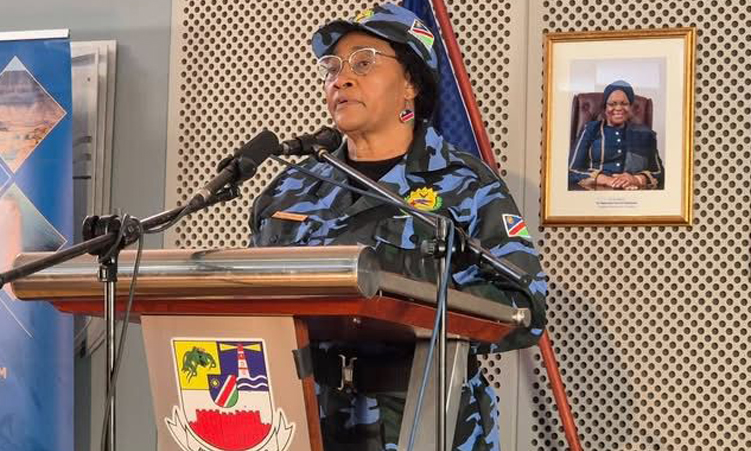
The Erongo region’s roads death rate has increased by 32% by the middle of this year, despite billions being pumped into infrastructure investment.
Erongo governor Nathalia /Goagoses, during her state of the region address at Swakopmund yesterday, said these figures were recorded during the 2025/26 financial year and show that road safety remains a serious concern.
“Regrettably, the Erongo region has seen a 32% increase in road fatalities by mid-2026, compared to the same period in 2025,” she said.
She said most deaths were recorded along the main transport corridor linking Swakopmund, Walvis Bay, Arandis, Usakos and Karibib, where traffic has increased due to mining, tourism and freight movement.
The governor said the increase comes despite major ongoing infrastructure projects, including the N$1-billion Swakopmund-Henties Bay-Uis main road, which is 86% complete and expected to be completed in February 2027.
/Goagoses highlighted the N$450-million Swakopmund-Walvis Bay dual carriageway phase 2B, which started in September 2025 and is 22% complete, as well as the N$538-million Karibib-Usakos road upgrade, which is nearing completion.
Despite these investments, the governor said reckless driving and truck-related crashes remain a concern.
“These accidents are caused by trucks, especially those travelling at night. Law enforcement agencies need to take corrective measures to compel trucks to obey traffic rules,” she said.
/Goagoses referred to several fatal crashes recorded on the coastal corridor during the period under review.
Among them was a head-on collision near the Swakop Uranium mine turn-off on the Arandis-Swakopmund road, where eight people died after a minibus taxi collided with a truck. All passengers in the taxi died at the scene.
In another incident, a young driver from Arandis died instantly after crashing into a truck near Swakopmund.
The governor said such incidents show the need for stronger enforcement and behavioural change among road users.
She also said the Regional Road Safety Forum has been revived to coordinate interventions between the government, police and transport stakeholders.
Beyond road safety, /Goagoses said the region continues to face wider development challenges, pointing to Otjimbingwe as a key concern despite ongoing projects such as the N$32-million Ozondati-Omatjete pipeline and upgrades at Uis.
“Water supply remains unreliable in some rural areas due to ageing and vandalised infrastructure,” she said.
She warned that rapid urbanisation is putting pressure on housing and services, especially in informal settlements.
On education, the governor expressed concern over a low 33.7% pass rate, saying the region needs urgent recovery measures despite ongoing investment in two new schools worth N$50 million in Swakopmund’s DRC area.
The governor also pointed to youth unemployment, which remains around 30%, even though youth programmes and funding initiatives have created some opportunities.
Despite these challenges, /Goagoses said the region continues to grow economically through mining, infrastructure development and tourism expansion, with uranium production alone contributing more than N$12 billion to the economy.
She said the region must now focus on improving safety, service delivery and education outcomes alongside economic growth.
The post Erongo roads get billions, but deaths keep rising appeared first on The Namibian.