Fragile diplomacy, dual blockades again push U.S. war against Iran further to the edge as military strikes continue
The tenuous month-old standoff between the United States and the Islamic Republic of Iran have escalated into a volatile naval confrontation over the Strait of Hormuz, the narrow chokepoint where a significant share of the world’s energy supply flows. Despite the standoff, missiles were shot in the waters off the coast of Iran with accusations […] The post Fragile diplomacy, dual blockades again push U.S. war against Iran further to the edge as military strikes continue appeared first on Final Call News.
 Black News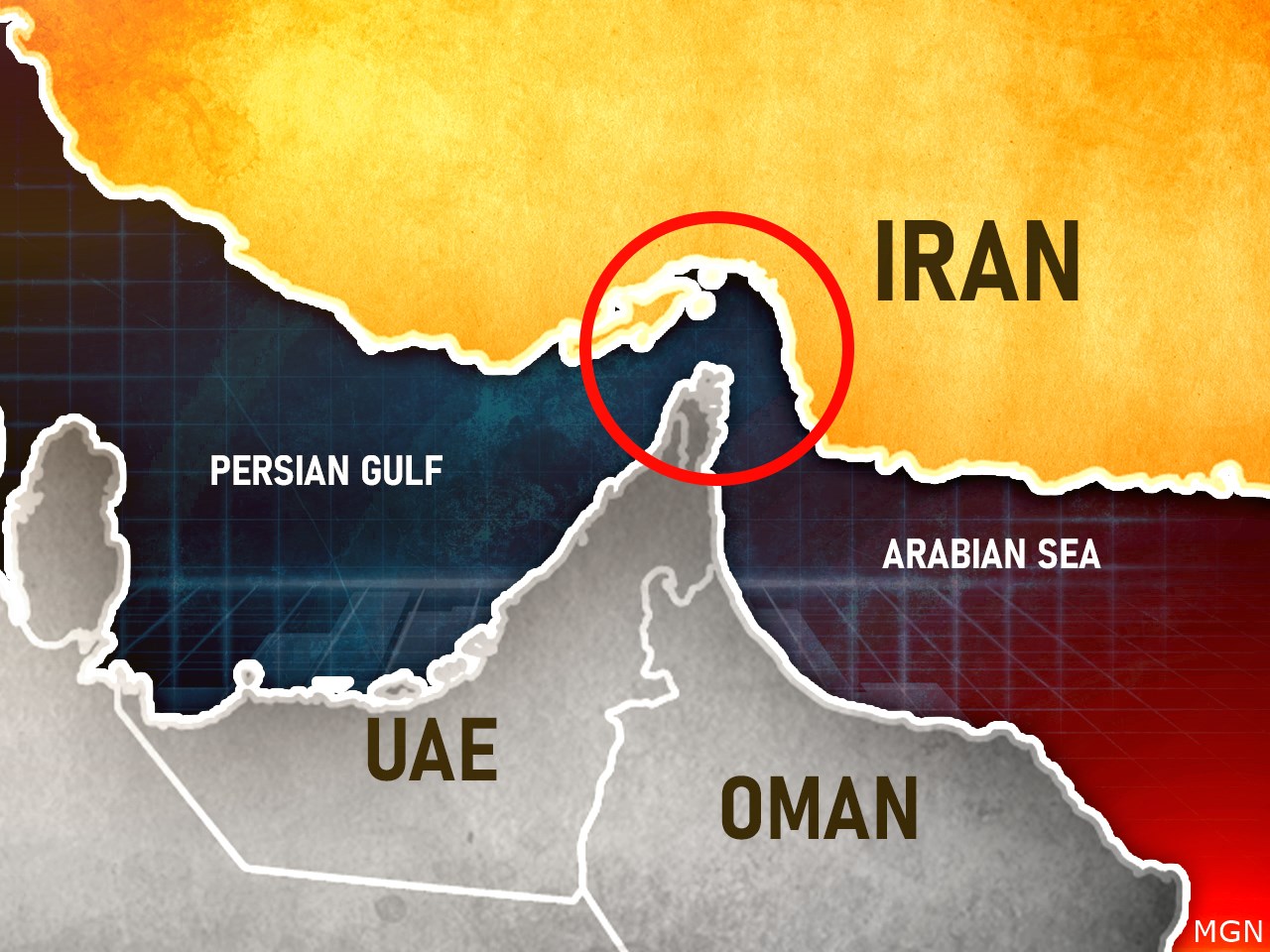
The tenuous month-old standoff between the United States and the Islamic Republic of Iran have escalated into a volatile naval confrontation over the Strait of Hormuz, the narrow chokepoint where a significant share of the world’s energy supply flows.
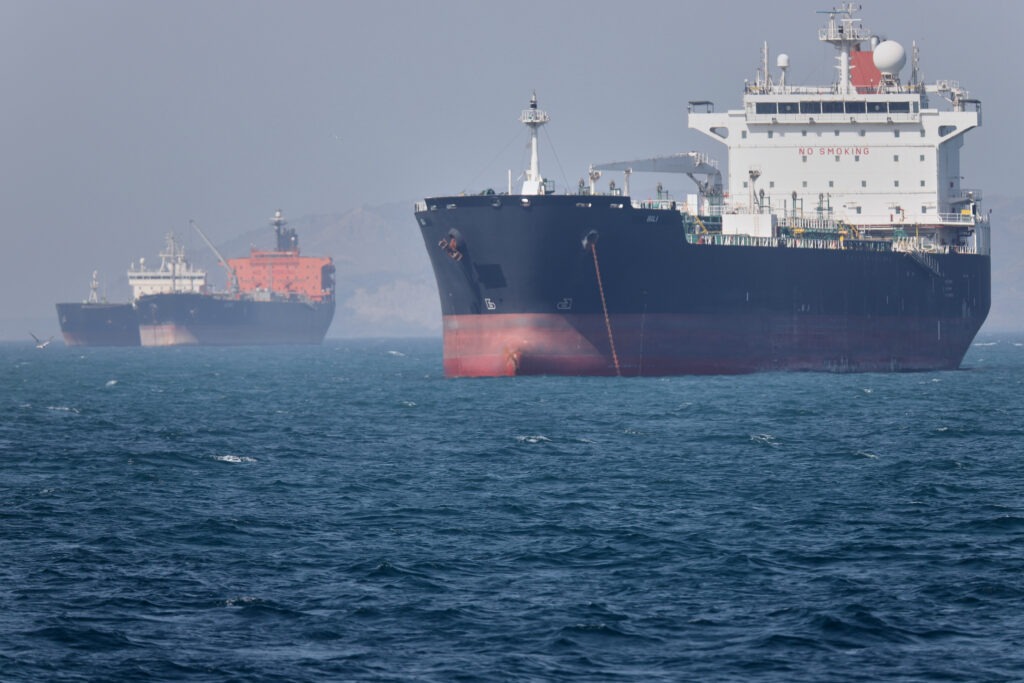
Despite the standoff, missiles were shot in the waters off the coast of Iran with accusations of ceasefire violations. A senior Iranian military official told Islamic Republic of Iran Broadcasting on May 7 that Iranian forces retaliated against an unprovoked U.S. attack on an Iranian oil tanker in the Gulf of Oman by targeting American units near the Strait of Hormuz.
“In a statement, Ebrahim Zolfaghari noted that the ‘aggressive, terrorist, and outlaw’ U.S. military, in violation of a ceasefire, targeted an Iranian oil tanker,” reported Press.TV.ir. Ebrahim Zolfaghari is spokesperson for the Khatam al-Anbiya Central Headquarters.
Another vessel near the Emirati port of Fujairah was attacked by U.S. forces, and with support from some regional countries, there were airstrikes on civilian areas along the Iranian coast, including Bandar Khamir, Sirik, and Qeshm Island.
Iranian officials said the country’s armed forces responded by striking U.S. naval vessels near the Strait of Hormuz and the port of Chabahar, claiming significant damage was inflicted.
Notwithstanding the May 5 attack on the tanker and renewed firepower exchanges in the Strait of Hormuz, U.S. officials, including President Donald Trump, continued to insist that diplomacy remained on track and that prospects for a second round of direct talks with Iran had not collapsed.
However, blame-shifting, U.S. officials claimed the attack on the tanker was retaliation for Iran allegedly firing 15 ballistic cruise missiles toward the United Arab Emirates on May 4, which Iran refutes.
The missile flew while America says it is pursuing peace; however, critics point out that this is the third time America has attacked Iran while negotiations were in motion. America had not been a trusted actor in its dealings with Iran. For years, America has been reproached for its errant foreign policy, warmongering, and mischief-making.
As Divine Warners, the Most Honorable Elijah Muhammad, the Eternal Leader of the Nation of Islam, and His National Representative, the Honorable Minister Louis Farrakhan, have cautioned America against exceeding the limits of justice.
“America, in trying to hold her place as the greatest power among the nations of earth, is one of the most troubled countries on earth today,” wrote the Most Honorable Elijah Muhammad on page 115 of His pivotal and profound book, “The Fall of America.”
“America brought all of her troubles upon herself. She alone is to be charged with being the cause of the troubled world and people today,” he continued.
“America loves meddling into other people’s affairs. She just cannot stay out of other people’s business, whether they be a two-cents worth soap-box teacher or presidents and kings of countries,” explained the Most Honorable Elijah Muhammad.
“America goes abroad and makes war against other people. Then she charges them with making war against her when she is the one who is guilty of the war-making. The Bible says Allah (God) will destroy those who delight themselves in making war,” warned the Most Honorable Elijah Muhammad.
Minister Farrakhan, like his teacher, has warned America to change its posture and respect the self-determination of other nations. “While the Iranians have problems to solve, as do every nation and people on earth, they are a proud and independent people,” said Minister Farrakhan, in a Nov. 7, 2018, statement from Iran.
“They do not wish to be under the thumb of America again. As I said several times in Tehran, the U.S. sanctions are a mistake. And, while dialogue should be a good thing, the U.S. has a history of lying and breaking her commitments,”
Minister Farrakhan explained. “To survive, America must turn away from yesterday’s policies, go forward in a new spirit and seek a new direction,” he continued.
The current crisis was exacerbated by a joint U.S. and Israeli attack on Iran in February. Minister Farrakhan said that America is a troubled nation suffering internal decay marked by political division, moral and spiritual decline, social fracture, fiscal instability, a culture of violence and a leadership blind to the weight of the times.
“Despite U.S. efforts to foment disunity and rebellion inside of Iran, the Iranian people may not be as gullible as America believes. Iranians have the right to resolve their own problems without outside interference,” Minister Farrakhan reasoned. Just a few short years later, his warnings and guidance are just as applicable today.
On May 4, U.S. officials began announcing that America’s war in Iran was over and a so-called “Project of Freedom” began, aiming to militarily force a full opening of the Strait of Hormuz. Notwithstanding, Washington abruptly backed off the plan less than 48 hours later, saying a peace deal was imminent from talks underway in Pakistan.
But Iran countered that an agreement was not in play and said that America failed in both its war aims and attempt to take control of the vital waterway.
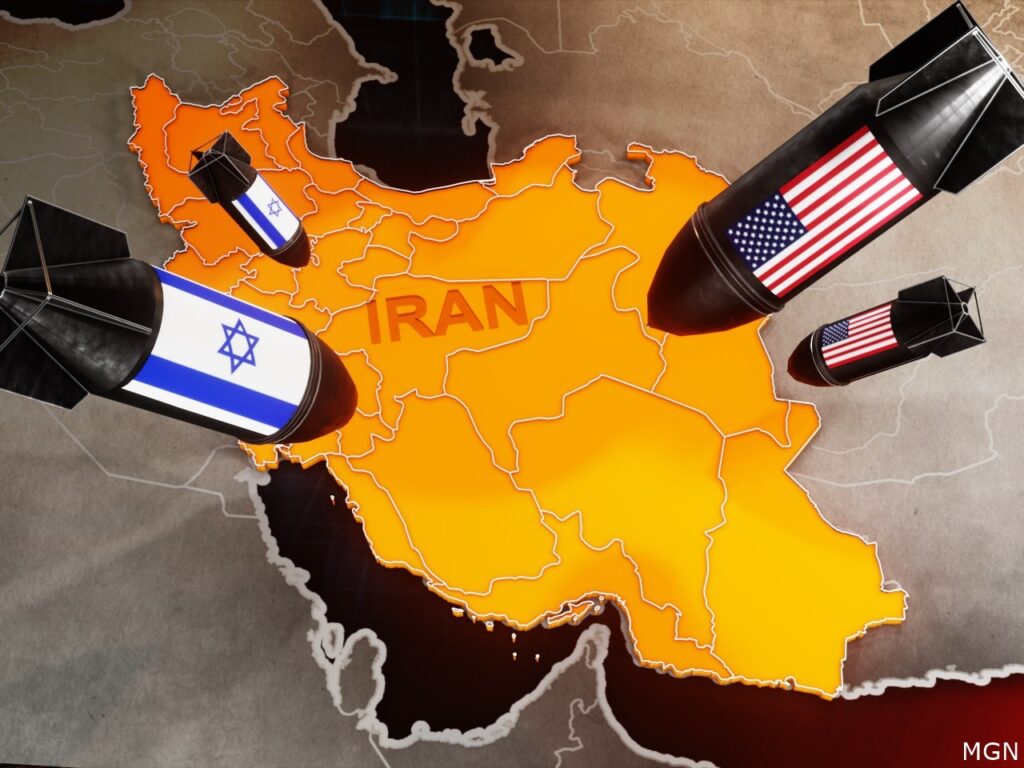
Dueling blockades on the waterway are still impeding commercial transit, driving up global energy prices, and raising the risk of wider regional conflict. The months-old war has reverted to high-stakes posturing and indirect talks.
On the table is a U.S. proposal reportedly aimed at ending the conflict and reopening the Strait of Hormuz, alongside a 14-point counterproposal from Tehran. Several proposals and counterproposals have been submitted by both sides over the course of the war.
As of Final Call presstime, according to several media outlets, the full text of Iran’s proposal had not yet been released, but a few key components, some of which have been previously presented, according to Al Jazeera, included:
- Ending the war instead of extending the truce and all issues resolved within 30 days.
- Guarantees against future attacks
- A withdrawal of U.S. forces from around Iran.
- The release of frozen Iranian assets worth billions of dollars and the lifting of sanctions.
- War reparations
- Ending all hostilities, including in Lebanon, and a new mechanism for the Strait of Hormuz.
“We expect an agreement sooner rather than later,” Pakistani Foreign Ministry spokesperson Tahir Andrabi said on May 7. “We hope the parties will reach a peaceful and sustainable solution that will contribute not only to peace in our region but to international peace as well,” according to Associated Press.
At Final Call presstime, commenting on the indirect talks, Esmaeil Baghaei, Iran’s Foreign Ministry spokesman, said Iran is reviewing messages received via the Pakistani mediators; however, it has not yet reached a conclusion, and no response has been given to the American side yet, according to Iranian Press TV.
His comments came on the heels of the United States, alongside Bahrain and the Gulf Arab states of Saudi Arabia, the United Arab Emirates, Kuwait, and Qatar, advancing a draft resolution at the United Nations Security Council intended to block Iran from restricting commercial ship passage through the Strait of Hormuz.
The draft follows other failed attempts, including a U.S.-backed Bahraini resolution that Russia and China vetoed in April.
“The only viable solution in the Strait of Hormuz is clear: a permanent end to the war, the lifting of the maritime blockade, and the restoration of normal passage,” said Amir Saeid Iravani, Iran’s Ambassador to the UN, in May 8 remarks to the press.
“Instead, the U.S. is pushing a flawed, politically motivated UN Security Council draft resolution under the pretext of ‘freedom of navigation’ to advance its political agenda and legitimize unlawful actions—not to resolve the crisis,” said Mr. Iravani.
He contends that if adopted, the resolution would seriously damage the “credibility” and “impartiality” of the Security Council and “politicize” the Council’s enforcement powers.
The resolution would establish a dangerous precedent for legitimizing unilateral coercion and unlawful actions by the United States against the sovereignty and sovereign rights of coastal States.
“The unlawful war of aggression by the United States and the Israeli regime remains the sole and direct cause of the current situation in and around the Persian Gulf,” Mr. Iravani stated.
With America’s domestic economic and political damage spawned from the crisis, Iran argues the U.S. Government has sacrificed the interests of its own nation to the hegemonic ambitions of the Israeli regime in the region and to the illusory aspiration of establishing a “Greater Israel” through the expansion of occupation.
The consequences for the global economic crisis arising from this aggression rest entirely upon the initiators of the war, Iran has argued.
An analysis published on May 5 by Press TV said Washington’s announcement that the war was over and abrupt ending of the so-called “Project of Freedom” was not a “signal of strength” but an “admission that the blockade had failed,” and revealed that the United States overestimated its own strategic endurance and underestimated Iran’s.
“Washington has now been forced to recognize that prolonging the blockade inflicts greater damage on the U.S.—politically, economically, and temporally—than on Iran,” said the analysis.
For Trita Parsi, analyst and co-founder of the Quincy Institute for Responsible Statecraft, by the U.S. entering a war with Iran instigated by Israel, the picture may be far worse.
“To say that Trump underestimated Iran is an understatement. The Israelis sold him—and he ended up believing—a narrative that portrayed Iran as so weak that the war would be won within 4 days,” said Mr. Parsi on his X page. Now, “60 plus days later, Trump is still stuck in the mess Israel sold him,” he added.
The post Fragile diplomacy, dual blockades again push U.S. war against Iran further to the edge as military strikes continue appeared first on Final Call News.