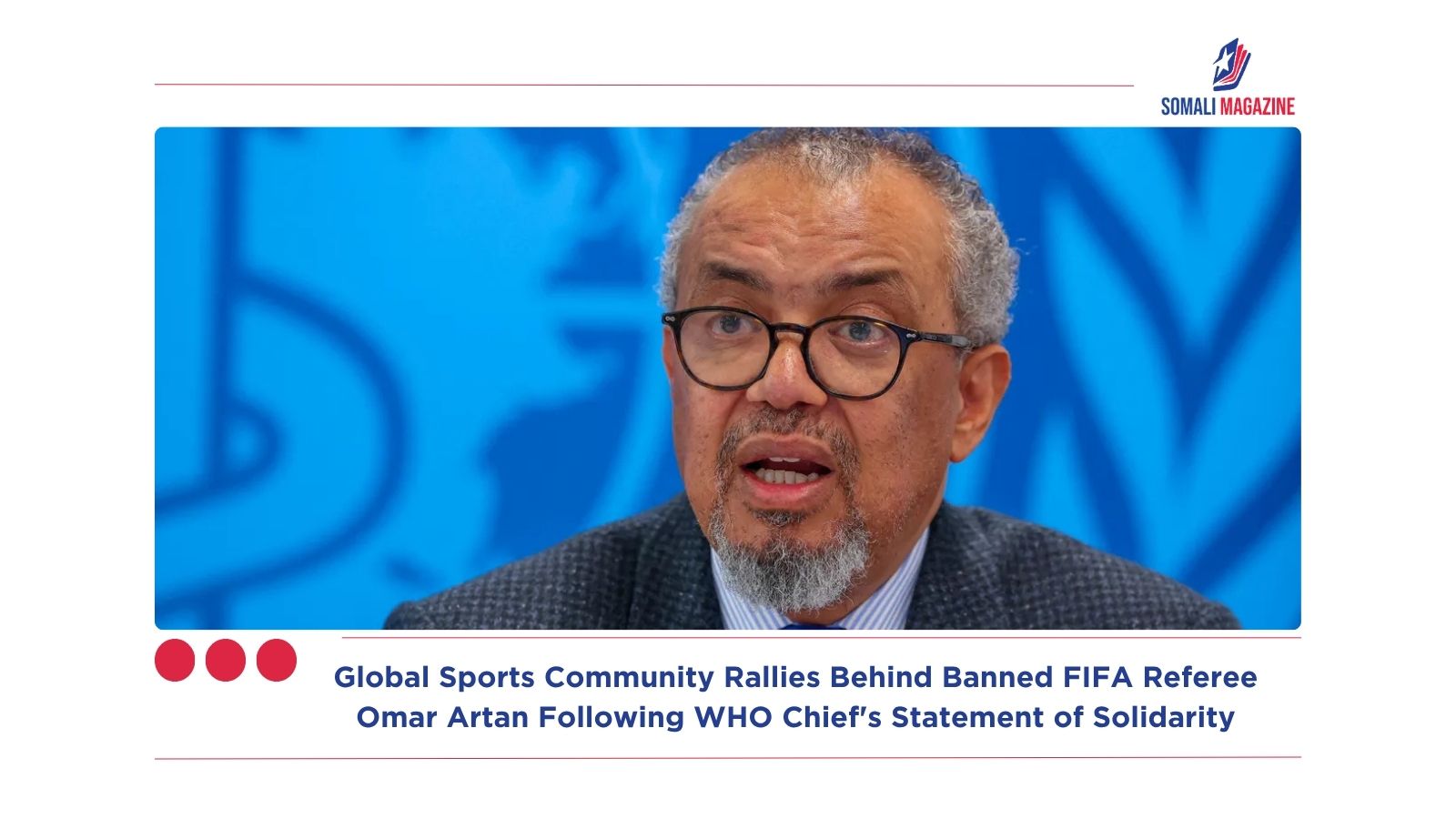
The ongoing international immigration dispute surrounding elite FIFA Referee Omar Artan has drawn substantial high-level diplomatic commentary, extending far beyond the immediate sphere of competitive athletics. World Health Organization Director-General Tedros Adhanom Ghebreyesus issued a prominent statement of public solidarity on Tuesday, openly backing the 34-year-old official after he was barred from entering the United States ahead of his scheduled World Cup officiating debut. Tedros’s formal remarks have amplified calls for structural inclusivity across the global sports community, transforming an isolated border restriction into a broader conversation regarding international athletic travel bans and equity in global sports governance.
The public intervention from a major United Nations figure emphasizes the historic weight of Artan’s career trajectory. Before his travel plans were halted by immigration enforcement at Miami International Airport, the highly decorated professional had secured a coveted position on FIFA’s final multi-national selection list. In his public address, Tedros highlighted that FIFA referee Omar Artan did not merely qualify for the tournament, but successfully made history as the first Somali national to reach the summit of international officiating. The global health chief noted that being physically kept off the playing pitch does not diminish the verified reality of his professional selection, adding that his path has effectively inspired an entire generation of aspiring youth across East Africa.
The high-profile administrative barrier stems from a rigorous border enforcement policy re-established by the host nation’s current executive leadership. United States Customs and Border Protection officials confirmed that Artan was deemed inadmissible following standard secondary screening procedures, citing specific national security and vetting concerns. Because tournament operational guidelines mandate that all selected referees live and train together at a centralized facility in Florida, the border block effectively forced soccer’s global governing body to remove Artan from the tournament entirely. In response to mounting public scrutiny, a FIFA representative stated that while the organization regrets the development, it possesses no legal authority to intervene in sovereign border control policies or municipal visa adjudications.
Despite the abrupt end to his immediate tournament goals, Artan has maintained a highly composed and conciliatory stance. Upon arriving back in Mogadishu to an overwhelming crowd of state officials and fans, the 2025 African male referee of the year described the sequence of events as an unfortunate twist of fate, while expressing deep gratitude for the organizational support extended by both FIFA and the Confederation of African Football. Sports analysts suggest that the high-profile expressions of support from figures like Tedros, alongside global political advocates, ensure that Artan’s case will remain a focal point for future discussions on talent mobility. Moving forward, the sports community continues to treat his elite football officiating milestones as a permanent breakthrough for regional representation on the world stage.

 Black News