How Ariel Pedatzur turned a lost summer into Some Kitschy Garbage
After four years hidden away, Ariel Pedatzur and Zizi Trippo’s hazy bedroom-indie EP is finally seeing the light of day, taking us back to a summer that almost disappeared. The post How Ariel Pedatzur turned a lost summer into Some Kitschy Garbage appeared first on BRICKS Magazine.
 Black News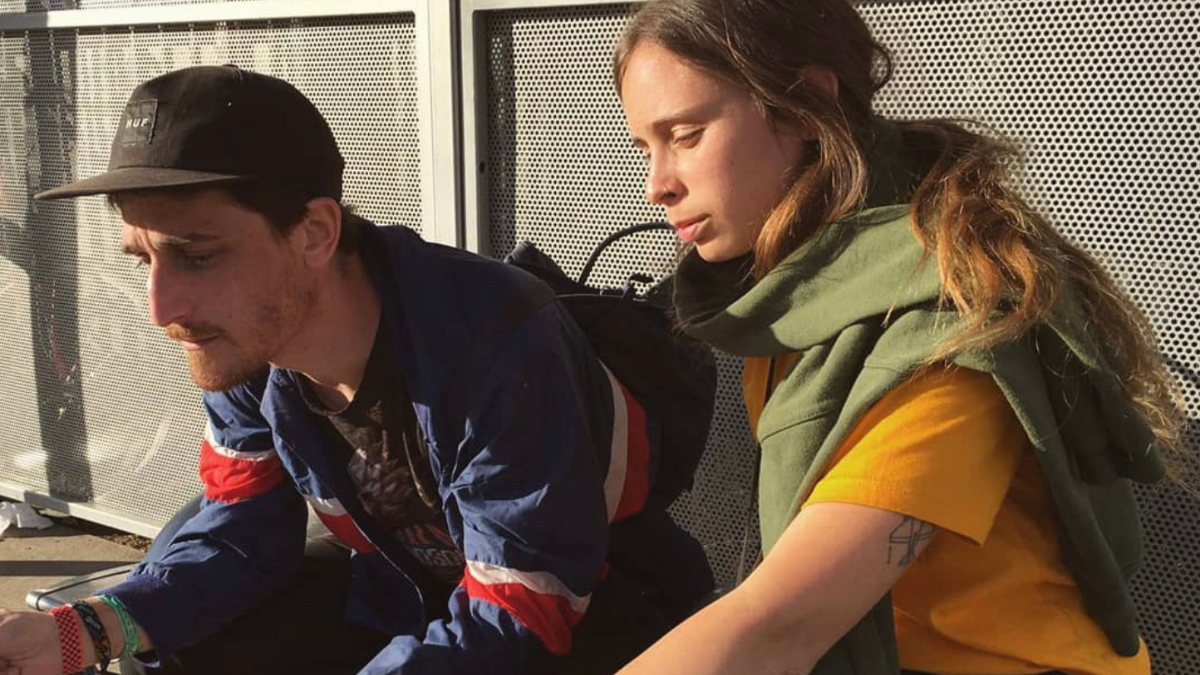
Ariel Pedatzur has been making music with Eden Atad, her former Bones Garage bandmate and longtime collaborator, for more than a decade. After forming the band in 2013 and fronting it until 2021, the pair spent years touring internationally and developing a shared sonic language. When Atad approached Ariel in 2022 with a collection of demos from his side project, Zizi Trippo, they were already years into making music together and growing up alongside each other.
The recordings were made quickly, with Ariel coming into the studio to sing and help rewrite some of Atad’s existing material. For four years, though, the recordings stayed private. He wasn’t ready to release material that had been written during such a personal period, and eventually the original stems were lost in a hard-drive failure. Earlier this year, however, he changed his mind. The songs had become part of the past rather than something he was still living through, and he finally felt ready to let them exist outside of their shared memory of the summer they spent making the record.
Across its six tracks, Some Kitschy Garbage moves through a hazy, melancholic bedroom-indie sound: ‘All My Mind’ and ‘Civil War’ sit in its dreamier territory, while ‘Inhalation’ picks up the pace with a gorgeous chorus threaded with twinkling piano and swooning strings. ‘Italy Feiner’ briefly shifts the mood altogether with an instrumental burst of electronic, euro-summer energy, before ‘The Old Trick’ and closer ‘Slow Mo’ settle back into the EP’s tranquil, meditative world, but now carrying some of the same electronic textures.
Some Kitschy Garbage is a project that feels caught between memory and the present, its rough edges and dreamy textures preserving a fleeting summer fever-dream that might otherwise have disappeared with the lost recordings. For Pedatzur, listening back is a strange kind of time travel, taking her to the person she was in 2022 while revealing how much, and how little, can change in four years.
Below, Pedatzur tells BRICKS how a Toy Story-style cloud mural, a lost hard drive, and someone else’s heartbreak inspired her latest EP.

Writing someone else’s heartbreak
At the centre of Some Kitschy Garbage is an unusual songwriting arrangement. The songs began with Atad’s experience of a breakup after a seven-year relationship, but he asked Pedatzur to become their voice. She helped rewrite some of the material, while bringing her own history into songs that were never originally written about her.
For Pedatzur, the process meant inhabiting somebody else’s emotional world without being able to completely separate it from her own. That distance also gave her a different way into feelings she had experienced herself, particularly as a teenager. “It was really interesting for me as an artist to sing these songs that are of somebody else’s really sad and deep experience,” she says.
Four years later, that emotional distance has shifted again. Atad told her that he was finally ready to release the recordings because enough time had passed for the project to feel like history rather than something he was still living through. “He just told me, ‘You know what, Ariel, it is the time’,” she recalls. “’Now, I’m so over it. It was such a huge part of my life, the history, but I’m so in the present now, and I’m just living my life’.”
A title that protects the vulnerable bits
The name Some Kitschy Garbage works as a kind of protective layer. There’s humour in calling something “kitschy garbage” before anyone else gets the chance to decide what it is, but beneath the joke is a record that Ariel felt needed a little distance around it.
“It’s a name that protects the vulnerability of the project,” she explains. “When you title something Some Kitschy Garbage, you’re kind of admitting, yeah, it’s the kitschiest thing you’ve ever heard before, but that’s what I felt when I wrote it.”
That self-deprecation also reflects the way Ariel approached the project as a whole. She was able to bring her own experiences into the writing without needing to treat every feeling with complete seriousness, letting the songs exist somewhere between the deeply personal and the slightly ridiculous melodrama of teenage angst, particularly when looking back from a more secure stage of her 30s. “Throughout the process, I was really able to tap into my own memories and bring them into the writing process,” she says. “I was more tuned in to write from Eden’s perspective, but of course I couldn’t control it, and I was bringing to the table some of my own personal experiences as well.”
When you title something Some Kitschy Garbage, you’re kind of admitting, yeah, it’s the kitschiest thing you’ve ever heard before, but that’s what I felt when I wrote it.
Ariel Pedatzur
Endless summers and old memories
There’s a particular kind of nostalgia running through Some Kitschy Garbage: not the distant nostalgia of looking back at childhood, but the more immediate feeling of being transported to a version of yourself who existed only a few years ago, yet feels like an entire lifetime ago. Pedatzur describes listening back as being pulled into 2022, when she was living in Vienna, and life looked completely different.
Close your eyes and the record takes her somewhere specific. “It brings me back to endless summers,” she says. “It’s golden hour in July, and you’re watching the sun setting, and you’re feeling a slight breeze, and you’re in light clothes from your summer wardrobe.”
It’s a feeling of freedom that becomes harder to access as life inevitably gets more complex in adulthood, which perhaps explains why returning to these songs feels so comforting. “It just gives me this really freeing feeling,” Ariel explains. “As you grow older, you realise life is complicated.”
A tiny bedroom studio, a lost hard drive and a sky-painted ceiling
The songs were made in a much smaller space than the pair had become accustomed to during their Bones Garage years. Atad’s parents had previously had a large studio in their house, but by the time Some Kitschy Garbage came together, they had moved, leaving him with a compact box room to work from.
Pedatzur and Atad wrote for a few days, bouncing ideas back and forth, before recording the entire project in a single day. “I remember us meeting there when it was summer again and super hot, and we were sitting in this tiny room,” she recalls. “He would show me all the lyrics he already had, and we were bouncing around ideas.”
The record’s roughness was later made even more literal when Atad lost the original stems to a hard-drive issue. Unable to remix every individual channel, he was left working from the demos themselves, preserving some of the imperfections that might otherwise have been polished away. “It feels even more raw sonically than we’d initially intended,” Ariel admits. “But maybe that fits with this experience we were trying to capture.”
There’s another bedroom hidden inside the record, too. Her favourite lyric comes from the track ‘Civil War’. “There is no meaning if you don’t believe in / Watch me flying higher and higher, crossing the ceiling through the night.” Atad’s old bedroom had a light-blue ceiling painted with Toy Story-style clouds, so that lying in bed meant looking up at something that resembled the sky. Pedatzur suspects that image found its way into the lyric, even though they never discussed it directly. “The lyrics, they punch me, but in the best way possible,” she smiles.
Slowdive, Beach Fossils and the dream-pop era
The record’s hazy quality comes from a musical vocabulary Pedatzur and Atad had already been building together for years. Slowdive was a longtime favourite, alongside Beach Fossils, Canadian trio Timber Timbre, and the wave of dreamy indie and shoegaze bands they were listening to around the time the songs were made.
“Slowdive was a huge inspiration sonically and musically,” Ariel says. Wild Nothing was part of the same listening world, while Timber Timbre had an influence on Atad’s production, particularly through the band’s drummer. Together, those references place Some Kitschy Garbage in a particular musical lineage: dreamy without becoming weightless, and melancholy without losing its warmth. It’s the sound of music that feels slightly sun-faded at the edges, as though it has been sitting in the same summer for the last four years.
Enjoyed this story? Help keep independent queer-led publishing alive and unlock the BRICKS Learner Platform, our alternative education platform for emerging and aspiring creatives, hosted via Substack.
The post How Ariel Pedatzur turned a lost summer into Some Kitschy Garbage appeared first on BRICKS Magazine.