How Republicans Are Using The WNBA, Caitlin Clark, And Sophie Cunningham To Dismantle Title IX [Op-Ed]
OPINION: The most visible women’s sports league, built by Black women, is now a staging ground for unwinding the law behind its existence.
 Black News
 ![How Republicans Are Using The WNBA, Caitlin Clark, And Sophie Cunningham To Dismantle Title IX [Op-Ed]](https://newsone.com/wp-content/uploads/sites/22/2026/08/17867305955508.jpg?quality=80&strip=all&w=1024&crop=0,0,100,683px#)

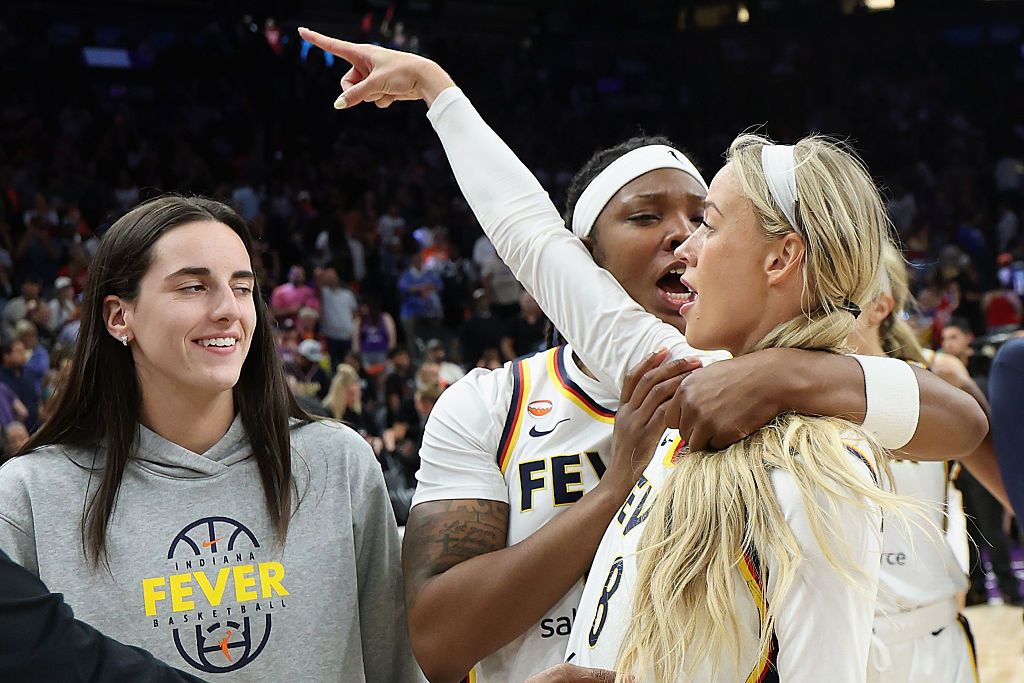
Right-wing lawmakers losing their collective minds over a phantom influx of trans athletes into the WNBA was not on my bingo card for a league that had not had a single reported trans woman expressing a desire to be added to its roster in its 30-year history.
The W is a league that has been defined largely through its advocacy of inclusivity and driven by rosters filled with Black and queer players. Yet, here we are, watching as the WNBA along with its players and coaches, have been thrust into the middle of what can best be described as conservative political theater.
The Indiana Fever has become ground zero for this intrusion, with partisan strategists zeroing in on its most watched team and two of its players, Sophie Cunningham and Caitlin Clark, as they are being wielded as political proxies.
The conservative effort aims to dismantle Title IX, the 1972 legislation that barred sex discrimination in any school program receiving federal funding, and built the pipeline of scholarships and athletic programs that still heavily feeds the WNBA’s pipeline today.
This spring the Supreme Court ruled that states can ban trans athletes from school sports without being in violation of Title IX. After that ruling, the Heritage Foundation published a report calling for Title IX itself to be rewritten, arguing that “equality under Title IX does not require identical outcomes or the erasure of sex differences.” The trans athlete ban, it turns out, is the opening move to pave the way to dismantle funding equity that Title IX guarantees.
The conservative movement is using Indiana Fever Guard Sophie Cunningham to center this anti-trans distraction. Last month Cunningham handed conservative groups a valuable political tool during an ESPN interview where she espoused anti-trans rhetoric.
By using a major national media outlet to broadcast standard talking points about protecting locker rooms from trans athletes, Cunningham provided validation for a non-existent roster crisis. Right wing networks capitalized on this friction and leveraged the league’s, new, more robust audience, establishing an even stronger foothold by tapping into Caitlin Clark’s rabid and conservative fanbase to fuel broader state and federal legislative efforts aimed at stripping trans rights and redefining gender equity.
The WNBA manufactured and has marketed Clark as its great white hope from her rookie year, and when her performance has fallen short, they’ve gone to great lengths to protect their investment. Highlight reels have been edited to hide her lapses and shortcomings while marketing campaigns keep her in nearly every ad break during games regardless of how poorly she plays.
It’s increasingly difficult not to connect the dots between the right’s ongoing fixation and protection of Clark and the Fever as the centerpieces of its white grievance politics. Clark is now being propped up as their great white hope in the fight against trans rights and Title IX.
Republican lawmakers wrote a letter to Commissioner Cathy Engelbert this summer, framing what they perceived as hard fouls against Clark as evidence of a hostile work environment and warning of a possible DOJ investigation.
The league bent immediately. A technical foul that should have triggered an automatic suspension earlier this month was rescinded within hours after the league said it disagreed with the referee’s call, clearing Clark to play in a high profile nationally televised game.
If the league is willing to override its own referees, it’s worth asking how much that decision and instinct is shaping whistles in Fever games. Referees have grown hesitant to call Fever games the way they used to, and now call fewer fouls on Clark while calling more on the players defending her.
The uneven whistle has started to show up in the box score. When Clark set the Fever franchise scoring record with 45 points against Seattle, she got there by going 17 of 19 from the free throw line.
In the 10 games after the letter from Republican lawmakers, Clark was called for more than 20% fewer personal fouls while her free throw attempts climbed around 15%, a swing large enough to change outcomes.
Her minutes dropped slightly as coaches began benching her on defensive possessions during close games, even as her steals nearly tripled, defensive numbers that would seem to argue for keeping her in and on defense when the game is on the line.
Despite those advantages, her shooting from the field hasn’t improved. Her game isn’t getting better. She’s in a better position to score, a subsidy paid for with a federal threat, and it’s unfair to every team and players competing against her who are earning their buckets cleanly.
The Fever front office and coaching staff have mostly avoided giving a stance on trans athletes.
While Minnesota’s Cheryl Reeve has spoken repeatedly in support of trans inclusion in the league, Caitlin Clark says it is up to governing bodies while Fever head coach Stephanie White, when asked directly whether she’d welcome a trans woman on a WNBA roster, said she didn’t feel educated enough on the science to answer. A coach with a national platform and the league’s most watched roster doesn’t need a science degree to stand for trans rights and inclusion.
Conservative think tanks like the Heritage Foundation have turned the WNBA into the highest-profile stage available for this fight, using its visibility to build momentum for gutting Title IX’s funding mandates nationwide.
The WNBA’s response so far has been reactionary rather than taking a firm stance and getting out in front of the controversy. The league’s embattled commissioner Cathy Engelbert called the question of trans inclusion “complex and nuanced.” Both Engelbert and NBA commissioner Adam Silver seem content to kick the can down the road, fully aware the consequences may not land until well after their tenures end, the same short-term thinking that defines most executive leadership.
On August 12, the WNBA’s anti-hate task force met to discuss trans athletes and the harassment players face online, and issued a statement promising more meetings and alluding to no pressing need for rule changes regarding eligibility.
What happens next likely rests on how much longer the league, Clark, and the Indiana Fever refuse to take a stand. If Indiana wins the title this season, expect the officiating pattern already in motion to become the invisible sixth player in the playoffs, and expect the outcome to read to the conservative base as proof their strategy worked.
If Clark and the Fever don’t end this season with a championship ring, the white grievance politics around her will persist since the funding fight underneath it depends on that grievance to keep Clark’s conservative fanbase engaged and mobilized.
There’s an irony sitting right underneath all of it, too. The same conservative base that has made its case on Clark’s stardom have also argued that women are best suited for lower intensity activity rather than elite competitive sports like women’s basketball, recommending that schools count things like yoga, dance, and hiking toward Title IX compliance.
Somebody should tell the Heritage Foundation that Clark’s own performance on the hardwood is making the case for them, and for free! A WNBA guard who needs a rescinded suspension and a softened whistle and still struggles to keep pace with the physical demands of the WNBA is a dream case study the Heritage Foundation should immediately seize.
The new woman they keep sketching out in their reports, who prefers lower stakes athleticism and softer competition, is Caitlin Clark. She’s out there modeling the role for free, right under their nose, and they’re too fixated on white grievance to even notice.
The NFL has committed to launching a women’s professional flag football, aiming to be up and running around the time flag football debuts at the 2028 Olympics. It will be studying how the WNBA handles political interference and player protection, and it is likely to copy whatever version works.
Clark has agency in this battle that she hasn’t used. Every time she chooses neutrality and silence she lends herself to a conservative base that is unabashedly homophobic, anti-trans, and anti-black that is aiming to tear down the league that manufactured her.
Clark wants to be remembered as the greatest to ever play basketball and the player who brought a whole new legion of fans to the WNBA, and that legacy comes with more than just being a good player. Her legacy is unfolding inside a league built on inclusivity and standing up for it isn’t a departure from who she’s supposed to be, inclusivity is why the league exists and it’s imperative for its future.
Whether this league has a future worth inheriting may come down to whether Caitlin Clark ever finds the nerve to say so.
SEE ALSO:
WNBA’s Uneven Whistle Continues To Put Black Women In Danger [Op-Ed]
Turns Out the WNBA Might Be in Good Hands After All [Op-Ed]