Kim pro quo: North Korea is emerging from international isolation by backing Russia’s war in Ukraine
In early September, Russia and North Korea opened a road bridge across the border river Tumen. Analysts note that the structure could become a key gateway for transporting North Korean troops and weapons for the war against Ukraine. Since 2023, military aid deliveries to Russia have become a key source of revenue for North Korea’s budget, fueling unprecedented economic growth. As Pyongyang has drawn closer to Moscow, China has also entered the competition for influence over North Korea — even though it backed sanctions against the country together with Russia back in 2017. Combined, these factors have strengthened Pyongyang’s position enough that it no longer needs to seek a thaw with the United States. At the same time, Donald Trump has shown readiness for talks, which, should they take place, could cement North Korea’s status as a nuclear power.
 Black News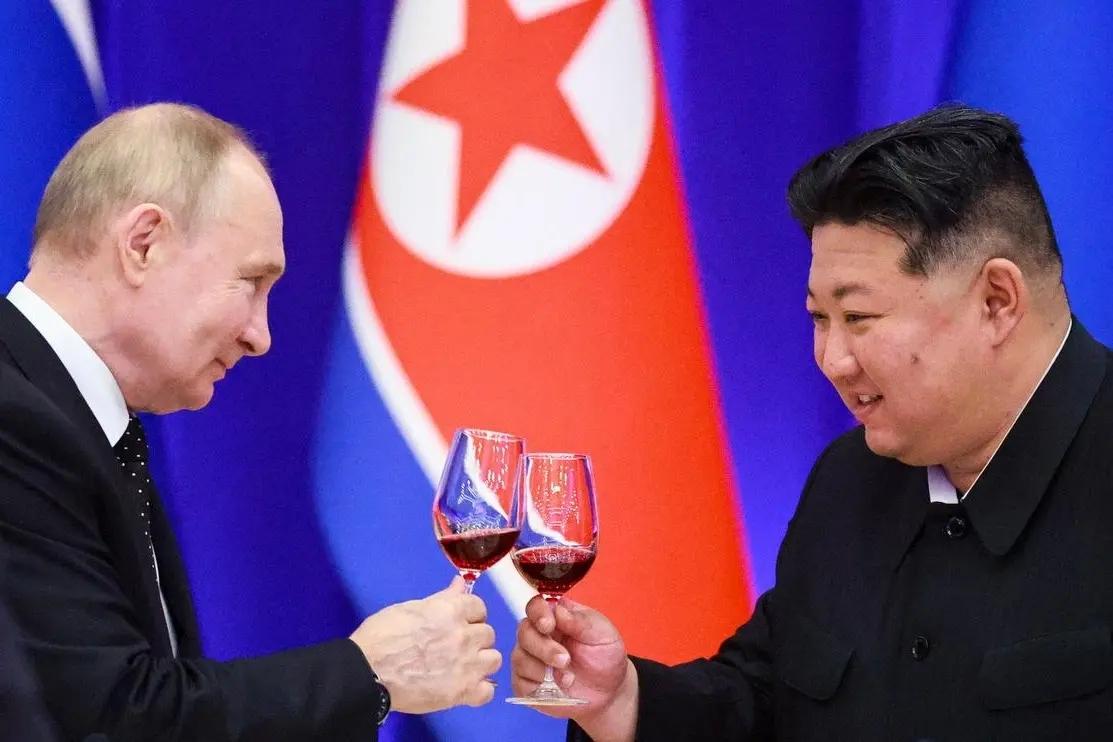
In July, the Bank of Korea estimated North Korea’s economic growth at more than 3% for a third straight year. The country has passed the peak recorded in 2017, shortly before the entry into force of what was then the UN most sweeping sanctions package ever.
Until recently, such a turnaround seemed unimaginable. North Korea emerged from the COVID-19 pandemic poorer and more isolated than ever: the country kept its borders closed for a long time, international sanctions continued to hamper trade, and disputes over its nuclear program further alienated it not only from the West but also from its traditional allies, China and Russia.
But the resumption of trade with China, large-scale state development programs, and military cooperation with Russia have reversed that trend, giving North Korea its most sustained economic growth in years.
For Moscow, Pyongyang is no longer a burden but a useful military partner, while Donald Trump’s return to the White House has once again made direct diplomatic contacts with Washington possible. North Korea is perhaps the most extreme case of rejecting the post-Cold War world order, and its rapid emergence from isolation suggests that order appears to be starting to crumble.
Unforeseen growth
North Korea’s economic recovery began with the country’s gradual opening. Pyongyang responded to the COVID-19 pandemic with near-total self-isolation, which collapsed its trade with China — from $2.8 billion in 2019 to $539 million in 2020 and just $318 million in 2021. In 2022, freight traffic gradually resumed, and by 2023 annual bilateral trade reached approximately $2.3 billion.
The restoration of ties with the outside world once again gave North Korea access to fuel, fertilizer, machinery, and consumer goods, while simultaneously opening up the Chinese market for North Korean exports. Meanwhile, as growth in agricultural output helped pull the economy out of the pandemic-induced slump, Pyongyang directed significant resources into construction and industry.
Domestic policy played an important role in this turnaround. North Korean leader Kim Jong Un made construction and regional development a state priority. In 2021, the authorities launched a program to build 50,000 new apartments in Pyongyang over five years. In 2024 an even more ambitious 20x10 Regional Development Policy followed, providing for the annual modernization of factories in 20 cities and counties over 10 years. The 20x10 program focuses primarily on the production of food, clothing, and everyday consumer goods.
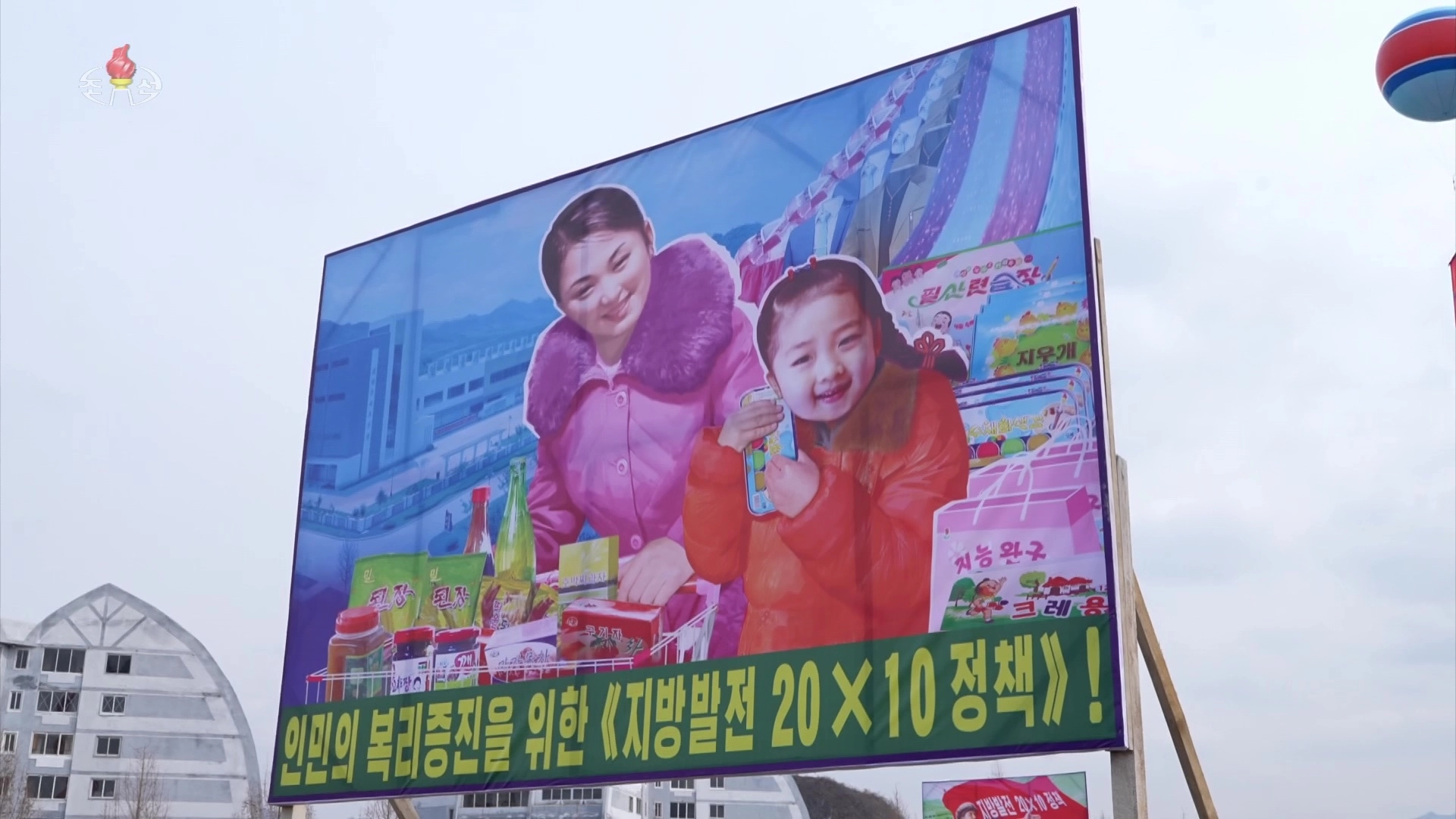
This approach is atypical for North Korea, whose economic development has historically been extremely uneven. The capital, Pyongyang, and strategic heavy-industry sectors received a disproportionately large share of state investment compared with the provinces, which were left to survive on outdated production and the informal economy.
The 20x10 policy is an attempt to narrow that gap by setting up production of basic consumer goods in the provinces, developing the food industry, modernizing agriculture, and improving housing conditions. Still, it remains unclear whether the new enterprises will be operational amid an acute shortage of electricity, equipment, and raw materials. Either way, the authorities’ pivot toward provincial development is already yielding tentative results.
Satellite imagery shows that construction began just weeks after the 20x10 policy was announced, and in its first year factories genuinely appeared in all participating localities. In 2025, the program expanded to include hospitals, leisure spaces, agricultural infrastructure, and other local projects. All planned facilities were opened within the year.
In February 2026, the authorities announced the successful completion of the housing construction program in Pyongyang. Most of the new housing is concentrated in the newly created Hwasong district, where farmland gave way to dense high-rise development.
Foreigners who have visited the capital in recent years have said that the city’s current appearance differs dramatically from its pre-pandemic image. The online sector of the economy has become more visible: mobile apps for ordering taxis, QR-code payments, grocery and medicine delivery services, and new shops and restaurants have all appeared. Wide streets have, for the first time, started approaching the limits of their capacity, as North Korea has seen an influx of imported cars, mostly from China, brought into the country despite UN sanctions.
While the expansion of foreign trade and the pivot toward regional development laid the groundwork for North Korea’s economic upturn, the resources largely came from military cooperation with Moscow. Since the summer of 2023, Pyongyang has become a major supplier of artillery shells and ballistic missiles for Russia.
The resources for North Korea’s economic upturn largely came from military cooperation with Moscow
According to South Korean intelligence, by August 2026 North Korea had delivered more than 15 million shells to Moscow. The Institute for National Security Strategy (INSS), affiliated with South Korean intelligence, estimates North Korea’s revenue from arms exports alone at more than $10 billion. For a country with an annual GDP of about $27 billion, that is an extraordinarily large sum.
The subsequent dispatch of about 15,000 troops to Russia brought in another hundreds of millions of dollars, though INSS confirms that only a small portion of these funds has reached North Korea’s budget. The rest may have been compensated through military technology, components, or materials, or may still remain an outstanding debt.
But the amount of revenue reaching the budget is not the most important part here. Far more significant is the fact that cooperation with Russia is blunting the impact of sanctions imposed on North Korea. The restrictions introduced after 2016 were effective largely because Moscow and Beijing were willing to take part in isolating Pyongyang, helping limit its access to fuel, equipment, foreign currency, labor, and export markets it depended on.
Now Russia plays almost the opposite role: it has become a major buyer of North Korean defense-industry output, the very thing the sanctions targeted, and a supplier of resources they were meant to restrict access to. That is why North Korea’s current economic growth is not simply a recovery from the pandemic-induced downturn, but reflects far deeper shifts in the country’s international standing.
Pyongyang’s place in the new world
North Korea never lacked powerful allies. When the country was nearly destroyed by the U.S.-led coalition during the Korean War, communist China entered the war largely out of fear that a state loyal to Washington would emerge on its border. Today, the alliance with North Korea remains China’s only mutual defense commitment.
The problem lay elsewhere: Pyongyang lacked powerful partners who actually needed its assistance. Since the end of the Cold War, North Korea had little to offer Russia and China in exchange for economic and diplomatic support: a scarce labor force, a domestic market too poor to consume costly imports, and a steady stream of international scandals tied to its nuclear program and regular foreign-policy provocations. Russia’s full-scale war against Ukraine proved to be the turning point. The very traits that once made North Korea a diplomatic liability for its partners have now become assets.
This shift is clearly visible in Pyongyang’s relations with Moscow. In 2017, Vladimir Putin stated that Russia “unequivocally condemns” North Korea’s nuclear tests and “fully complies with UN Security Council resolutions” regarding the country. In 2024, the Russian president traveled to Pyongyang to sign a mutual defense treaty, and Moscow purchased billions of dollars’ worth of North Korean munitions.
These changes have also affected the international institutions originally created to contain North Korea. In March 2024, Russia blocked the renewal of the mandate of the UN Panel of Experts monitoring compliance with sanctions against North Korea, effectively eliminating one of the UN Security Council’s core mechanisms for overseeing sanctions pressure on Pyongyang.
In March 2024, Russia blocked one of the core UN mechanisms for enforcing sanctions against North Korea
For North Korea, the benefits of cooperation with Russia are not limited to revenue from arms exports. Moscow provides Pyongyang with diplomatic support at the UN and also grants access to fuel, materials, and modern weapons.
According to some South Korean and Western sources, the partnership also includes the transfer of military technology — from air defense systems to missiles and satellites. The Korean People’s Army (KPA) still relies mainly on Soviet-era designs and domestically upgraded versions. For Pyongyang, the partnership with Russia is one of the few realistic ways to develop its military capabilities in the absence of domestic capacity to do so.
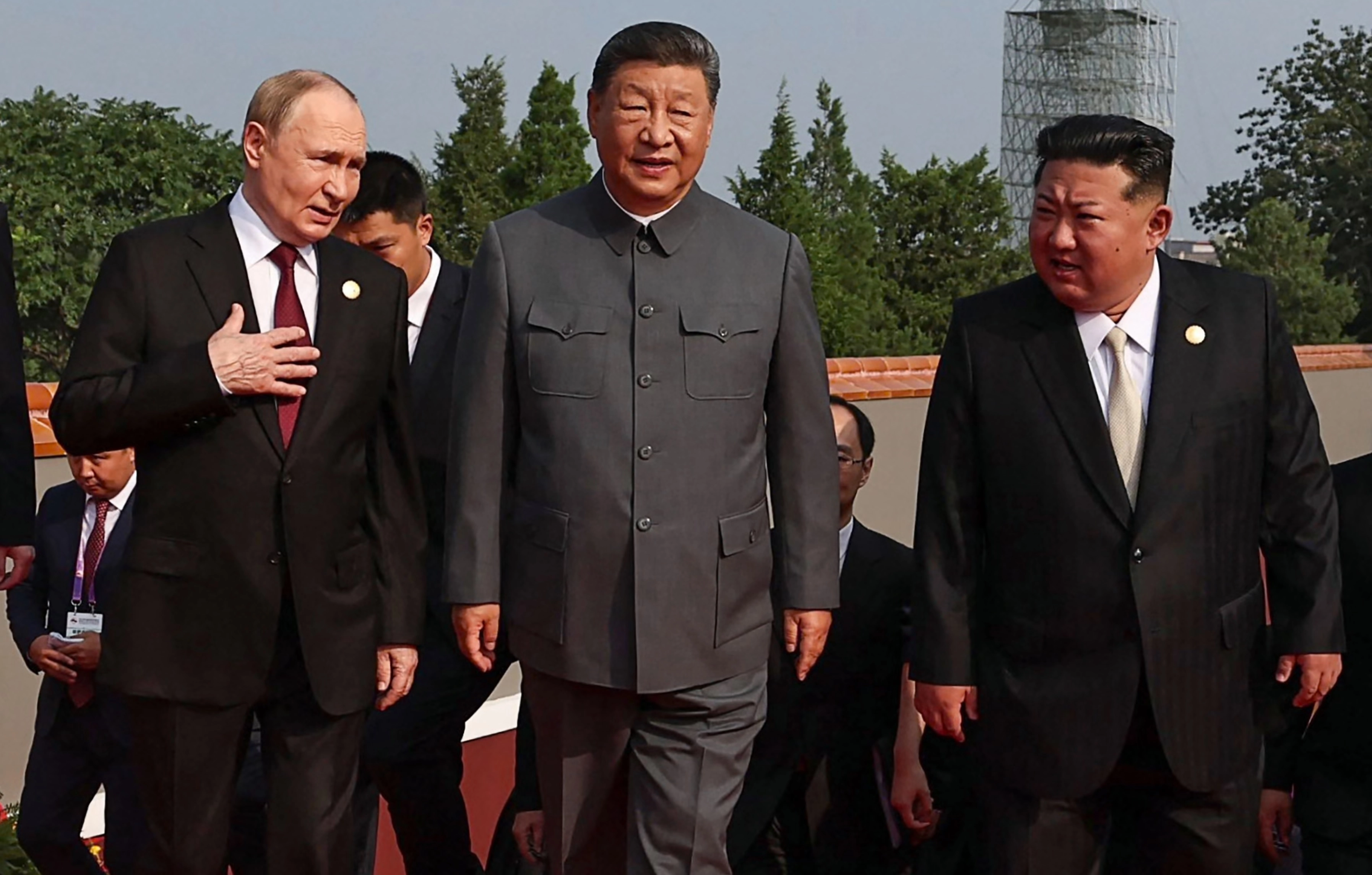
North Korea’s growing independence appears to have prompted China to work harder to preserve its own influence, which had been declining since the start of the pandemic and as Pyongyang’s ties with Moscow deepened. In June 2026, Chinese President Xi Jinping visited North Korea for the first time in seven years. He pledged that China would continue to support the country and agreed to deepen cooperation between the two nations across various fields.
In effect, Moscow has forced Beijing to compete for influence over Pyongyang by giving it a genuine alternative source of support. Kim can now draw economic support from China and military and diplomatic benefits from Russia, all while reducing his dependence on each power and preventing either from taking its influence for granted.
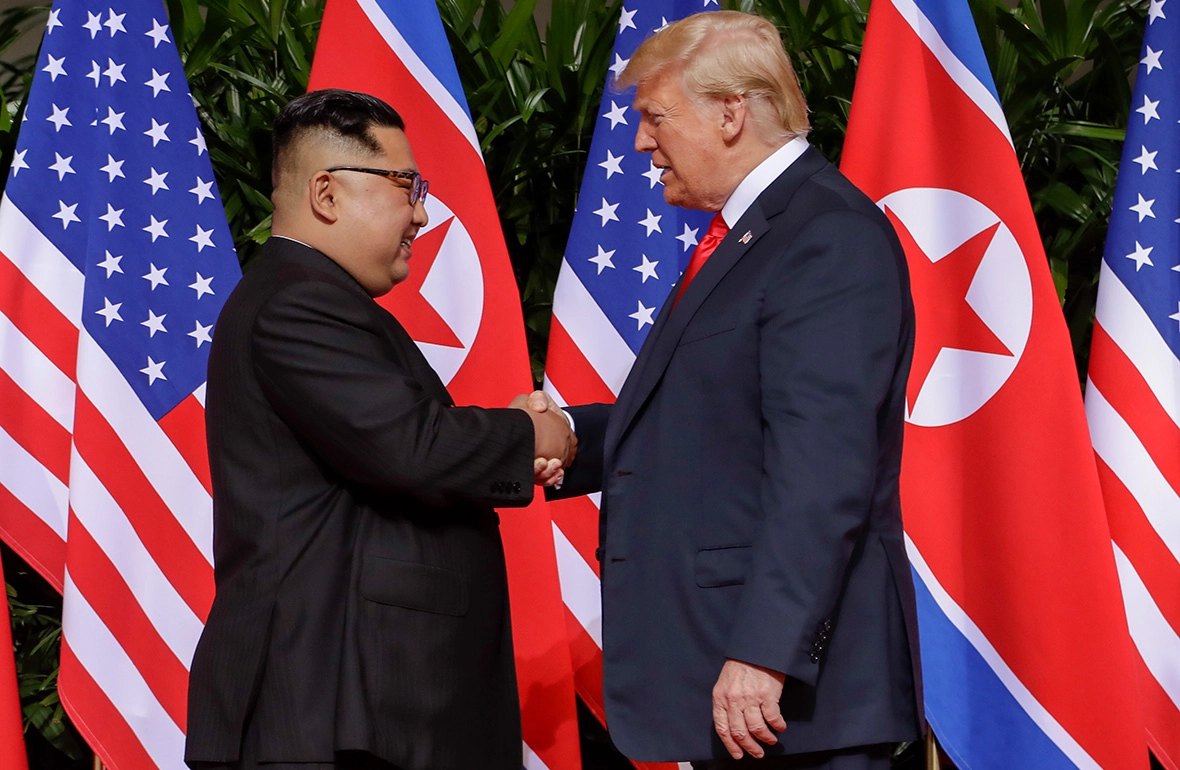
Under these circumstances, Pyongyang no longer needs a thaw with the U.S. as urgently as it did in 2018, when the first talks between Donald Trump and Kim Jong Un took place — the first-ever meeting between U.S. and North Korean leaders. Back then, North Korea was almost completely cut off from the outside world, and Washington could bargain for concessions in exchange for sanctions relief and normalized relations.
The U.S. now has significantly fewer opportunities for such an exchange. Pyongyang has retained its nuclear arsenal, expanded its missile program, restored a substantial share of foreign trade, and built ties with Moscow and Beijing, obtaining access to many of the economic and strategic benefits that normalized relations with the U.S. once offered. This does not rule out negotiations or possible steps toward rapprochement. But the starting position has clearly shifted in Kim’s favor: Trump is willing to talk to North Korea again, but Pyongyang needs it far less.
Trump’s gambit
Trump has emphasized his readiness to resume talks with Pyongyang since his reelection, taking the most significant step in this direction on Aug. 16, when just hours before the start of the annual joint military exercise with South Korea, Ulchi Freedom Shield, he ordered a substantial reduction in its scale.
Trump has shown readiness to engage with Pyongyang since returning to the White House
Trump said the exercises were costly and were sending North Korea a “totally inappropriate and hostile” signal, and that during his presidency Pyongyang had behaved “harmlessly and respectfully.” The drills were shortened from 11 to five days, and the field-training period was also reduced.
Additionally, Washington later canceled a joint amphibious exercise with Seoul that had been planned for September. Given Pyongyang’s position, which regards the maneuvers as a rehearsal for invasion and demands their end along with the withdrawal of U.S. troops from South Korea, Trump’s decision resembles a goodwill gesture — especially since he did not even demand a personal meeting with Kim.
It is unclear whether the cancellation was inspired by Trump’s evident displeasure that Seoul did not support Washington in the war against Iran, but the U.S. president has taken similar steps before. After his first meeting with Kim in Singapore in 2018, Trump announced the suspension of the Ulchi Freedom Shield exercise along with several smaller maneuvers.
At the time, he also justified the decision by citing the cost of the exercises and echoed Pyongyang’s narrative about “provocations.” The external circumstances, however, were fundamentally different: 2018 saw the start of what was likely the most significant thaw in relations between North and South Korea since their division.
Even before the exercises were canceled, South Korean President Moon Jae-in and Kim Jong Un signed a declaration stating that “there will be no more war...on the Korean Peninsula,” and that the sides would pursue reconciliation, economic cooperation, and even possible reunification.
Since then, however, Pyongyang has formally renounced reunification, declared South Korea a hostile state, and even destroyed sections of the roads and railways that Moon and Kim once promised to connect.
North Korea enters any potential talks with a growing nuclear arsenal, a new mutual defense treaty with Russia, and little regard for the sanctions regime, which was once Washington’s chief bargaining chip. Where Washington could once have demanded major concessions from Pyongyang in exchange for ending U.S.-South Korean exercises, that now becomes merely a starting point for dialogue. Kim, meanwhile, has yet to offer even the vague commitments that preceded the 2018 summit.
That said, Pyongyang does not reject the possibility of resuming talks. According to South Korean intelligence, a new meeting between Trump and Kim could be arranged “at any time,” but on fundamentally different terms than in the past: North Korea now views its nuclear arsenal not as a bargaining chip but as an inherent part of the state and its primary guarantee of sovereignty.
In analysts’ view, the U.S. war with Iran confirmed a conclusion Pyongyang had already reached: the attack on Tehran was possible only because Iran lacked reliable nuclear deterrence, meaning the arsenal must be preserved. Given Washington’s push for North Korea’s complete nuclear disarmament, which is also backed by South Korea, sweeping compromises look increasingly unlikely, and any future agreement will most likely only involve limits on further buildup and use of the nuclear arsenal itself.
The Korean rebalancing
Despite these new significant advantages for North Korea, the balance of power on the Korean Peninsula still clearly favors its southern neighbor. Despite its huge size and central place in the state structure, the Korean People’s Army (KPA) lags behind the Republic of Korea Armed Forces technologically, relying on significantly outdated arsenals.
The economic gap is even wider: in 2025, South Korea’s nominal gross national income exceeded North Korea’s by a factor of 56. South Korea’s annual defense budget alone is larger than the estimated value of North Korea’s entire economy, offering Seoul the opportunity to modernize its military, replenish losses, and maintain modern weapons systems on a scale Pyongyang cannot match.
The one area where the gap between the two countries is narrowing is manpower. In 2025, South Korea’s birth rate stood at just 0.8 children per woman. A demographic decline that for decades represented only a potential economic problem has now begun to affect the pool of potential conscripts as well.
From 2019 to 2025, the number of 20-year-old men in South Korea fell by 30%, and the active-duty military shrank by 20%, to 450,000 troops. Various estimates place the personnel shortfall at approximately 50,000 soldiers. Seoul has managed to soften the impact through military reorganization, expanded recruitment of contract soldiers and women, and technical modernization. But these measures do little to change the basic arithmetic of conscription: each new generation produces significantly fewer recruits than the previous one.
From 2019 to 2025, the number of young men in South Korea fell by 30%, and the size of the active-duty military by 20%
For North Korea, this problem currently looks less acute — but only in comparison with the South. According to UN estimates, North Korea’s 2025 birth rate stood at 1.8 — significantly higher than its neighbor’s, but still below the replacement level. When the small generation born during and after the famine of the 1990s began reaching conscription age, the authorities reportedly eased physical requirements for military personnel and began increasingly recruiting women into the army.
After 2020, the working-age population began shrinking by nearly 1% a year. The state is increasingly sending young people to work in mines and on farms, while mobilizing married women for factories and other production facilities facing tangible labor shortages.
The demographic balance between the two countries is shifting in two directions at once. Seoul is losing conscription-age population significantly faster than Pyongyang, allowing the North to retain one of the few advantages not offset by its neighbor’s economic superiority.
In the long run, however, North Korea will face the same challenge with far fewer resources to soften it. North Korea’s seemingly stable demographic edge is better understood as a reprieve. Still, it could meaningfully shift the military balance during the period before its population decline catches up with South Korea’s.
In the long run, North Korea will face a demographic decline without sufficient means to soften it
Since the late 1980s, virtually every long-term trend has favored South Korea: its economy grew and its military modernized, while North Korea only grew poorer and more isolated. The gap between the two countries remains enormous today, but time is no longer unambiguously on Seoul’s side. South Korea is beginning to face the demographic consequences of the very economic development that put it so far ahead of its neighbor. For North Korea, meanwhile, a rare moment has arrived in which several factors that once worked against it have started to ease.
Economic growth, a military partnership with Russia, renewed interest from China, and reduced vulnerability to Western sanctions have likely put North Korea in its strongest international position since the end of the Cold War. If Donald Trump and Kim Jong Un sit down at the negotiating table again, the U.S. will no longer be dealing with an isolated pariah state, as in 2018, but with a country that, amid the breakdown of the old world order, has forged a path to survival on its own terms.