Mali puts $3.5 million bounty on al-Qaeda-linked leaders over attacks on civilians and state assets
Mali's military-led government has placed a multi-million-dollar bounty on some of the most wanted militant leaders in the Sahel, stressing the growing pressure facing authorities as armed groups intensify attacks across the country.
 Black News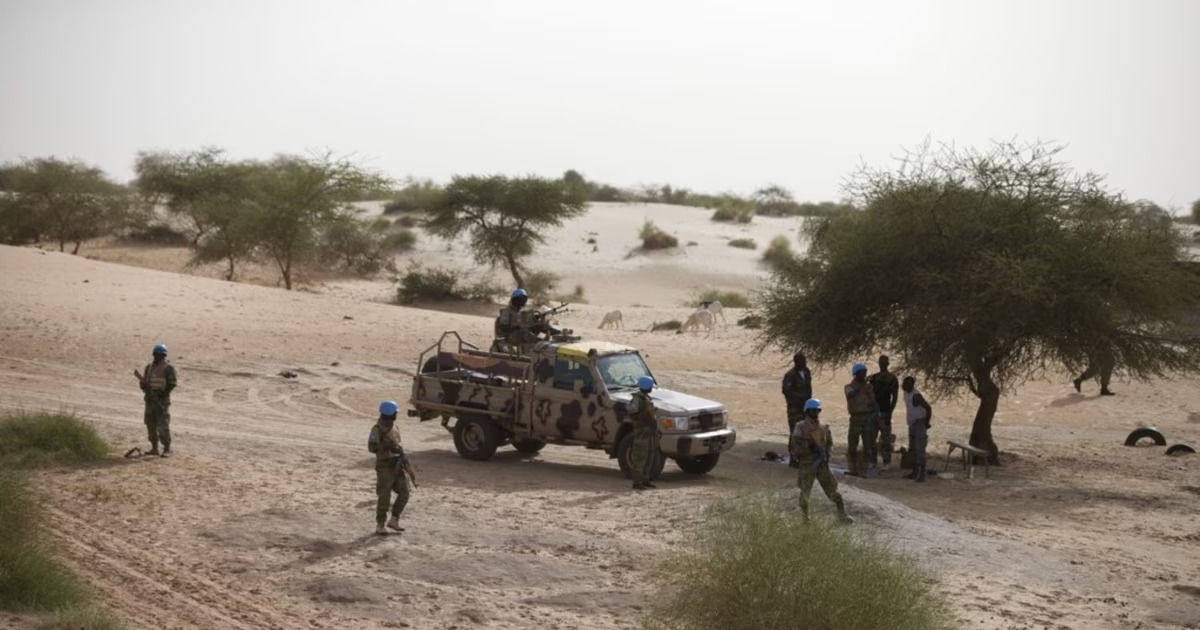

Mali's military-led government has placed a multi-million-dollar bounty on some of the most wanted militant leaders in the Sahel, stressing the growing pressure facing authorities as armed groups intensify attacks across the country.
- Mali's military government has announced multi-million-dollar bounties targeting key militant leaders in response to rising attacks.
- A reward of $3.55 million was set for information leading to the capture or neutralisation of Iyad Ag Ghaly, leader of JNIM, al-Qaeda's Sahel affiliate.
- Additional bounties were placed on other prominent figures such as Amadou Koufa and Tuareg separatist leader Alghabass Ag Intalla.
- This action follows a wave of coordinated attacks by jihadist and Tuareg rebel groups across Mali, marking a significant escalation in insurgent cooperation.
Mali's military-led government has placed a multi-million-dollar bounty on some of the most wanted militant leaders in the Sahel, stressing the growing pressure facing authorities as armed groups intensify attacks across the country.
In an announcement signed by Security and Civil Protection Minister Major General Daoud Aly Mohammedine, the government offered a reward of 2 billion CFA francs ($3.55 million) for information leading to the capture, arrest, or neutralisation of Iyad Ag Ghaly, the veteran jihadist leader who heads Jama'at Nusrat al-Islam wal-Muslimin (JNIM), al-Qaeda's affiliate in the Sahel.
Smaller rewards were also announced for several other high-profile militant figures, including Amadou Koufa, a key JNIM commander, and Alghabass Ag Intalla, a prominent Tuareg separatist leader accused of participating in recent attacks against the Malian state.
The move comes just weeks after one of the most serious security setbacks Mali has experienced in years.
In late April, coordinated attacks by JNIM and allied Tuareg rebel groups struck multiple locations across the country, including areas near the capital, Bamako. The offensive targeted military installations, towns, and strategic positions, exposing the growing operational capacity of insurgent groups despite years of military campaigns by the Malian army and its foreign partners.
The attacks proved particularly significant because they reflected an increasingly open alliance between jihadist groups and separatist movements in northern Mali, a development many security analysts had long warned could alter the balance of power in the region.
A country under pressure
For more than a decade, Mali has been at the centre of the Sahel's security crisis.
What began as a separatist rebellion in 2012 gradually evolved into a wider conflict involving al-Qaeda-linked groups, Islamic State affiliates, ethnic militias, and government forces. Despite military interventions by France, the United Nations, regional forces, and more recently Russian-backed security partners, large portions of northern and central Mali remain unstable.
JNIM, led by Ag Ghaly, has emerged as one of the region's most powerful armed groups. The organisation has steadily expanded its influence across Mali, Burkina Faso, and Niger, exploiting weak state presence, local grievances, and porous borders to build networks across the Sahel.
The group's growing reach has become a major concern not only for Mali but for neighbouring countries. Recent attacks have disrupted transport routes, targeted military facilities, and threatened key economic corridors linking Bamako with other parts of the country.