Dolphins Swim Club Kampala: Building champions, character and culture of excellence
In the heart of Uganda’s swimming landscape, few clubs have established a reputation as formidable, ambitious and consistent as Dolphins Swim Club Kampala. Over the years, the club has become a breeding ground for elite swimmers, nurturing talent from grassroots level to national and international competition. That reputation was once again on full display at […] The post Dolphins Swim Club Kampala: Building champions, character and culture of excellence appeared first on Kawowo Sports.
 Black News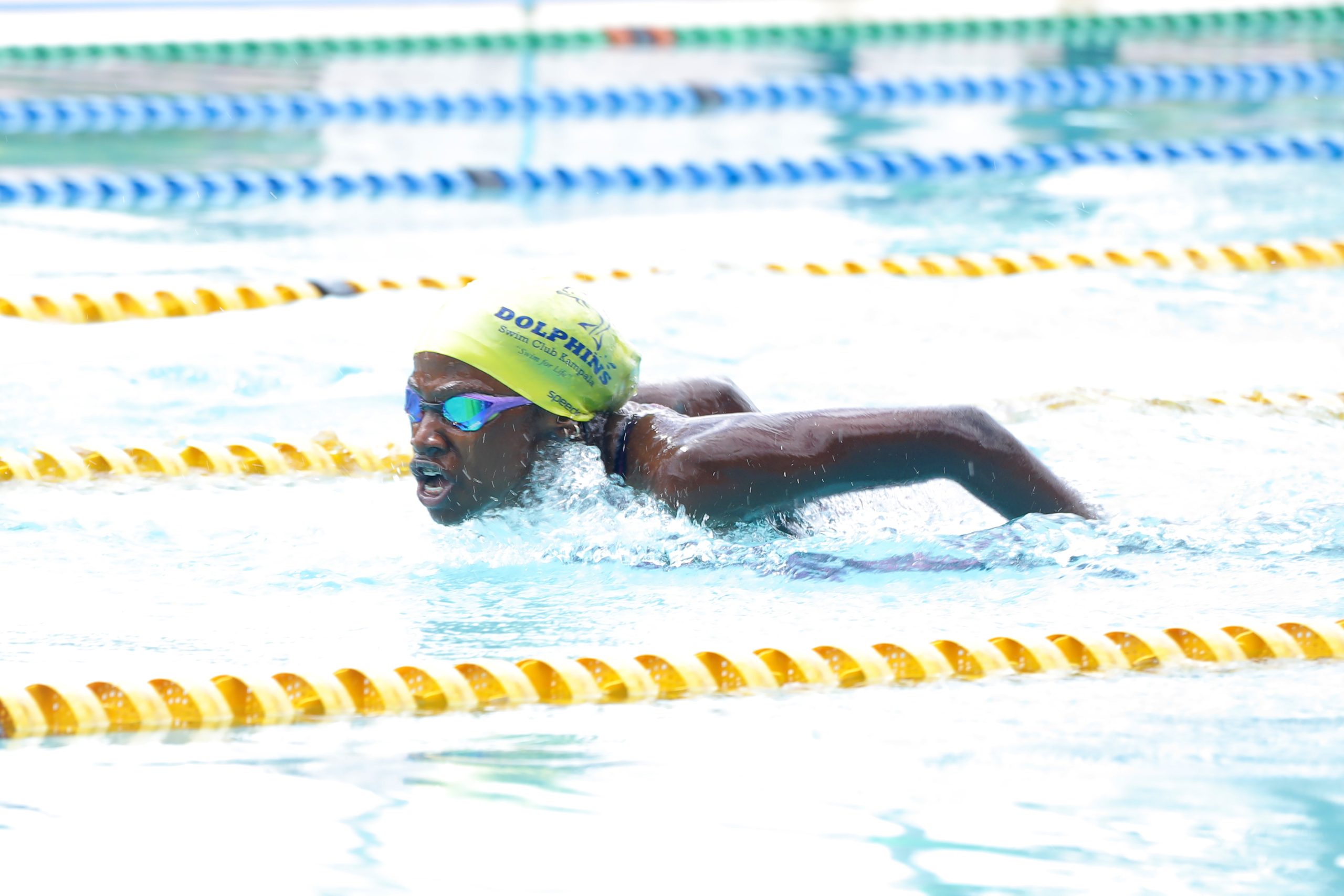

In the heart of Uganda’s swimming landscape, few clubs have established a reputation as formidable, ambitious and consistent as Dolphins Swim Club Kampala. Over the years, the club has become a breeding ground for elite swimmers, nurturing talent from grassroots level to national and international competition.
That reputation was once again on full display at the 2026 Kenya Aquatics National Long Course Swimming Championships, held from May 29 to 31 at the iconic Kasarani Aquatic Complex in Nairobi. Competing against 81 clubs from across East and Southern Africa, Dolphins Swim Club Kampala not only participated but also dominated.
The club emerged as the overall champions of the championships with a remarkable 370 combined points, comfortably ahead of their nearest rivals, Sailfish Swim Club Kampala, on 266.5 points. Dolphins also topped the women’s standings with 144 points and finished second in the men’s category with 140 points, underlining the club’s strength across all age groups and genders.
Yet behind the medals, trophies and points lies a deeper story, one of resilience, learning, sacrifice and growth.
Dolphins Swim Club Kampala finished the championship with an astonishing 63 medals, consisting of 28 gold, 20 silver, and 15 bronze, the highest medal tally of any club at the event. Their success was built on both individual brilliance and relay excellence.
Of those 63 medals:
- 33 came from individual events.
- 30 came from relay performances.
- The club won an impressive 20 relay gold medals, showcasing depth and teamwork throughout the squad.


This achievement reflects a club structure that prioritizes collective growth alongside individual success. While many clubs depend on a handful of star athletes, Dolphins demonstrated strength across every age group.
For many Ugandan swimmers, long-course competition presents a unique challenge.
Most local competitions are conducted in short-course pools, where turns come more frequently, and swimmers can generate additional momentum from walls. Long-course swimming demands greater endurance, pacing, technical efficiency and mental discipline.
The championships at Kasarani, therefore, served as more than a competition; they became a classroom.
For 14-year-old swimmer Ssali Mackyala, the experience was a reminder that improvement is a continuous journey.
“I think I’ve performed well, but I’m not really happy with my times,” she reflected. “I’ve been adding time in most of my events, but it’s been really cold here.”
Despite her frustration, Mackyala emerged with valuable lessons.
“I’ve learnt that I need to train more and work harder. Maybe I should start doing more gym.”
The cold conditions at Kasarani became a recurring theme among Dolphins swimmers.
For Crystal Semanda, competing in the 14-15 age group, the experience was a test of adaptability.
“My performance in the league was better compared to what I’ve done at Kasarani,” she admitted.
The transition from familiar short-course competition to a long-course environment was difficult.
“It’s been really, really cold and I don’t like long course. I prefer short course. I’ve increased most of my times here.”
Yet, like many Dolphins athletes, Crystal transformed disappointment into motivation.
“I need to train more and work on my nutrition,” she said.
Young swimmer Manuel Semanda, competing in the 12-13 age category, experienced both highs and lows during the championships.
“The races have been okay so far. I’ve been making some good and some bad times here.”
Like many developing athletes, Manuel understands that elite performance extends beyond the pool.
“I need to train more, eat better and fix my technique in certain strokes.”

In the boys’ 12-13 age group rankings, Manuel finished among the leading performers, scoring 13 points for Dolphins and placing sixth overall in his age category.
For Teresa Kikambi, competing in the 14-15 age group, the championships represented a venture into unfamiliar territory.
“It’s definitely been tough,” she said. “I’m not used to long course. I’ve been traumatised a bit.”
Her honesty reflects what many swimmers experience when exposed to higher levels of competition.
Yet she found positives amidst the challenge, and more importantly, the experience broadened her perspective.
“Overall, I think I’ve managed, and I’m happy with my times.
“Back in Uganda, there are a few long-course pools. Generally, I just need to do more practice and get used to it.”
While the entire team contributed to the club’s success, several Dolphins athletes delivered standout performances.
- Tyrah Dorothy Muganzi captured gold in the Girls 14-15 200m Butterfly, winning the event in 2:49.18. Her efforts helped her finish third overall in the Girls 14-15 individual rankings with 19 points.
- Benjamin Ssali, in the Boys 14-15 200m Butterfly, delivered another Dolphins victory, winning gold in 2:36.05.
- Jinan Nakato, a talented 12-year-old, produced one of the strongest performances in her category, finishing fourth overall in the Girls 12-13 individual standings with 16 points.
- Mackyala Ssali, despite her own critical assessment of her performances, finished fifth overall in the Girls 14-15 individual rankings with 11 points, demonstrating her consistency at the championship level.

Coach Tony Kasujja, who led the Dolphins delegation to Nairobi, emphasized the scale of the club’s commitment.
“We came here to participate in the Kenya National Long Course Championship with a team of 31 athletes, four officials and a big team of governance and cheerleading.”
That support structure has become one of Dolphins Swim Club’s greatest strengths.
Parents, officials, coaches and administrators work together to create an environment where young athletes can thrive both in and out of the pool.
Reflecting on the championships, Coach Kasujja expressed immense satisfaction.
“First of all, I want to appreciate the Kenya Aquatics for allowing countries outside Kenya to come and participate in their nationals.” He described the competition as one of the strongest in the region. “It’s been very competitive. There are lots of experienced swimmers and names that have been in this sport for a very long time.”
Against that level of opposition, Dolphins excelled. “My swimmers are doing very well. I’m very happy with their performances. They’ve won very many accolades, including medals and personal best times.”
For Kasujja, the success was no accident. “Basically, they prepared very well for it and we are all happy.”

Perhaps the most significant aspect of the championship was what it means for the future.
According to Coach Kasujja, the competition forms an important part of the team’s preparation for upcoming national championships.
He believes the long-course experience gained in Nairobi will strengthen the team’s performances back home. “We believe that once we take that experience, the vigour, energy, resilience and power into the short course, we’ll have very good performances.”
At the 2026 Kenya Aquatics National Long Course Championships, Dolphins Swim Club Kampala proved once again that they are among the premier swimming institutions in East Africa.
The post Dolphins Swim Club Kampala: Building champions, character and culture of excellence appeared first on Kawowo Sports.