Mayor Lendor-Gabriel shares journey raising autistic son
Castries Mayor Geraldine Lendor-Gabriel has opened up about her experience raising her autistic son, Kyan Gabriel, offering insight into the challenges, lessons and triumphs that have shaped both her family and her child’s development. Speaking with St Lucia Times, the mayor described parenting as a responsibility grounded in acceptance and care, stating, “as a parent, […] The article Mayor Lendor-Gabriel shares journey raising autistic son is from St. Lucia Times.
 Black News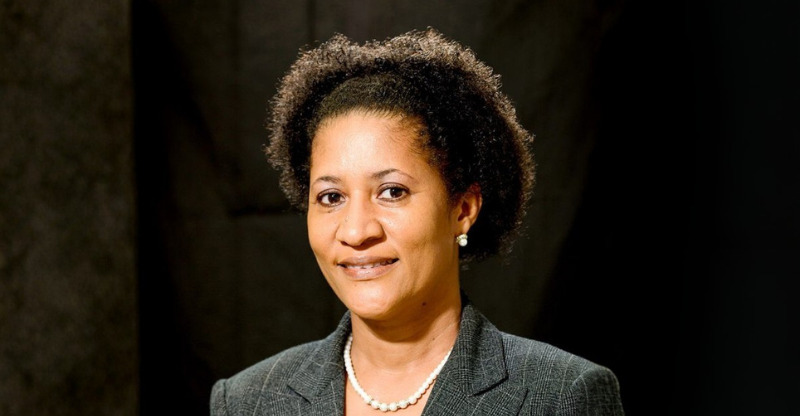
Castries Mayor Geraldine Lendor-Gabriel has opened up about her experience raising her autistic son, Kyan Gabriel, offering insight into the challenges, lessons and triumphs that have shaped both her family and her child’s development.
Speaking with St Lucia Times, the mayor described parenting as a responsibility grounded in acceptance and care, stating, “as a parent, I think it is very important for one to recognize that the child is a gift, a gift from God,” while noting that “you cannot determine what child that you have, but once you are gifted with that child, you have a responsibility to ensure that you will nurture that child in the best way that you can.”
She explained that key elements in a child’s development include “the child’s feeling love, the child being able to function in the society, and the child having a solid education”, adding that it is equally important that “the child relates to the society that they live in.”
The mayor highlighted acceptance as a foundational step for parents, noting that “having a child, I think some of the key things would be acceptance”, alongside seeking the necessary support systems. She credited the Child Development and Guidance Centre for playing a transformative role in her son’s early years, revealing that he “was actually able to get support… and that played a key role in terms of moving him from being non-verbal to verbal”.
Understanding and communication, she said, require patience and attentiveness. Parents must spend time “to try to understand that child, even in their own way,” while “finding ways to communicate is important” and “being very observant” of how the child responds to different situations.
In her son’s case, early exposure to educational materials proved pivotal. Although initially non-verbal, he showed remarkable cognitive ability. The mayor recalled that “he learned to read on his own” and “he learned to write on his own”, adding that “at about age three and a half, he was spelling words like xylophone.” She attributed this to early exposure, explaining, “One of the lessons learned is ensuring that you expose them, because you never know.”
She stressed that a lack of speech does not mean a lack of understanding. “The fact that they are not speaking does not mean that the brain is not working in other ways.” Her son’s abilities became evident when she realised he could read independently after observing him spell complex words.
Despite these successes, the mayor acknowledged the social challenges that often arise, as she recounted instances in which members of the public misunderstood her son’s behaviour, noting that “people will react badly” and recalling how individuals approached her to criticise it. However, she emphasised the importance of perspective, urging parents to remember that “the person does not understand that child.”
She also stressed teaching siblings empathy and restraint, advising they should “not get angry about it” but recognise others’ lack of understanding.
Importantly, the mayor cautioned against isolating children on the spectrum, stating, “One of the things you should not do is hide the child.” Instead, she encouraged parents to support integration, noting that “there’s no special world” and children must have opportunities to interact within society.
Community support, she said, remains critical. She expressed gratitude for individuals and institutions that contributed to her son’s development, including educators who facilitated his inclusion in the mainstream school system. She described mainstreaming as “a key component to helping young people,” while acknowledging challenges like the need for a full-time aide during his early school years.
Reflecting on his academic journey, the mayor shared that his son excelled in the public education system, graduating with seven O-Levels and earning four subject prizes. She noted his success was not solely due to ability but also the “support” and strong connection between school and home.
Beyond academics, she highlighted his musical talent, describing him as a “very multi-talented musician.” She recounted advocating for his inclusion in a programme where his abilities could be nurtured, which led to opportunities for mentorship and performance. Inspired by musician Ronald “Boo” Hinkson, her son developed a passion for the guitar and has since written his own song titled “This is me”.
The song, she explained, carries a powerful message, “I’m not broken, I’m just unique,” reflecting a broader call for acceptance of children on the autism spectrum.
The article Mayor Lendor-Gabriel shares journey raising autistic son is from St. Lucia Times.