Meet the founder who took a detour from tech, and raised $1.5 million to build West Africa's largest safety footwear company
Yinka Atunde, a computer science graduate of Babcock University, pivoted into shoemaking after a delayed NYSC programme pushed him to rethink his career path. What began with training in Italy, factory experience in Nigeria, and the production of just 20 pairs of shoes a day has grown into Yikodeen, West Africa’s largest safety footwear manufacturer. In 2025, he raised $1.5 million from Aruwa Capital Management to expand its industrial footprint.
 Black News

Yinka Atunde, a computer science graduate of Babcock University, pivoted into shoemaking after a delayed NYSC programme pushed him to rethink his career path. What began with training in Italy, factory experience in Nigeria, and the production of just 20 pairs of shoes a day has grown into Yikodeen, West Africa’s largest safety footwear manufacturer. In 2025, he raised $1.5 million from Aruwa Capital Management to expand its industrial footprint.
- Yinka Atunde switched careers to shoemaking after a delayed NYSC programme and founded Yikodeen, West Africa’s largest safety footwear manufacturer.
- Atunde trained in Italy, gained factory experience in Nigeria, and started by restoring old manufacturing equipment due to limited resources.
- He faced scepticism from clients used to foreign products, but gradually built credibility through relentless quality improvements and support.
- By 2025, following a $1.5 million funding round, Yikodeen had entered a new phase of rapid expansion.
Most people don’t spend four years studying Computer Science at Babcock, one of the best universities in Nigeria, only to graduate and decide they want to make shoes. But Yinka Atunde was never particularly interested in walking the expected path.
Ten years ago, Atunde found himself at a crossroads. He had completed his university education and was preparing for the next phase of life when an unexpected delay in his National Youth Service Corps (NYSC) programme created space for a decision that would ultimately change his life.
The delay, which coincided with the political transition that brought President Muhammadu Buhari into office in 2015, stretched for almost a year. Atunde suddenly found himself with a blank calendar and a question to answer.
“I literally had nothing going on, and I kept asking myself what I actually wanted to do with my life,” he said.
Having studied computer science, the expectation was that he would follow a traditional path into technology, perhaps pursue a master's degree in America and build a corporate career. Instead, he approached his parents with an unusual request. He wanted to spend a year learning how to make shoes.
Looking back, it sounds like an unlikely beginning for the man who would go on to become the founder and CEO of Yikodeen, now West Africa's largest safety footwear manufacturer. But at the time, there was no grand plan behind it.
DON'T MISS THIS: Meet the founder who came to Nigeria by chance, saw tomatoes going to waste, and raised over $18 million to fix it
Learning the Ropes, and the Laces
Nigeria was importing footwear that, in Atunde’s view, didn’t look too complex to make locally. He then travelled to Italy, where he learned the craft of shoemaking. He also visited factories in China, the world’s largest footwear manufacturing hub, to see firsthand how shoes were produced at scale.
After returning to Nigeria and completing his NYSC, Atunde made another unconventional decision. Instead of immediately launching a company, he chose to start from the factory floor, taking a job as a factory worker in a Nigerian shoe manufacturing plant.
“I went into the factory as a worker because I didn’t want theory. I wanted to understand exactly what was happening on the floor, where the inefficiencies were, and how people were actually producing shoes in Nigeria,” he stated.
The difference between Italy and Nigeria was clear. In Italy, shoemaking felt like art, with every pair treated like something carefully crafted. In Nigeria, things looked very different. But instead of putting him off, that gap only made him more convinced there was something worth building.
Like many entrepreneurs, Atunde didn’t start with the idea that would eventually define his company. At first, he focused on fashion shoes. But as he dug deeper into the footwear market, he discovered something that changed his thinking completely - almost all industrial safety footwear used in Nigeria was imported.
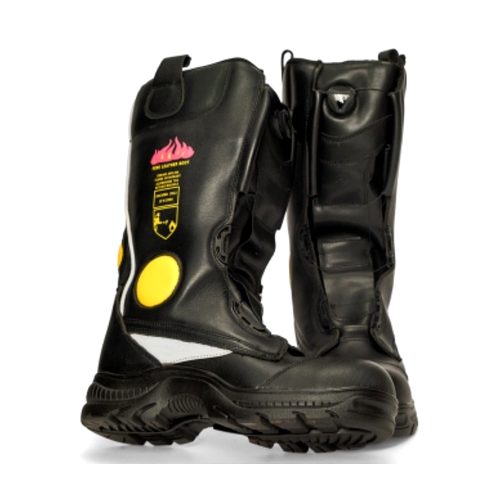
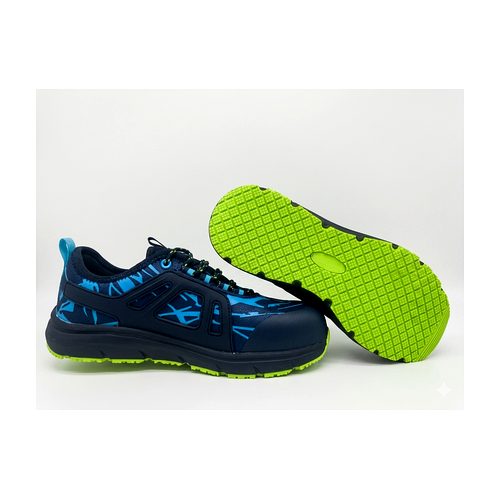
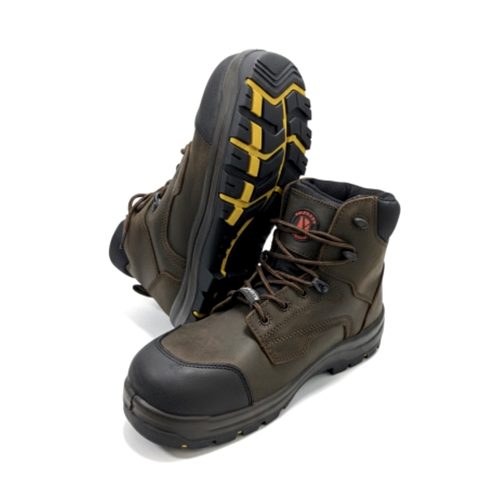
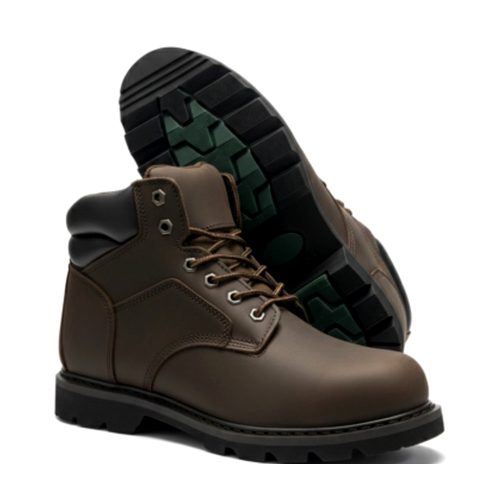
Safety footwear isn’t just regular shoes. It’s more complex to make, requiring stricter quality checks, international certifications, proper testing, and far more precision because they are designed to protect lives. The complexity spiked Atunde's interest in it.
"I've always liked difficult things," he said. "Difficult things are harder for other people to replicate."
DON'T MISS THIS: Meet the founders who raised over $10 million from palm processing and the waste it leaves behind in Africa
Building on Old Soles
If manufacturing industrial footwear was difficult, building the factory itself was even harder. Like many startups, Yikodeen started with limited resources.
The machinery required to produce safety footwear was expensive, and even the cheapest imported equipment was far beyond what the young company could afford. Atunde quickly realised that certain production processes simply couldn't be done efficiently by hand. Without machines, there would be limits to both quality and scale.
Determined to find a solution, he began researching Nigeria's forgotten manufacturing history. What he discovered surprised him. Decades earlier, Nigeria had a thriving footwear manufacturing sector. Many of those businesses had disappeared following economic downturns and the influx of cheaper imported products, but their factories had not completely vanished.
What remained were warehouses filled with abandoned machinery. Atunde began travelling across the country in search of those machines. “I went from state to state looking for old factories. Some of these machines had been sitting there for decades, but I kept thinking that if they worked once, maybe we could bring them back to life,” he said.
He visited more than fifteen defunct footwear factories. Many of the factory owners were elderly men whose businesses had long since closed. Atunde started buying old equipment and working with engineers to restore it.
The process was painstaking. Machines broke down regularly. Spare parts were difficult to find. But over time, the company built a functioning factory using machines that many people believed had outlived their usefulness.
DON'T MISS THIS: Meet the Japanese entrepreneur who raised $7 million to build Ethiopia’s fastest-growing EV company
Walking Through Constant Rejection
Those early years tested the company in ways few startup founders experience. One of the biggest challenges was a long-standing industry issue, getting customers to trust locally made safety footwear.
For years, Yikodeen faced rejection from some of the largest companies operating in Nigeria. Many of these organisations had spent decades relying on imported safety footwear from established international manufacturers. The idea that a local company could produce products of similar quality was difficult for some buyers to accept.
Atunde remembers those years as a period of relentless persistence. The company continued to improve its products, refine its processes, and seek feedback wherever it could find it. There were moments when it seemed easier to give up. Every test costs money. Every failed trial costs money. Every rejected proposal represented time and resources the company could barely afford to lose.
“At some point, you start questioning everything. But we kept improving, kept testing, kept going back to the same clients with better versions until things started changing slowly,” Atunde said.
A key turning point came with support from the Nigerian Content Development and Monitoring Board (NCDMB), which helped open doors for product testing in the oil and gas sector. Atunde had deliberately targeted that space because local content policies gave Nigerian manufacturers a real chance to compete.
But even then, nothing came quickly. After almost three years of trial and refinement, the breakthrough finally arrived.
“We were spending heavily on testing and certification without knowing if it would even lead to orders. It was a long, uncertain process, but we just kept pushing.”
In 2022, Yikodeen’s safety footwear was fully tested, accepted, and approved for a major contract to supply 10,000 shoes to the police. For the first time, years of effort translated into a significant commercial breakthrough.
Everything changed after that. Demand increased. New opportunities emerged. The same market that had once doubted whether a Nigerian company could manufacture world-class safety footwear was now beginning to embrace locally made alternatives.
Yikodeen has grown from serving only a handful of corporate clients to working with more than 50 organisations, including Saipem, NLNG, Dangote Group, Seplat, BUA and the Nigerian Army.
DON'T MISS THIS: Meet the founder who turned down $1.5 million — and built one of Africa’s fastest-growing companies two years in a row
Funding the Grind
As the business expanded, Yikodeen faced a different challenge, which was keeping up with demand. The company, which started on bootstrapping and survived by reinvesting gains, reached a new phase in 2025 when it secured $1.5 million in funding from private equity firm Aruwa Capital Management.
The investment helped the company significantly increase production capacity. With its newly commissioned world-class manufacturing facility in Ejigbo, Lagos, Yikodeen can now produce over 5,000 pairs of shoes in 24 hours, powered by a skilled team of 500 employees, over 61% of whom are women.
Yet Atunde believes the company is still only getting started. The first decade, he says, was about proving a model. The next decade will be about expansion. While safety footwear remains at the centre of the business, his ambitions extend far beyond boots.
He sees opportunities across industrial safety equipment and personal protective products, many of which are still imported despite having the potential to be manufactured locally.
“We’ve proven that it’s possible to build something like this here. Now the next step is scaling it beyond footwear into a full industrial safety ecosystem.”
More importantly, he believes Yikodeen's journey demonstrates something bigger than the success of a single company. It proves that Nigerian manufacturers can compete in industries long dominated by foreign products. It proves that local production can meet international standards. And it proves that with enough persistence, even the most sceptical markets can eventually be won over.
For aspiring entrepreneurs, however, Atunde offers no romantic illusions about manufacturing. If anything, his advice is a warning. Manufacturing, he says, is one of the toughest businesses anyone can choose in Nigeria. It requires patience, sacrifice and an extraordinary level of resilience.
“If you’re coming into manufacturing for quick returns, it will frustrate you. But if you are patient enough to stay through the process, then the impact you can create is very real,” Atunde said.