Millions of Nigerians are working, but Moody’s says many earn nine times less outside formal jobs
Millions of Nigerians are working, but many remain trapped in low-paying informal jobs that earn only a fraction of what formal employees take home, according to a new report by Moody’s Ratings.
 Black News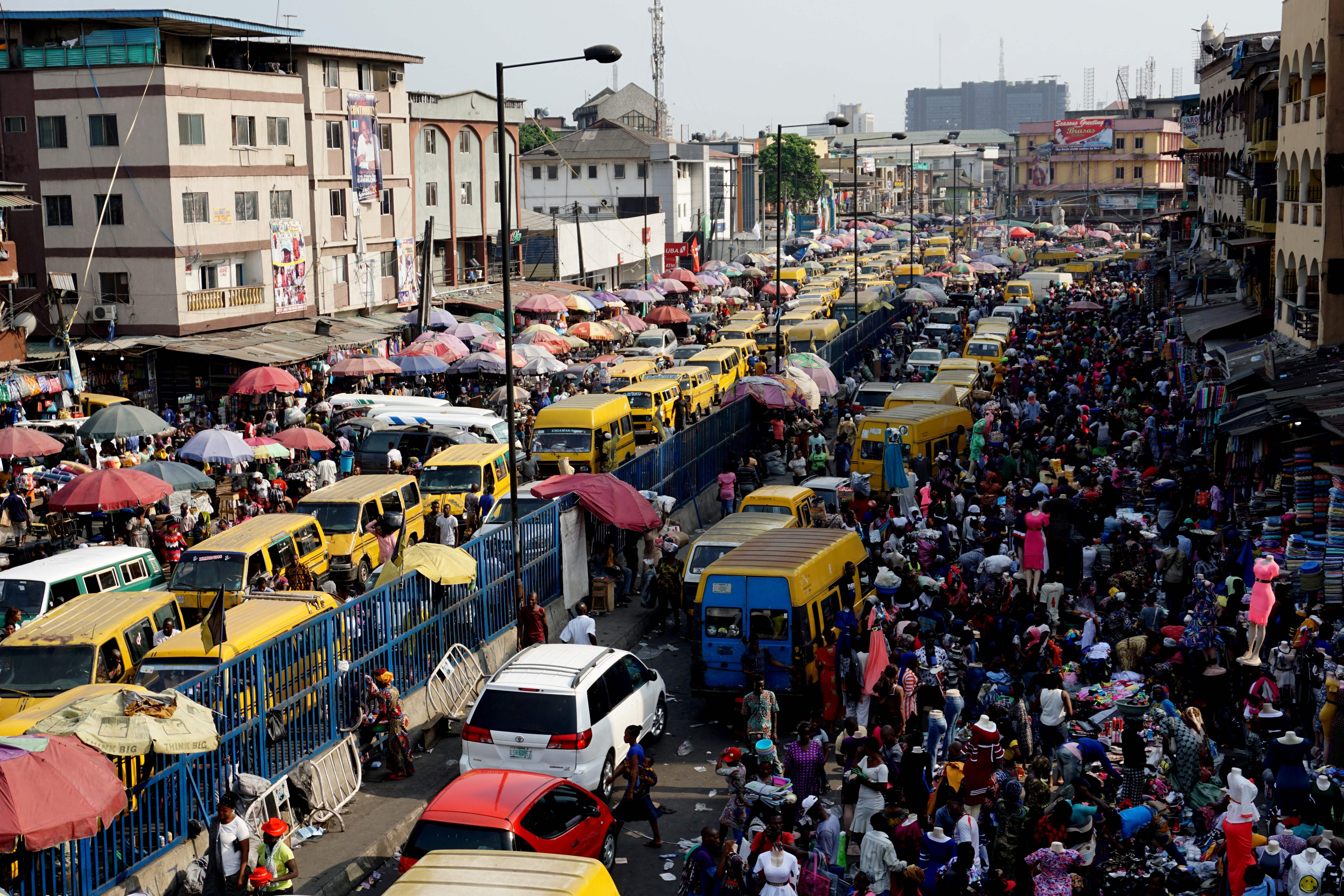
![Roadside vendors display wares on major roads and vie for space with public transport as people shop ahead of the festive seasons at Idumota in Lagos central district, on December 17, 2018. [Photo by PIUS UTOMI EKPEI / AFP]](https://ocdn.eu/pulscms/MDA_/7c5ab51777bd69f293daa23d6154ae9f.jpg)
Millions of Nigerians are working, but many remain trapped in low-paying informal jobs that earn only a fraction of what formal employees take home, according to a new report by Moody’s Ratings.
- Nigerian informal workers earn nine times less than workers in the formal sector, according to Moody’s Ratings.
- The report exposes a major wage gap in Africa’s largest economy, where millions work outside formal employment arrangements.
- Nigeria’s labour market has high employment levels, but much of the work is informal, low-paying and without social protection.
- Moody’s says reducing informality could improve productivity, raise incomes, and strengthen long-term economic growth.
The ratings agency said informal workers in Nigeria earn nine times less than their counterparts in the formal sector, exposing one of the widest income gaps in Sub-Saharan Africa.
The finding highlights a deeper problem in Africa’s largest economy: Nigeria does not only need more jobs; it needs better-paying and more secure jobs.
Nigeria’s labour market is dominated by informal work. Data from the National Bureau of Statistics showed that informal employment stood at 93% in the second quarter of 2024, even as the unemployment rate was recorded at 4.3%.
That means millions of Nigerians are counted as employed, but many work in small-scale trading, transport, agriculture, construction, domestic services, and other activities that often entail unstable income, limited access to finance, and limited protection.
“The disparity with the formal sector is greatest in Sub-Saharan Africa. For example, informal workers earn nine times less than formal ones in Nigeria,” Moody’s said.
Working, but still poor
The report comes at a time when Nigerian households are still under pressure from high living costs following major economic reforms, including the removal of petrol subsidies and the depreciation of the naira.
Although inflation has eased from earlier peaks, food, transport, and energy costs remain a major burden for many households.
Nigeria’s poverty challenge also remains severe. The National Bureau of Statistics previously estimated that 133 million Nigerians, or 63% of the population, were multidimensionally poor.
For many workers, the problem is not the absence of work but the quality of work available.
Informal jobs often provide daily income, but they rarely offer pensions, health insurance, paid leave, stable contracts, or access to structured career growth.
This leaves many households vulnerable to price shocks, illness, business disruption, and sudden drops in income.
Why do informal jobs pay less?
Moody’s said informal businesses are typically small, less productive, and have limited access to capital, technology, and skills.
This makes it difficult for them to expand, invest in better equipment, improve efficiency, or create higher-paying jobs.
The agency said informality can help households absorb shocks because people can move quickly into informal work during difficult periods.
But it warned that the wider cost is significant.
“Although it can help cushion shocks by allowing rapid labour and income adjustment as it allows people to switch to informal work, this comes at the cost of lower productivity, limited capital accumulation and weaker income growth,” Moody’s said.
That trade-off is evident across Nigeria’s economy, where millions of people survive on self-employment and microbusinesses yet remain outside the structures that typically support wage growth.
A drag on productivity
The income gap also matters for the wider economy. When most workers are concentrated in low-productivity activities, the economy struggles to generate stronger household purchasing power, deeper savings, and broader consumer demand.
Informal firms also struggle to access formal credit because many lack registration, audited accounts, collateral, or a traceable financial history.
That limits their ability to scale from subsistence-level operations into larger businesses capable of hiring more workers and paying higher wages.
Moody’s said large informal economies weaken long-term growth by constraining investment, productivity gains, and competitiveness.
“Large informal economies constrain fiscal capacity, productivity growth and policy effectiveness,” the report said.
The formalization challenge
Nigeria has introduced several reforms in recent years to expand financial inclusion, digitize payments, and improve tax administration.
However, the size of the informal labor market underscores how difficult it is to integrate millions of workers and small businesses into the formal economy.
For many informal operators, registration can appear costly or complicated, while the perceived benefits of formalization remain weak.
Where public services are poor and trust in government is low, businesses and workers often see little reason to enter official systems.
Moody’s said reducing informality requires more than enforcement.
It requires stronger institutions, simpler regulations, better public services, and economic growth that creates formal jobs.
“Reducing informality takes time, resources and political will,” the agency said.
For Nigeria, the report suggests that narrowing the wage gap between formal and informal workers will require policies that make it easier for small businesses to grow, access finance, improve productivity, and hire workers under more stable employment arrangements.
Until then, millions of Nigerians may continue to work every day without earning enough to escape economic vulnerability.