MPs demand deadline for gov’t to activate parole system
Attorney General and Minister of Justice, Dawda A. Jallow, told lawmakers that while government supports parole, the necessary infrastructure and rehabilitation programmes are not yet in place. “These facilities are not existing,” he said, stressing that designated centres, staff and a management system would be needed before parole could be effectively implemented. Hon. Alhagie Mbowe, member for Upper Saloum, questioned whether government should be allowed to decide when the provision takes effect without a fixed timeline. He proposed giving government three to five years to establish the facilities, warning that indefinite suspension could render the law meaningless. Hon. Almameh Gibba of Foni Kansala also pressed for prioritised funding for rehabilitation centres rather than simply delaying the law. He reminded colleagues that Parliament had already passed the Criminal Procedure Act to modernise the justice system, introducing parole, community service and suspended sentences. Hon. Yahya Sanyang of Latrikunda Sabiji cautioned against weakening or delaying laws due to funding constraints, insisting that resources should instead be allocated through the national budget. Responding, the Justice Minister emphasised that the amendment was not intended to remove parole from the law but to temporarily suspend its operation until facilities are ready. He noted that courts are already receiving parole applications despite the absence of infrastructure, creating a legal vacuum. Jallow said he was open to a fixed timeline but maintained that immediate suspension was necessary to give government time to build the system. The debate therefore centred on how long government should be given to make parole a reality, with MPs pushing for a clear deadline backed by funding commitments. The bill was later referred to the Assembly Business Committee (ABC) for committal to either a committee or the committee of the whole house, with 27 members voting in favour and seven against.
 Black News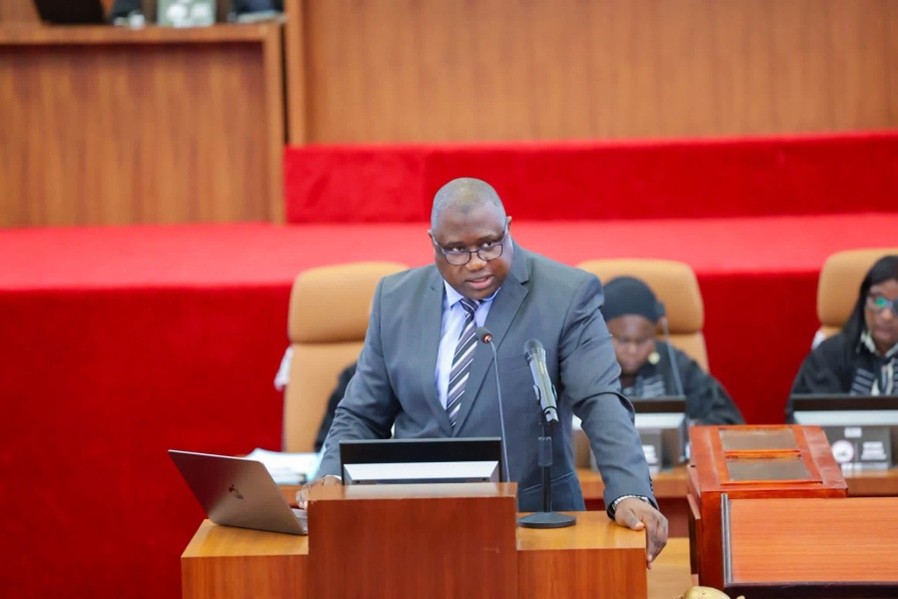
Attorney General and Minister of Justice, Dawda A. Jallow, told lawmakers that while government supports parole, the necessary infrastructure and rehabilitation programmes are not yet in place. “These facilities are not existing,” he said, stressing that designated centres, staff and a management system would be needed before parole could be effectively implemented.
Hon. Alhagie Mbowe, member for Upper Saloum, questioned whether government should be allowed to decide when the provision takes effect without a fixed timeline. He proposed giving government three to five years to establish the facilities, warning that indefinite suspension could render the law meaningless.
Hon. Almameh Gibba of Foni Kansala also pressed for prioritised funding for rehabilitation centres rather than simply delaying the law. He reminded colleagues that Parliament had already passed the Criminal Procedure Act to modernise the justice system, introducing parole, community service and suspended sentences.
Hon. Yahya Sanyang of Latrikunda Sabiji cautioned against weakening or delaying laws due to funding constraints, insisting that resources should instead be allocated through the national budget.
Responding, the Justice Minister emphasised that the amendment was not intended to remove parole from the law but to temporarily suspend its operation until facilities are ready. He noted that courts are already receiving parole applications despite the absence of infrastructure, creating a legal vacuum. Jallow said he was open to a fixed timeline but maintained that immediate suspension was necessary to give government time to build the system.
The debate therefore centred on how long government should be given to make parole a reality, with MPs pushing for a clear deadline backed by funding commitments.
The bill was later referred to the Assembly Business Committee (ABC) for committal to either a committee or the committee of the whole house, with 27 members voting in favour and seven against.