Navigating Hope and Exhaustion through the Art of Publishing
The Chinese Government imposes strict controls on publishing through both formal legal mechanisms and informal, arbitrary enforcement. Within this institutional context, independent publishing that does not rely on state-authorised or major commercial publishers is inherently precarious, therefore demanding constant resilience and creativity. 51 Personae is a notable independent publishing project that was born in this […] The post Navigating Hope and Exhaustion through the Art of Publishing appeared first on Made in China Journal.
 Black News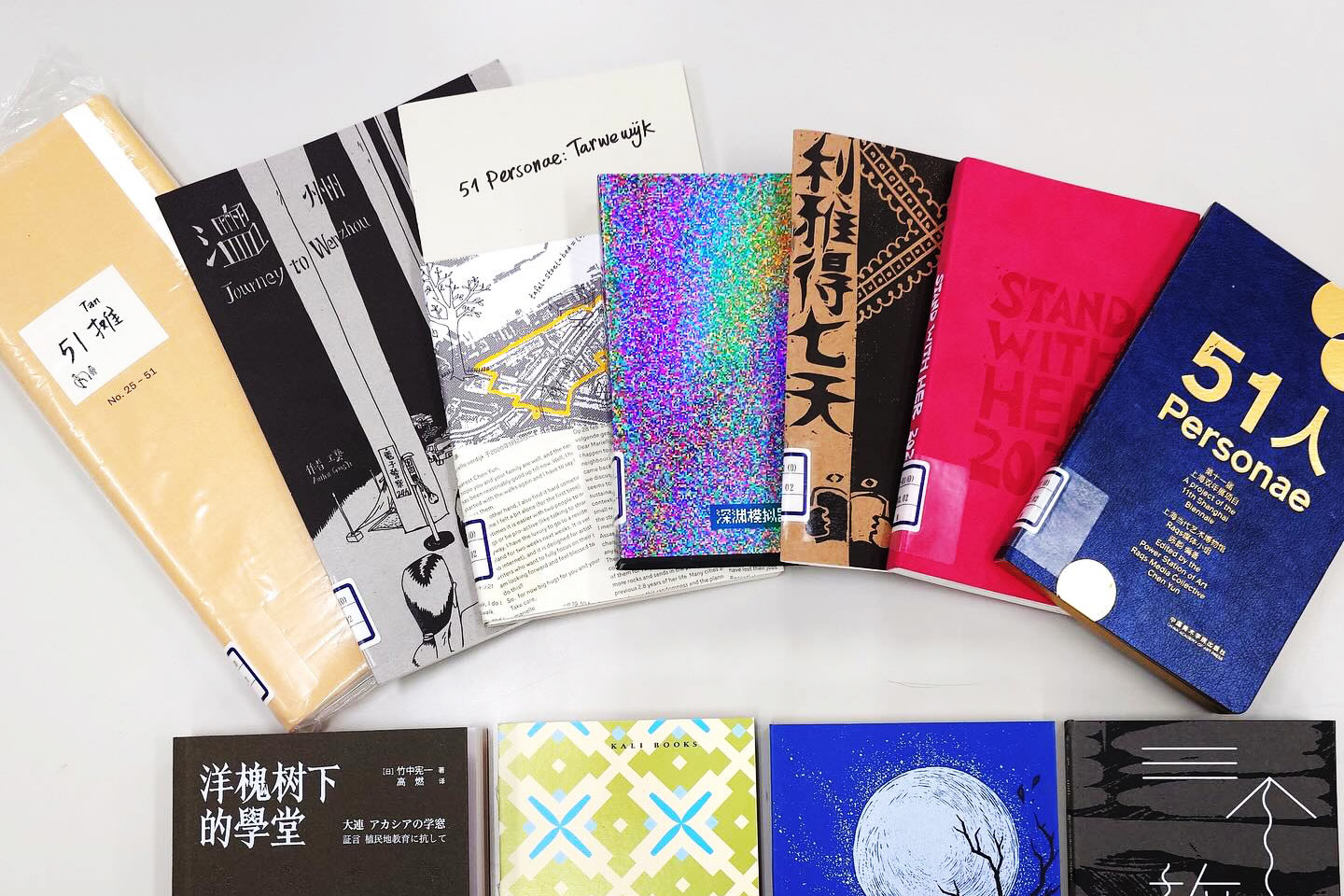
The Chinese Government imposes strict controls on publishing through both formal legal mechanisms and informal, arbitrary enforcement. Within this institutional context, independent publishing that does not rely on state-authorised or major commercial publishers is inherently precarious, therefore demanding constant resilience and creativity.
51 Personae is a notable independent publishing project that was born in this environment. It began as an offsite program of the Eleventh Shanghai Biennale (2016–17), comprising 51 events across Shanghai that foregrounded individual and collective experiences and actions in the context of urban transformation. Since 2018, the initiative has evolved into a self-sustaining independent art publishing project, motivated by the belief that publishing constitutes an urgent and legitimate artistic practice. The project places particular emphasis on lived experiences in Asia and the Global South, as well as marginalised voices under conditions of suppression.
A watershed moment came in 2022 when the founder of the project, Yun Chen, was anonymously reported to authorities, resulting in a series of administrative penalties, including the confiscation of books and temporary restrictions on her mobility. In response, she reassessed and adjusted her work to continue the project in compliance with China’s current legal framework. In this conversation, she discusses how she has navigated these constraints and what it takes to sustain an independent publishing practice.
Faye Xu and Jingzhe Zhang: 51 Personae began as an independent art project at the Eleventh Shanghai Biennale (2016–17). It evolved into a publishing initiative, marking the start of your independent publishing practice. This coincided with the rise of independent art book fairs in China. For example, the abC Art Book Fair was first held at the China Academy of Art in 2015 before becoming a professionalised institution and expanding to different cities from 2018 (Jingyi 2025). The UNFOLD Art Book Fair also started in Shanghai, in 2018. Until the onset of the Covid-19 pandemic, we witnessed a flourishing of art books and independent publishing in China. However, 2022 seems to have been a turning point: you were reported to the authorities, 51 Personae faced difficulties, and many art book fairs and independent bookstores across China began to experience increasing political pressure, ranging from police harassment to closures. What are your observations of the scene over this decade of change? How have you personally adjusted your publishing practices to adapt to these changing conditions, especially after 2022?
Yun Chen: Ten years is a very long time in the Chinese context. Over this decade, art book fairs and independent publishing have gone through intense changes. As a newly emerging field, they developed at an extraordinary speed. This is not an overstatement at all; within a mere five years, we covered a distance that took Europe 50 years. A tremendous amount of energy and passion went into creating on paper and making books during the seven or eight years before 2022. At that time, the public response to art books was very enthusiastic, and being reported to the authorities was not something anyone anticipated. Later, that changed, and this had to do with shifts in the broader political and social environment.
Objectively speaking, those ‘beautiful’ or ‘golden’ years will not come back. We must accept the end of that period and adjust to the changes. But at the same time, we must keep in mind that what emerged in those years was real. It might sound foolish, but sometimes I feel that people have begun to forget what domestic readers and art book fairs in China were like back then. Even though that growth has fractured and book fairs no longer operate in the same ways, with the same orientations or values, we should cherish the relationships we built with our readers. We should remember what was once possible. It may be impossible now, but perhaps one day it will become conceivable again. We should remember not only the trauma, but also the good moments, because those are resources for imagining the future and maintaining hope and strength.
After 2022, I had to shift more of my attention to overseas book fairs due to the increasing limitations on domestic events. International exhibitors could no longer participate freely and domestic exhibitors could no longer sell their art books without constraints. As I now participate in more art book fairs abroad and seek more readers outside China, I make more books in English and two or even three languages, so language is no longer a barrier for non-Chinese readers. Given how difficult it has become to grow an audience in China, having my books reach overseas readers has become a matter of survival.
Because receiving face-to-face feedback from Chinese readers has become increasingly difficult, overseas readers, through a network of volunteers, have become much more important to me. Their responses have reshaped how I understand the relevance of my content to my audience—something that previously occurred mainly through connections with readers inside China. Now I must think about how these books relate to readers in other social and cultural contexts, which might subtly but inevitably influence my decisions about what kinds of books to make and in which languages. These are important changes that I must accept.
FX: You once mentioned that the legal case against your publishing practice was framed as an economic rather than a political issue, which I find very revealing. It suggests that, in China, control over book publishing can operate through market-based regulations rather than solely through direct political censorship. The state maintains strict regulations over both the publishing and the printing industries to control them. For example, according to the Publishing Administration Regulations (出版管理条例), all books published in China must have a book number (NPPA 2025). In many countries, book numbers are merely a commercial identifier rather than a legal requirement and independent publishers and artists commonly produce and sell works without them. In China, however, ISBNs (International Standard Book Numbers) have been adapted into Chinese ISBNs, the rights to which have been strictly controlled by the Party-State since 1949. Only publishers approved by the National Press and Publication Administration (NPPA) and registered with the China ISBN Centre may apply for them (NPPA 2025). To some extent, a market-based mechanism designed for global commercial circulation, when imported to China, has been turned into a tool of cultural governance. How do you view the impact of the Chinese ISBN system?
YC: Chinese ISBNs, which allow for legal distribution within China, are reserved for state-run publishers. There are basically no other types of publishers in China, except for book curatorial companies that work through state-run publishing houses. In such a unique landscape, independent publishers have two choices: adapt or give up. Those who remain are not naive rebels but careful pragmatists. The act of alternative publishing in China is itself a form of quiet defiance, a commitment to keeping diverse perspectives alive in a society that increasingly favours uniformity over diversity.
But we should not assume that countries without China’s publishing regime automatically have more diversity. Even within China’s formal and mainstream commercial publishing, the range remains highly diverse and rich. If we ignore this, we create a very self-defeating narrative. What I want to emphasise is that the Chinese ISBN system has not completely disabled the publishing ecology. We still see many Chinese publishers managing to ‘dance in shackles’ to keep evolving in terms of quality and their range of subjects, depth of content, and creative design. How do you explain this? This is what we should reflect on: limitations in a system do not act exclusively as constraints but also have a positive potential. After all, we must exist within this system, so the key question is: how compatible do we choose to be?
We could look at things in a larger historical context. Indeed, compared with five years ago—which I believe was a once-in-a-lifetime period of exception—our survival and work have clearly become more challenging, but if we compare today to five decades ago, we are already doing things that would have been impossible back then, right? Neither technology nor the law has completely closed off possibilities. It is this perception that keeps me going.
FX: How to adapt to the system and stay hopeful is essential to continuing your practice. You mentioned that independent publishing and art book fairs in China used to operate with relatively little scrutiny or interference from the state, but the situation changed abruptly in 2022. This reflects the unstable and less institutionalised nature of cultural censorship and regulation in China. As scholars have observed, while cultural censorship exists in most countries, China’s system is uniquely unpredictable because of ‘the primacy of human beings over written documents’ and its control is ‘less mechanical and more psychological than it has been elsewhere’ (Link 2000: 81). Such an environment and the immense personal responsibility imposed on cultural workers intensify self-censorship (Hladíková 2021: 508). Could you share how this political context has affected your practice? Has it caused psychological pressure and, if so, how do you deal with that?
YC: Self-censorship certainly exists. However, even outside China, when you make a public statement, you must consider whether what you say is ‘appropriate’ in many senses. You must think about your readers, about different opinions, and about the relationship between your platform and the views you are expressing. In this broader sense, self-censorship can be understood as a generalised form of awareness or perception: if you take cultural production seriously and act responsibly, it is impossible to operate in a completely free or unrestricted way.
Of course, in China, there are many additional factors to consider, some of which are unimaginable in other social contexts. Because the censorship regime is constantly changing, you must calculate repeatedly whether what you say at any given moment will pass inspection, even if you have no intention of being unreasonable or radical. This is emotionally exhausting.
To cope with that exhaustion, I remind myself that I am not alone in facing this problem. Everyone involved in publishing in China is in the same situation. Yet, new books continue to be published in China and many of them are meaningful. Especially when working as part of a team, the anxiety is not mine alone. It is also the anxiety of the authors and other editors. We share this anxiety collectively and, as we bring a book into being, we constantly ask ourselves where the bottom line lies for us in each book. And this is an interesting question, or at least you must turn it into a meaningful question for yourself. Only then can you figure out what you truly cannot give up and what, in fact, may not be as non-negotiable as it first seems; it’s not that bad. In the process of debating these questions, you might grasp more accurately what really matters. I’m not saying self-censorship is wholly positive, but I do want to say that, even though it is exhausting, that exhaustion is not meaningless.
FX: Given that exhaustion, what drives you to make the great effort to obtain ISBNs to make your books legally published and publicly available?
YC: I still consider what I am doing now with 51 Personae an art project rather than just an act of independent publishing. Or, to put it another way, independent publishing is simply the form, while, in essence, it is an artistic project. For me, this project could end at any time, as long as it is the right time; it could also continue, but the point is not ‘publishing for the sake of publishing’. The point is to achieve something that, in ordinary life, one most often cannot, and the only way to achieve it is through artistic practice. What does it mean, then, to practise something ‘artistically’? What counts as an ‘artistic method’? For me, it means facing all the circumstances, conditions, and constraints head-on and responding to them flexibly. That is at the core of an artistic method. It does not pursue financial viability as a goal. There are things it wants and may never manage to achieve, but that does not make the attempt less worth making, because it is not about proving to anyone that it can or cannot be done.
FX and JZ: Over the past decade, your practice has undergone a major shift, from running the Dinghaiqiao Mutual Aid Society (DMAS) community space to being an independent publisher. Does your interest in public space continue in your current practice? If we think of printed books as a kind of public space, what different affordances do they offer compared with a physical public space such as DMAS?
YC: My interest in space and especially public space built up throughout my life. When I was a child in Shanghai, the per capita living space was less than 2.6 square metres. It was an almost unimaginable level of compression. Then, over the following three decades, the whole city underwent a massive program of demolition and redevelopment. This extreme dissolution of space inevitably left a deep mark on me.
In my early thirties, I began working on DMAS, which was a community space. At that time, many people—myself included—had a rather underdeveloped understanding of space, because we were mostly experiencing its effects passively. From about 2014, when I started running Dinghaiqiao, to 2018, when I decided to stop, I transformed from someone who merely received space to someone who could sense it more deeply and act upon it. This transformation was sparked by a collective experience embedded in the social changes taking place at that time in Shanghai, especially in the governance of urban spaces, as I came to perceive them through the connections I had with people in my work on the community space. After 2018, possibilities in physical public space shrank rapidly, so I felt that it might be time to give up space-based practice. The compression of public space and increasingly elaborate grid management [a system of microlevel urban surveillance dividing cities into small units, each monitored by designated officials] had an immediate impact on me—both bodily and psychologically. I no longer felt that I could realise the kind of publicness I once practised within a physical space, because publicness no longer guaranteed open dialogue; I already sensed boundaries. Although I thought there should be no boundaries and I wanted everyone to be welcome in the community space of Dinghaiqiao, at a certain point, I realised that welcoming everyone without distinction would make all the voices within that space vulnerable. At that moment, the space would cease to function as the kind of ideal public space I had envisioned.
That was when I turned towards the two-dimensional space of the book as a way to continue exploring spatial possibilities. The way I decide on content acquisition and feel about making books is still based on my concerns about practice and the production of space. While my practice has become more multifaceted, it is still rooted in the perceptions and experiences of my previous work in space production. Books as a medium offer a freedom that a physical space could no longer provide.
Books are an ultimate kind of blockchain: they can travel to readers, rather than relying on people to come to a particular location, as is the case with an exhibition or an offline event. Locality does not disappear but is instead extended in another form. Because every author and designer involved in this publishing project remains locally situated, their place-based experience can now travel further through the book. In that sense, I see my publishing practice as a continuation and development of the locality based on the physical space in which I engaged.
JZ: As 51 Personae participated in many book and zine fairs, your books have travelled not only to East Asia, Europe, and North America, but also to Taiwan, Southeast Asia, and even Mexico. This year we volunteered to set up a table for 51 Personae at two book fairs in Amsterdam, witnessing at first hand how demanding it is for you in terms of labour, how challenging financially, and how unpredictable difficulties can arise at any time. What are your thoughts after exploring overseas book and zine fairs?
YC: Selling books in Europe is indeed high input and low return, especially at the more institutionalised art book fairs. Their understanding of what an art book is differs greatly from mine. They prioritise design and form, while, for me, content and social issues always come first.
But we also participate in locally grounded, less formal, and more issue-oriented book and zine fairs, such as the Anarchist Book Fair in Amsterdam. We are better suited to such events. Admittedly, their agendas are mainly set by mainstream (usually white) communities, and alternative perspectives are not always well represented, so I was somewhat cautious and even resistant. But now I see it this way: once we participate, the space is no longer as white-centred. Even if audiences and exhibitors remain predominantly white, all the positive responses we receive show that this is a reality that can only be changed through active engagement. Only as we build new conversations through increased participation and receiving more responses will these book fairs change. This is something I had not considered before going to the fairs.
I always embrace outcomes with an open mind. If I do my best, I am prepared to accept the results. When it comes to overseas distribution, this can be high costs or even lost shipments. At this stage, it is impossible for me to run this project as a commercial venture. On one hand, I simply cannot precisely map the human and material resources required for every step. On the other hand, this is not the right way to approach what we are doing, because the process of deciding what to prioritise, what to protect, and at what cost is at the core of how this practice works.
The difficulties and exhaustion might be an inevitable result of trying to sustain international distribution with extremely limited resources. At the same time, I may need to make some adjustments next year. For example, participating in highly institutionalised art book fairs in Europe, especially those hosted within white cubes, may require more caution going forward, because sales there have been extremely poor and the costs are simply too high to justify.
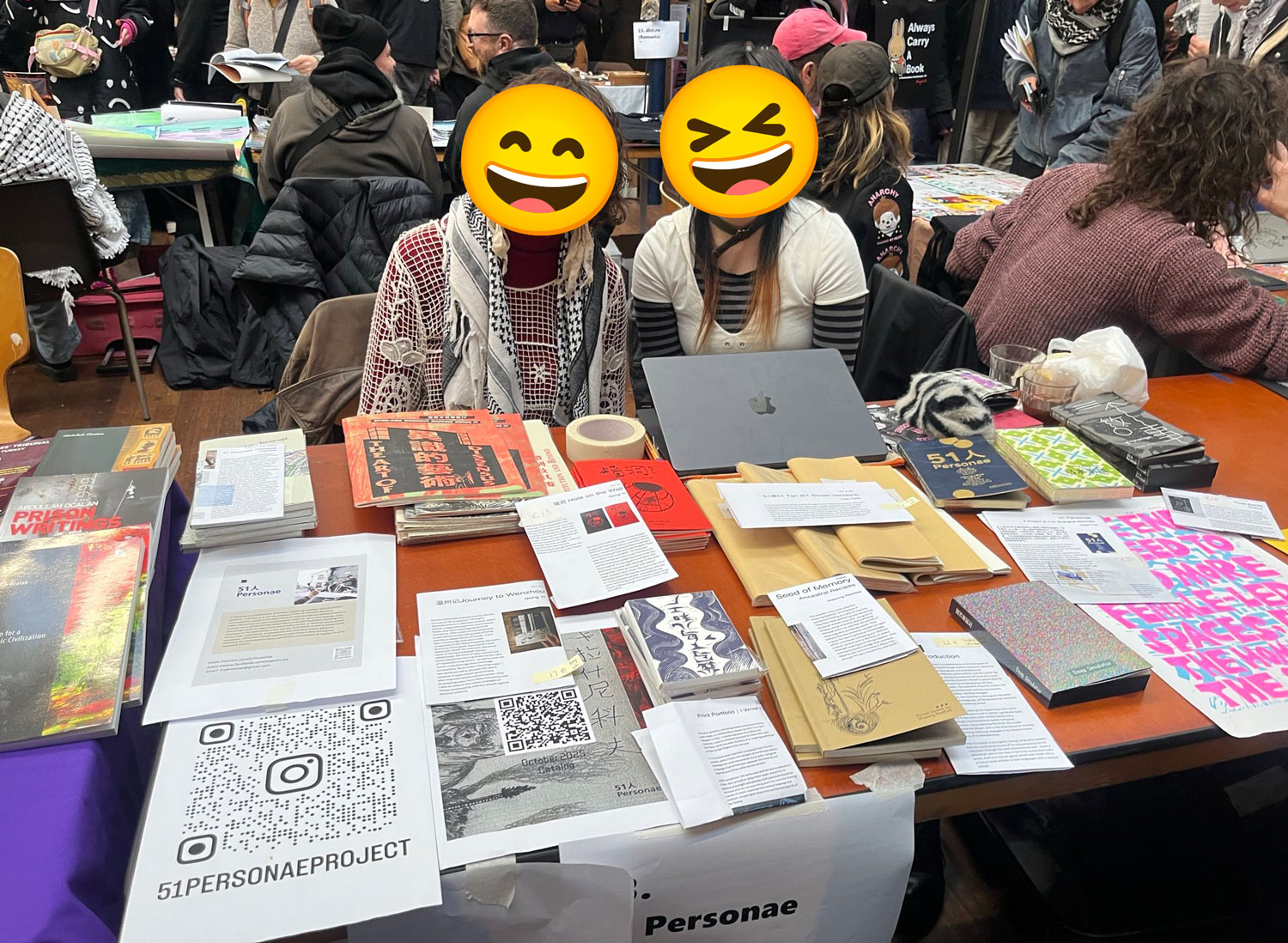
JZ: Talking about international distribution, the way 51 Personae participates in book and zine fairs is quite particular. You usually rely on overseas Chinese students and recently graduated young people as volunteers—such as us! Another observation we had in volunteering for 51 Personae was that these books connect many people and open a shared space in their process of circulation.
YC: Many volunteers had similar observations. Through these fairs they got to know other volunteers and, because they share some common ground in how they see the world, it is very easy for them to become friends. Sometimes they even become romantic partners. In just two years, I have already witnessed more than one such story.
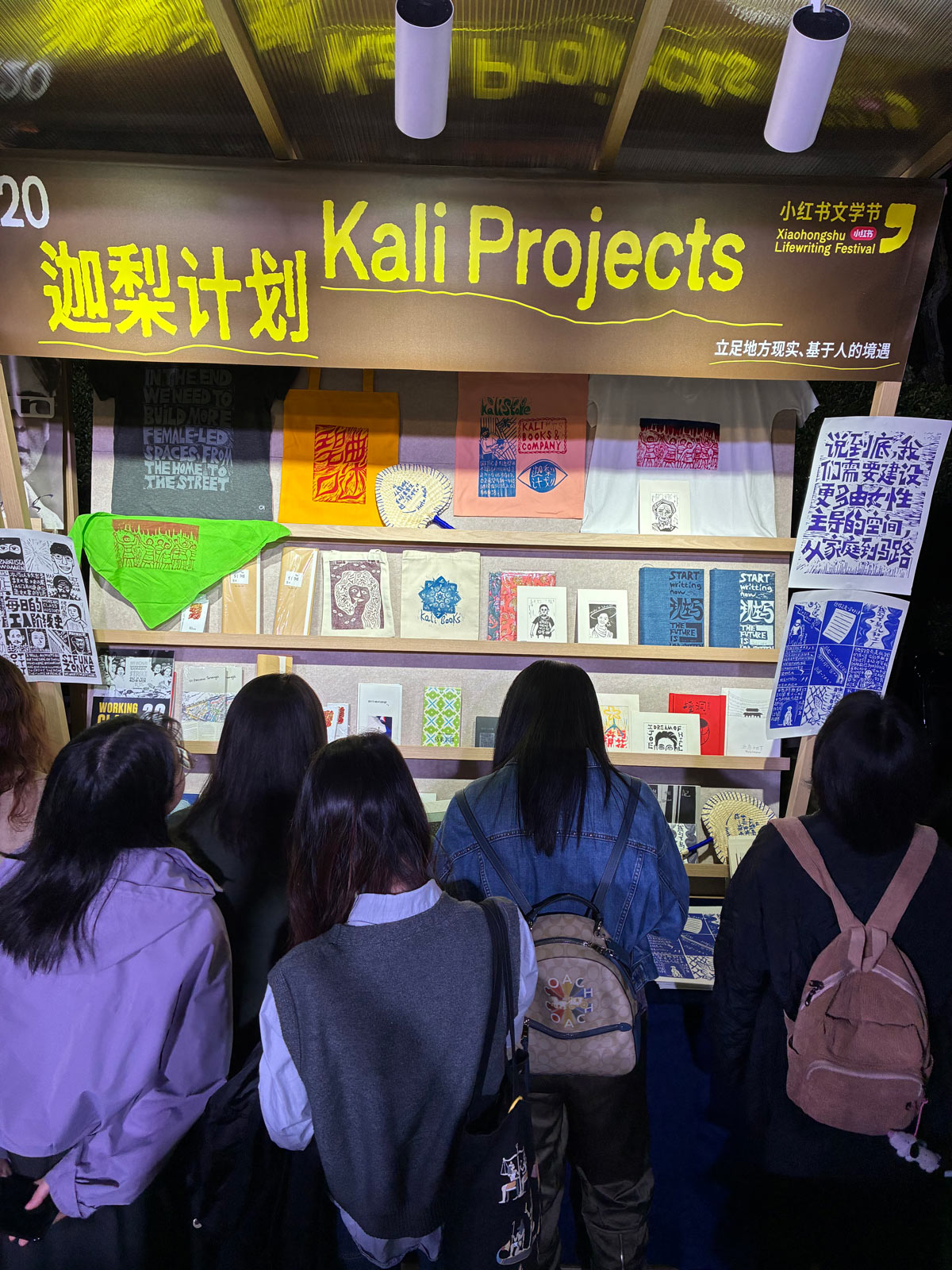
Beyond building connections among the Chinese diaspora, volunteers can also connect with local readers. For instance, one volunteer in Chicago recently organised an event in her home at which participants read books from 51 Personae and I joined their conversation remotely. One participant was a white man. When I asked the organiser how this person had heard about the event, it turned out that he had encountered our book Three Stories at the Pilsen Zine Fest and found it deeply inspiring, so he decided to join this mainly Chinese gathering. That was the very first zine fair in Pilsen, a district in Chicago, still very small in scale, and we were among the participants. For me, this already represents a crossing of boundaries beyond the everyday social circles of Chinese international students and other communities. In this sense, books are truly a medium. They not only convey messages from authors, curators, editors, and designers. They also transmit energy and create connections through the embodied act of setting up a stand at a book fair. If I were simply to send these books to online vendors or local bookstores, these connections would not happen. A stand creates genuine face-to-face encounters. It is a form of social exchange that is extremely special in this age of the internet and artificial intelligence.
At the same time, these volunteer-run stands sustain the publishing project, allowing it to keep going a bit longer. They open many, many doors in many places. This is something I had not anticipated, because most of my decisions were truly made from desperation. Yet, once we went overseas, things started to come together in small ways. This was only possible because so many people abroad stepped in to help, including not only the Chinese communities with which we are already familiar, but also those who are not Chinese.
The authors disclosed receipt of the following financial support for the research, authorship, and/or publication of this article: funded by the European Union (ERC-2022-Advanced, Resilient Cultures—Music, Art, and Cinema in Mainland China and Hong Kong [RESCUE], ERC Grant Agreement no. 101097553). The views and opinions expressed are, however, those of the authors only and do not necessarily reflect those of the European Union or the European Research Council Executive Agency. Neither the European Union nor the granting authority can be held responsible for them.
References
Hladíková, Kamila. 2021. ‘In the Name of Stability.’ In The Routledge Handbook of Chinese Studies, edited by Chris Shei and Weixiao Wei, 505–17. London: Routledge.
Jingyi 静宜. 2025. ‘10年了,中国艺术书展何去何从 [Ten Years On, Where Does the China Art Book Fair Go]?’ Wallpaper WeChat Official Account, 9 September. mp.weixin.qq.com/s/Vm-AXOyXSnZjECuR17FCMg.
Link, Perry. 2000. The Uses of Literature: Life in the Socialist Chinese Literary System. Princeton, NJ: Princeton University Press.
National Press and Publication Administration (NPPA). 2025. 出版管理条例 (2024年修订) [Publishing Administration Regulations (2024 Amendment)]. NPPA website, 7 February. www.nppa.gov.cn/xxgk/fdzdgknr/zcfg_210/fg_212/201712/t20171226_4560.html.
The post Navigating Hope and Exhaustion through the Art of Publishing appeared first on Made in China Journal.