New York’s school cellphone policy enters its second year
New York City schools continue enforcing cellphone restrictions aimed at reducing classroom distractions and improve learning. The post New York’s school cellphone policy enters its second year appeared first on New York Amsterdam News.
 Black News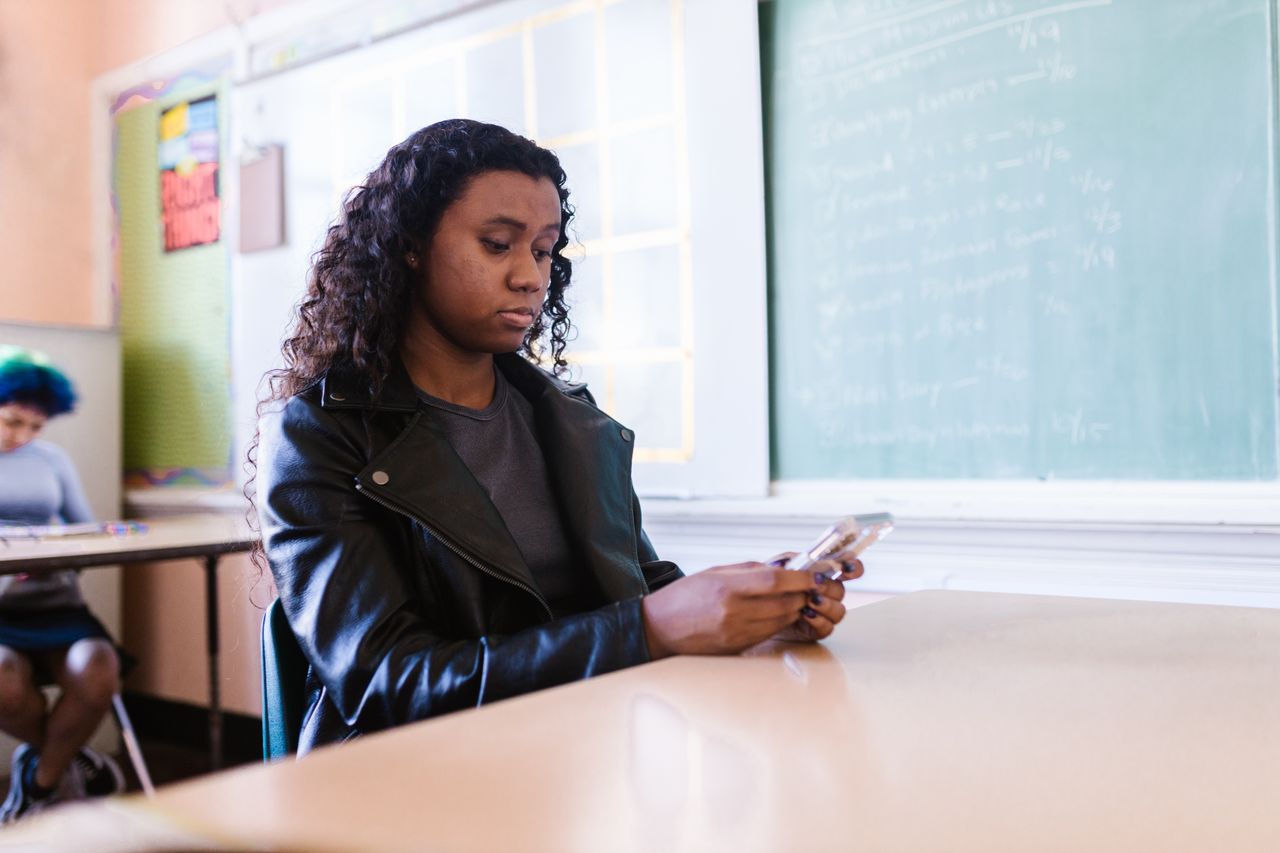



As students prepare to return to school this fall, New York City schools will continue enforcing cellphone restrictions aimed at reducing classroom distractions and improving student learning.
The policies stem from New York’s Distraction-Free Schools Law, signed by Gov. Kathy Hochul in early 2025. The law prohibits students from using personal internet-enabled electronic devices during the school day. Supporters say the policy is intended to improve focus, encourage face-to-face interaction, and address concerns about the effects of excessive screen time on students’ academic performance and mental health.
According to Hochul’s office, the law took effect during the 2025–26 school year and applies to all public school districts, charter schools, and Boards of Cooperative Educational Services (BOCES).
“I know our young people succeed when they’re learning and growing, not clicking and scrolling,” Hochul said in a statement last school year. “That’s why New York continues to lead the nation on protecting our kids in the digital age.”
Geneva Lewis, a Bronx parent, believes separating cellphone use from classroom instruction benefits students.
“I think it’s good because we have to separate time for phone use and learning,” Lewis said. “Everyone knows phones are more of a distraction than a support for students.”
Not everyone supports the restrictions.
Dasiel De Jesus, a 17-year-old high school senior, believes students should have limited access to their phones during noninstructional time.
“I believe that having your phone during lunch and free periods would be good so that students can do things like show friends funny videos online,” De Jesus said. “That way there’s a mix of socialization offline while still being engaged online.”
Critics argue that the law does not address the underlying causes of students’ mental health challenges.
The New York Civil Liberties Union (NYCLU) has criticized the policy, arguing that schools are receiving funding for cellphone storage systems instead of additional social workers, counselors, and psychologists.
“As New York’s K-12 students head back to school this fall, there’s one more summertime freedom they’ll have to say goodbye to: access to their phones,” the organization said in a statement. The NYCLU also argued that schools need more mental health professionals rather than cellphone pouches and other storage systems.
Cellphone restrictions have become increasingly common across the United States.
According to the Institute of Education Sciences, 77% of public schools prohibit students from using cellphones in at least some classes, while 86% of elementary schools have similar policies. In addition, 38% of schools with cellphone restrictions prohibit phone use during free periods, including lunch.
Research on the effectiveness of cellphone bans has produced mixed results.
A study by the National Bureau of Economic Research found that cellphone bans had “close to zero” effect on students’ test scores. Researchers suggested that after phones were removed, students were often distracted by other technology, including laptops and tablets commonly used in classrooms.
As smartphones have become a larger part of students’ daily lives, schools continue to debate whether they should be allowed during the school day.
Supporters of cellphone restrictions argue that the policies reduce distractions, improve classroom behavior, and encourage students to interact more with teachers and classmates. Opponents contend that smartphones can be valuable tools for learning, communication with parents, and emergency situations.
Educators have also raised concerns that smartphones contribute to issues such as class skipping, cyberbullying, excessive social media use, and conflicts among students.
As of July 2026, 44 states had adopted policies governing student cellphone use in K–12 schools, with 35 implementing statewide restrictions or bans during the school day. Florida, Hawaii, Louisiana, Utah, and South Carolina are among the states that have recently adopted or expanded cellphone policies.
The post New York’s school cellphone policy enters its second year appeared first on New York Amsterdam News.