Nigeria bets on battery supply chain with West Africa’s biggest lithium processing plant
Nigeria has commissioned what the federal government describes as West Africa’s largest lithium processing plant, as Africa’s biggest mineral producers race to capture more value from the fast-growing global market for battery materials.
 Black News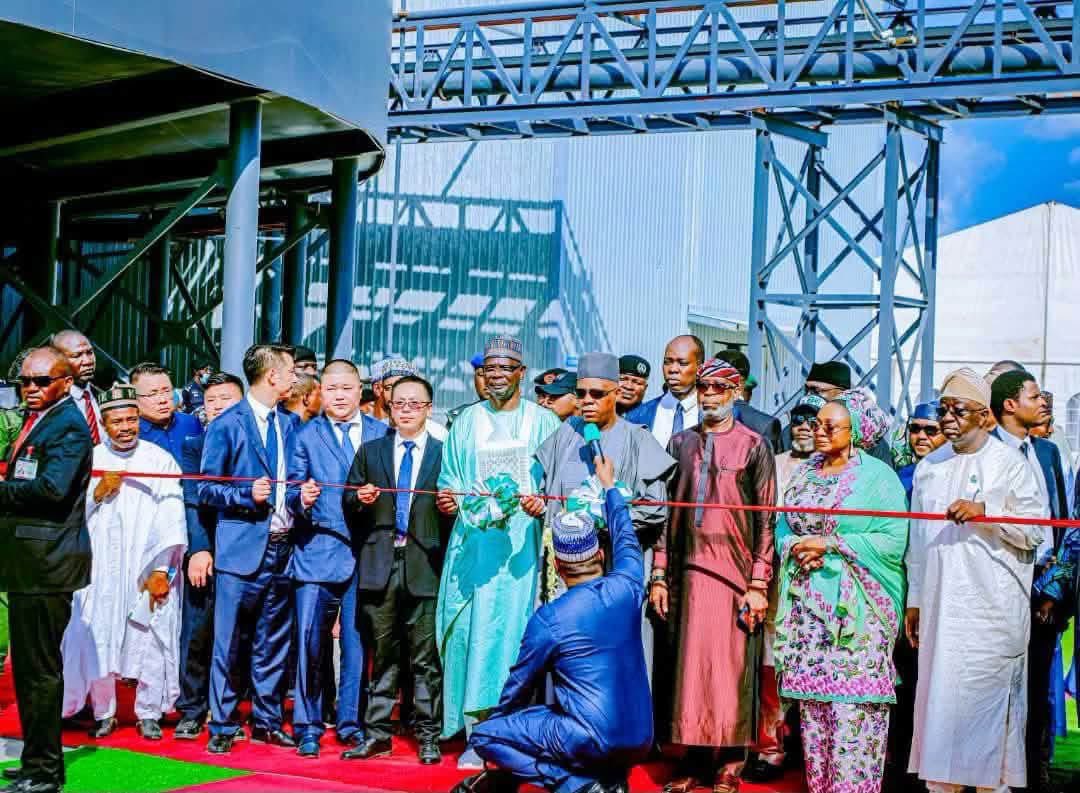

Nigeria has commissioned what the federal government describes as West Africa’s largest lithium processing plant, as Africa’s biggest mineral producers race to capture more value from the fast-growing global market for battery materials.
- Nigeria has commissioned what it says is West Africa’s largest lithium processing plant.
- The project can process up to three million tonnes annually.
- It marks a push to process minerals locally instead of exporting raw ore.
- The move comes as African countries compete for a bigger share of the global battery supply chain.
The facility, located in Endo community in Nasarawa State, has a daily processing capacity of 6,000 metric tonnes and an annual capacity of three million metric tonnes.
Officials say the project is part of Nigeria’s strategy to stop exporting raw minerals and instead build domestic processing industries that create jobs and attract manufacturing investment.
President Bola Tinubu, represented by Vice President Kashim Shettima at Thursday’s inauguration, said Nigeria must move beyond extracting raw minerals if it wants to benefit from the global demand for critical minerals.
“Natural resources may be a blessing, but only vision can turn them into wealth. Only institutions can protect that wealth. Only industry can multiply it, and only people can give it meaning,” he said.
He added that Nigeria must deliberately shift “from extraction to processing, from potential to production, from raw materials to value-added goods, and from isolated investments to integrated industrial ecosystems.”
The company operating the facility said it has already created more than 1,000 direct jobs and over 2,000 indirect jobs.
DON'T MISS THIS: Africa's top oil producer set to add rare earths to its list of prized exports after breakthrough discovery
Africa shifts towards mineral processing
The commissioning comes as several African countries move to process more of their critical minerals domestically instead of exporting raw ores, seeking to capture a larger share of the value generated by the global transition to electric vehicles, battery manufacturing and renewable energy.
Zimbabwe has banned exports of unprocessed lithium, Namibia has introduced restrictions on exporting certain unprocessed critical minerals, while the Democratic Republic of Congo and Zambia have been pursuing plans to develop regional battery value chains built around their vast copper and cobalt resources.
Those efforts reflect a broader shift across Africa as governments seek to move beyond being suppliers of raw materials and position themselves higher up global manufacturing supply chains.
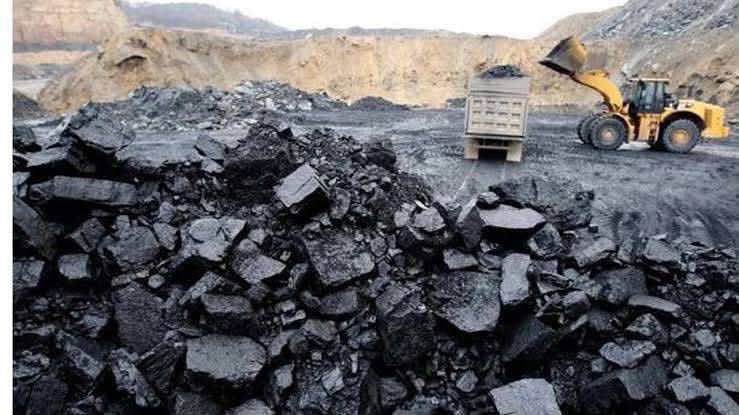
Lithium has become one of the world’s most sought-after critical minerals because it is used in rechargeable batteries powering electric vehicles, energy storage systems and a wide range of consumer electronics.
Nigeria doubles down on critical minerals
The inauguration also comes days after Nigeria announced the discovery of what it described as a world-class polymetallic mineral province in Kaduna State containing platinum group metals, gold, nickel, copper, lithium and rare earth elements.
The Minister of Solid Minerals Development, Dele Alake, said the latest investment demonstrates the government’s policy of promoting local value addition in the mining sector.
He said Nigeria would no longer encourage the export of raw minerals without processing them locally.
“Our goal is to begin to produce lithium batteries, vehicles, phones, solar panels, solar-powered turbines, and every gadget that uses lithium as a base requirement for its performance. We want to produce everything in Nigeria,” the minister said.
DON'T MISS THIS: Kenya nears U.S. critical minerals deal as Ruto pushes for local processing
Alake added that several African countries have begun adopting similar policies aimed at encouraging domestic mineral processing.
Chinese investment deepens
The project also highlights the growing role of Chinese companies in Africa’s critical minerals sector.
Speaking on behalf of Diamond New Energy, Yu Chongqiang said the company is investing not only in mining but also in processing facilities, infrastructure, workforce development and partnerships with host communities.
He said the company’s long-term objective is to build an integrated industrial platform that supports local manufacturing, strengthens supply chains and contributes to Africa’s clean energy future.
DON'T MISS THIS: Nigeria to open $800m Chinese-funded lithium processing factories this year
Nasarawa State Governor Abdullahi Sule said the state remains one of Nigeria’s richest mining destinations, with commercial deposits of lithium, lead, zinc, copper, gold, iron ore, gemstones and marble, while calling on more investors to explore opportunities in the sector.
The new processing facility adds to Nigeria’s efforts to position itself as a regional hub for critical minerals at a time when governments worldwide are seeking more diversified and resilient supply chains for materials essential to electric vehicles, batteries and clean energy technologies.