What to do in San Pedro de Atacama, Chile
Why you must channel you inner adventurer and head to Chile's otherworldly San Pedro de Atacama. The post What to do in San Pedro de Atacama, Chile appeared first on The Travel Magazine.
 Black News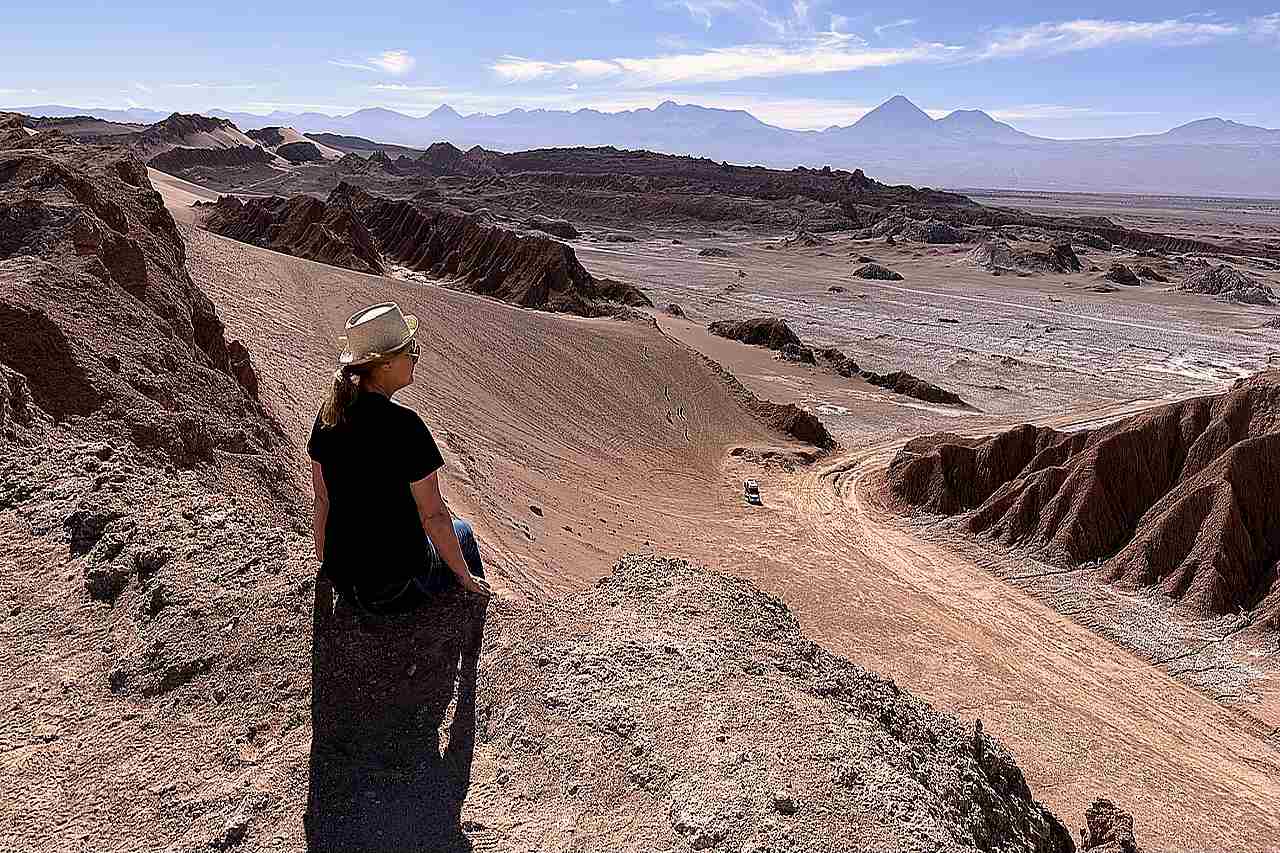
This is the driest and often the hottest place on Earth, where some areas are so high above sea level that it’s sometimes difficult to breathe. Alongside that, petulant temperatures offered up freezing mornings and evenings and boiling hot afternoons.
We drove through a sparse desert where llamas roam freely, explored the mineral-rich canyons, gazed at the pristine night sky, and at shining lagoons that look like artwork and where smoking volcanoes emit cloud-like plumes of steam replete with pulverised rock, while the Andes looked on.
Frankly, spending a week in Northern Chile’s San Pedro de Atacama was an excellent decision.
The 62-mile drive from the airport in Calama (a copper-mining town) was literally one of ups and downs. The journey started at 2,400 metres above sea level. We stopped to enjoy the mountainous desert scenery of the Cordillera de Domeyko, 3,600 metres above sea level, passing through moonscapes and settling in San Pedro de Atacama at 2,400 metres, where at last some lush greenery appeared.
Large areas of this arid, dusty land have turned white with lithium and salt deposits. Sometimes there was a haze on the horizon, and as the sun set, a bright, lantern-orange hue descended, creating an incandescent mountainscape.
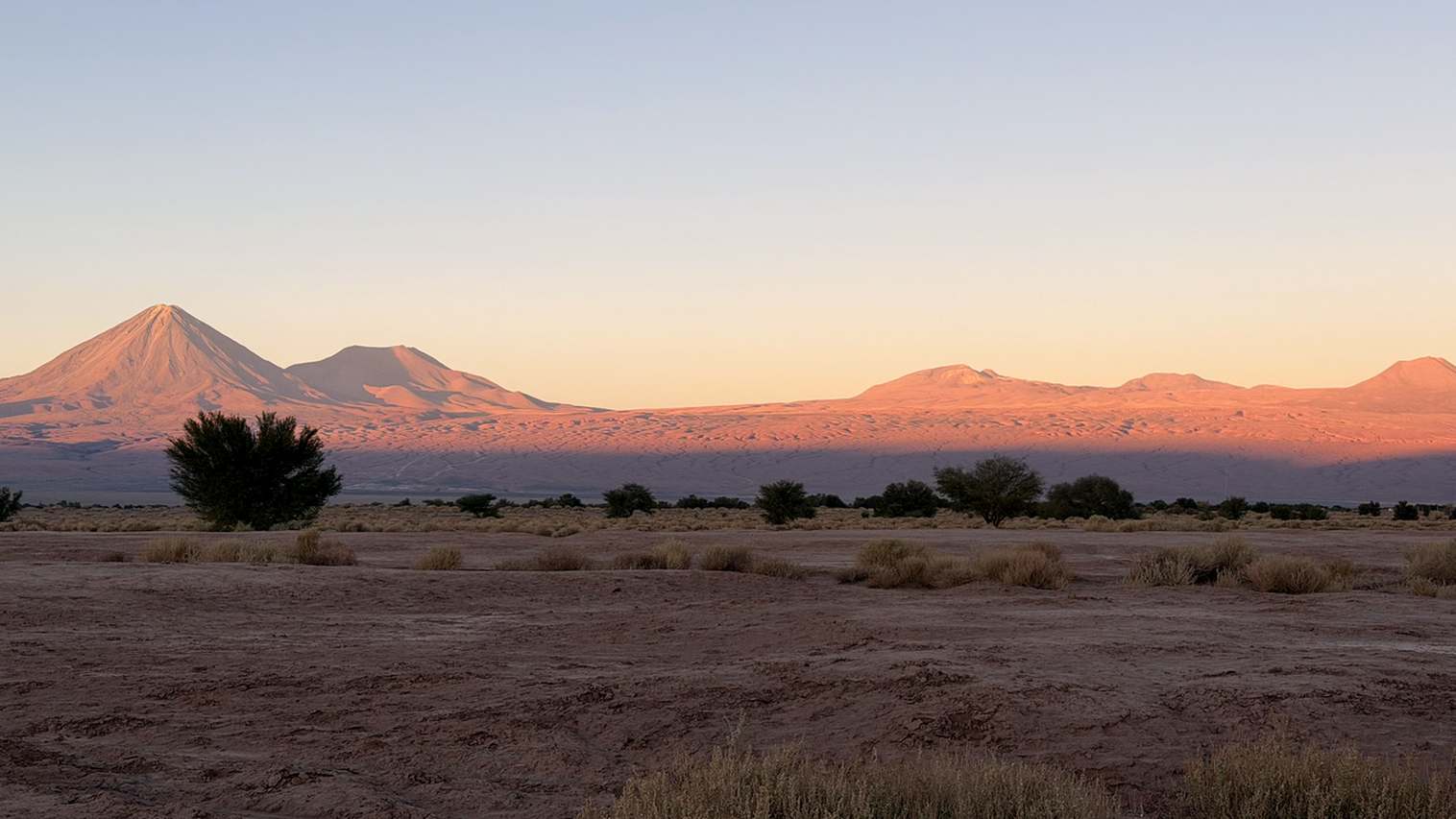 And geologically, the provenance of this place is mind-blowing. Beneath my feet was an ancient seabed that,195 million years ago, was under the sea. We were walking over the tectonically active South American Plate, where millions of years of tectonic compression buckled the earth’s crust, pushing up the surrounding Andes mountain range, the Cordillera de Domeyko, and the famous Cordillera de la Sal (Salt Range).
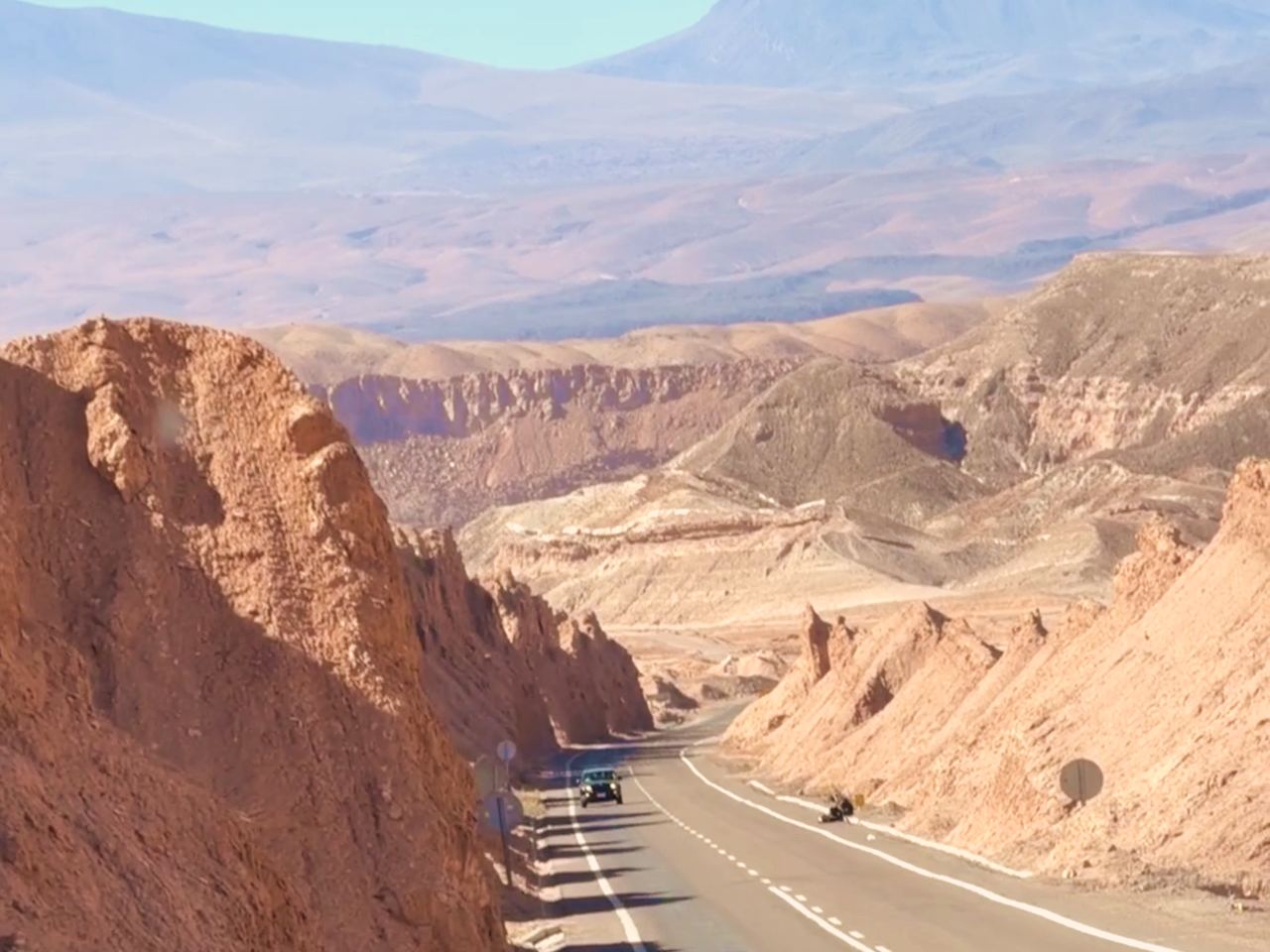
Route 28 from Calama to San Pedro, Chile
Cone-shaped Licancabur and the smouldering Láscar volcano are the most beloved by the ancient Lickanantay, the highly spiritual indigenous people, and uncannily, wherever I went, they were there too, always looking on from the east. I was aware that just on the other side was Argentina.
We turned off the tarmacked Route 28 onto dirt tracks, which were for the most part not signposted. We were heading for Reserva Elemental Puribeter (which means “Water Path” in the idigenous Kunza language), a 47-hectare conservation area in San Pedro de Atacama, and wondered how the driver recognised the land so well that we actually got there.
San Pedro de Atacama Town
I’m glad we did, as the alternative would be to stay in San Pedro de Atacama town, a 10-minute drive away. Not that that would be a bad thing; the town is pretty and petite, with dirt streets, hemmed by one-story Spanish colonial adobe buildings where some have turned red from dusty roads.
At the top of San Pedro is an attractive square, with a 17th-century Iglesia de San Pedro de Atacama, Pueblo-style church, the second oldest in Chile. The roof, and the entrance door are built with cactus wood and held together with llama leather.
Caracoles, the main road is full of bars, restaurants, shops and street sellers. I enjoyed a massage at Kimal Rela and bought a gorgeous llama wool scarf, ideal for the UK winters.
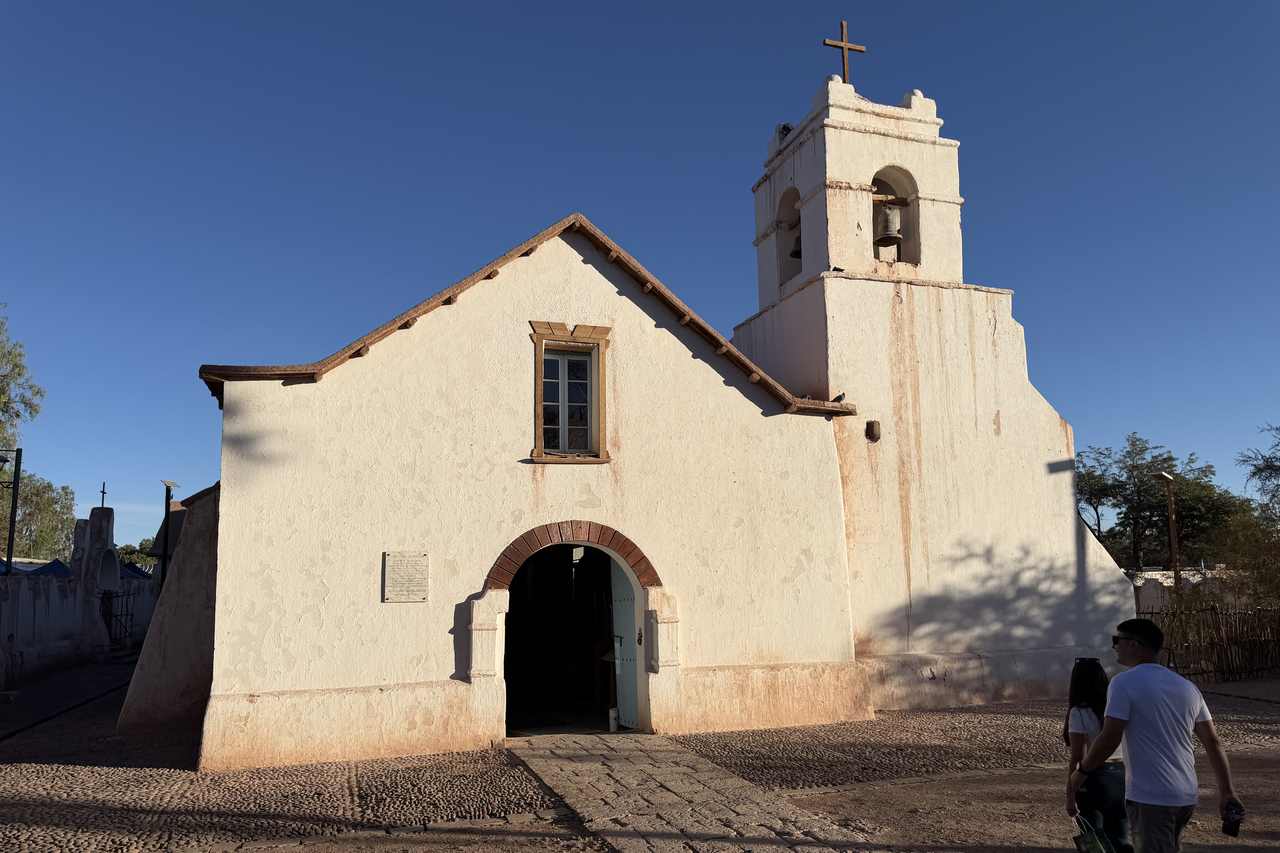
Iglesia de San Pedro de Atacama
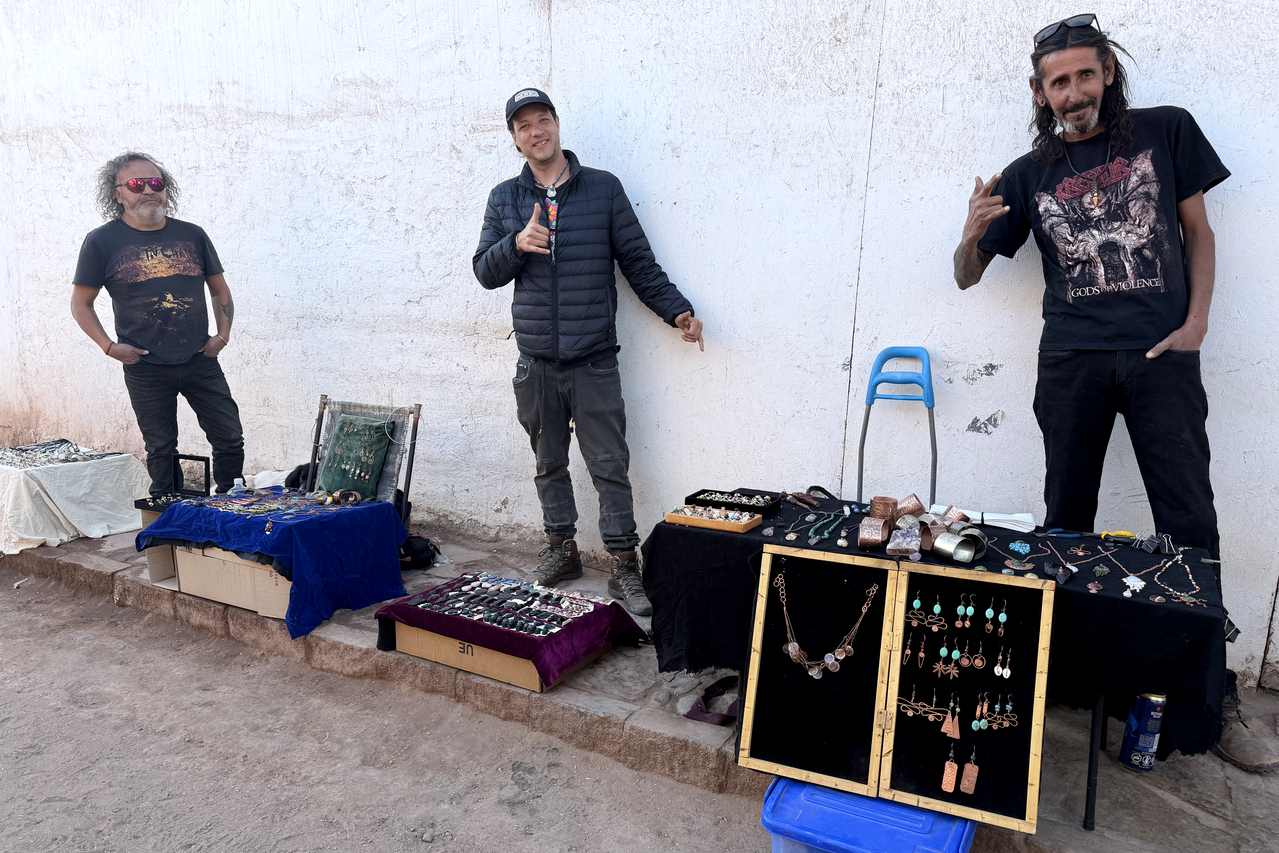
Street vendors
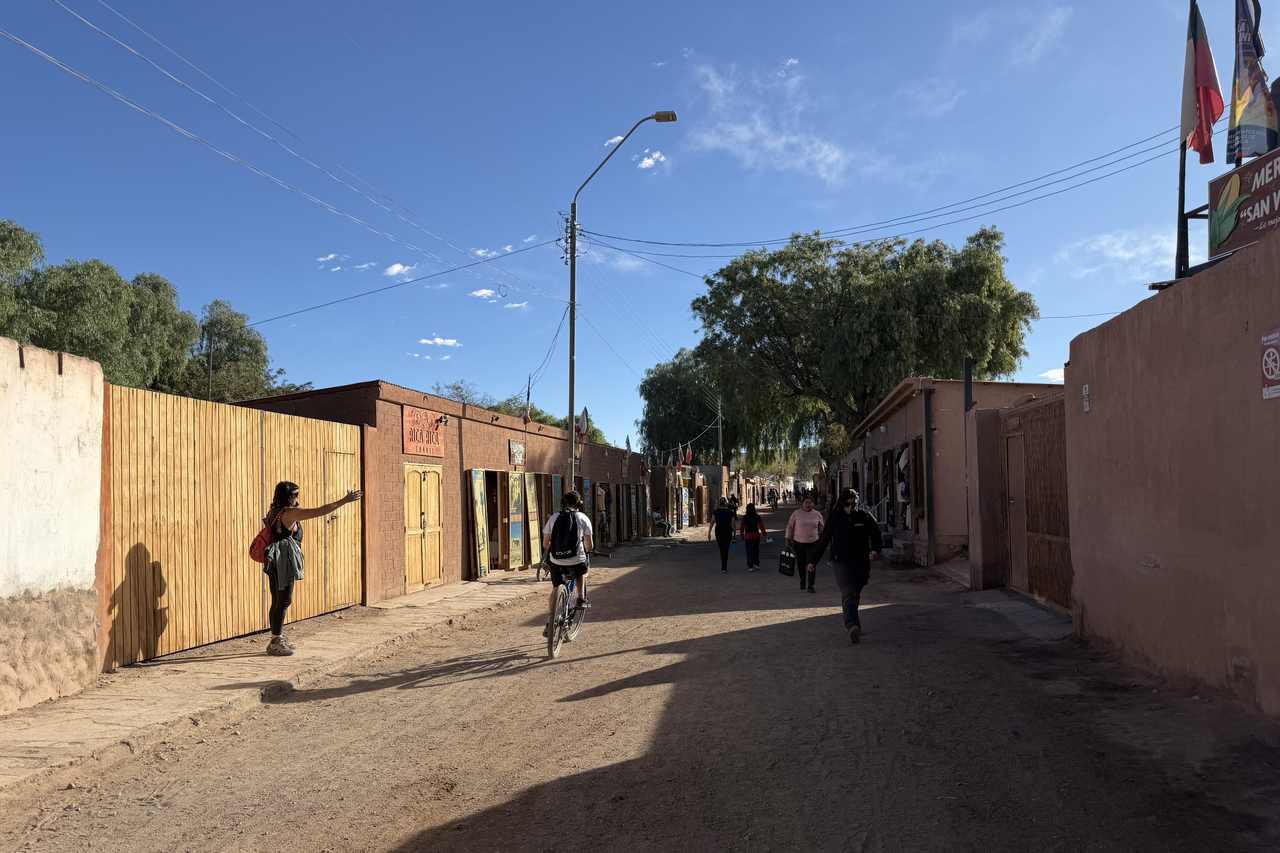
A street in San Pedro de Atacama
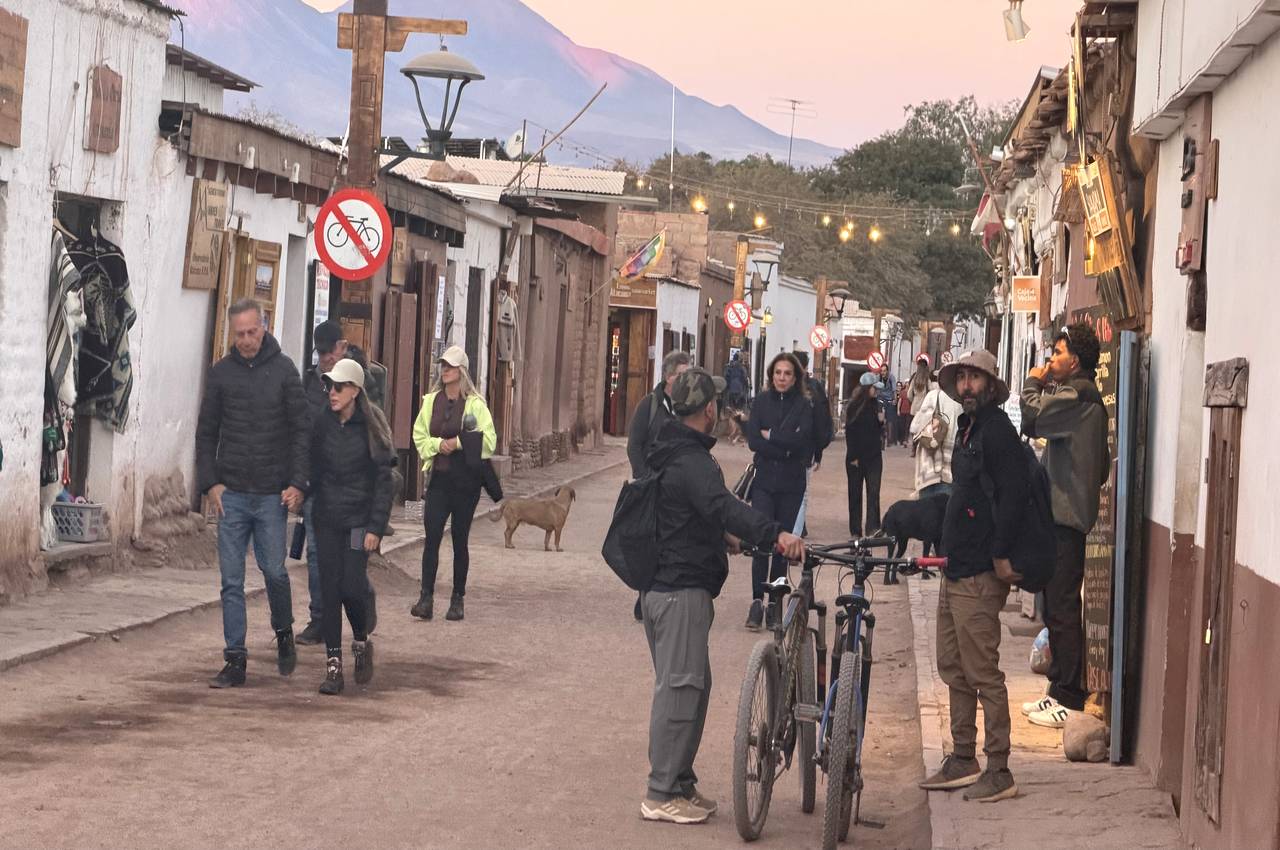
San Pedro town early evening
It’s a chilled vibe, a sense of easy living, and perhaps why the town attracts backpackers who stay at hostels in rustic buildings costing from as little as $20 a night. There are five-star hotels too, but a stay at the out-of-the-way luxurious Puribeter cannot be beaten.
Puribeter
Our home was a delightful, quiet, private property on the Puribeter reservation. Just in front of the open-sided living space, we could see Licancabur and Láscar, who soon began to feel like old friends.
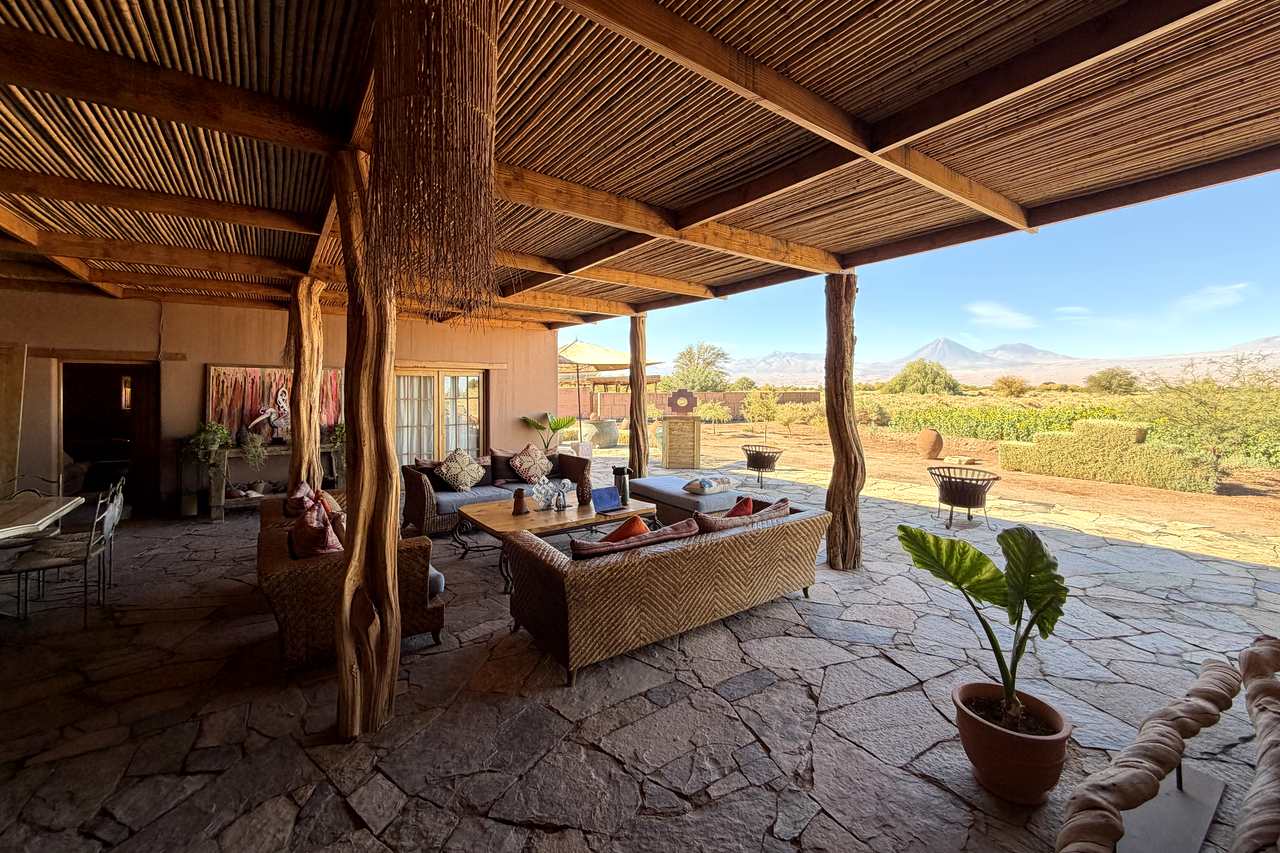
This is where we met Juan Carmelo Ramírez Rodríguez, a member of the Lickanantay (aka Atacameño) community. He is known simply as Carmelo, yet there is nothing simple about him. An educator working with the reservation with a shaman-like passion for the ancestral knowledge, ecology, and native and spiritual heritage of the Atacama Desert.
Awakening ceremony – gratitude for Pachamama
Though not an early riser, there was no way I would miss Carmelo’s 5.30 am ritual for a sunrise homage to the earth – Pago a la Tierra (Payment to the Earth). This is an intricate ceremony to thank and give back to Pachamama (Mother Earth).
An Indian table was arranged on the ground. The base was a colourful blanket on top of which Carmello placed coca leaves, seeds, wine, traditional sweets, and sunflowers. There was chicha too, a highly potent alcoholic drink, and as I sipped, I became aware of hawks, owls and other birds filling the chilly early morning air with their dawn chorus.
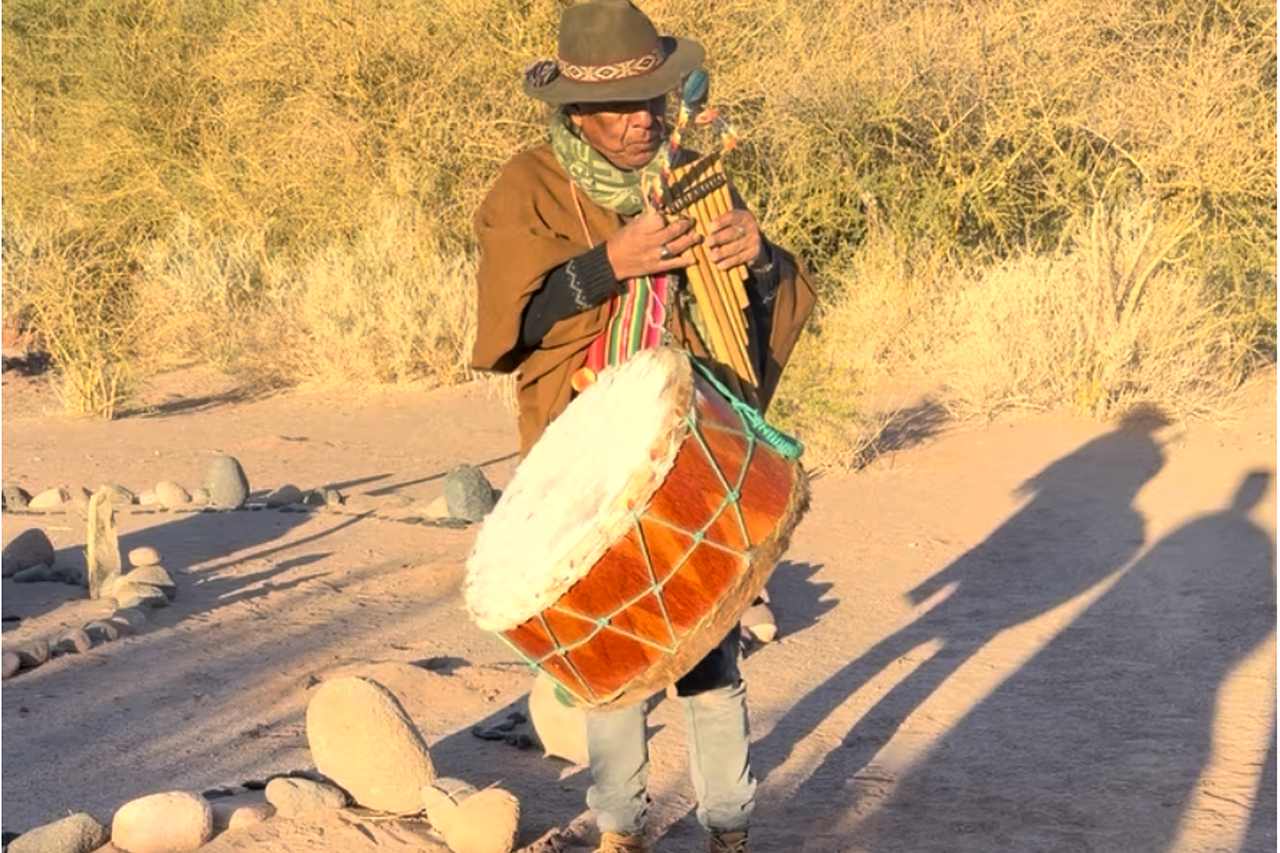
Carmelo plays Bombo & Wank'ara: and Zampoña
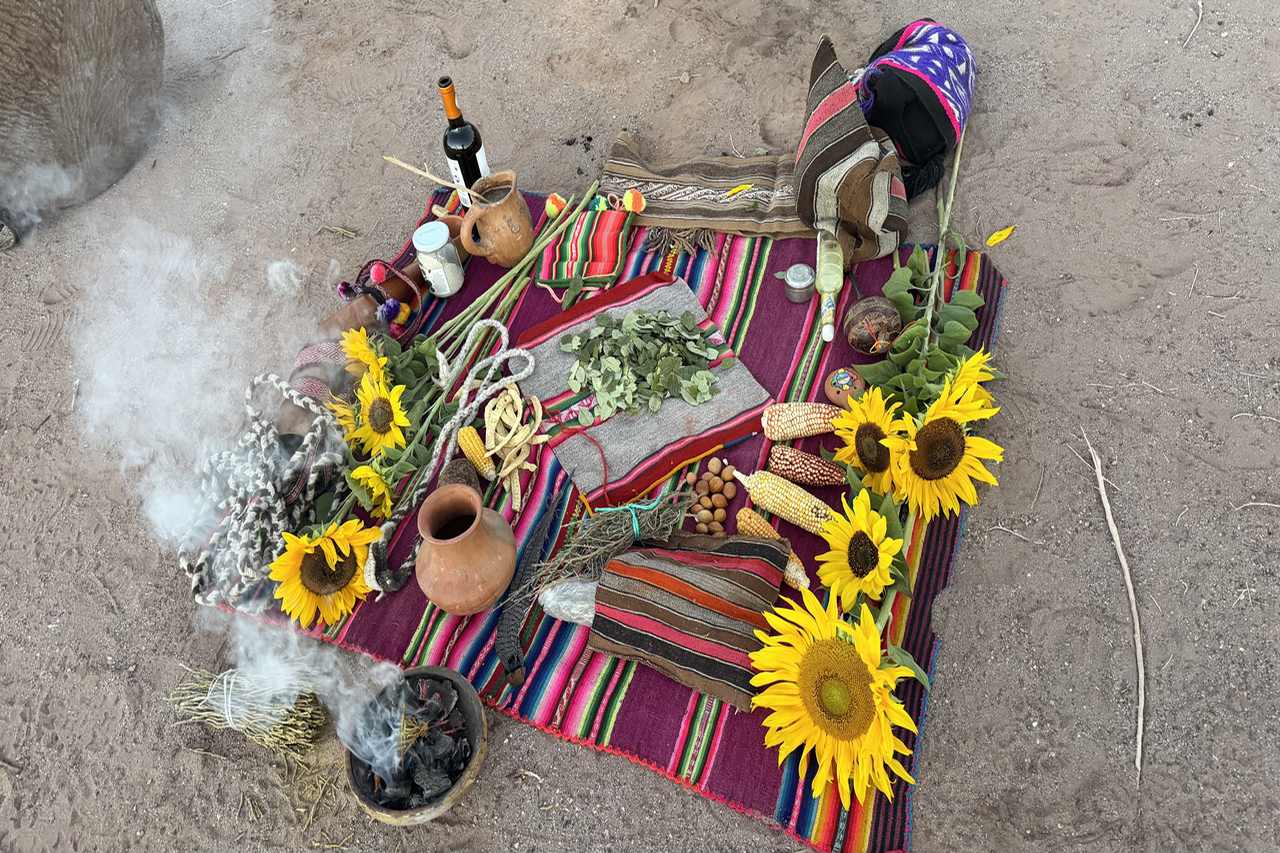
Indian Table adorned with symbolic ornaments
Carmelo chanted, then played a Bombo & Wank’ara, a double-sided drum and played Zampoña, bamboo pipes. It was a moving experience and set the theme of the day beautifully.
Another day, we visited Ramalda, a fine lady also from the Lickanantay community. She runs a farm, as her ancestors have done for centuries, of llamas, horses and goats along the Paso Jama mountain pass at an elevation of 4,200m (13,800 ft).
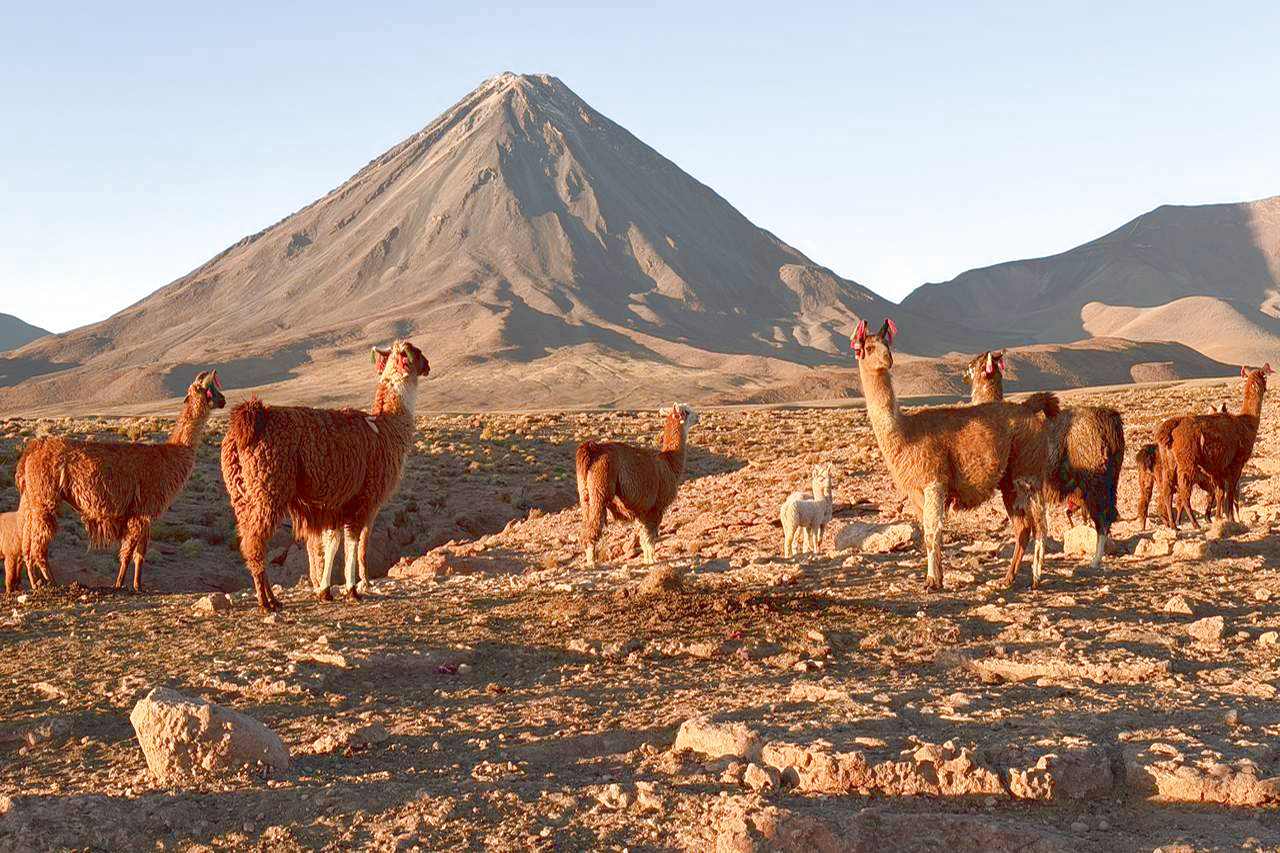
Llamas in front of Lycancabur at Paso Jama
Llamas are deeply woven into the region’s history, culture, ecology. They supply wool, meat and fertiliser, and visitors love their cheeky faces and friendly nature.
Ramalda’s herds had gone higher into the mountains to find food, while we joined her in a ceremony where she talked of gratitude to Pachamama and the spirit of the mountains, especially Licancabur, which she says is the source of her wellbeing and is a supply of water. She taught us how to make yarn from lama wool. By the time we had finished, the llamas and goats had made their way down the mountains as if to join us in venerating the earth. I got to walk among them for a while.
Yerbas Buenas Petroglyphs & Valle del Arcoíris (Rainbow Valley)
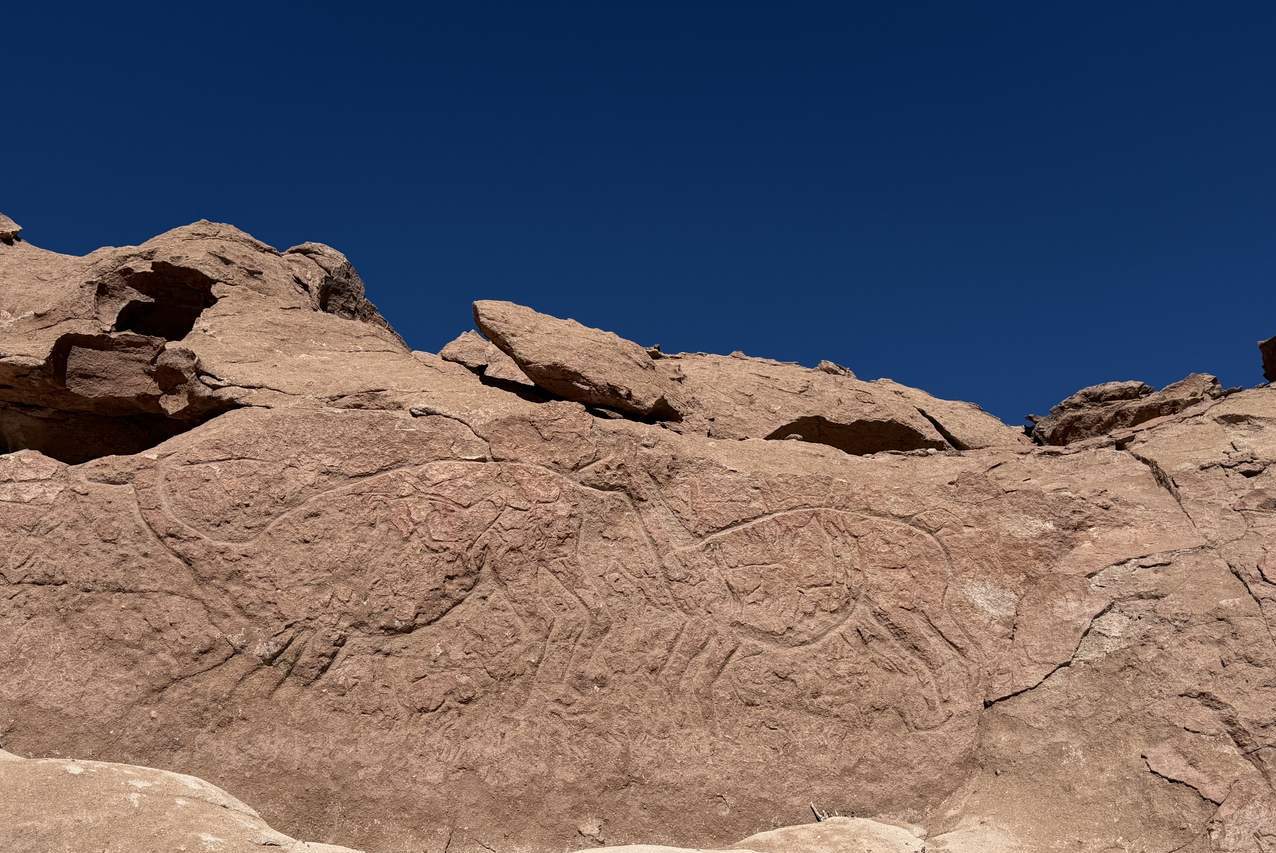
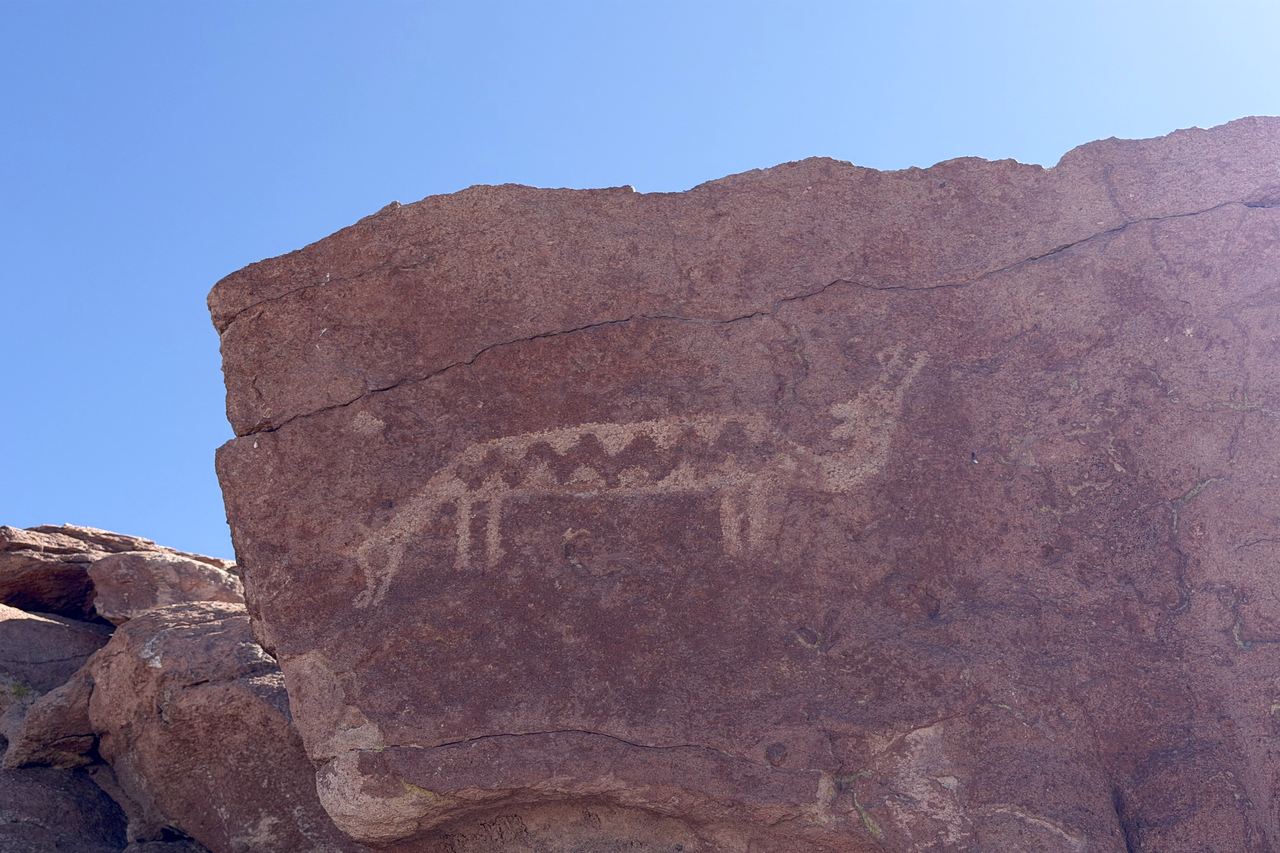
Later, we headed towards the Cordillera Domeyko mountain range to the Yerbas Buenas Petroglyphs archaeological site. Drawings etched into rocks some 10,000 years ago still show daily life and spiritual beliefs of the Atacameño. Ilama caravans, hunter scenes and symbolic figures are shown doing their thing. Monkey-like creatures appeared too, suggesting that this was part of an ancient trading route that stretched from the Amazon to the Pacific.
Nearby is the beautiful Rainbow Valley, a dry canyon in the Domeyko range. It’s a mishmash of vibrant hues of red, green, white, yellow and brown. I loved it here, and so it seems did a herd of Llamas.
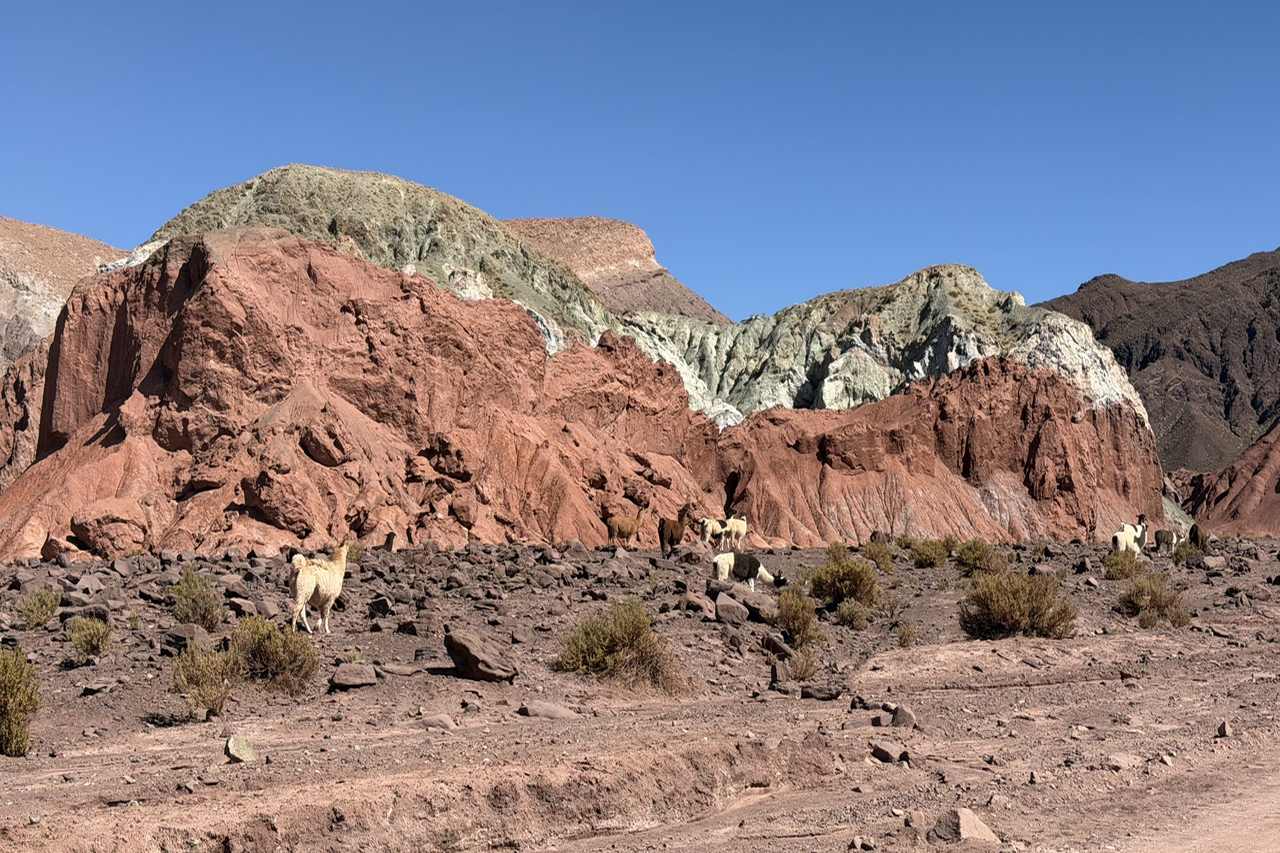
Rainbow Valley
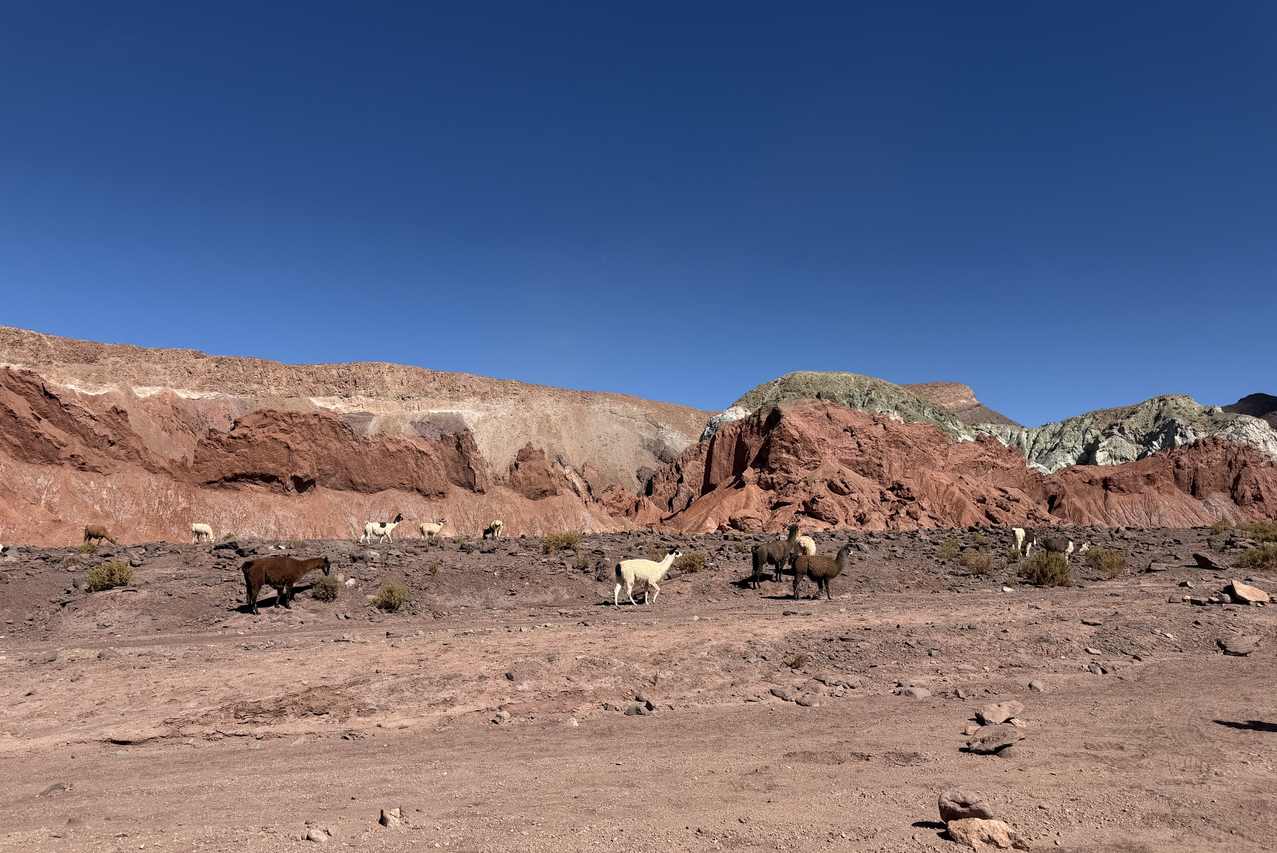
Rainbow Valley
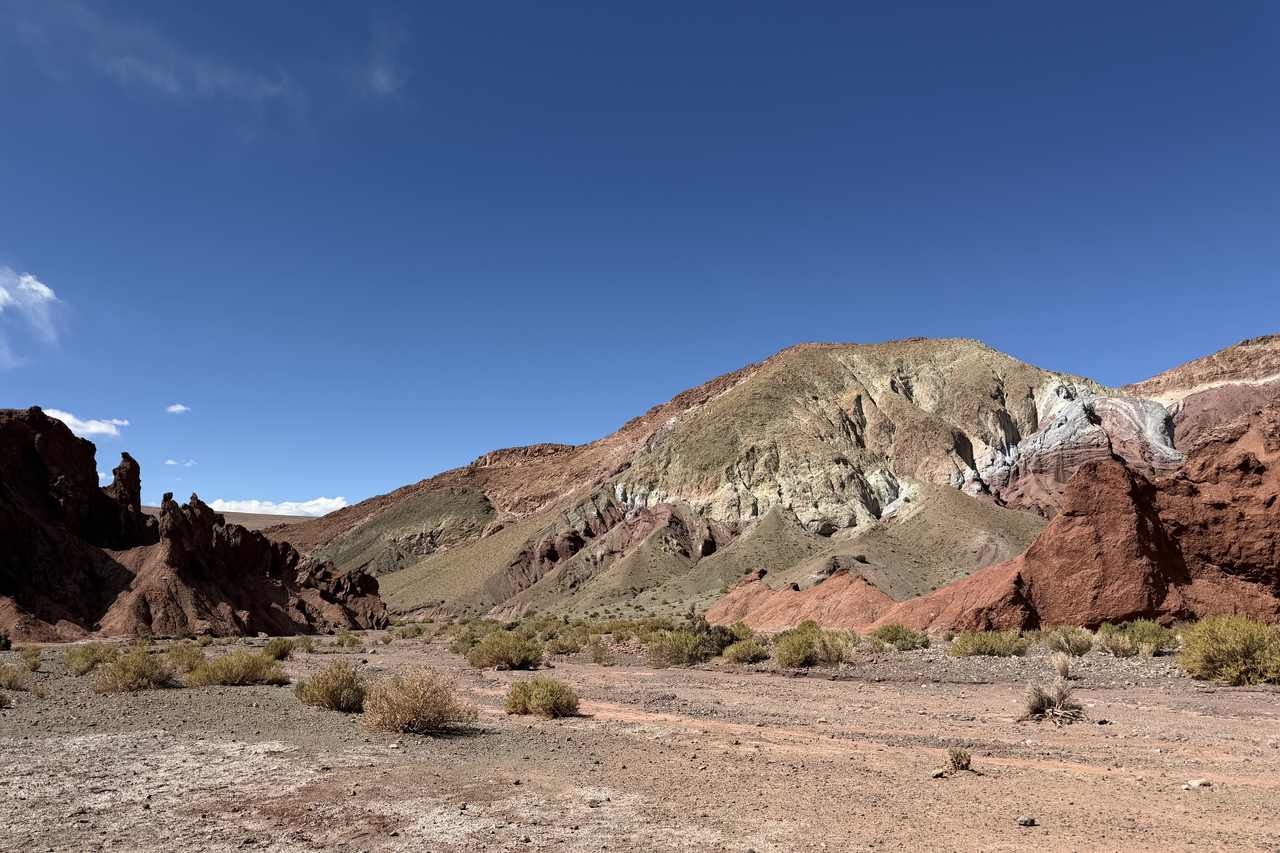
Rainbow Valley
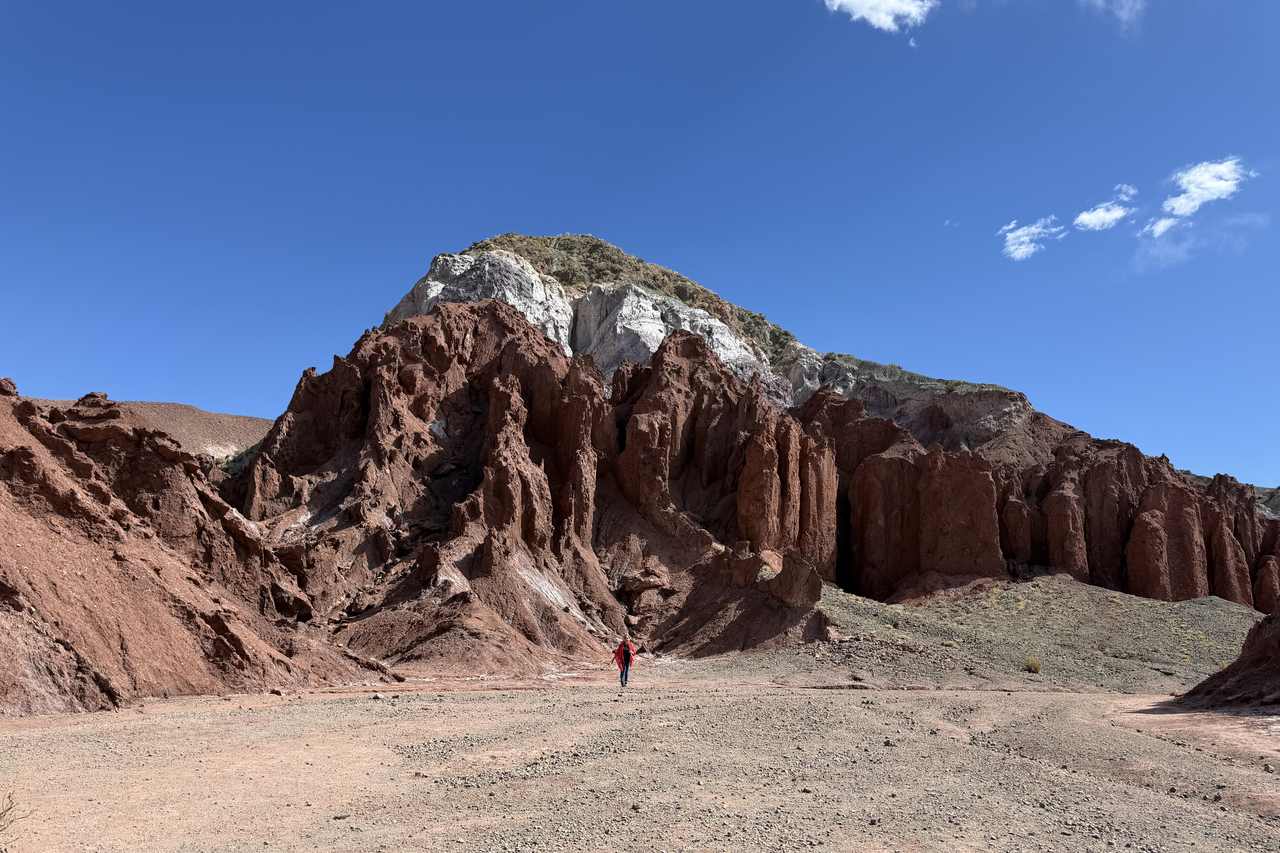
Rainbow Valley
Puritama Thermal Springs
By now, the land, the history and the spirituality had taken root. So by the time I visited the Puritama Thermal Springs, I was ready to explode with joy at another extraordinary feat of nature. At 3,500 meters (11,500 feet) above sea level, I got to bathe in warm mineral-rich springs right here in the driest place on earth.
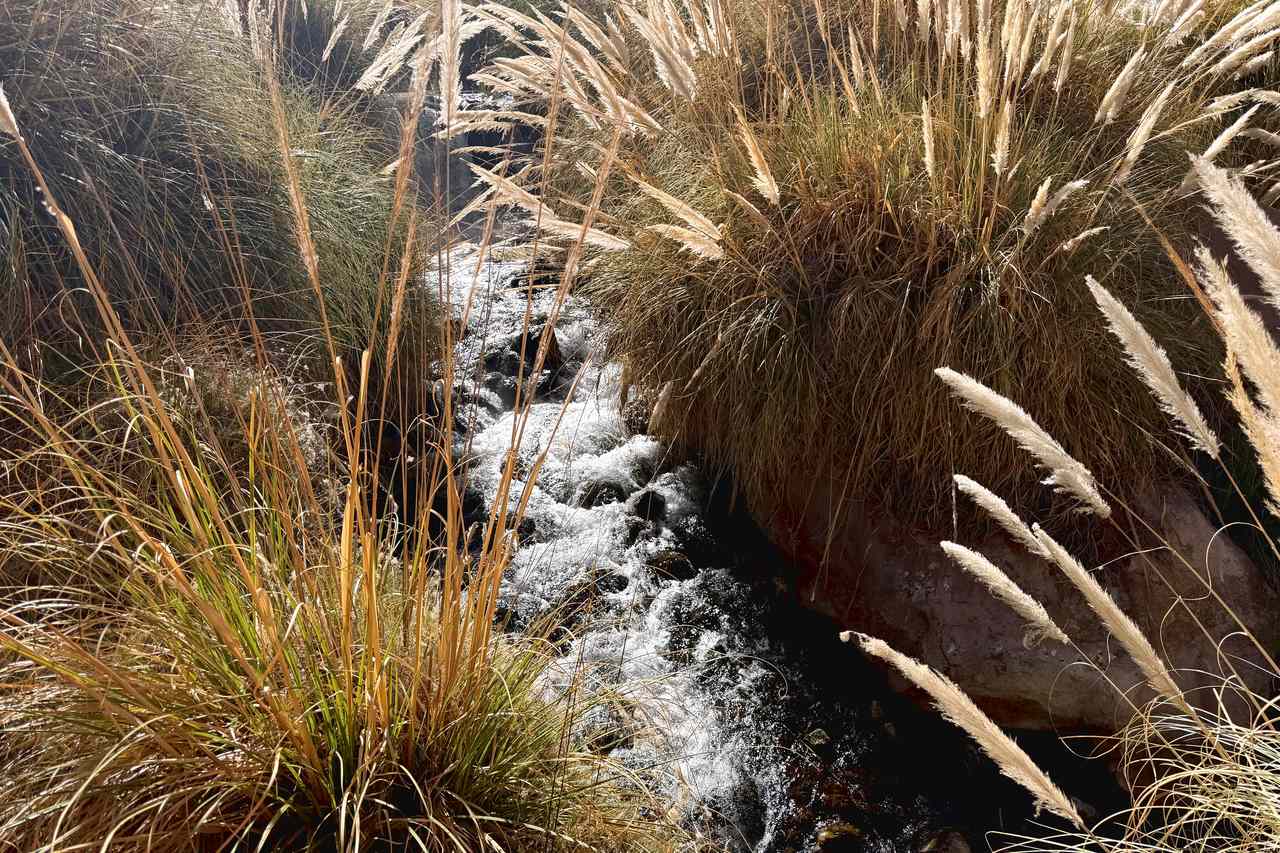
Puritma – water from the Andes feeds the geothermal pools
The water starts as rainfall high in the Andean mountains, flows through the desert canyon, seeps underground, gets heated by magma and hot volcanic rock, then rises to feed eight geothermal pools surrounded by rocks, reeds, and marsh grasses. The water stays at a glorious temperature of 33°C, and is simply perfect for bathing.
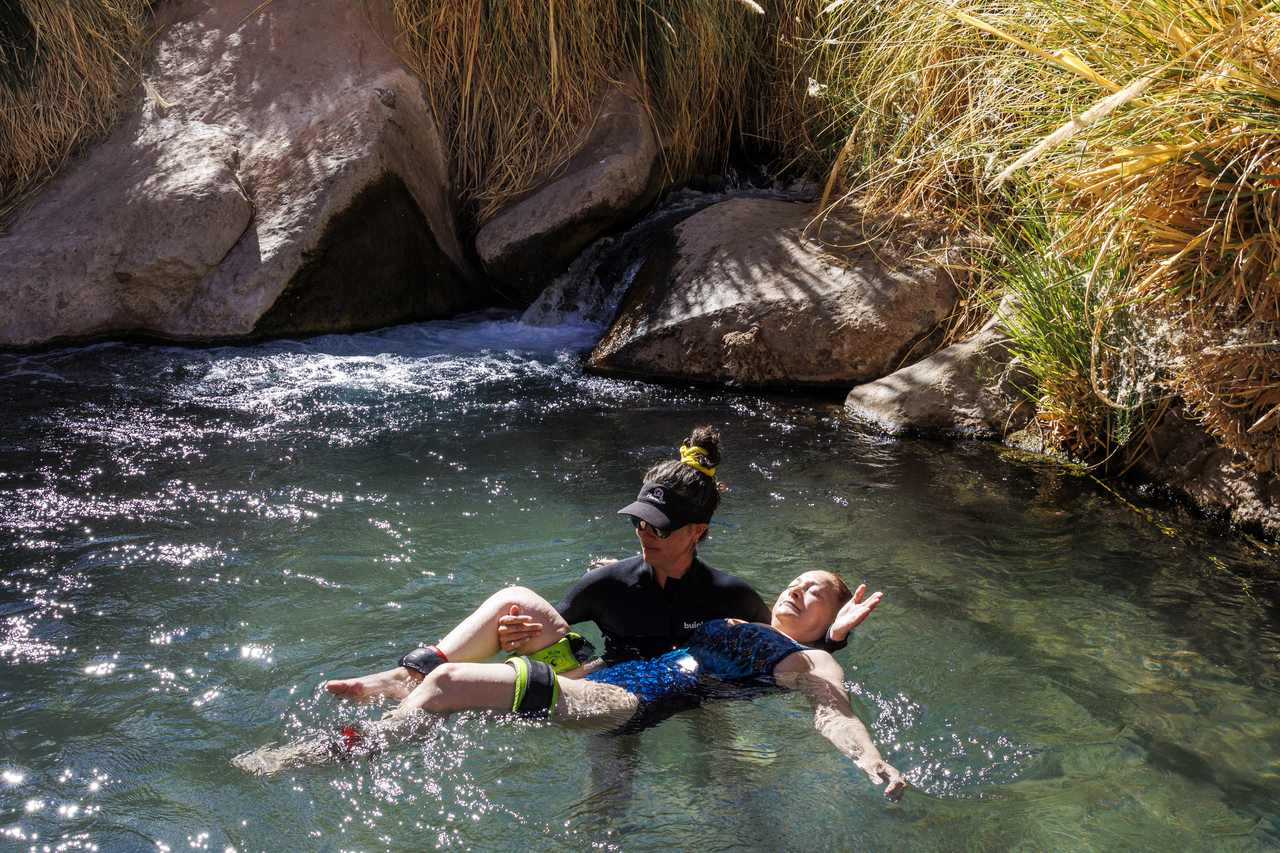
Receiving a gentle massage at Puritamar Springs c. Jeremy Flint
I, like others, flocked here with Trekana tour operator. The experience included a gentle, extremely relaxing massage while in the pool, followed by a fabulous lunch of local specialities.
The Cejar lagoon
Located 28 km from San Pedro, in the heart of the Atacama Salt Flat, is this gorgeously hued turquoise lagoon, looking stunning surrounded by white gashes of salt. The water is salty, so you get to float effortlessly, just like the Dead Sea.
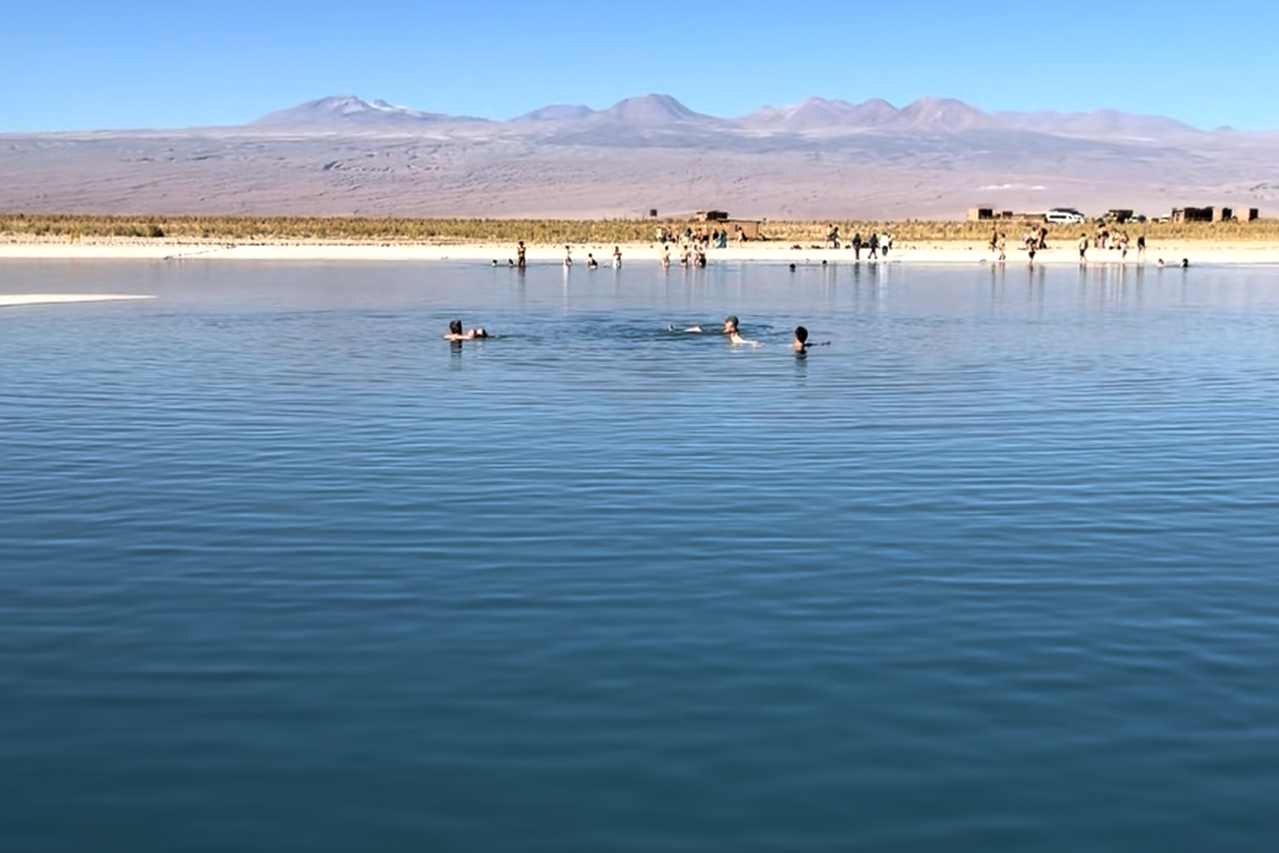
The Cejar lagoon
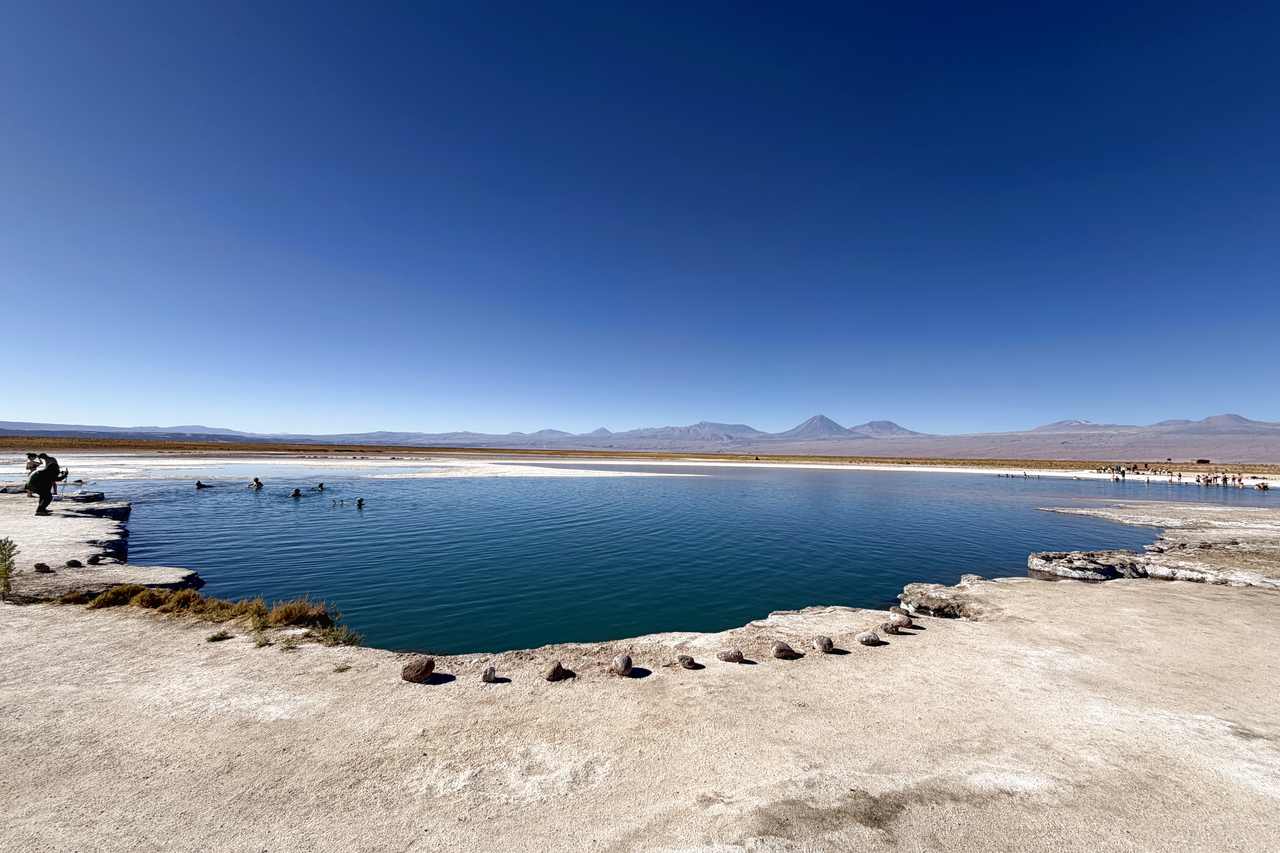
The Cejar lagoon
The water is absolutely freezing, though, and it took me ages to actually get in, but floating and chatting with friends surrounded by white salt landscapes, turquoise contrasts, and distant volcanoes was exhilarating.
Time to reflect at Lake Lejia
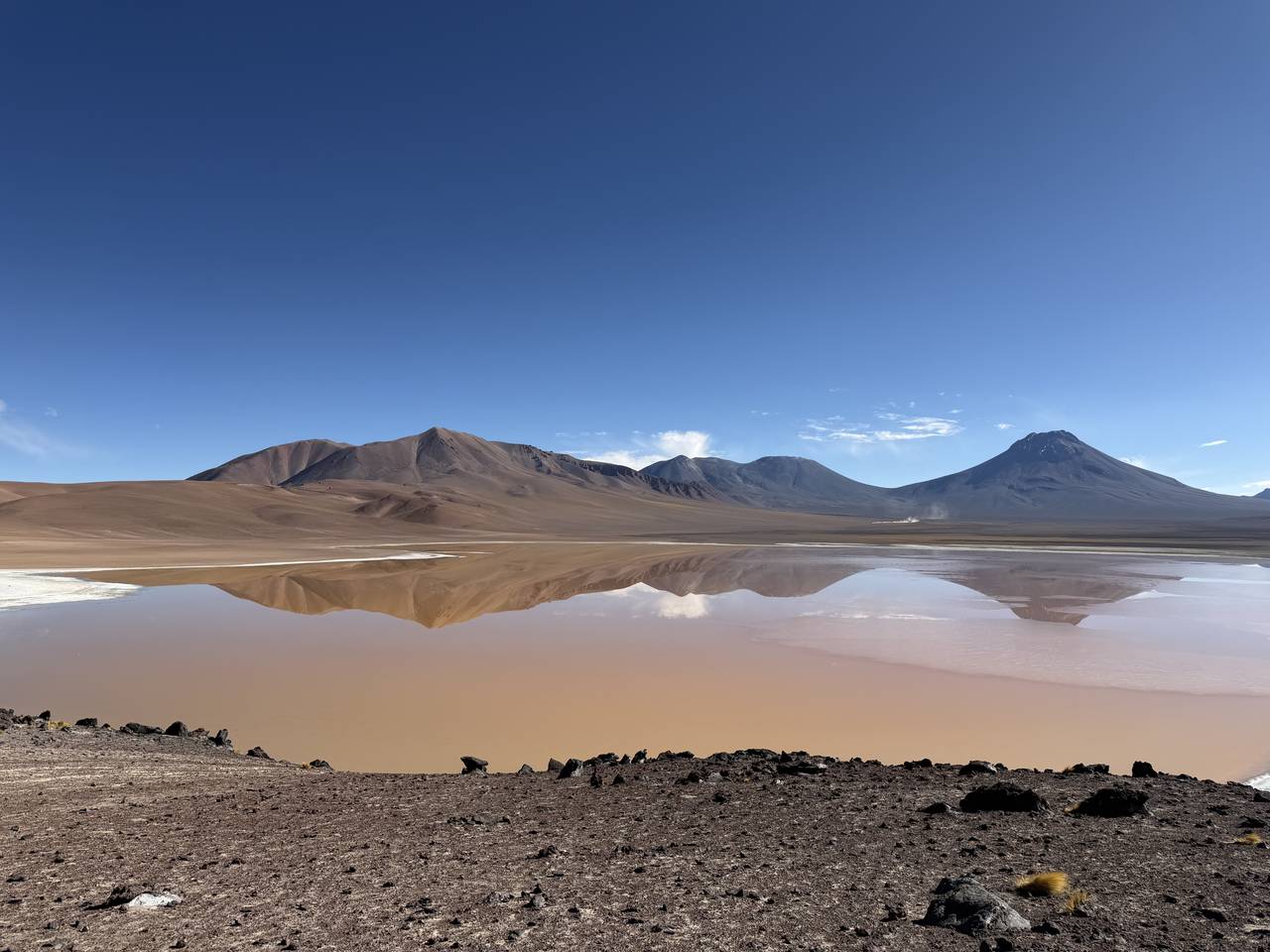
Laguna Lejía is a stunning, high-altitude salt lake in Chile’s Atacama Desert.
We used mountain roads to climb upwards to see the shallow Lake Lejia. The roadside changing views were sometimes sparse, sometimes busy with wandering vicuñas whose wool makes the finest garments, sometimes rica rica plants were growing wild, often used for tea and general cooking, Finally we got to this high-altitude (4,325 meters/14,190 ft) salt lake.
We stopped for a while to enjoy tea and lunch as we looked on in awe.
Stargazing in the Atacama Desert’s unbelievably clear skies
Yet it is not only about the landscape. In the absence of pollution, the skyscape in the Atacama Desert is so clear you don’t really need a telescope. Here, stargazing is a big deal.
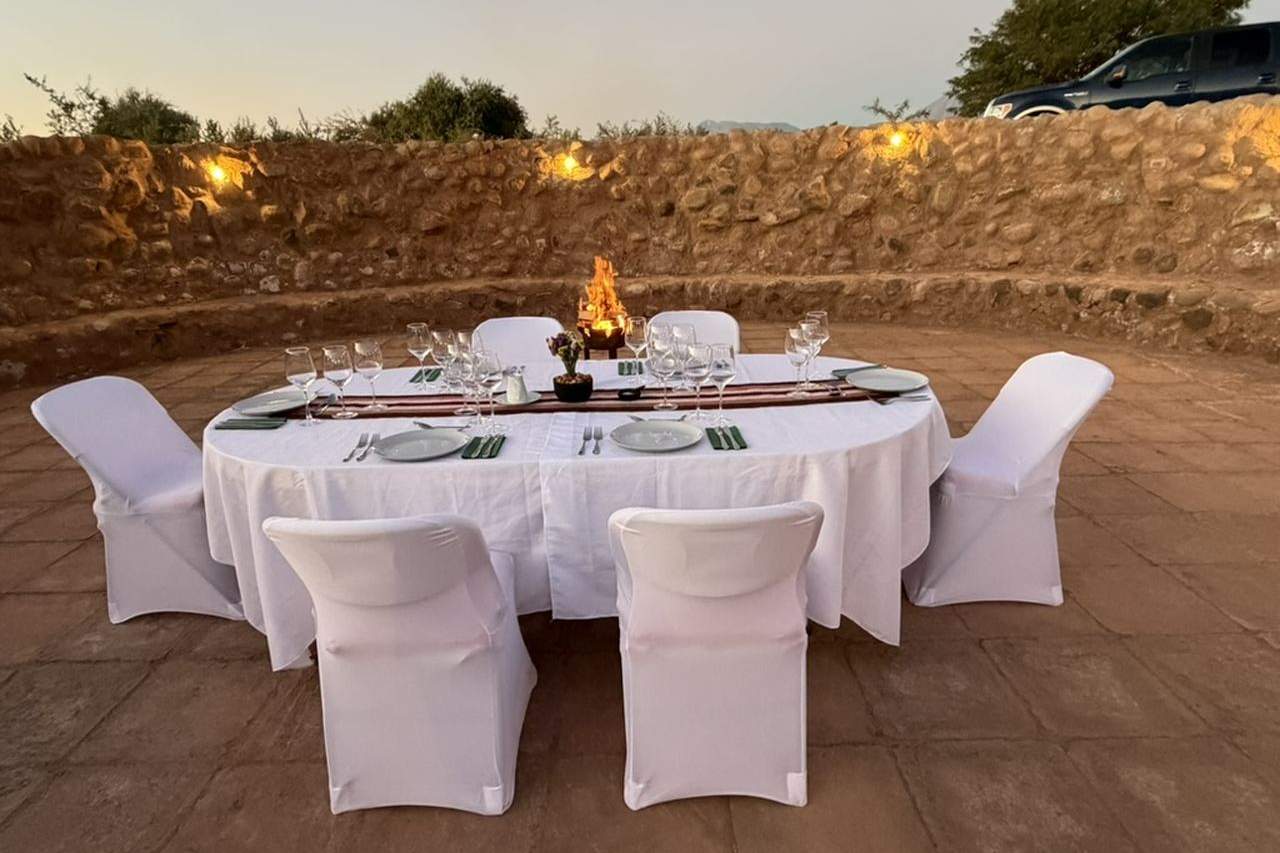
Dinner under the stars
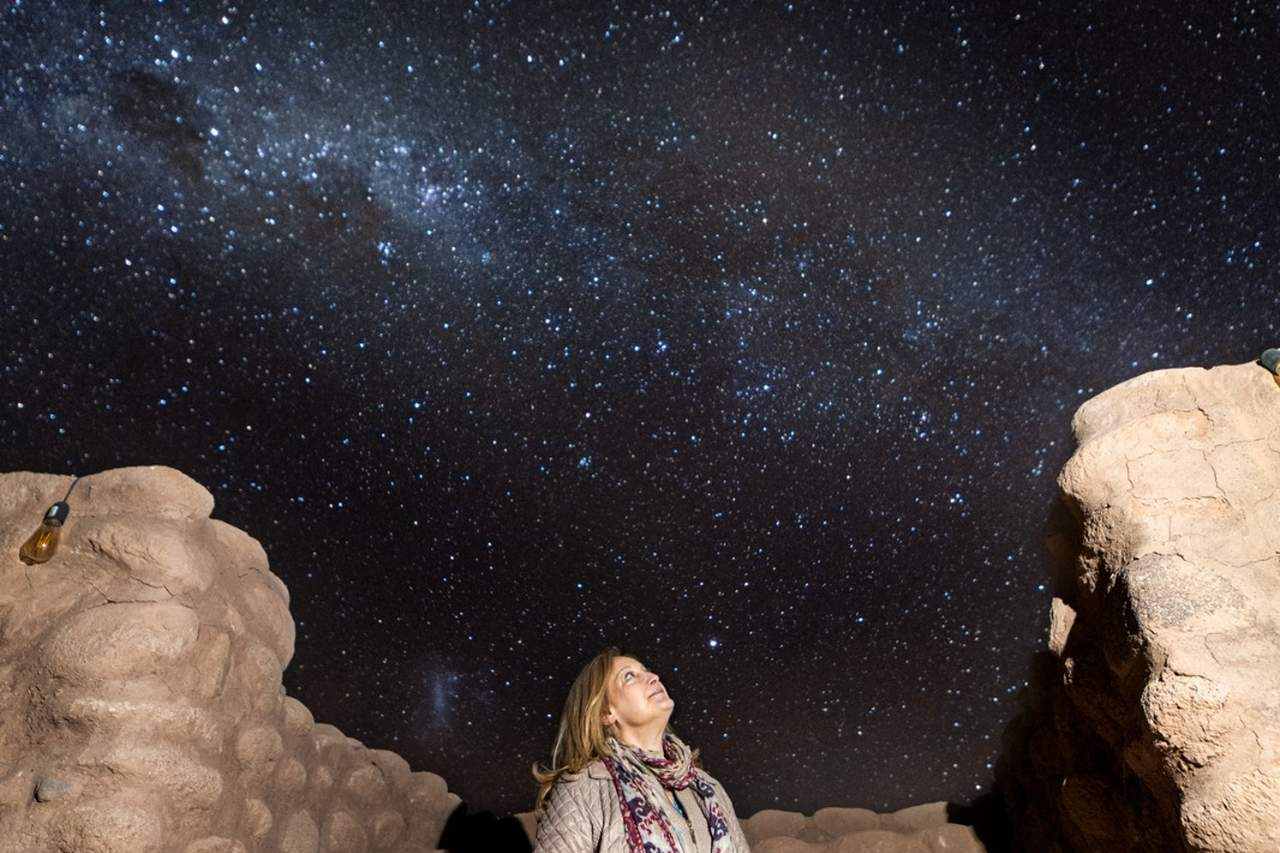
Star gazing
We headed to the IO Crux Observatory for a guided celestial experience that started with a heavenly al fresco dinner at sunset, where we were served llama croquettes, followed by a tour of the night sky. Our guide pointed out Jupiter’s moons and Saturn’s rings, Orion and the Southern Cross constellations and a Milky Way that cannot be seen in the Northern hemisphere, and Yakana, a huge dark area that forms the shape of a llama.
Sound healing at Lagunita
As the days frittered away, I found myself somehow shifted by all that I had seen and experienced. Yet there was still one more experience that would seal it – a sound bath at sunset at Lagunita with healers Luna and Terry, courtesy of Flavia Expeditions.
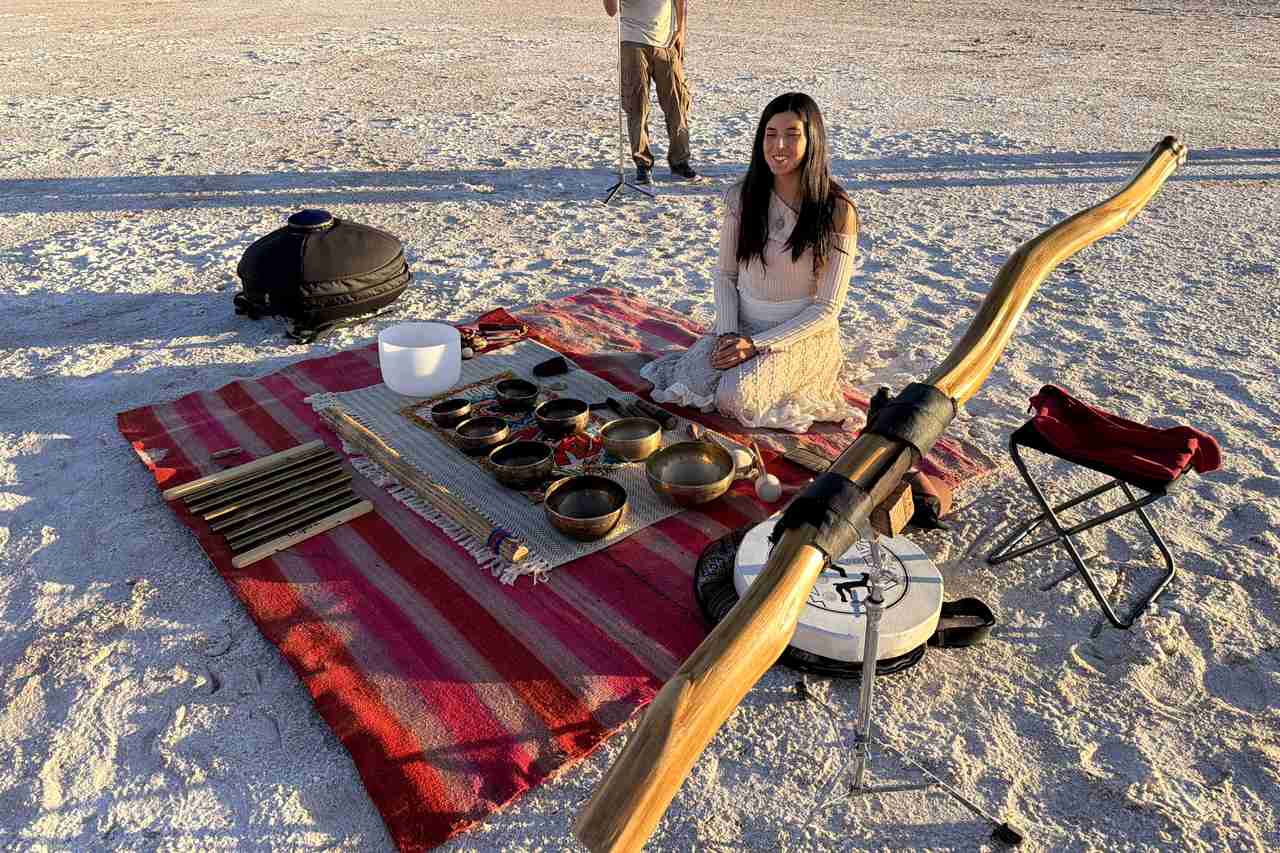
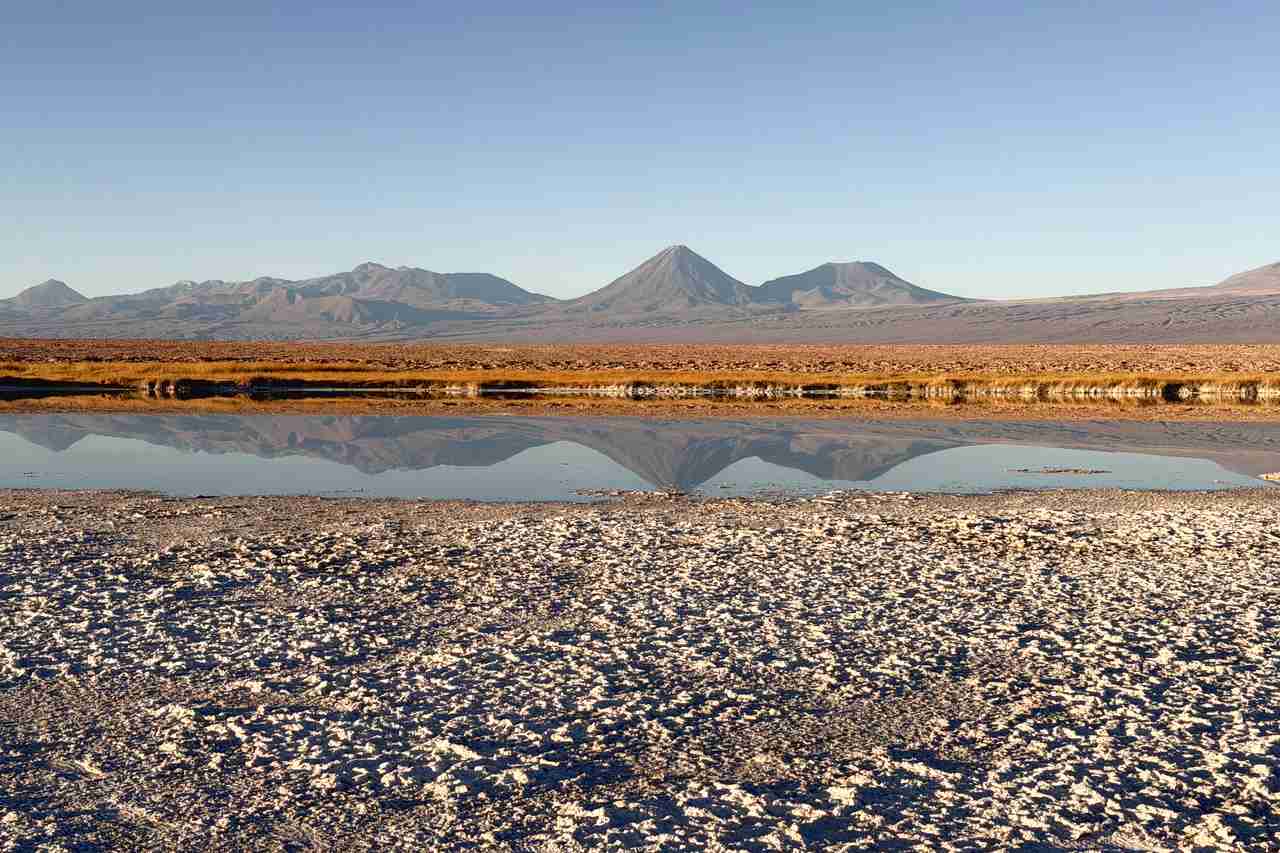
Luna created healing sounds with her bowls as the sun set, throwing reflections of Lycancabur and the rest of the Andes into the lagoon, marking the end of a most beautiful week away.
MORE INFO
STAY: at Puribeter. To organise a stay email infopuribeter@reservaelemental.cl.
EAT: Paacha restaurant is located in the adobe-style Hotel Kimal and offers Novo-Andean gastronomy.
The post What to do in San Pedro de Atacama, Chile appeared first on The Travel Magazine.