Nine Yards is reimagining slow living in Joburg
A lush, all-in-one Rosebank precinct where food, art, fashion and green space come together to turn everyday city life into a slow, walkable experience
 Black News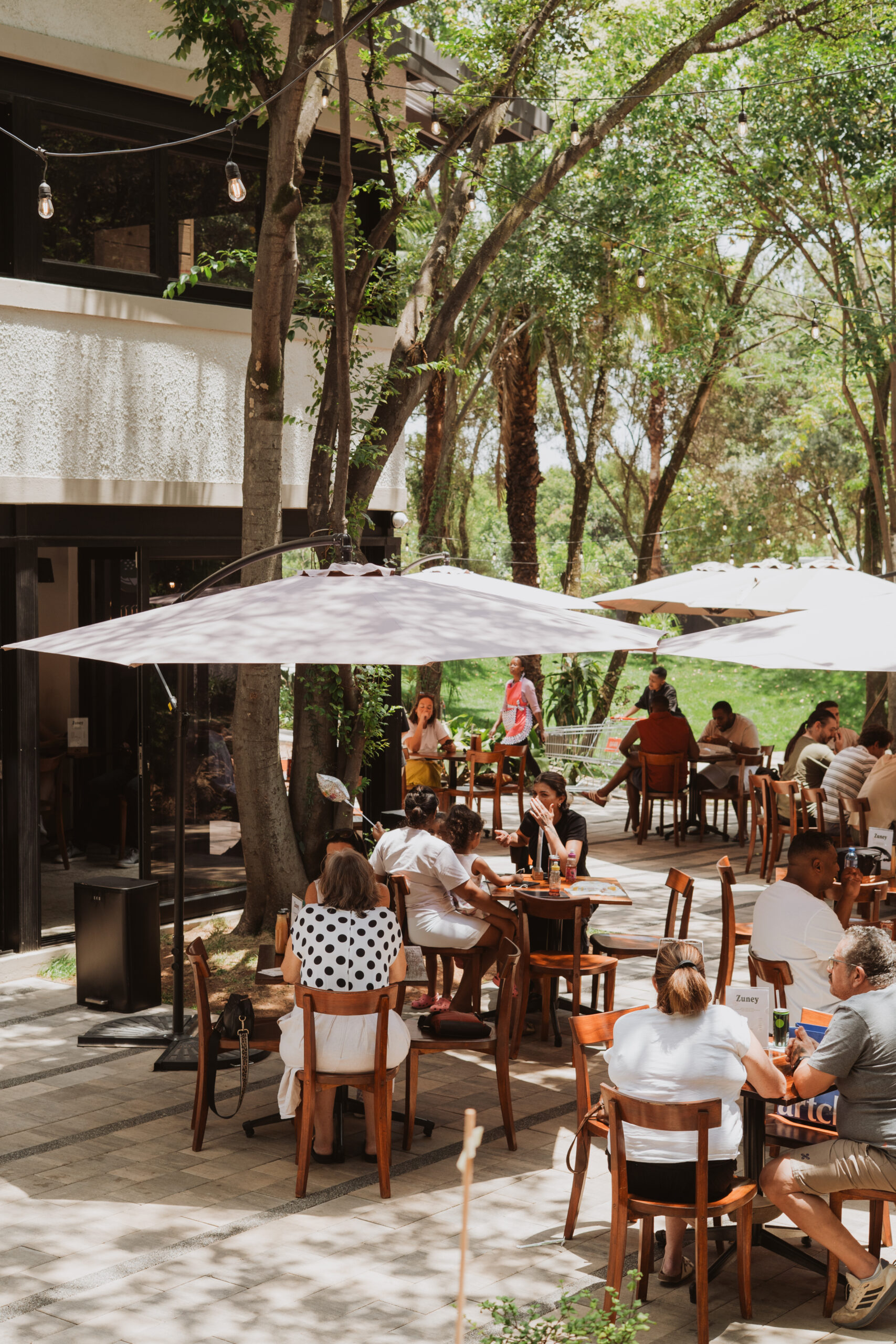
In Johannesburg, a city constantly negotiating speed, survival and spectacle, rest has become a luxury. Spaces that invite you to linger without demanding that you perform wealth, urgency or coolness are rare. Yet tucked into the folds of Rosebank, a neighbourhood fluent in the language of culture and consumption, sits a precinct quietly attempting to offer something gentler.
Nine Yards is not trying to reinvent Rosebank. If anything, it understands exactly what makes the area seductive.
Nine Yards is owned by the Lubner family, Arnold Forman, Bradley Benatar, investors and Cadastral Capital and developed by Cadastral Capital.
Rosebank has become one of Johannesburg’s most layered pockets. Within a few blocks, you can move from polished high-end restaurants to contemporary galleries, from luxury retail to garage forecourts where queues form for TikTok-famous pepperoni pizza. The beauty of the suburb lies in that coexistence. It caters to the person hunting for a R300 sourdough loaf and the one simply looking for somewhere to sit under a tree with a takeaway coffee.
But navigating Johannesburg often requires movement. One drives from neighbourhood to neighbourhood chasing experiences scattered across the city. Breakfast in Parkhurst. Art in Rosebank. Plants somewhere else entirely. Ice cream in another suburb. The city can feel fragmented, its pleasures stretched apart by traffic lights and petrol prices. Nine Yards enters this reality with an almost radical proposition: What if all these rituals existed in one yard?
The precinct unfolds less like a shopping centre and more like a carefully assembled Saturday mood board. One can imagine the rhythm of the afternoon immediately. You arrive with no real agenda. Maybe you have just been paid and feel indulgent. Maybe your bank account is pleading for restraint but you want to feel part of the city. Nine Yards somehow accommodates both realities.
You wander first through the nursery, where rows of green spill into one another. Monsteras, herbs, textured leaves and sculptural plants sit waiting for apartment balconies and kitchen corners. Johannesburg people love plants with the intensity of people attempting to soften hard urban lives. The nursery understands this. It feels less transactional and more aspirational, as though everyone is slowly trying to build small sanctuaries at home.
A few steps away, there is fresh produce. Fruit stacked brightly beside vegetables carrying traces of soil. Cheese that feels artisanal without becoming intimidating. It recalls older ideas of neighbourhood shopping, where food was not merely convenience but ritual. There is a quiet dignity to spaces that encourage people to buy slowly and thoughtfully.
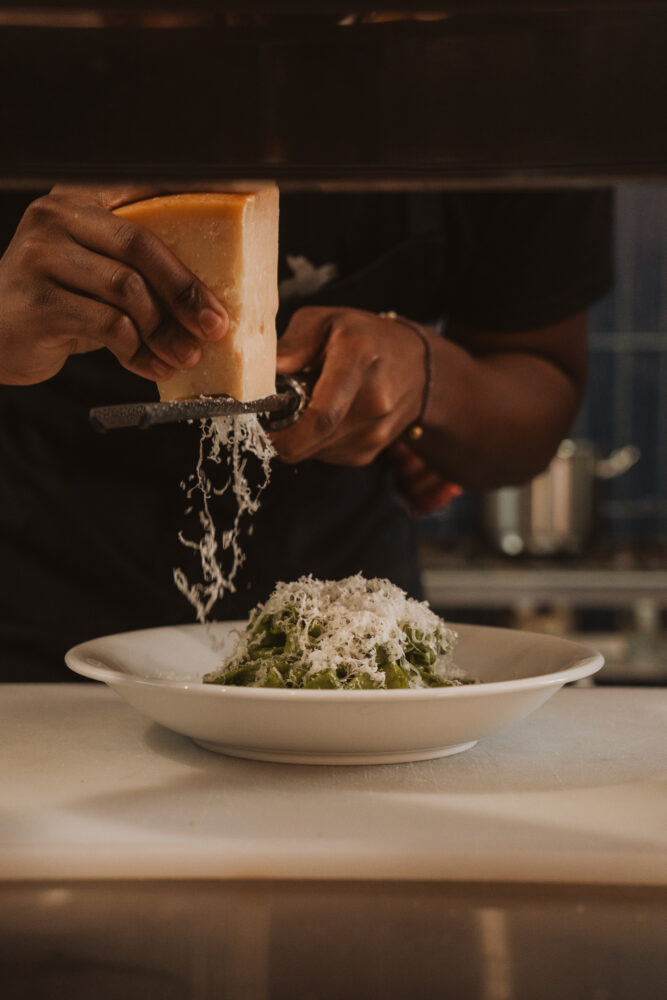
Then there is Ti Amo, the Italian restaurant where early arrivals are rewarded with fresh sourdough loaves. The kind one imagines becoming sandwiches throughout the week, toasted in the mornings or eaten standing over the kitchen sink late at night. Good bread has become its own cultural currency in Johannesburg, signalling not just taste but intentional living. Nine Yards understands the emotional pull of these small luxuries.
Lunch might mean heading to Zuney Wagyu Burger Bar for a wagyu burger. Not the kind of meal demanding ceremony or white tablecloth etiquette but something rich and satisfying enough to justify stretching out on the grass afterwards. Around the precinct, people occupy the space casually. Friends talking loudly across benches. Couples strolling slowly between pathways. Children moving between tables. Nothing feels rushed.
That is perhaps the precinct’s greatest achievement. In a city obsessed with efficiency and optics, Nine Yards feels deliberately slow.
The architecture of the place matters here. Too often Johannesburg developments flatten nature in pursuit of sleekness. Trees disappear. Greenery becomes decorative rather than integrated. At Nine Yards, the environment feels respected. The pathways curve gently around life. Benches appear naturally within the landscape instead of as afterthoughts. Shade matters. Space matters. There is room to pause without being moved along by security guards or the pressure to spend more money.
It feels lush without becoming exclusive.
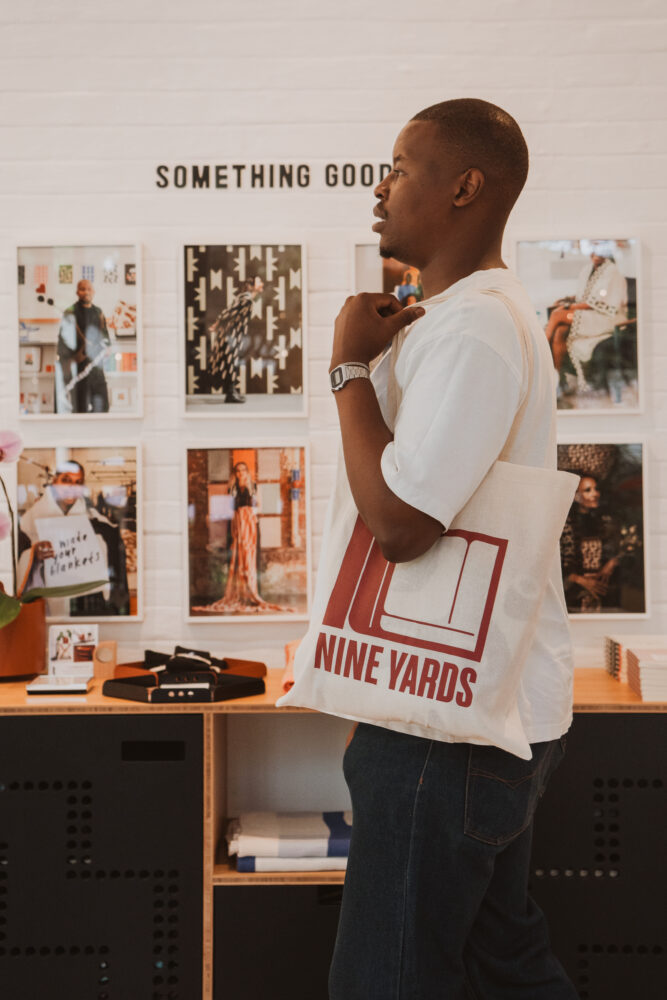
You can drift from lunch into fashion at Something Good Studio, where clothing hangs with the kind of understated confidence that does not scream trend cycle. The garments invite touch first. Fabrics soft against the skin, silhouettes timeless rather than aggressively seasonal. In many ways, the store mirrors the precinct: thoughtful, tactile and uninterested in shouting for attention.
And then, naturally, there is art.
Kumalo | Turpin anchors the cultural dimension of the precinct with quiet sophistication. The gallery does not feel detached from the everyday life happening around it. Instead, it folds contemporary art into the rhythm of ordinary Saturday movement. Someone can walk in after a burger, wander through an exhibition and leave thinking differently about colour, memory or form. Art becomes less intimidating when placed within lived environments rather than isolated behind institutional silence.
That accessibility matters in Johannesburg, where art spaces can still feel coded by class and familiarity. Nine Yards softens the boundaries. It allows for accidental encounters with creativity.
Before leaving, there is the final indulgence: biscoff ice cream at Gelato Mania. Sweet, slightly excessive, deeply satisfying. The kind of ending that turns an ordinary afternoon into a memory you replay later while sitting in traffic somewhere else.
Yet what lingers about Nine Yards is not any single store or experience. It is the atmosphere of permission the precinct creates. Permission to move slowly. Permission to browse without urgency. Permission to sit under trees and simply exist in Johannesburg instead of constantly battling against it.
“Nine Yards is built around a simple but powerful idea: Johannesburg deserves places that feel human, hopeful and full of possibility,” says Timothy Sammons, the CEO of Cadastral Capital.
“The response so far has shown how much people value thoughtful spaces where they can gather, connect and enjoy the city differently.”
That idea of enjoying the city differently feels important. Johannesburg is often spoken about through extremes. It is dangerous or exciting. Exhausting or exhilarating. Brutal or beautiful. Rarely is it discussed as a city capable of softness. Nine Yards seems interested in exploring exactly that possibility.

There is also something personal underpinning the project. Marc Lubner, says the precinct carries family history and long-term investment in Johannesburg’s future.
“This precinct carries deep personal meaning for me, with a legacy rooted both within my family and alongside my partner, Arnold Forman and shareholder, Braddley Benatar. My late uncle owned The Gardenshop, while much of the surrounding property was acquired by us and has now been invested into the concept defined by Cadastral as a green zone in the urban area of Johannesburg,” he says.
“We have always believed in creating places that add lasting value to the city and uplift the communities around them. Nine Yards is a meaningful expression of the Johannesburg we all aspire to. Together, Arnold Forman, Timothy Sammons, Michael Hunt and I have drawn on a rich combination of experience, creativity, perspective and shared values to bring this vision to life.”
That language of “lasting value” often gets thrown around loosely in urban development conversations. But at Nine Yards, one senses an attempt to think beyond commercial foot traffic. The precinct feels designed around emotional experience as much as retail consumption.
In many ways, Nine Yards reflects a growing desire among Johannesburg residents for spaces that feel communal without becoming chaotic. Spaces where culture, food, greenery and design coexist naturally. Spaces where people can spend money, yes, but also spend time.
Johannesburg has always been a city of reinvention. Warehouses become galleries. Old suburbs become nightlife districts. Parking lots become markets. The city survives because people continue imagining new ways to gather within it. Nine Yards joins that lineage, offering not a spectacle but something quieter and perhaps more necessary.