On the frontlines of Britain’s ’80s protest movements
Protest and Equality — Against a backdrop of Thatcherism, hospital closures and global conflict, photographer Sarah Saunders was a documentarian of the long decade’s effects on society, as well as the communities actively resisting it.
 Black News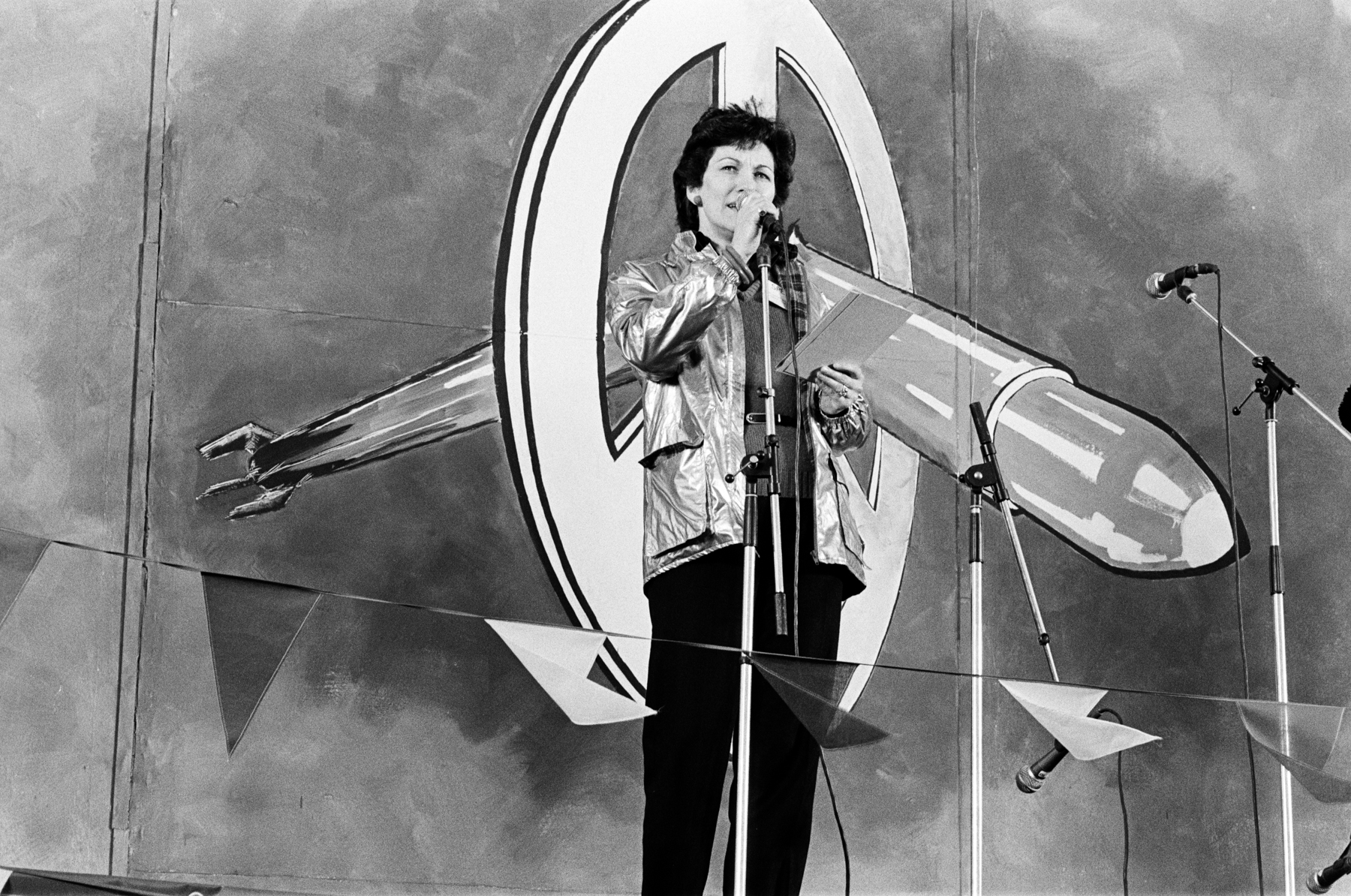
Protest and Equality — Against a backdrop of Thatcherism, hospital closures and global conflict, photographer Sarah Saunders was a documentarian of the long decade’s effects on society, as well as the communities actively resisting it.
Snidely dubbed the “Iron Lady” by a Russian newspaper in 1976, rising opposition leader Margaret Thatcher donned the insult with the pride of a woman draped in diamonds and mink. “I stand before you tonight in my Red Star chiffon evening gown, my face softly made up and my fair hair gently waved, the Iron Lady of the Western world,” she crowed in a televised speech to Finchley Conservatives just days later.
Following her election as prime minister in 1979, Thatcher brought the imperial boomerang home, remaking the UK as a bastion of neoliberalism over the next decade. The first woman in history to bear this title had been dubbed “Thatcher the Milk Snatcher” for ending free school milk to secondary school children during her tenure as education secretary in 1971. Riding on the blustery storms of Winter of Discontent, Thatcher slipped a velvet glove over her iron fist, smashing trade unions, privatising state-owned companies, and deregulating financial markets.
The year Thatcher came to power, photographer Sarah Saunders returned to “a rather gloomy Britain” after spending five years in Germany. Inspired by A Seventh Man, John Berger and Jean Mohr’s seminal 1975 book exploring the lives of migrant workers in Europe, Saunders began a series following the migrant route from Turkey to Germany. “I was interested in how stories can be told using pictures and text, and was exposed to the work of John Heartfield and the Worker Photography movement in Germany,” she says.
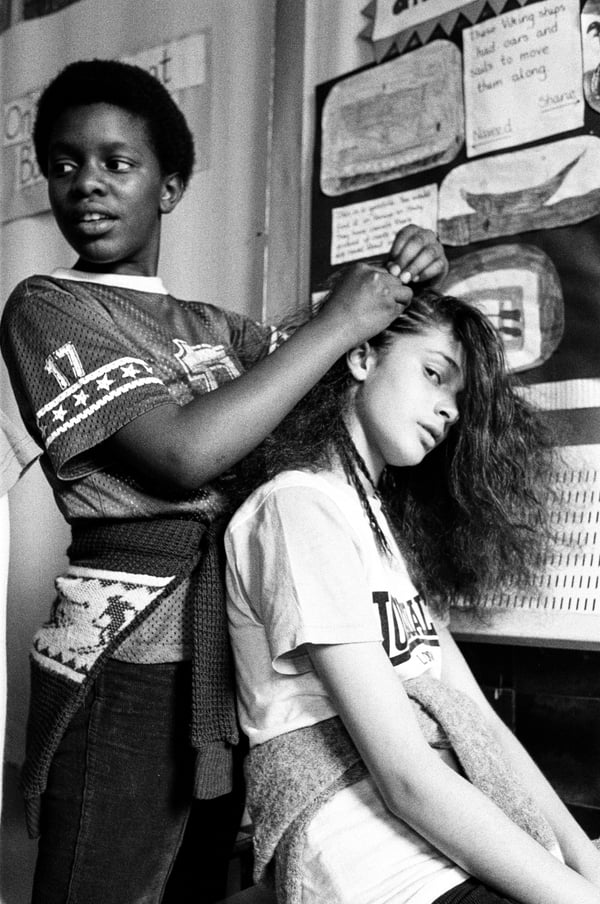
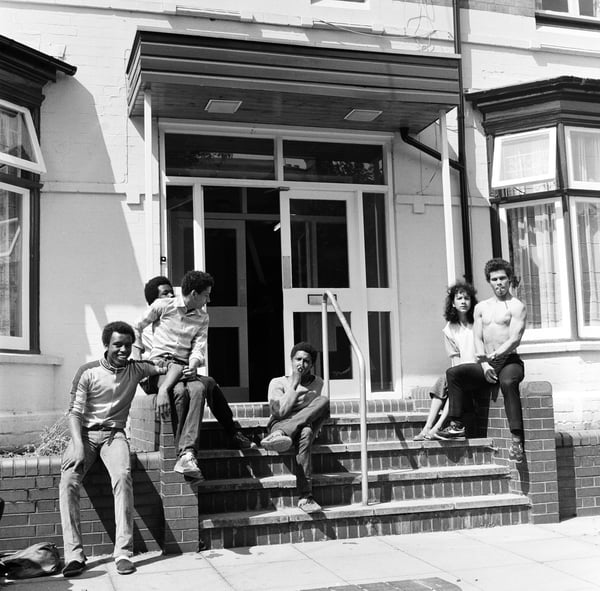
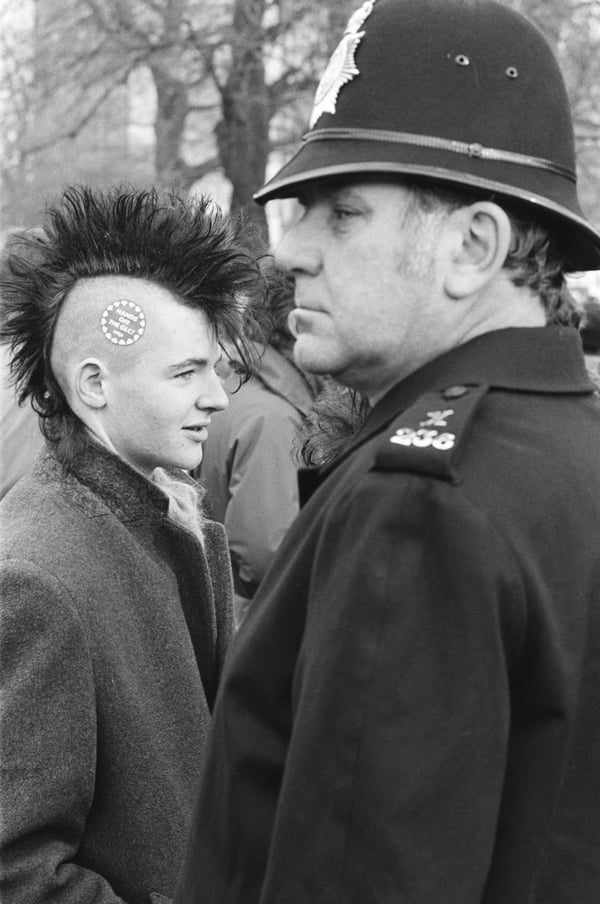
After returning to London, Saunders joined the Wandsworth Photography Coop in Thatcher’s flagship borough. “We were looking at the sharp end of Thatcher’s policies of shrinking the state and letting the markets take over – privatisation, sales of council flats, closure of hospitals and sale of council assets,” she says.
Drawing inspiration from the communist tradition of Wandzeitung (“wall newspaper” designed to be displayed in public spaces on vertical surfaces), Saunders and the Photo Coop began producing wall newspapers in community spaces to support their campaigns. “I had always felt the excitement of using photography as a tool in campaigning for social change,” she says. “Working with a group of like-minded photographers was a dream come true.”
By the early ’80s, attendance had dwindled to just three photographers: Saunders, Gina Glover, and Cory Bevington. After securing funding from the GLC Women’s Committee, they renamed themselves the Women’s Photo Coop, founded the Photo Coop picture library, and produced exhibitions on South London Hospital for Women, which was under threat of closure due to the effects of privatisation.
As the organisation expanded once again, they became the Photo Coop, a community photography centre and picture library, known today as Photofusion. “Our policy on picture use was to enquire about the use of the image, and ensure that it be used in the correct context, taking account of the rights of people portrayed to be represented with integrity,” she says.
Now Saunders looks back at the era in Protest and Equality 1980s (Café Royal Books). Here, she brings together scenes from the Greenham Women’s Peace Camp, the Campaign for Nuclear Disarmament rallies, the Balham Girls Club Festival, and personal work to illuminate the connections between community care and collective resistance.
“It is interesting to experience our own work from the past becoming history,” Sanders says. “The lessons we can learn from the ’80s lie in the power of images and text together to tell a story. Although news photography and social media deal with very fast moving content, I think there is still a place for thoughtful work which tells a story in support of a cause. How to make the best impact with images is something I’m thinking about now with my more recent work on Palestine, as well as my work with the swimming community at the Ladies Pond.”
Protest and Equality 1980s by Sarah Saunders is published by Café Royal Books.
Miss Rosen is a freelance arts and photography writer, follow her on X.
Buy your copy of Huck 83 here.
Enjoyed this article? Follow Huck on Instagram for more from the cutting edge of sport, music and counterculture.
Support stories like this by becoming a member of Club Huck.