Rhodes School for Performing Arts approaches 20 years of excellence
Rhodes School of Performing Arts beats the odds and celebrates two decades of arts education.
 Black News


Rhodes School for the Performing Arts (RSPA) is celebrating nearly two decades of excellence in arts education, a milestone most charter schools never reach.
Nearly four in 10 charter schools nationwide close within their first 10 years, and more than half shut down by year 20, according to a 2024 report from the National Center for Charter School Accountability. This year, the Houston-area charter marks its 20th anniversary, having beaten those odds, tuition-free, arts-integrated, and still growing.
Founded in 2007 by educator Michelle Bonton, RSPA opened with 97 students on a single campus. Today, it serves more than 1,000 students across multiple campuses in East Harris County, and it remains the only charter school in the country designated a Fine Arts Magnet School of Distinction by the U.S. Department of Education.

“When people won’t let you sit at their table, just go build your own,” Bonton said, referring to the school’s origins. “That’s really where the Rhodes School was born.”
Bonton spent years as a public school teacher, counselor, and assistant principal in Galena Park ISD before starting RSPA. She said she kept running into the same wall with the traditional system, leaving little room for kids, especially Black kids, to fully express themselves. She’d already been improvising around that limit in her own classroom, staging Shakespeare instead of reading it, taking an English class outside in the spring. RSPA grew out of a desire to build that kind of space on purpose, in a community she’d worked in for years, where she said there was no performing arts presence.
“What’s kept the school alive for 20 years wasn’t a funding cushion or press attention, it was a standard I measured every decision against,” she said. “If it’s not right for my kid or if it’s not good enough for my kid or my grandkid, then it’s not good enough for someone else’s. My own grandchildren attend RSPA today.”
That commitment extended to protecting arts programming itself, even as arts funding has been cut across traditional public schools for years.
“I understand the research behind it, being an educator, being a grant writer,” Bonton said. “The performing arts provide a space for students to think critically, to be creative, and also to problem-solve.”
RSPA’s student body is predominantly Black, with Hispanic students making up the next-largest group, according to state data. At the school’s Humble campus, Black students made up 87.6% of the 370-student enrollment in the 2023-24 school year, according to reports from US News and World Report.
Bonton said the school closely tracks its alumni and has found that students who stay at RSPA for at least 3 years graduate in the top 10% of their class and often place into advanced coursework in high school. Among RSPA alumni, she said, are nurses, an attorney, business owners, an Air Force pilot, and professional dancers, some of whom have returned to teach at the school themselves.
She officially passed leadership of RSPA to her daughter, Ashley Miller, more than five years ago, a transition she describes as central to the school’s legacy philosophy.
“The seed for my own career in education was planted at RSPA itself. I fell into a conversation with the school’s special education director about my future, and was steered toward speech-language pathology,” Miller said. “I trained, worked in the Houston Independent School District, then came back to RSPA to provide speech therapy for students. “ I just kind of stayed here and went up the ranks.”
That commitment to the arts has held even as arts funding has been cut across traditional public schools for years. Now more than ever, tapping into creative outlets helps students navigate their emotional development and mental health.
“We want to make sure our students are competitive in the global marketplace,” Miller said. “We’re having a mental health crisis right now. Being in the arts allows children to express themselves in ways they wouldn’t be able to do so outside of art, outside of dancing, outside of playing an instrument. It gives them a pathway for expression, especially in our world today”

Genesis Thompson,22, is an alum of RSPA. The school’s arts-first model shaped how she sees herself. Thompson graduated in 2018. She started dancing at the age of three and came to RSPA already knowing she wanted to pursue movement, but the school pushed her into disciplines she never expected to love, including theater.
“I express my words through movement, and being in front of a crowd talking was very frightful to me,” Thompson said. “But being in a class with Ms. Gordon [former teacher] and her building my confidence, I really found my love for theater.”
Thompson said being surrounded by other Black students who shared her passion for the arts mattered as much as the training itself.
“When people won’t let you sit at their table, just go build your own,” Bonton said of the school’s origins. “That’s really where the Rhodes School was born.”
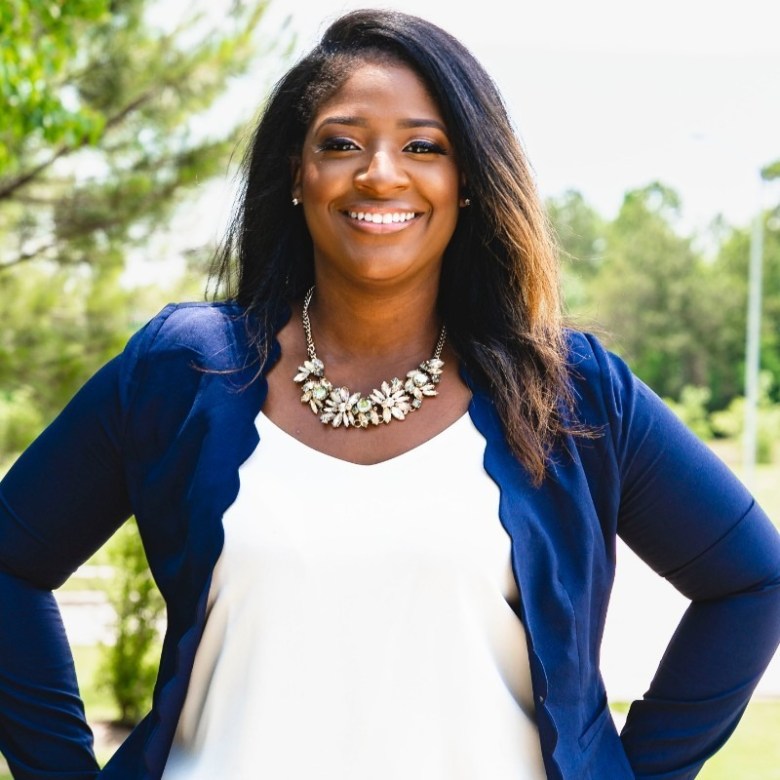
Michelle Bonton, founder and superintendent emerita of RSPA.
“Everybody loves singing, dancing, acting, whatever their category is,” she said. “They were so passionate about it, and I loved that.”
Today, Thompson works as a professional dancer with Nia’s Daughters Dance Company, teaches dance, and performs as an actor, a career she traces directly back to RSPA. Her teachers have taught her many life lessons that she still uses as she teaches other young, promising dancers.
“Just be you,” she said. “Whatever environment, whatever space, whatever room that you walk into, just be yourself.”