Sydney Lima’s Rich Parents Club is calling out creative industry gatekeeping
The writer and filmmaker’s new platform and live talk series, Parental Guidance, is opening up conversations around class, access and what it really takes to sustain a creative career. The post Sydney Lima’s Rich Parents Club is calling out creative industry gatekeeping appeared first on BRICKS Magazine.
 Black News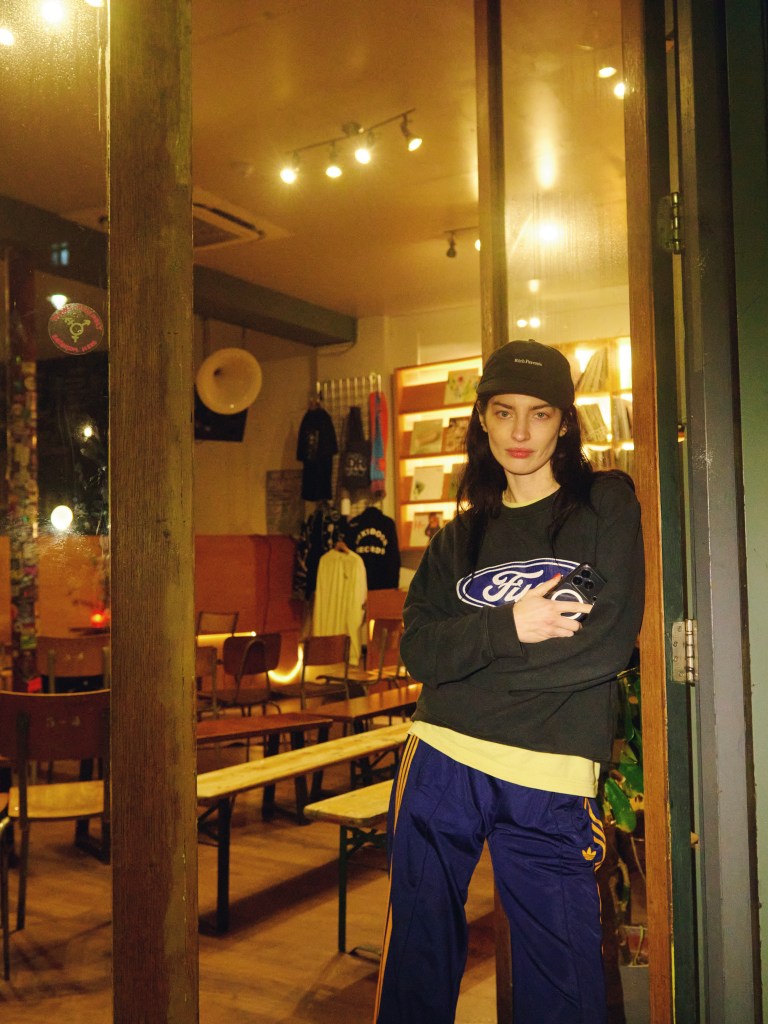
Somewhere between the fourth assistant stylist with a famous surname and the nineteenth 21-year-old creative director being profiled as “self-made”, an entire generation collectively realised that some people enter the arts through the front door, while everyone else is trying to climb in through a bathroom window carrying a tote bag full of unpaid internships.
Which is precisely why Rich Parents Club feels like such a perfect name for Sydney Lima’s new, nurturing creative community. The platform, founded by the London-based writer, presenter and documentary filmmaker, takes the thing creative industries are usually most careful not to say out loud – that class, money and proximity still shape who gets to sustain a creative career – and puts it directly in the title.
The joke lands because it’s true. But beneath the satire is something much more serious: a growing frustration with the disappearance of accessible pathways into film, media and the arts. Through Rich Parents Club and its live talk series Parental Guidance, Lima is trying to build something that feels increasingly rare in creative industries: transparency. The talks, hosted across London, bring emerging creatives into conversation with established names including BAFTA-winning filmmaker Akinola Davies Jr., Adolescence director Philip Barantini, and award-winning writer and comedian Jack Rooke, creating the kind of access that so often only exists informally behind closed doors.
Next up in the series is Mia Bays, the Oscar-winning, BAFTA-nominated producer and current Director of the BFI Filmmaking Fund, whose career has long championed underrepresented voices within independent film. Hosted in London on Monday 1st June, the conversation will continue the club’s wider mission of opening up access to the kinds of industry insight, mentorship and career conversations that often feel reserved for people already inside the room.
For Lima, the idea for Rich Parents Club came from watching the industry become increasingly difficult to enter for people without financial support or inherited connections. “As of this year, only 6% of working-class artists hold positions in the UK creative economy,” she says. Across the wider economy of creative and cultural industries, Creative UK reports that working-class people make up 35% of the workforce, yet only 17% of UK-based film & TV directors are from working-class backgrounds. “My awareness of the issue quickly turned to rage, and I think that is quite clear in the name Rich Parents.”
As of this year, only 6% of working-class artists hold positions in the UK creative economy. My awareness of the issue quickly turned to rage, and I think that is quite clear in the name Rich Parents.
She’s careful to position the project not as bitterness towards individuals, but as an attempt to challenge a wider system that repeatedly reproduces itself. “The initiative isn’t about tearing others down,” she explains. “It’s about simply highlighting the advantages some people have and how we need to consciously keep working-class voices alive in the arts.” That urgency has only intensified through the conversations the platform has hosted so far. “The talks have really highlighted the number of opportunities that are disappearing in the UK, from grants to commissioning,” she says. “There is a desperate need for us to find new ways to create opportunities.”


What makes the series particularly compelling is that it avoids minimising the subject’s success into a neat, aspirational narrative. They aren’t there to deliver polished TED Talk versions of their careers; they’re there because their paths into the industry were unexpectedly complicated, non-linear and often improvised. “I think I’m particularly interested in their unique journeys into the industry and how they’ve constantly adapted their creativity to opportunities or used their success to switch lanes,” she explains. “Like Fisher, for example, who used his success as an actor to start making documentaries.”
That ability to pivot, creatively and professionally, feels central to the kinds of careers Lima wants younger creatives to imagine for themselves. “None of the guests have had very clear paths to success,” she says. “I think people need to hear now more than ever that what you’re doing at this current moment in time won’t define you forever.”
I think people need to hear now more than ever that what you’re doing at this current moment in time won’t define you forever.
It’s an especially important message within industries that increasingly reward the appearance of certainty. Online, creative careers are often presented as linear, with “career dumps” showcasing highly curated round-ups of breakthrough commissions, sold-out launches, and announcements written like an Oscars acceptance speech. The less photogenic realities (financial instability, burnout, self-doubt, rejection) are usually intentionally edited out entirely.
Parental Guidance’s title itself suggests something slightly more emotional than just another networking event or career surgery. Not everyone entering creative industries has family members who can explain how to negotiate rates, apply for funding, survive freelance instability, or even understand what their job actually is – advice many students also crave from institutions like universities, which rarely provide it. Sometimes, guidance simply means hearing someone articulate the anxieties you thought were uniquely yours. “I wanted to build a community first and foremost,” Lima says. “I grew up in a council estate, but it was five minutes from Soho, so I always had this world on my doorstep. This is what I want to create with the talks, this level of access.”
Importantly, the talk series is free to attend – in part, because Lima understands how quickly the arts can become inaccessible when every event, workshop and panel talk exists behind a paywall. And increasingly, geography plays its own role in that exclusion. “We’ve started working on some exciting events around the UK, outside of London,” she adds. “After all, the whole living in London to access the arts thing is a huge part of the problem.”
Still, some of the most poignant parts of the project come from the conversations it creates around emotional survival within creative work. “I think Jack Rooke touched on this perfectly in the recent talk; in lockdown, he started a writing group with his friends and collaborators,” she explains. “I think working in the arts can feel very alienating at times.”
Having built a career spanning documentary filmmaking, presenting and writing for the likes of VICE, Channel 4 and Vogue, Lima understands firsthand how emotionally precarious creative work can feel even once you’re “in” the industry. “It’s weird because so many of my friends are doing similar things to me, but we never speak about it,” she admits. “It was only recently that we started speaking openly about the overwhelming mood swings of anxiety, fear and excitement that come with trying to create things. It’s such a relief when you learn everyone feels similarly.”
That may ultimately be what Rich Parents Club understands best: that creative industries don’t just run on talent or ambition, but on reassurance, shared knowledge, and the confidence to believe you belong there in the first place.
You can book Rich Parents Club’s next Parental Guidance talk with Mia Bays for free here.
Enjoyed this story? Help keep independent queer-led publishing alive and unlock the BRICKS Learner Platform, full of resources for emerging and aspiring creatives sent to you every week via newsletter. Start your 30-day free trial now.
The post Sydney Lima’s Rich Parents Club is calling out creative industry gatekeeping appeared first on BRICKS Magazine.