The continuous American sneeze and the Caribbean cold (Part I)
The Caribbean has again featured prominently in the US policy positions, explicitly and implicitly, in, for example, the requests for acceptance of deportees from third states, the removal of the US from numerous international organisations, the kidnapping of the president of Venezuela, and the subsequent suspension of certain classes of visas. Certainly implying the cliché, […] The article The continuous American sneeze and the Caribbean cold (Part I) is from St. Lucia Times.
 Black News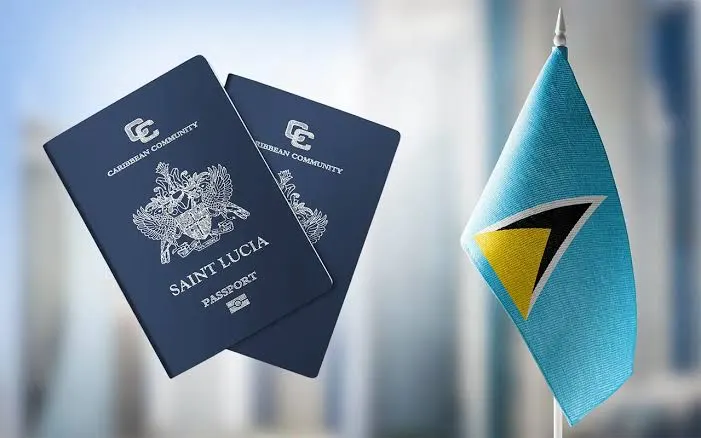
The Caribbean has again featured prominently in the US policy positions, explicitly and implicitly, in, for example, the requests for acceptance of deportees from third states, the removal of the US from numerous international organisations, the kidnapping of the president of Venezuela, and the subsequent suspension of certain classes of visas. Certainly implying the cliché, “when America sneezes, the Caribbean catches the cold”, is accurate.
What is worrying is not a by-product of democratic expression per se, but of ignorance and our inability to deepen and broaden political knowledge about the forms of imperialism, which sees the US activity as not a response to internal Caribbean lax policy failures but a continuation of the Monroe Doctrine, Roosevelt Corollary, and the like. The US will thus attempt to limit our sovereignty, recognising our region’s inherent vulnerabilities and economic dependence on them. In fact, if it were any of the internal lax and elusive regulations, then it could have been addressed through championing reform. However, the fig leaves of ‘absolute bans’, ‘national security interests’ and obfuscation from the international multilateral system in prioritising America while continuing wars are about destruction and recreation.
Dudley Seers rings true when he suggests that a country’s independence is only truly possible if it has the power and influence to conduct relations on equal terms. It just appears that in recent times, America’s sneeze has continued to be more contagious, while some countries within the Caribbean, notably Trinidad and Tobago, while spiting their regional nose, have become immune to the cough by design.
What this is not about
What is important is to explain from the onset what this is certainly not about. It is not about the Citizenship by Investment (CBI) Programme or the lack of residency requirements, drugs, or democracy, or any ‘inherent national security concern’ to the US. In fact, the CBI does not guarantee any citizen, as distinct from the EU, visa-free access to the US, as they still must go through the same processes. Moreover, the data have not suggested that there has been any astronomical increase in migration, which can be attributed to the CBI or that there have been any alarming national security threats to the US.
If that were the case, there are due diligence mechanisms which would aid in identifying and reducing the risks of ‘undesirables’ entering the US. After all, this is a fulfilment of President Trump’s campaign to reduce immigration, without any nuanced application to the value of ‘the immigrant’ or, in part, the ‘method’. It is a continuation of lumping people and regions in a discriminatory, xenophobic manner, such as the Muslim Ban, Haitian cannibalism slurs, and other bigoted attacks, to reduce migration to the ‘land of the free and home of the brave’
But it is another neocolonial attempt to dictate the policies, definition of citizenship, and diplomatic partners of the Caribbean, which is an affront to the deeply fought sovereignty of the Caribbean. If it were about the CBI, then how would other countries without CBI, such as Barbados and Jamaica, also be part of the cold? Is it an infection by association? Or is it that they, too, have engaged in some policy measure that affects the US, and as such, are being punished?
Or are they continually standing up for principles in the UN Charter and international law that are rendered obsolete in today’s diplomatic marketplace, and as such are being punished with ‘might’? Certainly, there exists not an iota of evidence presented by Kamla Persad Bissessar on the ‘bad mouthing’ of the US. And if that were the case, it is worrying that political leaders, albeit in typical colonial fashion, have utilised ‘critique’ of their policies and of leaders around the world, as the basis for spiting their regional nose, permitting divide and conquer politics, as opposed to strengthening the institutions and our people’s resolve through direct interventions.
On a personal level, what is interesting is how we would never encourage our children to cower to bullies, even if reporting them to the authorities as our response. In this instance, there exists an ideological limbo that renders our Constitution and independence movement hapless and unfinished.
The US is continually aware of our economic vulnerabilities as we are open and small economies susceptible to economic shocks and vagaries. Moreover, we engage in beneficial partnerships with non-traditional partners, while receiving the short end of the globalisation stick, which causes us to always be positioned North diplomatically.
Nevertheless, the first port of call is the announcement by the Prime Minister of Saint Lucia, that he, like other Caribbean leaders, has signed the memorandum of understanding for the acceptance of deportees from third countries who are in the USA or making route to.
Ideology – or pragmatism
It is a legitimate position for the defenders of sovereignty to be concerned about the extent to which we, like other countries, are slowly becoming colonies and dependencies of the US. There is legitimacy in the argument of those who believe that there is an inherent hypocrisy, double standards, and asymmetrical power relations between our countries, such that the US is proposing, and we are aimlessly accepting. Instead, they proffer, quite accurately and convincingly, that behind the mask of bilateralism, and being able to shape the terms of this engagement through negotiation, one should stand firm on principles of sovereignty and independence, which allows us to decline the request for ideological, economic, political, and social reasons.
On the other hand, those who proffer ‘we had no choice’ sit within the economic pragmatism, and remain aware of the economic, military, and political might of the US, and their recent deviation from the utilisation of international norms, law, diplomacy, and multilateralism in their engagement. Instead, there has been a use of sovereignty as a sword to beat small islands into submission and compliance. This is even more opportune when one assesses that some of our states have only come on these lists, such as Antigua and Barbuda, after requests were made for utilising their countries for American support in security and war. Interestingly enough, Grenada was not included on the first list, possibly because they considered a military radar installation.
Of course, the bedfellows of Trinidad and Tobago with the US, for their energy interests has also caused it to scathe off any inclusion on the lists. Trinidad and Tobago, under Persad Bissessar, as has been done previously, has played shots for the local bankrupt gallery and continued to strike a death knell to the regional integration idea, by “cutting off her economic nose to spite her integration face”.
In fact, there existed formulae which could have maintained the national self-interest of Trinidad while still pursuing aggressively and continuing to benefit from economic and political integration.
As such, if Saint Lucia and other Caribbean countries were to invoke the sovereignty card, it is not far-fetched that the US would pull the wool, recognising our dependence on US-based tourists as the lifeline of our economies, the ability to apply and possibly receive visa access, remittances, Caribbean Basin Initiative benefits, trade and commerce.
What we do however get incorrect is that there should never be a full surrender of our sovereignty by fully agreeing with the US policies, particularly when they conflict with our national interests, belief in regionalism, rules-based order in the international multilateral system, maintenance of the Caribbean as a Zone of Peace, ability to engage in autonomous decision making and engaging with partners and agencies that are sensitive to the difficulties of small states like ours.
This decision is coupled with what Professor Justin Robinson has classified as guarding “our deep bonds driven by geography, bonds of family and culture, shared values.”
The article The continuous American sneeze and the Caribbean cold (Part I) is from St. Lucia Times.