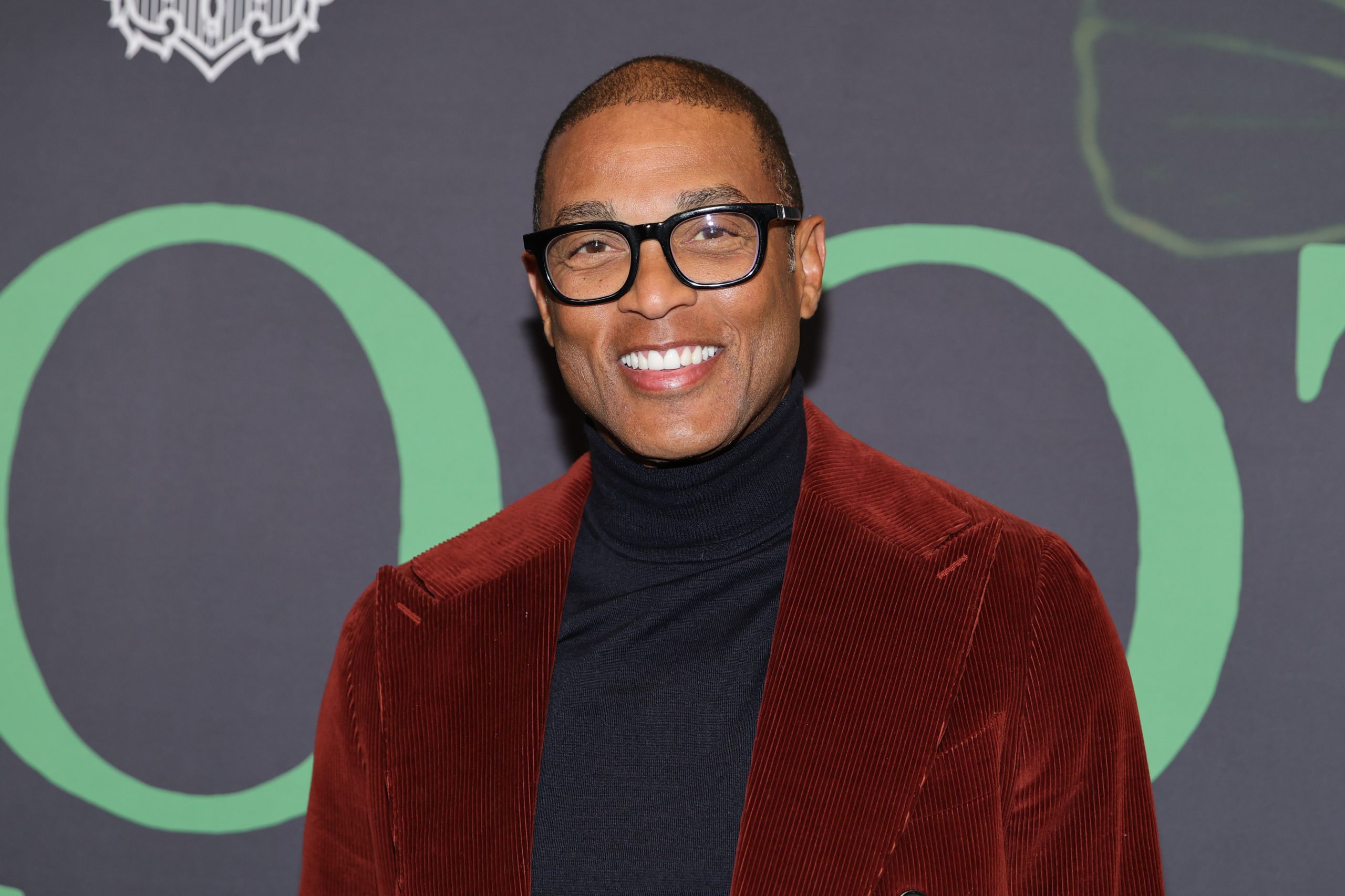
Tim Ross on Black Men, Communication, and His New Book ‘The Missing Peace’
Tim Ross on why Black men struggle to communicate and how finding the right words unlocks the peace we've all been missing. The post Tim Ross on Black Men, Communication, and His New Book ‘The Missing Peace’ appeared first on The Quintessential Gentleman.
 Black News
There is a particular kind of exhaustion that has no clean name. It is not the tiredness of a long day or the grief of a specific loss. It is the weight of years of unspoken things, trauma carried in the body, pain managed through distraction, silence mistaken for strength.
For too many Black men, it is simply called life.
Tim Ross knows that exhaustion personally. Born and raised in Inglewood, California, he grew up in an environment where violence was ambient and vulnerability was not a luxury most men could afford. He was sexually abused at eight years old by a neighbor. He watched his older brother found a gang. He saw his first dead body at nine. By his own account, he had more than enough reasons to numb himself, and for years, in ways both subtle and not, he did.
But Ross also had something else: language. The hard-won, hard-fought ability to finally put words to what he was feeling. And once he had those words, everything changed.
Today, Ross is a thought leader, pastor, and bestselling author with a following that has grown organically across platforms, over 9 million likes on TikTok, nearly 900,000 followers on Instagram, not because he performs wellness, but because he tells the truth about what falling apart actually looks like.
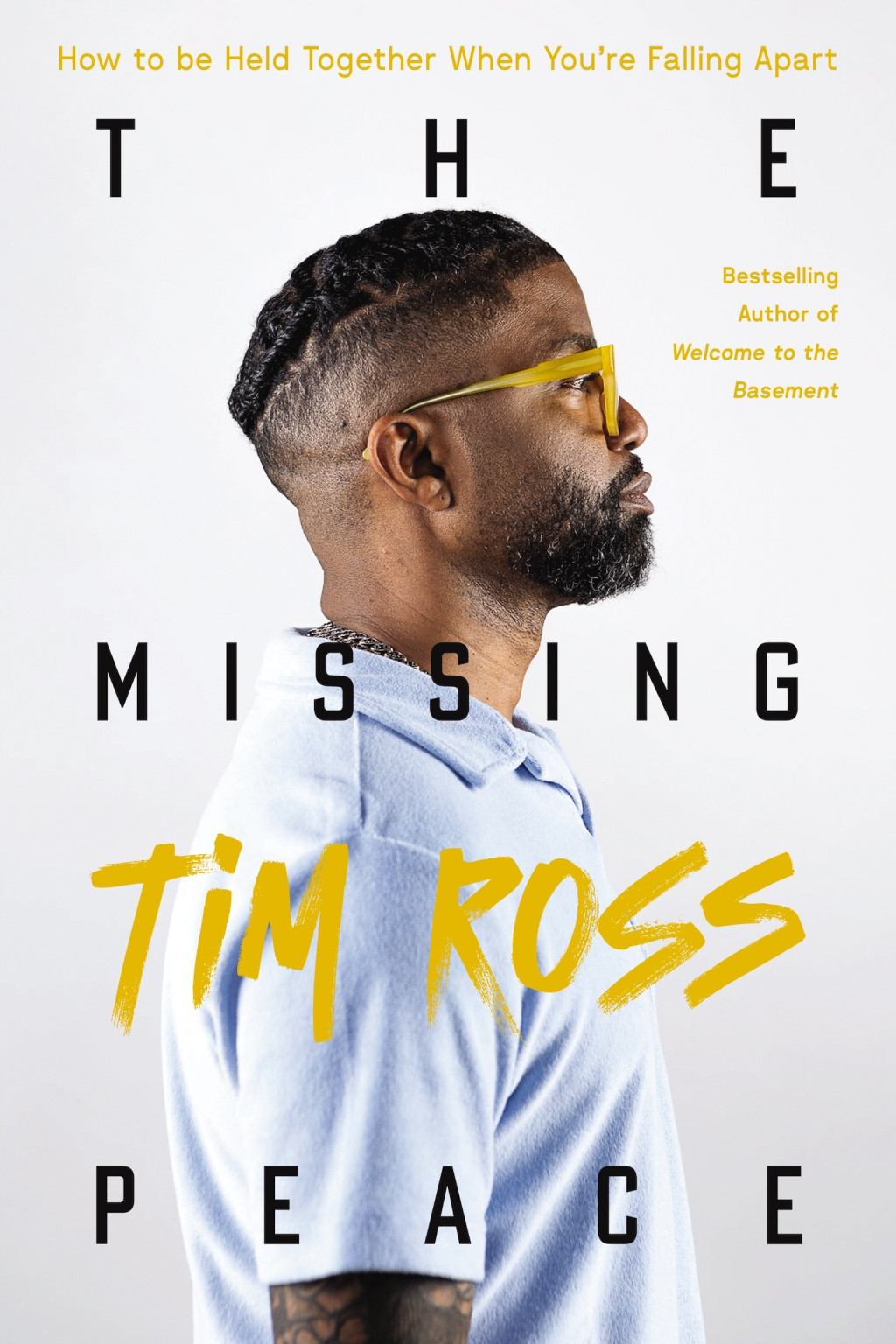
He is the host of the popular podcast The Basement, a space he describes as a sanctuary for vulnerability, and his new book, The Missing Peace: How to Be Held Together When You’re Falling Apart (releasing May 5th), arrives at a moment when the world, and particularly Black men inside it, could not need it more.
The Missing Peace is not a self-help book in the conventional sense. It does not offer a ten-step plan or a motivational pivot. It provides the difference between temporary escape and genuine peace, between surviving and actually living. Ross draws from scripture, from neuroscience, from the therapy room he has sat in for 28 years, and his raw personal history.
We sat down with Ross for a conversation about the book, Black men and communication, and what it really means to be okay.
The Quintessential Gentleman: Many know you as someone who speaks and leads. But what was it about you that made you want to become such a listener?
TR: You’re literally the first person that’s asked me that question. This goes back to my childhood. My father and both of my brothers stuttered. And because they stuttered, I had to become patient at allowing them to finish what they were saying. The worst thing for somebody that has a stuttering problem is for you to cut them off and try to fill in the blank. So from a very early age, I would always just let them get out what they were saying through their stutters. When I talked to people that didn’t have a stuttering problem, it was just always second nature to let them complete their thought. A lot of people think I talk for a living. I actually listen for a living.
QG: I want to talk about communication specifically around Black men. I feel like too many Black men don’t communicate and aren’t even necessarily taught how to communicate effectively. What are your thoughts on that?
TR: It is something that most Black men, if they’re not in an environment where that was celebrated and welcomed, have to acquire. But it is actually paramount for them to acquire the ability to communicate. I talk about this in the book: whatever doesn’t come out of your mouth through words will come out of your body through actions. And for years and years, Black men have acted out what they have not been able to speak out.
QG: You write that secrets keep us trapped, that we can’t heal what we don’t reveal. Can you speak to that from your own life?
TR: My mom caught me watching porn at 19. And being who she was, a woman of faith, she ran to the room, hit her knees and started praying. Now I’m left there feeling shame and embarrassment. But I knew why I was watching it. Nobody watches porn as a recreational activity. We’re usually using pornography and masturbation as a numbing tool for something we don’t want to feel. I didn’t want to feel what I had been living with since I was eight years old — the sexual abuse from a neighbor.
So what I did was I cleaned up, and I made a decision. I could make a left and go to my room and it would be awkward for four or five days. Or I could make a right, go to my mom’s room, and tell her why. I knew why. So I walked in and said, Mom, I don’t want you to think I’m a pervert. I got abused by homeboy.
She was already crying on her knees praying. Then she cried harder. She asked did it happen to my younger brother too. I said, “Yes.” She said, “Wake him up.” So we all ended up in the house that night…my dad worked nights at the post office, she called him home. And man, what should have been embarrassing, that was the freest day of my life. It felt like a 2,000-pound slab of concrete came off my chest. Nothing about the past changed. Nothing about the present changed. But my body was like: finally. You finally said what we’ve been feeling for the last 11 years.
From that day to this, I’ve never had a secret. I will not live like that again.
QG: Do you believe in therapy?
TR: Bro. 28 years.
QG: The intersection of therapy and faith is something our community doesn’t speak about enough and when we do, we usually hear it from the therapist’s side, not from inside the church. Talk to us about how those two things coexist for you.
TR: I gave my life to Jesus on January 14th of ’96. For the first two years, I grew up in a Pentecostal environment, everything was, come to the altar, get prayed for. And I went to those altars. I prayed. I did what they told me. And I was still walking away either still in the activity I was doing, still with the thoughts I had. I started to think, God can fix everybody but me.
Then I went to a Christian therapist. I sat down, I started talking, and he was just like, “Yeah, okay, that makes sense based on what you’ve been through and how your body coped with it.” He said, “You’re dealing with the surface stuff. You’re trying to stop looking at porn. It ain’t even about porn. Porn is the fruit, not the root. We need to get to the root.”
And that started me on the journey. When I started getting freedom around why I was doing what I was doing, my core traumas, the abandonment and attachment issues, I realized: it ain’t theology or therapy. It’s theology and therapy. And the more I read that book and kept going to therapy, I was like, God is a therapist. If you read Genesis 3, the first two questions God asked the first human beings are the exact same two questions a therapist asks in your first session. Where are you? Meaning, are you self-aware enough to know where you are right now? And: who told you that? Where are you getting your narrative from? Truth or a lie? Once you see it, you can’t unsee it.
QG: For someone who is constantly exhausted and overloaded, how do you define the difference between the insatiable search for happiness and finding true peace?
TR: I like to delineate between temporary peace and eternal peace. Temporary peace is all the stuff we can have and do, but by the end of it, it brings us back to the state we felt before. And when I’m talking about recreation, I’m not talking about drugs, I’m talking about, I’m watching Netflix, I’m going to a sporting event, I’m hitting the club tonight. At the end of it, you still have to address whatever you’re dealing with internally.
Eternal peace is not contingent on external circumstances. It’s a state of regulation, a state of calm and quiet that I can have, and that everybody can have, regardless of what situations are going on in our lives, whether the bank account is swollen or anemic, whether you’ve got the career you want or you’re working the job you can’t wait to get off.
Peace is a person. It’s the Holy Spirit. I know that because in my own life, I’ve been through more than enough to be drinking it away, smoking it away, sexing it away. And even in the midst of all of that, I read a verse in John 14:27, Jesus saying, I am leaving you with the gift, peace of heart and mind, not as the world gives. So neither be thou troubled or afraid. I’m a literalist. He is called the Prince of Peace. The only gift the Prince of Peace can give is the actual thing.
QG: What does being ‘okay’ actually look like? Because that word gets used so loosely.
TR: “Okay” is not the absence of frustration. It’s not the absence of a problem. Last year, I had a company I co-founded, we reached an impasse, and we had to part ways. As a result, 70% of my income went away. And I was okay.
I was pissed off. I wanted to go see that man for about six months. But I would have had to trade my peace to do that. So I was peaceful all of last year, operating on 30% of what I would normally make, only because of that person on the inside of me that is available at all times. I refuse to give up this calm in my body to get worried, to be angry, to be petty. Full is full. The belly don’t know the difference between filet mignon and a Chipotle bowl.
Being “okay” does not mean the absence of something. It means in the face of whatever I’m dealing with, I still choose peace.
QG: Why is now the right time for this book?
TR: I wish I could say I was smart enough to drop a book against a political climate, a cultural climate, a world climate that was so dysregulated, so on edge, so full of fear and doubt. I’m just not smart enough to do that. It just so happens that the world right now needs a book that allows people to understand what true peace is really about.
QG: After readers finish The Missing Peace, how do you want them to feel?
TR: I want them to feel like this: finally. Finally, somebody gave me language. Somebody gave me words for what I was feeling. Between the ages of eight and nineteen, I didn’t have words for my pain. I didn’t have words for my trauma. And once I got those words, I got freedom. Then started a journey to live in that freedom every single day.
So at the very least, what I hope people walk away from this book saying is — finally. I got some words for the way I feel. I didn’t go through what Tim went through. Thank God. But he still gave me language by telling me about his story that is going to help me navigate my own.
The Missing Peace: How to Be Held Together When You’re Falling Apart by Tim Ross is available May 5th. Follow Tim on Instagram @upsetthegram and on TikTok @upsetthetok.
Check out the full interview below.
The post Tim Ross on Black Men, Communication, and His New Book ‘The Missing Peace’ appeared first on The Quintessential Gentleman.