Trinidad, Nature Destination?
The boat slips into a corridor of mangroves, with roots rising from the water and branches closing overhead. Farther west, small islands appear across the Gulf of Paria, hiding caves, coves, forests, and old traces of Trinidad’s history. Above Port of Spain, the land rises quickly into green hills, cool valleys, and dense tropical forest. […] The post Trinidad, Nature Destination? appeared first on Caribbean Journal.
 Black News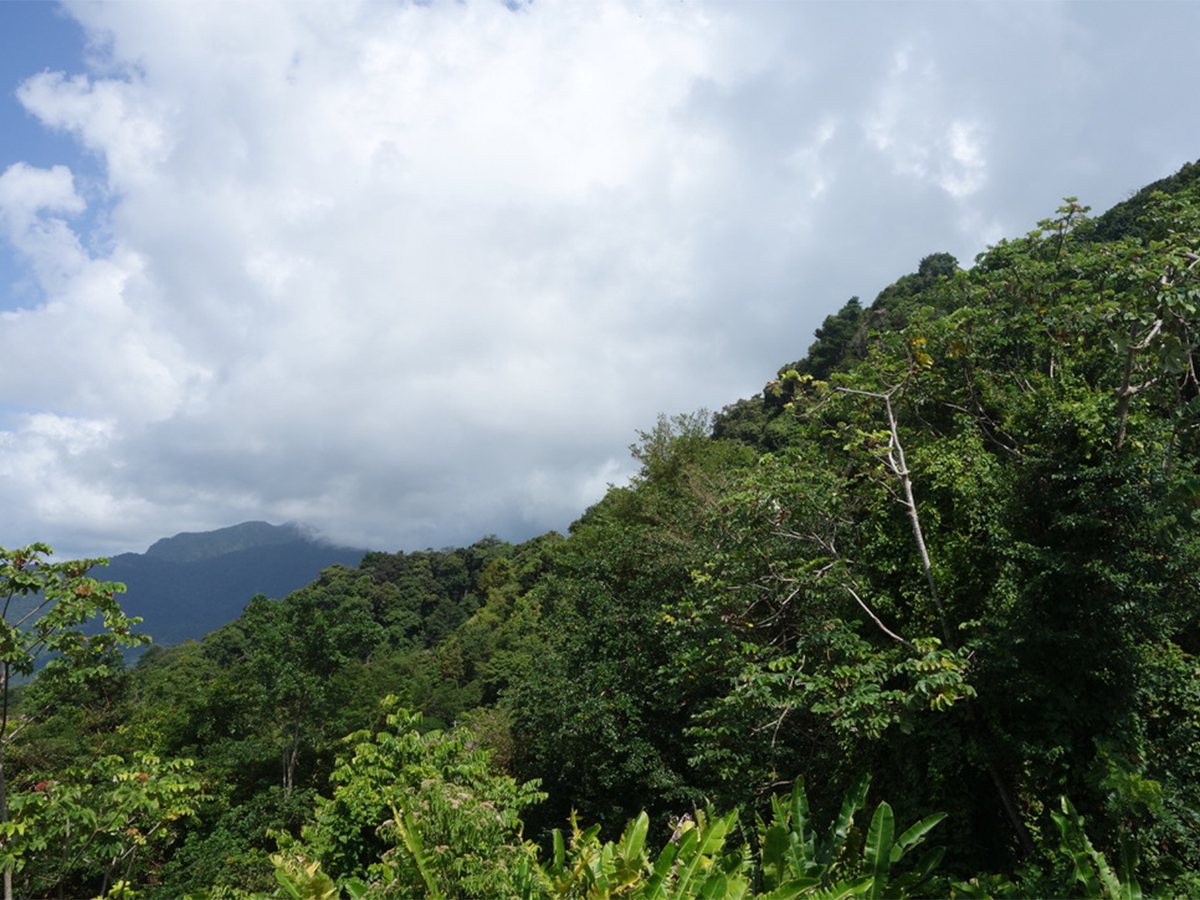
The boat slips into a corridor of mangroves, with roots rising from the water and branches closing overhead. Farther west, small islands appear across the Gulf of Paria, hiding caves, coves, forests, and old traces of Trinidad’s history. Above Port of Spain, the land rises quickly into green hills, cool valleys, and dense tropical forest.
This is Trinidad, although it may not be the Trinidad you think you know.
The island has long been associated with business travel, energy, Carnival, nightlife, and the busy streets of Port of Spain. Its hotels tend to fill with conference delegates and corporate travelers. Its most famous images usually involve costumes, steelpan, soca, and crowds. (Oh, and street food).
But beyond the capital, another Trinidad is emerging: one of the Caribbean’s most compelling nature destinations.
It is a place where you can watch hundreds of scarlet ibises return to a mangrove roost, explore limestone caverns on an island offshore, hike through rainforest to waterfalls, look for leatherback turtles on an Atlantic beach, and spend a day birdwatching in the Northern Range.
Trinidad is quietly becoming an eco destination, powered by experiences that have been here all along.
The World Inside Caroni Swamp
Just south of Port of Spain, the city gives way to the wetlands of the Caroni Swamp, a vast mangrove ecosystem filled with narrow channels, open lagoons, mudflats, and forested islands.
The classic experience begins aboard a flat-bottomed boat, traveling deep into the mangroves with a naturalist who knows where to find the wildlife.
You may see tree boas resting above the channels, caimans near the water, silky anteaters in the branches, fiddler crabs across the mud, and herons, egrets, kingfishers, and other wetland birds throughout the journey.
The defining scene comes when the scarlet ibises return to roost.
They arrive in groups, their brilliant red feathers crossing the sky before they settle into the green mangroves. More birds follow, then more, until entire sections of the trees appear flecked with red.
The scarlet ibis is Trinidad and Tobago’s national bird, but seeing one in a photograph is entirely different from watching hundreds converge above a protected wetland.
Caroni has become one of the island’s signature visitor experiences, with traditional wildlife excursions joined by private tours, kayaking trips, and even meals served aboard boats in the sanctuary.
And it is remarkably close to the capital. You can leave Port of Spain and, within a short drive, enter one of the Caribbean’s great mangrove habitats.
The Islands Beyond Chaguaramas
Head west from the capital and Trinidad begins to change again.
The road follows the edge of the Chaguaramas Peninsula, passing marinas, forested hills, bays, hiking trails, and former military sites. Offshore, a chain of islands stretches across the entrance to the Gulf of Paria.
Known collectively as the Bocas Islands, they include Gaspar Grande, Monos, Huevos, and Chacachacare, each with its own geography and history.
Gaspar Grande is home to the Gasparee Caves, a limestone cavern system filled with stalactites, stalagmites, chambers, and a striking blue pool deep inside the rock. Reaching it requires a boat ride from Chaguaramas followed by a walk across the island, turning the cave visit into a wider maritime adventure.
Monos has sheltered bays and vacation homes tucked into the hills. Huevos is rugged and largely undeveloped. Chacachacare, the westernmost of the islands, carries the remains of a former leprosarium, abandoned buildings, dry forest, hiking routes, and views toward Venezuela.
Together, the islands give Trinidad an unexpected dimension.
You can spend the day boating through the Gulf of Paria, swimming in quiet coves, exploring caves, walking through forest, and looking back toward the mountains of the mainland. The experience feels far removed from the commercial center of Port of Spain, even though the journey begins only a short distance away.
A Capital Surrounded by Green
Port of Spain is a Caribbean capital with a remarkably wild backdrop.
The Northern Range rises immediately behind the metropolitan area, forming a wall of tropical green above the city. Roads climb from sea level into cool valleys, hillside farming communities, rainforest, and cloud-covered ridges.
One of the most distinctive places is Paramin, a mountain village known for its steep slopes, herb gardens, Creole traditions, and broad views across Trinidad’s northwest.
The journey upward reveals another side of the island. Houses cling to the hills. Farmers cultivate chives, thyme, peppers, and other seasonings on sharp inclines. The air cools as the road climbs, and the city begins to feel distant below.
Elsewhere in the Northern Range, trails lead to rivers, forest pools, and waterfalls. The route toward Blanchisseusecrosses thick tropical forest before descending toward Trinidad’s north coast, where villages and beaches are separated by hills and long stretches of green.
There are hikes to Paria Waterfall, Avocat Waterfall, and Rio Seco Waterfall, along with river outings, mountain drives, and guided forest walks.
Trinidad’s hills are not scenery around the island’s tourism product. Increasingly, the hills are the tourism product.
One of the Caribbean’s Great Birding Islands
Serious birdwatchers have understood Trinidad for decades.
The island’s position near the South American mainland gives it an extraordinary range of species, joining Caribbean habitats with wildlife more commonly associated with the continent.
In the Arima Valley, the Asa Wright Nature Centre has long been one of the region’s best-known names in birding. Its forested grounds in the Northern Range are known for hummingbirds, toucans, tanagers, manakins, motmots, and other tropical species.
A visit does not require extensive birding experience. Much of the appeal comes from simply spending time in the forest, listening to the calls, walking the trails, and watching birds gather around the vegetation.
The island’s birding map extends well beyond Asa Wright.
At Yerette, in the Maracas Valley, hummingbirds gather in remarkable numbers around a private garden. Along the Blanchisseuse Road, guides search for species in the forest canopy. In south Trinidad, the Pointe-à-Pierre Wild Fowl Trust combines conservation work with close views of wetland birds.
The Nariva Swamp and adjoining Bush Bush Wildlife Sanctuary add another major ecosystem, with freshwater wetlands, forest, monkeys, parrots, macaws, and extensive birdlife.
Birding here is not confined to a single preserve. The entire island functions as a network of habitats, from mangrove wetlands to mountain forest.
The Wild Atlantic Side
Trinidad’s ecological identity continues along its east and north coasts, where the Atlantic meets long beaches, forest, rivers, and small communities.
The most important seasonal experience is leatherback turtle nesting.
At places including Grande Rivière, Matura, and Fishing Pond, enormous leatherback turtles come ashore to lay their eggs. Guided viewing programs allow visitors to witness the nesting process while supporting conservation rules designed to protect the turtles.
Grande Rivière has become the best-known base for the experience, with small hotels and guesthouses near the beach and forest. The village also offers a chance to see another of Trinidad’s signature species: the red howler monkey, whose calls carry through the trees.
This is a different kind of Caribbean beach trip. The sand is darker, the Atlantic is powerful, and the forest reaches close to the sea. The primary reason to come is not a row of beach chairs. It is the rare chance to watch one of the planet’s largest sea turtles return to land.
Beaches Framed by Rainforest
Trinidad’s beaches are often overshadowed by those of neighboring Tobago, but the island has its own collection of striking coastal places.
The best-known is Maracas Bay, reached by a winding drive across the Northern Range. The beach is framed by green hills and has become famous for bake and shark, Trinidad’s beloved fried-fish sandwich served with a long counter of sauces and toppings.
Continue along the north coast and you reach Las Cuevas, a long, curving beach with a quieter atmosphere and forest rising behind the sand.
Farther east, beaches such as Grande Rivière and Toco feel more remote, with fewer large developments and a stronger connection to the surrounding villages and natural terrain.
Even close to Port of Spain, the green landscape remains present. Chaguaramas has hiking paths, bamboo groves, waterfalls, beaches, and cycling routes, making it possible to add an outdoor excursion to a short city stay.
A Different Kind of Trinidad Trip
The most compelling way to experience Trinidad may be to stop treating Port of Spain as the entire destination.
The capital remains the gateway, the dining center, and the island’s principal hotel hub. It is where you can explore the Queen’s Park Savannah, hear live music, eat doubles, visit restaurants, and understand the cultural energy for which Trinidad is famous.
But the city works best as the beginning of a broader journey.
Spend a day in the Caroni Swamp. Take a boat into the Gulf of Paria. Hike in the Northern Range. Stay near a turtle-nesting beach. Visit a hummingbird garden. Follow the north coast beyond Maracas. Explore the caves beneath Gaspar Grande.
The distances are manageable, yet the ecosystems change constantly.
Mangroves become mountains. The mountains descend to beaches. Forest roads lead to waterfalls. A marina becomes the departure point for an island cave. A business-oriented capital places you within reach of wetlands filled with scarlet ibises.
Trinidad will always be one of the Caribbean’s great cultural destinations. It will always be the home of Carnival, calypso, soca, steelpan, and one of the region’s most exciting culinary scenes.
But the island’s next chapter in tourism may be written in quieter places: inside the mangroves of Caroni, across the islands of the Gulf of Paria, along the turtle beaches of the Atlantic, and high in the green hills above Port of Spain.
How to Get There
Trinidad’s principal gateway is Piarco International Airport, about 30 minutes from Port of Spain. Caribbean Airlinesflies nonstop to Trinidad from New York and Toronto, along with an extensive network across the Caribbean, while American Airlines operates nonstop service from Miami.
Connections through Miami, New York, and regional hubs make the island readily reachable from major cities across the United States and Canada. Once you arrive, a rental car or private driver is the best way to connect Port of Spain with Caroni Swamp, Chaguaramas, the Northern Range, and the island’s Atlantic coast.
The post Trinidad, Nature Destination? appeared first on Caribbean Journal.