US$340m Caribbean Push
Source :Jamaica Gleaner The Trump administration says it is investing more than US$340 million in the Caribbean following talks with CARICOM countries at a…
 Black News
Source :Jamaica Gleaner
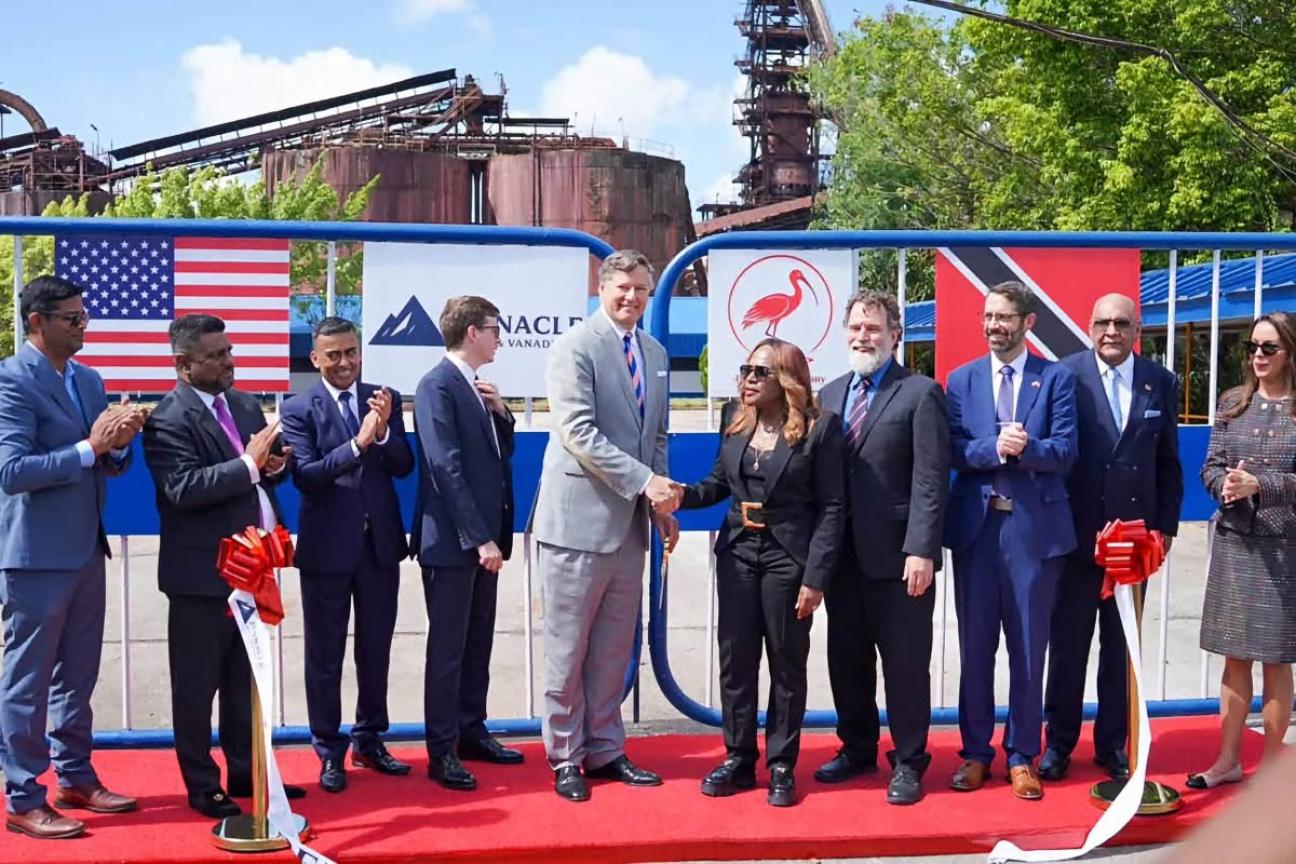
The Trump administration says it is investing more than US$340 million in the Caribbean following talks with CARICOM countries at a US-Caribbean Dialogue hosted by the State Department on Friday.
The meeting was reportedly attended by Deputy Secretary of State Christopher Landau and “high-level” delegations from Jamaica, Antigua and Barbuda, The Bahamas, Barbados, Belize, Dominica, the Dominican Republic, Grenada, Guyana, Haiti, St Kitts and Nevis, St Lucia, St Vincent and the Grenadines, Suriname, and Trinidad and Tobago.
The State Department said the investment follows a commitment made by US Secretary of State Marco Rubio in February in St Kitts and will cover areas including economic growth, digital infrastructure, healthcare and regional security.
A Caribbean Investment Summit is expected to be hosted in early 2027 to connect US companies, financiers and government finance agencies with Caribbean partners to help them close deals in open, competitive markets, the State Department said.
The department said the US will invest US$175.8 million in a Caribbean and Central America Undersea Cables Programme to expand trusted, high-speed undersea cable connectivity across the Caribbean and Central America and make those connections more resilient to disruption.
The State Department is also looking to advance the Americas Strategic Partnership for Independent Regional Healthcare Excellence initiative, working with Congress, with the intention of providing US$61.5 million “to help Caribbean governments build self-sufficient health workforces by hiring health professionals ethically and transparently, with fair pay going to the workers themselves”.
INFLUENCED BY US VISA PRESSURE
This comes on the heels of several CARICOM countries severing decades-old ties with Cuba and its medical cooperation programme, a move critics have argued was made under US visa pressure.
Through the Caribbean Basin Security Initiative (CBSI), the State Department announced US$37 million in programming to secure critical digital infrastructure and ports, and counter illegal, unreported, and unregulated fishing.
It also said it would invest US$66 million under law enforcement and security cooperation to strengthen Caribbean partners’ ability to counter transnational criminal organisations and secure the region’s borders. The total includes US$55 million in International Narcotics Control and Law Enforcement assistance and US$11 million in foreign military financing.
The US will also work with Caribbean security ministers and the CARICOM Implementation Agency for Crime and Security to convene the next CBSI Security Ministerial in spring 2027, the department said.
The US$340.3-million investment package represents a direct effort by Washington to counter Beijing’s growing footprint in what the US views as its backyard.
Over the past two decades, China has poured billions into the region through its Belt and Road Initiative, financing highways, ports, government buildings and telecommunications grids across several CARICOM states.
The initiatives announced at the dialogue target similar sectors in which Beijing has established leverage.
During a two-day visit to the Caribbean in March 2025, with stops in Jamaica, Guyana and Suriname, Rubio said China, a rich and powerful country, had “predatory practices”.
China hit back, arguing that openness, inclusiveness and win-win collaboration are the hallmarks of China-Latin America and Caribbean cooperation.
BLAKE’S CONCERNS
Ambassador Byron Blake, former deputy permanent representative of Jamaica to the United Nations and former assistant secretary general of CARICOM, has questioned whether the listed initiatives emerged from joint discussions or were proposed solely by the US.
Blake said that if the initiatives were developed in consultation with Caribbean countries, they would be surprising given the region’s priorities.
“I would think that, and certainly, if I were advising Caribbean leaders at this stage, I would think that one of their most critical requirements at this time and going into the future is the hardening of infrastructure against climate risk which will arise from the greater warming of the atmosphere, the sea, et cetera,” Blake told The Gleaner.
“So I would think that one of my priorities would be, how do you harden the infrastructure against those climate risks?”
He noted that the region had experienced flooding and droughts, alongside increased threats to food security, as a result of climate change and climate-related events.
Blake said CARICOM countries should focus on food production systems suited to a new and hotter environment, as this would become an increasingly difficult challenge for the region.
He acknowledged that healthcare was a priority but said the initiative’s stated focus was “much too narrow”.
“I would see that you focus more on the training, so that you have a larger cadre of these healthcare professionals lean into the new needs; and, for example, their capacity with AI and that direction of medicine,” said Blake.
“And training in numbers, which will allow for the Caribbean to still have sufficient persons to cover the Caribbean’s needs, so that we would not have to be recruiting from abroad,” he added.
Blake said addressing transnational crime and related security threats aligned with the region’s priorities, but argued that the approach would depend on how the initiative was structured.
“As I’ve said, if it were developed by the US in conjunction with the Caribbean, then I’m surprised at the priorities, but of course, I couldn’t question it if Caribbean governments think that these are the priorities. But if I were advising them, I would have had a different list of priorities, as I’ve suggested,” Blake said.