World Bank’s IFC backs Tunisia’s automotive ambitions with $59.4 million financing for German supplier
The International Finance Corporation (IFC), the World Bank Group’s private-sector investment arm, is preparing to invest up to €52 million ($59.4 million) in German automotive supplier Marquardt GmbH, reinforcing Tunisia’s position as one of Africa’s leading automotive component manufacturing hubs despite a challenging economic environment.
 Black News

The International Finance Corporation (IFC), the World Bank Group’s private-sector investment arm, is preparing to invest up to €52 million ($59.4 million) in German automotive supplier Marquardt GmbH, reinforcing Tunisia’s position as one of Africa’s leading automotive component manufacturing hubs despite a challenging economic environment.
- IFC plans to invest up to €52 million ($59.4 million) in German supplier Marquardt’s manufacturing expansion in Tunisia.
- The financing will support factory upgrades, equipment purchases, working capital and stronger links with Tunisian SMEs.
- Tunisia has become one of Africa’s leading exporters of advanced automotive components serving European manufacturers.
- IFC says the project will strengthen industrial competitiveness, skilled employment and investor confidence in Tunisia.
The proposed investment, disclosed on July 6, is scheduled to go before the IFC’s board for approval on August 7.
If approved, the financing will support Marquardt’s expansion programme in Tunisia through factory upgrades, equipment purchases and working capital for its local subsidiary, Marquardt Automotive Tunisie S.a.r.l.
But the project is about far more than expanding one manufacturer’s production capacity.
According to IFC project documents, the investment is expected to deepen supply-chain linkages between Marquardt and Tunisian small and medium-sized enterprises (SMEs), strengthen technical and managerial skills through partnerships with universities and vocational institutions, promote digital upskilling and reinforce Tunisia’s competitiveness as an advanced automotive manufacturing hub capable of attracting additional foreign direct investment.
The IFC also said its financing would provide longer-term funding than is typically available from commercial banks in Tunisia, matching the long investment cycles required in advanced manufacturing.
DON'T MISS THIS: Tunisia’s foreign investment jumps 30% to $1.2 billion as reforms start to pay off
Beyond the financing itself, the institution described its participation as a confidence signal designed to encourage Marquardt to continue expanding in Tunisia while reassuring other multinational manufacturers that the country remains a viable long-term industrial destination despite ongoing macroeconomic pressures.
Building on more than three decades in Tunisia
The proposed financing builds on Marquardt’s long-standing presence in Tunisia.
The German family-owned company established operations in the country in 1991 and now employs approximately 2,000 people across three manufacturing facilities in the greater Tunis area, with women accounting for more than 60% of its workforce.
Its Tunisian operations manufacture advanced mechatronic systems, vehicle access and ignition technologies, energy management solutions and electronic switching components supplied to some of the world’s leading automotive original equipment manufacturers (OEMs).
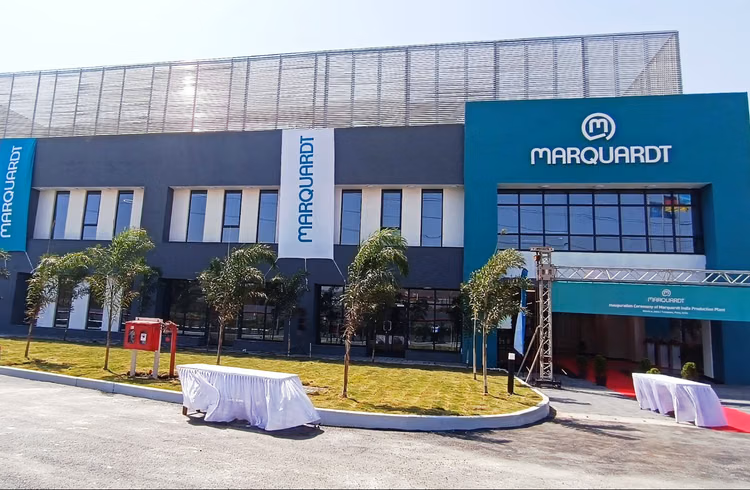
In 2024, Marquardt further expanded its footprint by opening a €50 million ($57.1 million) state-of-the-art manufacturing plant in El Fejja, near Tunis, as part of plans to create about 1,500 additional jobs over the coming years.
Why Tunisia matters
Together with Morocco and South Africa, Tunisia has emerged as one of Africa’s most important automotive manufacturing centres.
But unlike its larger regional peers, Tunisia has carved out a competitive advantage in producing advanced automotive components rather than assembling complete vehicles.
The country specialises in high-value products such as mechatronic systems, electronic controls, wiring solutions, sensors and precision components that are exported primarily to European vehicle manufacturers.
DON'T MISS THIS:Tunisia unveils plans for ambitious overland trade corridor to connect North Africa with the Sahel
Its strategic location on the Mediterranean, close proximity to Europe, competitive labour costs, skilled engineering workforce and trade links with the European Union have made Tunisia an increasingly attractive nearshoring destination for manufacturers seeking to shorten supply chains and reduce production risks.
Today, the country hosts manufacturing operations for several global automotive suppliers, including Leoni, Valeo, Draxlmaier, Yazaki, Coficab and Marquardt, making the sector one of Tunisia’s largest industrial employers and export earners.
The latest investment also reflects broader changes reshaping global manufacturing.
Following supply chain disruptions during the COVID-19 pandemic, semiconductor shortages and rising geopolitical tensions, multinational manufacturers have increasingly diversified production closer to key consumer markets.
North African countries have benefited from this shift as companies look for reliable production bases serving Europe.

Why IFC is investing now
For the IFC, the project aligns with its broader strategy of helping African economies move beyond commodity exports by strengthening advanced manufacturing and integrating local industries into global value chains.
The institution’s development assessment says the investment will increase domestic value addition, expand skilled employment, strengthen local supplier networks and enhance Tunisia’s competitiveness as an advanced automotive manufacturing base.
DON'T MISS THIS:Top automobile manufacturers in Africa
It also expects the project to support greener manufacturing by helping Marquardt strengthen environmental and social standards beyond local regulatory requirements.
If approved, the financing would reinforce Tunisia’s role as one of Africa’s leading exporters of automotive components while sending a strong signal to international manufacturers that the country’s industrial sector remains competitive despite broader economic challenges.
For Tunisia, the message extends beyond one company or one investment.
It signals growing international confidence that the country’s advanced manufacturing sector can continue attracting long-term capital, creating skilled jobs and strengthening its position within Europe’s evolving automotive supply chain.
The proposed IFC financing is more than a loan for factory expansion. It is a strategic investment in Tunisia’s industrial future and a vote of confidence in Africa’s growing role in global automotive supply chains.
By supporting advanced manufacturing, local suppliers and workforce development, the project could encourage additional multinational investment while helping Tunisia move further up the manufacturing value chain.