Zenith Bank hits $3.86 billion valuation after stock surge
Zenith Bank Plc has crossed a market capitalisation of about $3.86 billion (₦5.2 trillion), becoming the most valuable banking stock on the Nigerian Exchange Group after a rapid rally in its share price.
 Black News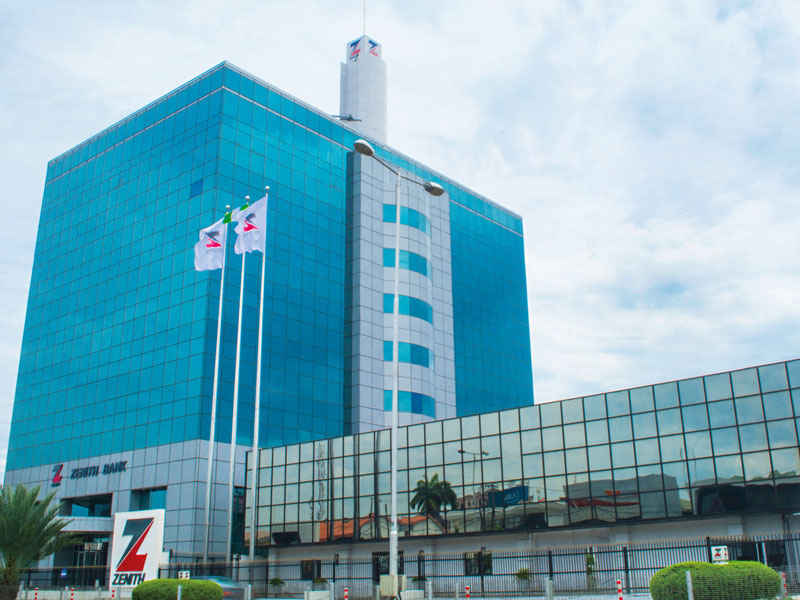



Zenith Bank Plc has crossed a market capitalisation of about $3.86 billion (₦5.2 trillion), becoming the most valuable banking stock on the Nigerian Exchange Group after a rapid rally in its share price.
- Zenith Bank has reached a market value of about $3.86 billion after its shares more than doubled in four months.
- The rally is driven largely by high interest rates boosting bank margins in Nigeria.
- Despite strong revenue growth, profit has remained almost flat due to loan write-offs.
- Investors are now weighing whether the valuation is sustainable in a volatile economy.
The stock has climbed from $0.046 (N61.80) in December 2025 to $0.094 (N127.20) as of April 20, more than doubling in roughly four months. That makes it one of the strongest-performing large-cap stocks in Nigeria over the period.
During the rally, Zenith at times overtook Guaranty Trust Holding Company Plc as the country’s most capitalised lender, reflecting a broader rotation within Nigeria’s banking sector rather than an isolated surge.
The gains are closely tied to macroeconomic conditions. Nigerian banks are benefiting from elevated interest rates as the Central Bank of Nigeria maintains tight monetary policy to curb inflation and stabilise the currency.
This has widened lending margins and boosted interest income across the industry.
Zenith’s 2025 results reflect that trend. Interest income rose to $2.75 billion (N3.7 trillion), up 35% year-on-year, while net interest income jumped 53% to $1.96 billion (N2.64 trillion).
However, stronger revenue did not fully translate into profit growth. Profit before tax fell 5% to $935 million (N1.26 trillion), largely due to balance sheet clean-up measures, including loan write-offs. Net profit rose marginally by 1% to $771 million (N1.04 trillion).
That divergence, fast revenue growth but flat profit, suggests the stock rally is being driven as much by investor positioning and liquidity as by underlying earnings.
Trading volumes point to heavy demand. Between mid-December and mid-March, roughly 2.5 billion shares were traded, placing Zenith among the most active stocks on the exchange. Its share price has also crossed the N100 mark, a level few Nigerian equities sustain.
On the balance sheet, customer deposits increased 11% to $18.05 billion (N24.33 trillion), providing a strong funding base. Gross loans stood at $8.20 billion (N11.06 trillion) after adjustments linked to asset quality improvements.
Zenith’s exit from regulatory forbearance, which had allowed banks to delay recognising certain problem loans, has helped improve transparency and investor confidence. But it also underscores that parts of the loan book required restructuring.
The leadership transition to CEO Adaora Umeoji in 2024 has coincided with a strategic push into digital banking, capital strengthening, and international expansion.
Still, such structural changes typically take longer to reflect in earnings than the current pace of the stock rally.
There is also a structural market factor. Nigeria’s equity market has a limited pool of large, liquid stocks, meaning institutional flows often concentrate in a few names, amplifying price movements during periods of positive sentiment.
At $3.86 billion, Zenith is now being valued closer to larger emerging-market peers, despite operating in a volatile macro environment marked by currency pressure, inflation, and policy uncertainty.
For now, the rally reflects strong investor appetite for Nigerian bank stocks. Whether that valuation holds will depend on how earnings evolve if interest rates ease and whether asset quality gains prove durable.