51 years later, Black veterans still wrestle with the vestiges of battle during the Vietnam War
By D. Kevin McNeirSpecial to The AFRO Second in a two-part series More than half a century has passed since Saigon was captured by North Vietnamese communist forces, signaling the end of the Vietnam War on April 30, 1975. And while the significance of this date in history failed to make headline news, Black veterans […] The post 51 years later, Black veterans still wrestle with the vestiges of battle during the Vietnam War appeared first on AFRO American Newspapers.
 Black News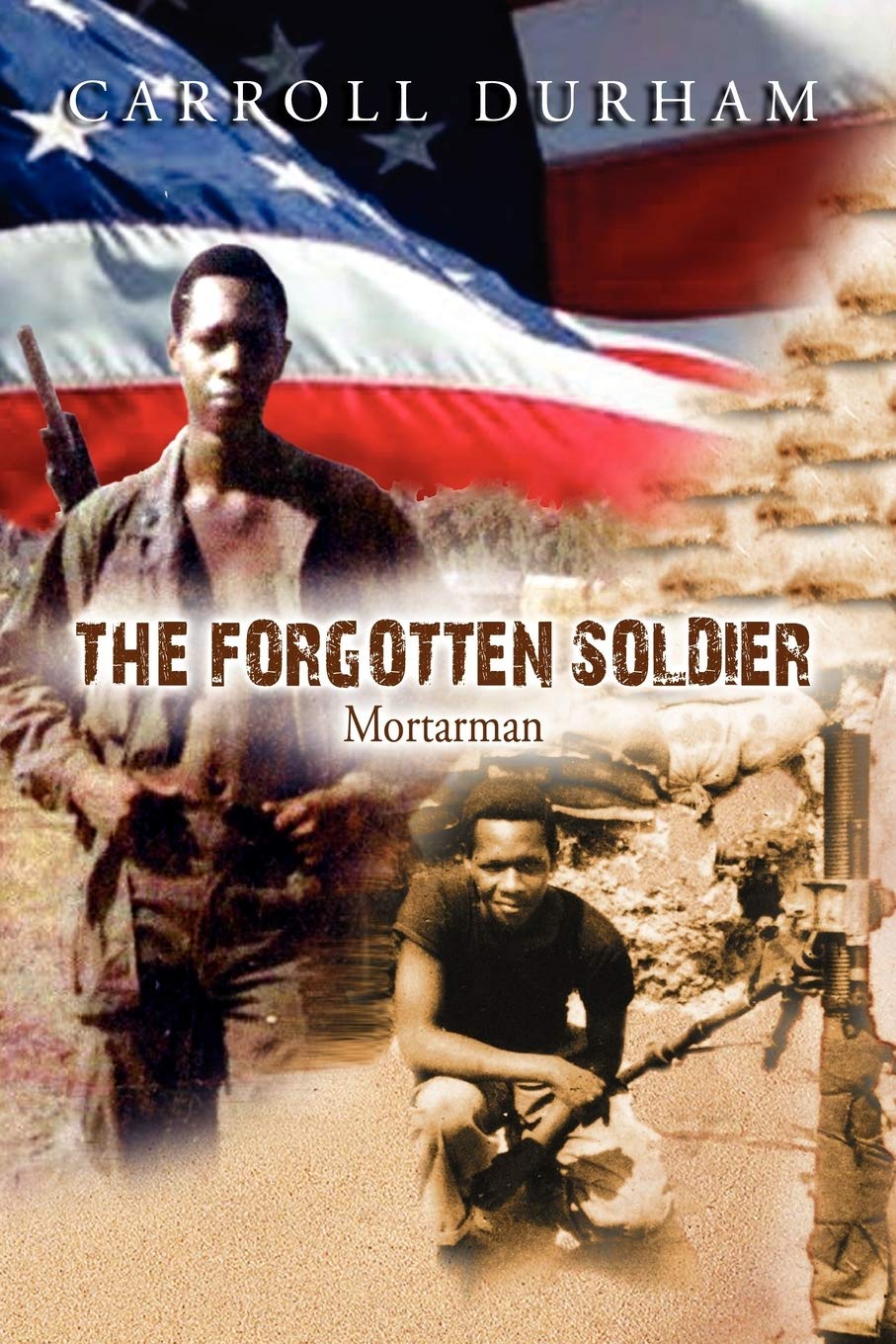

By D. Kevin McNeir
Special to The AFRO
Second in a two-part series
More than half a century has passed since Saigon was captured by North Vietnamese communist forces, signaling the end of the Vietnam War on April 30, 1975.
And while the significance of this date in history failed to make headline news, Black veterans who served and put their lives on the line for their country remember those days as if they were only yesterday.
For some, serving in the U.S. armed forces laid the foundation for solid careers, lifelong friendships and opportunities in other fields where they could use the skills they’d acquired while serving in various branches of the military. But for others, the scars of warfare have led to mental anguish, anxiety and anger.
For George G. “Rock” Forrest, 88, who recently revisited his alma mater, Morgan State University in Baltimore, Md., his most troubling thoughts have long focused on the 17 soldiers who died and the 44 who were injured under his watch during a four-day battle with enemy forces.

Lt. Col. George R. Forrest, U.S. Army (Ret.), a career military man, stands at ease during his time in the Vietnam War where he served for two tours. Credit: Photo Courtesy George R. Forrest
“I was at Morgan State last week for a book signing event which featured Wil Haygood, the author of ‘The Butler: A Witness to History,’ who just published a book about Black veterans,” said Forrest, who served two tours in Vietnam and was the only African-American company commander in his regiment.
“Conversations about Wil’s new book, ‘The War Within a War: The Black Struggle in Vietnam and at Home,’ forced me to once again look back on those days, especially 1965 when my company was ambushed during the Battle of Ia Drang,” Forrest said. “I served in the military for 26 years, I’ve raised four sons, and even marked my 88th birthday during the book tour at my alma mater, where my time in the ROTC led me to pursue a career in the U.S. Army. But my inability to keep my men safe is something with which I have continued to wrestle.”
Forrest said while recent events in America illustrate our nation’s refusal to extinguish the flames of racism and instead embrace the diversity that has been a hallmark of America’s achievements, soldiers on the battlefield had little time to be distracted by racial differences.
“War makes race and religion irrelevant. When the bullets fly, they don’t care what color you are, or what God you may or may not serve.” – Vietnam veteran George G. “Rock” Forrest
“War makes race and religion irrelevant,” he said. “When the bullets fly, they don’t care what color you are, or what God you may or may not serve. Early in the war, the White guys may have had a problem with a Black man leading them, or being in a regiment that was 40 percent Black and Hispanic. But in the heat of the battle, the only thing that matters is staying alive and keeping your fellow soldiers alive, too.”
The Defense Department’s “Project 100,000”
In the early years of the war, speculation began to surface with increasing regularity that Black men were being drafted and sent to the frontlines far more often than Whites.
Confirmation came as Americans learned about “Project 100,000,” a program contrived by Defense Secretary Robert McNamara and other federal officials that garnered thousands of Black men for the war by lowering testing standards and allowing the courts to drop criminal charges against young men who agreed to enlist.
The effects of Project 100,000 were two-fold: it protected the White middle class by preserving college deferments, and it secured more Black men for battle. Despite African Americans only making up 10 percent of the population, nearly half of those brought in by the project were Black – nearly all were poor.

“The War Within a War: The Black Struggle in Vietnam and at Home,” published in February 2026, examines the dual battle African Americans fought during the Vietnam War. The acclaimed author Wil Haygood chronicles the challenges faced by Black soldiers overseas and the civil rights struggle back home, highlighting racial injustice and political tension.
Credit: Courtesy Photo
Haygood clarifies the impact of the project in his Vietnam-era historical account.
“Project 100,000 was cynically billed as part of Lyndon Johnson’s Great Society,” he wrote. “But behind closed doors, the famously salty president slipped into his neo-Confederate drawl, praising the project as a means of cleaning up ‘all these Nigra boys that are now rejects.’”
Carroll Allen Durham Jr., 77, a self-described “military brat,” joined the Army in 1968 and was immediately sent to Vietnam, where he served as a combat soldier. There was little time, he said, to get acclimated, as the war was raging in full force.
“My dad was in the military but I enlisted because with two sisters ahead of me, the only way I could afford to go to college was with financial assistance under the GI Bill,” Durham said. “I was smart, sharp, and kind of a daredevil, which the White guys in my unit picked up on.
“Within three months after my arrival, I was made sergeant,” he continued. “But there was no time to celebrate because in late April 1968 (continuing through May 1968), the enemy launched a series of massive attacks on military targets and cities, especially Saigon referred to as ‘the second Tet.’ Our forces, along with the South Vietnamese, effectively repulsed the attacks but it was bloody and deadly with the U.S. recording 2,169 men in May – the highest monthly total for the entire Vietnam War.”
African-American servicemen like Durham played a vital, albeit disproportionate role in Vietnam, contributing to 23 percent of combat troops by 1967, while being only 10 percent of the U.S. population. While serving in the newly integrated military, Black soldiers faced higher combat casualties, racism, and by the mid-’80s, were twice as likely as White veterans to experience PTSD, estimated between 20 percent and 40 percent depending on the source of the study.
“Black soldiers knew the White boys didn’t want us over there with them – a lot of them felt we were inferior – but they needed us,” said Durham who, after earning a college degree and serving in the Navy for one tour ( 1977-1979), was diagnosed with PTSD (post traumatic stress disorder).
“I almost committed suicide while I was in Vietnam – it was that intense,” he said. “But I completed my tour and then went on to finish college. And while I’ve been diagnosed with PTSD at 100 percent, it’s been even worse for a lot of the guys who came in under Project 100,000. Some of them were barely literate and they had other problems too, which the military ignored so they could get more Black boys on the frontline. Those who made it back found it difficult to get a job – many of them are still suffering from mental illnesses.”
Former Maryland Delegate Clarence “Tiger” Davis (whose life was chronicled in part one of this series) has known both Forrest and Durham for decades. He said he marvels at their resilience, given what they encountered in Vietnam.
“Rock (Forrest) did two tours and was awarded the Silver Star,” Davis said. “But he has carried the burden of losing 17 of his men for most of his life. The sister of one of the men he lost recently told him he had nothing to apologize for, calling it ‘God’s will.’ He needed to hear that.
“As for Durham, who we’ve always called ‘Sly,’ he was in Vietnam during the same time as his father. Can you believe it? He could have been awarded the Medal of Honor on at least four occasions because of his heroics. I don’t know why he was overlooked. But I can say Black veterans have a lot to be proud of – they served their country with distinction.”
Forrest summed his feelings about the war and his struggle with PTSD.
“What I still ask God from time to time is why them (my men) and not me?” he said.
The post 51 years later, Black veterans still wrestle with the vestiges of battle during the Vietnam War appeared first on AFRO American Newspapers.