Africa recovers $685 million in tax crackdown on multinationals and digital revenue leakages
African governments are intensifying a continent-wide crackdown on multinational tax avoidance and cross-border revenue leakages as rising debt burdens and shrinking external financing force countries to search for money at home.
 Black News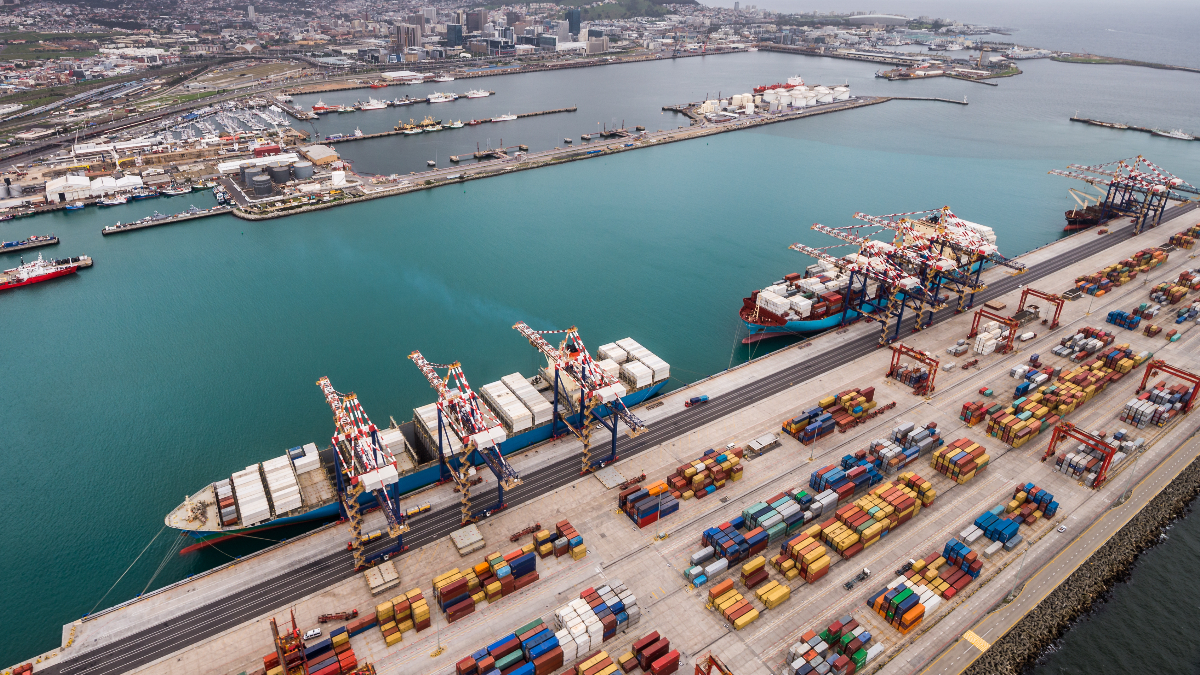
![Multinational corporations, digital transactions and illicit financial flows are becoming key targets for African tax authorities. [Stock Photo via Getty Images]](https://ocdn.eu/pulscms/MDA_/429fd650d19ceee66600a74f42dcfce7.jpg)
African governments are intensifying a continent-wide crackdown on multinational tax avoidance and cross-border revenue leakages as rising debt burdens and shrinking external financing force countries to search for money at home.
- African countries recovered $685.8 million through ATAF-backed tax interventions in 2025.
- The recoveries targeted multinationals, digital services, cross-border VAT leakages and tax avoidance schemes.
- The push comes as African governments battle rising debt costs, weaker aid flows and widening financing gaps.
- ATAF says stronger domestic tax systems are becoming essential for Africa’s economic sovereignty and long-term growth.
The African Tax Administration Forum (ATAF) said tax interventions it supported across member countries generated $907.8 million in tax assessments in 2025, with governments successfully recovering $685.8 million.
The figures shows a growing shift in Africa’s economic strategy as governments increasingly abandon dependence on foreign borrowing and donor support in favour of stronger domestic revenue mobilisation.
The urgency is mounting.
DON'T MISS THIS: Africa loses nearly $90bn annually to illicit financial flows as calls to tighten mining and tax laws deepen
Across the continent, countries are facing higher debt servicing costs, weaker currencies, elevated inflation and slowing access to international capital markets.
At the same time, global aid budgets are tightening while development financing gaps continue to widen.
According to the latest OECD-backed Revenue Statistics in Africa report, total government revenues across African countries averaged just 21.9% of GDP in 2023, far below levels seen in many advanced economies.
That weak revenue base has left many governments struggling to fund infrastructure, healthcare, education and social programmes while also servicing rising debt obligations.
ATAF’s report shows African tax authorities are now aggressively targeting areas where governments believe billions of dollars have historically escaped taxation.
Transfer pricing audits generated $47.1 million in additional tax assessments during the year, while cross-border VAT compliance measures brought in nearly $143 million. Digital services taxes added another $3.57 million.
The organisation said its support included helping countries revise transfer pricing laws, establish specialised audit units and introduce anti-tax avoidance measures aimed at multinational corporations shifting profits out of African jurisdictions.
The issue has become increasingly important globally as governments from the United States to the European Union intensify efforts to close corporate tax loopholes and impose tougher rules on international taxation.
For Africa, however, the stakes are even higher.
Many African governments argue that aggressive tax planning by multinational companies, illicit financial flows and weak international tax rules have drained badly needed revenue from the continent for decades.
ATAF said it helped member countries establish exchange-of-information units to improve access to cross-border financial data needed to investigate tax evasion and hidden offshore assets.
The organisation also trained 2,433 tax officials from 43 countries, including Nigeria, while providing technical assistance to 35 African nations.
ATAF Executive Secretary Mary Baine said domestic revenue mobilisation has become critical to Africa’s economic future.
“Domestic Resource Mobilisation is no longer optional for Africa,” she said, describing it as the foundation for “economic resilience and fiscal sovereignty.”
Her comments reflect a broader shift taking place across developing economies as governments confront what the World Bank recently described as a worsening global financing environment for poorer nations.
The bank’s Global Tax Program report noted that widening development financing gaps and mounting fiscal pressures are forcing countries to strengthen domestic tax systems more aggressively.
Digital taxation is becoming one of the fastest-growing battlegrounds.
As more commerce moves online, African governments are increasingly trying to capture revenue from cross-border digital transactions involving foreign technology companies operating without large physical footprints on the continent.
ATAF said it is also expanding work around artificial intelligence-driven tax compliance systems designed to improve risk assessment, taxpayer monitoring and collection efficiency.
Another growing concern is climate-linked taxation.
The organisation said it is studying the impact of Carbon Border Adjustment Mechanisms (CBAMs), climate-related trade measures being introduced by advanced economies, especially in Europe.
The policies could impose additional costs on carbon-intensive exports entering foreign markets, potentially affecting African industries ranging from cement and steel to mining and manufacturing.
For African exporters already battling high logistics and energy costs, the implications could be significant.
ATAF said it is also increasing focus on the taxation of high-net-worth individuals as governments attempt to widen tax bases more fairly and reduce overdependence on consumption taxes that often hit poorer citizens hardest.
Beyond tax collection, the organisation is positioning itself as a stronger African voice in global tax governance negotiations.
The report said ATAF has become increasingly involved in international discussions around tax transparency, illicit financial flows, digital taxation and the United Nations Framework Convention on International Tax Cooperation.
That matters because African countries have long argued that global tax rules are largely shaped by wealthier economies despite developing nations bearing some of the biggest consequences of profit shifting and tax base erosion.
ATAF maintained that stronger tax institutions and more efficient revenue collection systems are essential if African economies are to reduce dependence on external borrowing, strengthen governance and fund long-term development priorities sustainably.