Baffour Awuah deliberately refused to honour EOCO invitation – Deputy AG, Srem-Sai
Deputy Attorney-General Dr Justice Srem-Sai has accused Nana Agyei Baffour Awuah of deliberately refusing to honour an invitation from the Economic and Organised Crime Office (EOCO), describing his decision as a “deliberate and principle position”.
 Black News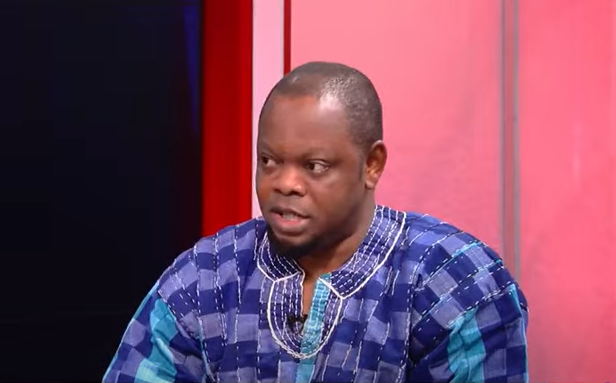
Deputy Attorney-General Dr Justice Srem-Sai has accused Nana Agyei Baffour Awuah of deliberately refusing to honour an invitation from the Economic and Organised Crime Office (EOCO).
He described the lawyer’s decision not to respond to the invitation as a “deliberate and principled position”, arguing that there were no obstacles preventing him from appearing before the investigative body.
Dr Srem-Sai was speaking on Joy FM’s Super Morning Show on Thursday, October 1, in response to Mr Awuah’s claim that he had visited EOCO on several occasions after receiving the invitation but was not arrested.
According to the Deputy Attorney-General, Mr Awuah had the opportunity to present himself to EOCO but chose not to do so.
“And that is why I say that after hearing all these things, all his explanations for a whole week and comparing them with the facts of the case, this is someone who has clearly refused to honour the invitation. He had no hindrances,” he said.
“It is just a deliberate and principled position to take that I did not honour the invitation.”
Dr Srem-Sai also challenged Mr Awuah’s argument that EOCO could have arrested him during one of his visits to its offices, where he had gone to represent clients.
The host had questioned why EOCO did not engage Mr Awuah during those visits if the investigative body was keen to speak with him. The host also referred to Mr Awuah’s earlier statement that he intended to drive to EOCO himself but subsequently failed to show up.
Responding, Dr Srem-Sai described the argument as a “typical bad faith comment”, saying it would have been inappropriate for EOCO to arrest a lawyer while he was performing his professional duties on behalf of a client.
“Imagine this gentleman accompanied a client with EOCO and EOCO decided to pick him up at the time that he was with the client. We would have come out to say that he was being arrested because he went there to represent a client and he was being arrested as a lawyer,” he said.
According to Dr Srem-Sai, such an arrest would have strengthened Mr Awuah’s argument that he was being targeted in the course of his work as a legal practitioner.
“That is exactly what we did. And in that situation, the facts would have clearly supported his case,” he added.
He said EOCO was not expected to arrest lawyers who visited its premises to represent clients, arguing that such an action would have raised more serious concerns about the treatment of legal practitioners.
“And I can understand why EOCO would never arrest him when he was there on behalf of his client,” he said.
“That would have been a very serious thing to do to a lawyer who is on the premises to represent his client and then law enforcement then arrest him during the process. That would have been more serious than what happened in front of the court.”
Dr Srem-Sai said Mr Awuah could instead have used one of his visits to EOCO to respond to the invitation after completing his professional duties.
“In any case, if he had the energy, the time, to do his professional law work by visiting EOCO, then why did he not take one of those moments just after visiting EOCO to inform them that, oh, I received this invitation, I finished with my professional work, now I’m submitting myself to that,” he asked.
He further said Mr Awuah’s visits to EOCO demonstrated that he was not prevented from accessing the office.
“He always goes there according to his will and lives peacefully and goes home. So it is not even true that he has any restraint from going to EOCO,” he said.
The Deputy Attorney-General also questioned Mr Awuah’s suggestion that EOCO should have arrested him during one of those visits rather than expecting him to respond to the invitation.
“In fact, that statement actually convicts him more than any other statement. That you have been going there, they have invited you, you won’t go, but when it comes to your professional law practice, you will go,” he said.
“And then you turn around to tell the public that, if they wanted me, they should have arrested me as one of those moments that I was there. How does that even make any practical, reasonable proposition?”