Book Review: Martins Agbonlahor’s ‘Not Yet Freedom’ Speaks To “Humanity’s Unfinished Struggle For Dignity And Freedom”
By Lashan Hollis Not Yet Freedom is not the kind of book you rush through casually. It is the kind of work that forces you to pause repeatedly because many of the truths inside it are too weighty to simply skim past. What impressed me immediately was the intellectual courage behind the essays. Martins Agbonlahor (above) writes with the voice of someone deeply troubled by injustice but equally committed to confronting it openly. Whether discussing corruption, gender inequality, dictatorship, media suppression, migration, or social hypocrisy, the essays never feel performative. They feel lived, observed, and morally urgent. What I appreciated most was the structure of the collection itself. The arrangement creates a gradual widening of perspective. One moment you are reading about women facing institutional injustice in Africa, and the next you are reflecting on global silence surrounding political oppression or media intimidation. Yet somehow the essays still feel connected by one central thread: humanity’s unfinished struggle for dignity and freedom. Four essays affected me deeply. “In Solidarity with Egypt’s TikTok Girls” was extraordinary in its emotional honesty and moral clarity. The author’s outrage over the punishment of young women for self-expression felt genuine and necessary. It raised painful questions about state control, female autonomy, and fear disguised as morality. The tribute to Shireen Abu Akleh stayed with me long after reading. Martins writes about journalism not merely as a profession, but as resistance against erasure and disinformation. That essay carried emotional gravity and immense respect for truth telling. I was also deeply moved by the essays addressing African leadership failures. The writing is sharp but not empty criticism. Beneath the frustration is genuine disappointment that leaders entrusted with public hope repeatedly betray their people. And then there were the essays centered around women’s suffering and gender injustice. Those pieces revealed perhaps the strongest aspect of the author’s work: his ability to humanize social issues without stripping them of political seriousness. This deserves five stars because the essays are intellectually stimulating, emotionally grounded, socially conscious, and morally fearless. Very few essay collections today manage to remain this reflective while still feeling deeply human. And honestly, how can societies move toward freedom if writers no longer possess the courage to confront uncomfortable truths publicly? This is a book I would strongly recommend to readers who enjoy socially engaged literature, political reflection, and human rights discourse. Reviewed by Lashan Hollis Books and Bites Book Club Atlanta Social Exchange Atlanta, GA, USA.
 Black News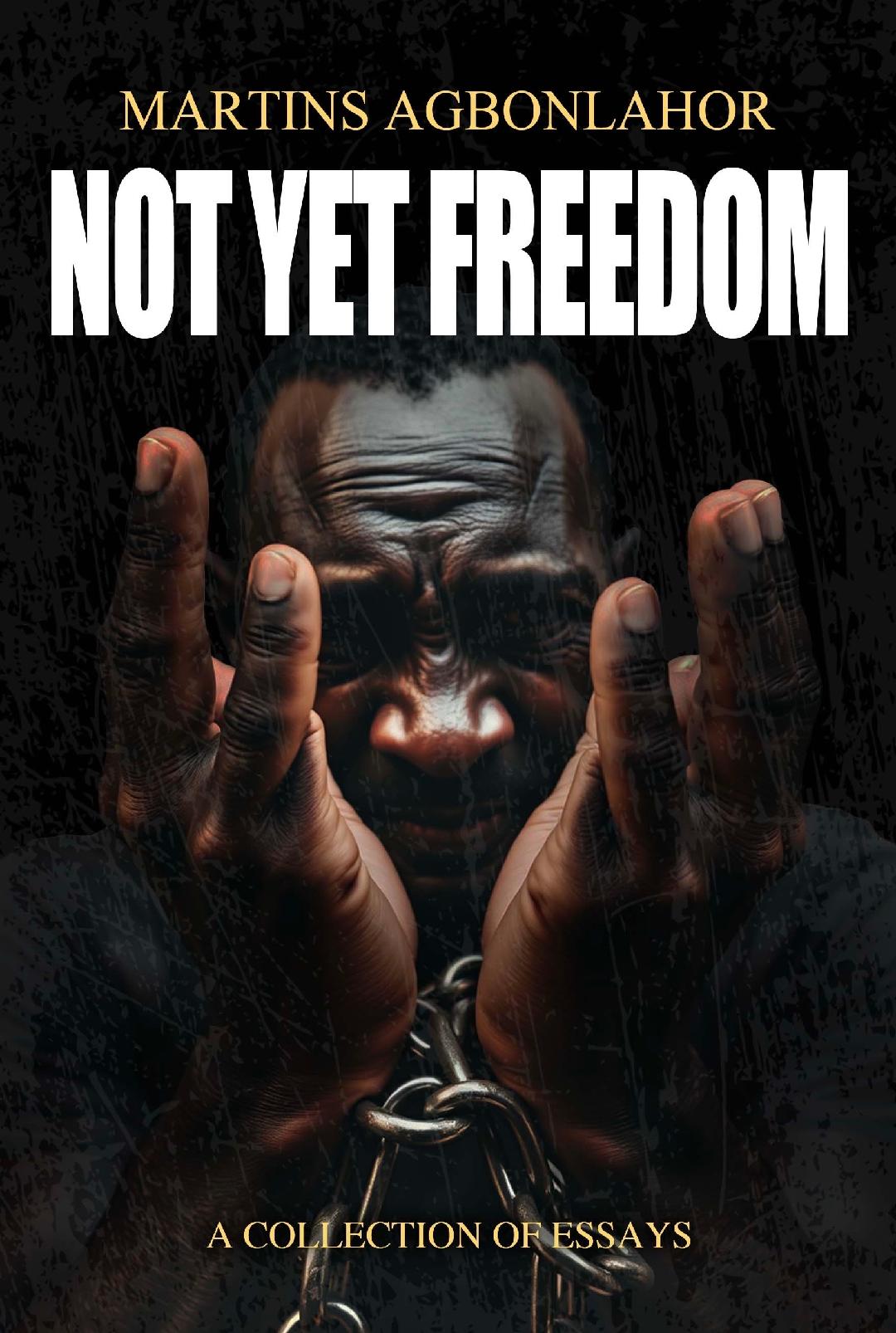
By Lashan Hollis
Not Yet Freedom is not the kind of book you rush through casually. It is the kind of work that forces you to pause repeatedly because many of the truths inside it are too weighty to simply skim past.

What impressed me immediately was the intellectual courage behind the essays. Martins Agbonlahor (above) writes with the voice of someone deeply troubled by injustice but equally committed to confronting it openly. Whether discussing corruption, gender inequality, dictatorship, media suppression, migration, or social hypocrisy, the essays never feel performative. They feel lived, observed, and morally urgent.
What I appreciated most was the structure of the collection itself. The arrangement creates a gradual widening of perspective. One moment you are reading about women facing institutional injustice in Africa, and the next you are reflecting on global silence surrounding political oppression or media intimidation. Yet somehow the essays still feel connected by one central thread: humanity’s unfinished struggle for dignity and freedom.
Four essays affected me deeply.
“In Solidarity with Egypt’s TikTok Girls” was extraordinary in its emotional honesty and moral clarity. The author’s outrage over the punishment of young women for self-expression felt genuine and necessary. It raised painful questions about state control, female autonomy, and fear disguised as morality.
The tribute to Shireen Abu Akleh stayed with me long after reading. Martins writes about journalism not merely as a profession, but as resistance against erasure and disinformation. That essay carried emotional gravity and immense respect for truth telling.
I was also deeply moved by the essays addressing African leadership failures. The writing is sharp but not empty criticism. Beneath the frustration is genuine disappointment that leaders entrusted with public hope repeatedly betray their people.
And then there were the essays centered around women’s suffering and gender injustice. Those pieces revealed perhaps the strongest aspect of the author’s work: his ability to humanize social issues without stripping them of political seriousness.
This deserves five stars because the essays are intellectually stimulating, emotionally grounded, socially conscious, and morally fearless.
Very few essay collections today manage to remain this reflective while still feeling deeply human.
And honestly, how can societies move toward freedom if writers no longer possess the courage to confront uncomfortable truths publicly?
This is a book I would strongly recommend to readers who enjoy socially engaged literature, political reflection, and human rights discourse.
Reviewed by Lashan Hollis
Books and Bites Book Club
Atlanta Social Exchange
Atlanta, GA, USA.