Burundi President Accuses Catholic Church and Civil Society of Acting for Former Colonial Powers
President Évariste Ndayishimiye alleged that some religious leaders and civil society organizations continue to serve foreign interests and dismissed economic migration to Europe as a legacy of colonialism.
 Black News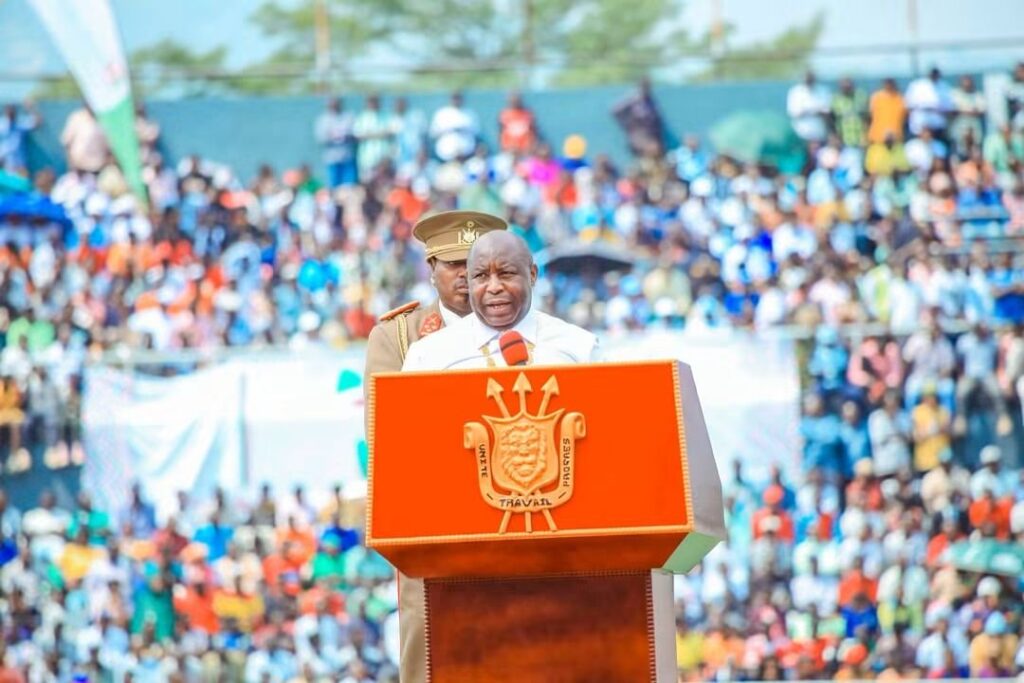
Burundian President Évariste Ndayishimiye has accused the country’s Catholic Church and civil society organizations of acting as the “eyes” of Burundi’s former colonial powers, while also criticizing Burundians who leave for Europe in search of better opportunities, as the country marked the 64th anniversary of its independence.
In speeches delivered ahead of and during the Independence Day celebrations, President Ndayishimiye alleged that some religious leaders and civil society actors continue to serve foreign interests instead of supporting Burundi’s development.
In a national address on Tuesday, June 30, on the eve of the anniversary, the president singled out the Catholic Church, linking it to Burundi’s colonial history.
“I would like to send a message to those who claim to be apolitical organizations, as well as to church leaders, especially the Catholic Church. You know very well that the Catholic Church was the coalition on which the Christian Democratic Party (PDC), which opposed Burundi’s independence, was founded,” Ndayishimiye said.
He went on to claim that because the Catholic Church remains the country’s largest religious institution, it continues to influence political affairs. He also referred to historical ethnic violence, alleging that Catholic Church officials were complicit in the killings of Catholic elites from one ethnic group. The president did not provide evidence to support the allegation.
Without naming any specific civil society organizations, Ndayishimiye accused some groups and religious leaders of reporting Burundi’s internal affairs to former colonial powers rather than addressing concerns through national institutions.
“Even today, we see church leaders and those claiming to be apolitical organizations behaving like the eyes of the colonizer, watching over what they still consider their property. Instead of alerting Burundian authorities when they see wrongdoing, they report it to the colonizer as if they still had authority over Burundi, which is no longer the case,” he said.
He concluded by urging religious leaders to promote hope and patriotism rather than, in his words, supporting “the enemy” who does not want to see Burundi develop.
The remarks come as Burundi’s Catholic Church has frequently criticized governance, human rights concerns and socio-economic challenges facing the country.
President criticizes migration to Europe
During the official Independence Day celebrations at Intwari Stadium in Bujumbura on Wednesday, July 1, Ndayishimiye also addressed the growing number of Burundians leaving the country for Europe and other destinations, describing the trend as a legacy of colonialism.
The president argued that many educated Burundians migrate because they seek an easier life rather than employment requiring hard work.
“If you observe carefully, you will find that intellectuals prefer going to countries where they can live without working too hard. Those leaving the country want to live without working,” he said.
Ndayishimiye questioned why migrants rarely choose China, where he said obtaining a visa is relatively easy.
“I once asked why those leaving do not go to China but instead prefer Europe, the United States and Dubai. I found that the reason is simply that they want to live without working, because in China no one can survive without working,” he said.
Burundi has experienced a growing outflow of skilled workers in recent years, with many professionals seeking employment abroad.
State employees who have left the country, however, say their decision is driven not by a desire to avoid work but by low salaries and limited economic opportunities. Many say they migrate in search of better-paying jobs and improved living conditions.
The president’s comments come amid ongoing concerns over brain drain, as increasing numbers of qualified Burundians continue to leave the country for employment overseas.