The intricate, clandestine art of Japan’s traditional tattoos
Irezumi — Having emerged during the Edo Period centuries ago, inking skin has long been associated the country’s working class, and particularly Yakuza. A new book by Manami Okazaki explores the history and deep meaning of the practice, as well as the horishi who dedicate their lives to the needle.
 Black News
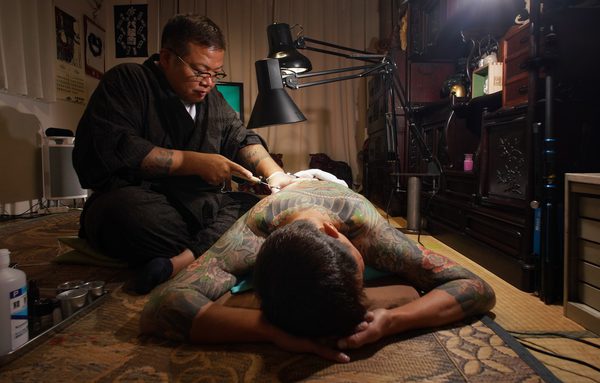
Irezumi — Having emerged during the Edo Period centuries ago, inking skin has long been associated the country’s working class, and particularly Yakuza. A new book by Manami Okazaki explores the history and deep meaning of the practice, as well as the horishi who dedicate their lives to the needle.
Manami Okazaki got her first tattoo when she was “underage”. Nowadays, 18 year olds are legally allowed to get their skin inked when they come of adult age in Japan, but before 2020, tattoos were largely criminalised, and artists required a medical licence to practice.
Either way, she would still have been too young to get one today. “It was by one of the top horishi (traditional tattoo artists) of Japan,” she says. “I grew up in Australia and came to Japan straight after that. I was pretty clueless and also very young, so I didn’t know anything – I just called him out of the blue and was like, ‘I want a tattoo,’ and he was like, ‘What?’ Because during that time it was almost 100% Yakuza getting tattoos.”
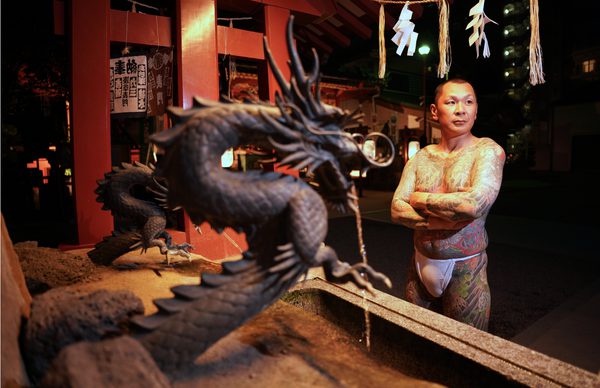
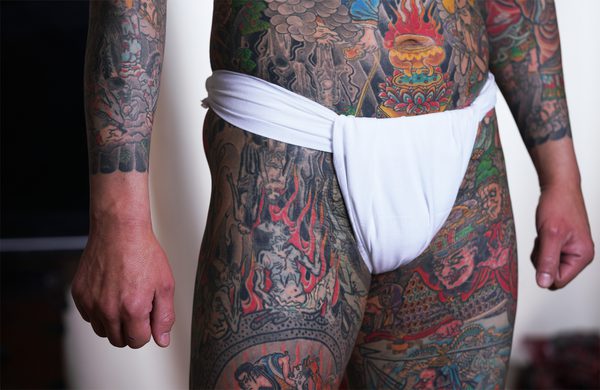
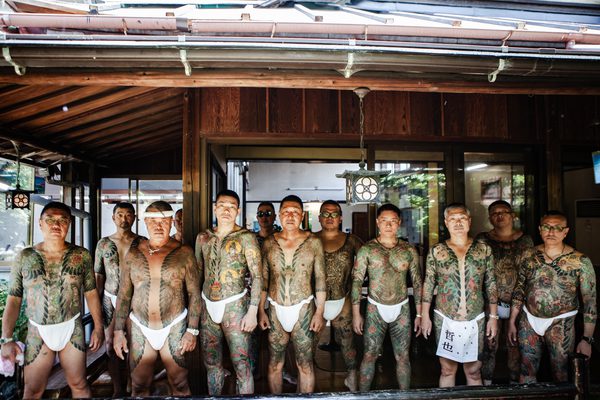
Known as irezumi, horimono or wabori, traditional Japanese tattoos have a history that dates back to the Edo Period in the 17th century. Typically spanning the full body of a person, they often explore folkloric stories and intricate, generations-old art styles. And though they are most commonly associated with gangsters, they are ultimately a visual lineage stemming from the country’s working class.
“In the past there was a hierarchical society – there was aristocracy and the samurai at the top, then at the lower echelons it was farmers, merchants and artisans,” Okazaki explains. “But there was a time of peace – the commoners had a lot of money, and it was also very hedonistic. And the commoners had a very anti-authoritarian stance, and over history tattoos were banned many times, but they just kept doing it.”
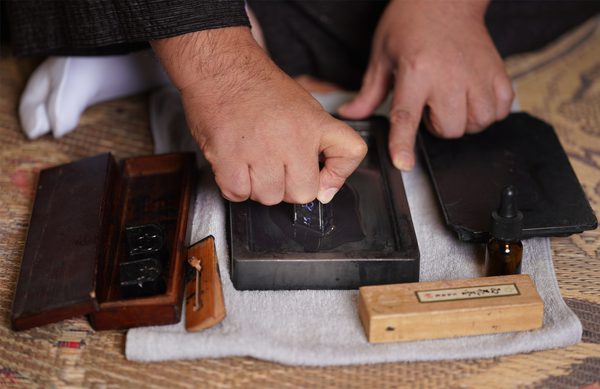
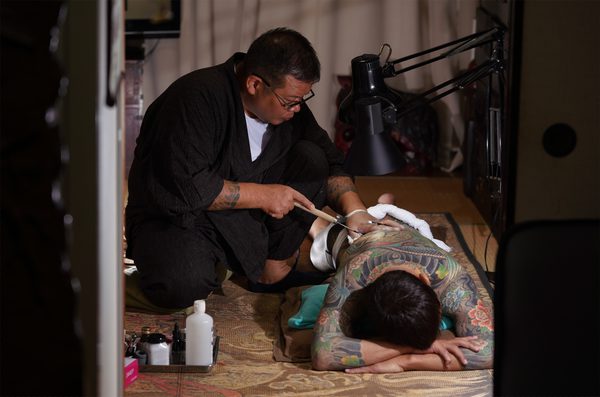
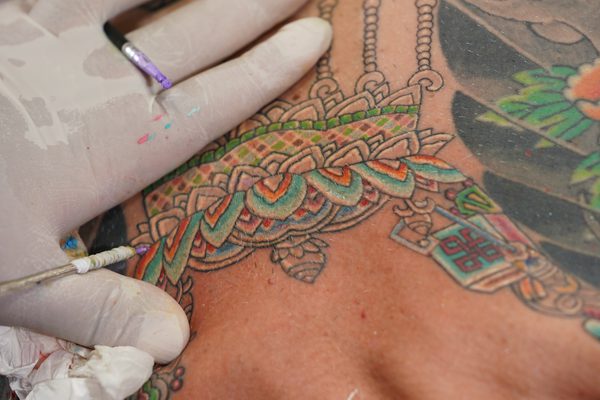
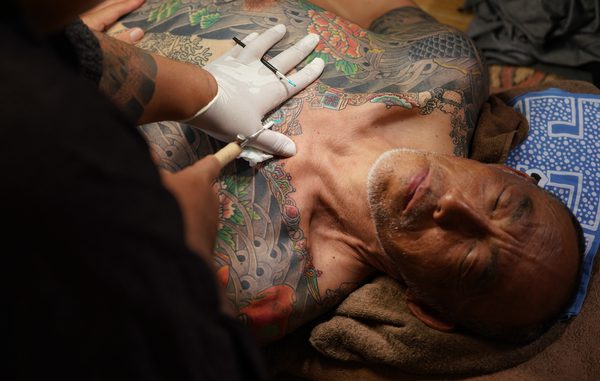
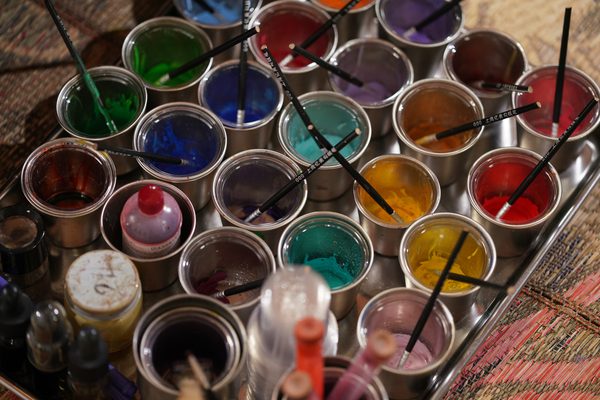
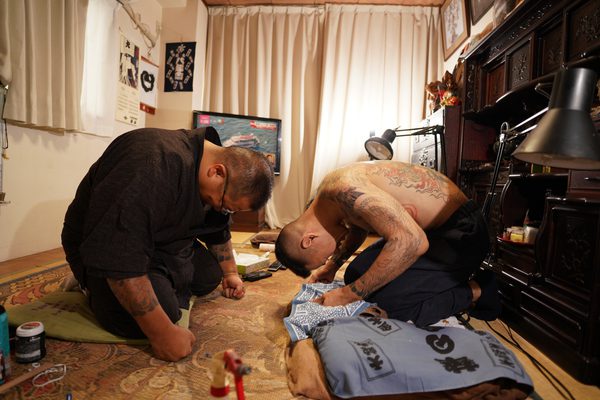
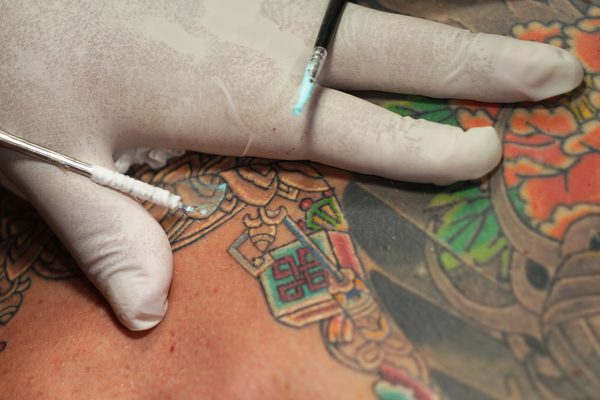
These traditional tattoos are also the subject of a new book authored by Okazaki, The Japanese Tattoo, which surveys the culture and tradition in the modern day, as well as the horishi masters who dedicate their lives to perfecting their art. Featuring photography by the likes of Ronin de Goede, Cory Lum, Emil Pacha Valencia and Zoetica Ebb, the book provides a window into a world rarely seen, and a close-up look into the painstaking process. Using original hand poking methods, a full body suit can take over 150 hours in multiple sittings, and more than a year in total.
“They work within the traditional system that’s been in place since the Edo period,” says Okazaki. “They do all the tattoos by hand, they insert manually with traditional tools, and they use a lot of traditional ink. Japanese tattoos are compositional, so there’s a narrative within a piece that covers the entire body.”
The Japanese Tattoo places a particular focus on Horikazu, a horishi whose father was also a tattoo master that Okazaki also had close ties to. Their longstanding relationship gave the author rare access into his studio, which came with its own unexpected set of circumstances. “We basically stayed on his sofa and were with him 24/7,” she recalls. “And because he works with a lot of clandestine characters, a lot of situations were just happening on the fly. It felt like the calm within the eye of a cyclone – it was kind of a temple atmosphere but outside there’d be cop cars or gangsters. It would be very intense, but inside the studio it felt so quiet, sometimes there was no conversation at all.”
Yet while criminality is still often associated with inking, a shift has occurred over the past decades. Young people are increasingly being tattooed, with a 2022 New York Times report finding that around 1.4 million Japanese adults had tattoos, double the number in 2014.
“One of the biggest changes is that the culture of gangsters getting tattooed kind of dropped,” Okazaki says. “More regular people are getting tattooed than for example 20 years ago, it was almost 100% Yakuza. About 15 years ago, when I first started doing interviews the number had dropped significantly, and nowadays it’s more like 20%. A lot of the artists I talked to say they only have less than 1% of Yakuza [as clients]. There’s less of the classic kind of gangsters, and concurrent is the rise of tattoos as fashion.”
At the same time, a parallel backlash is also happening, which reflects the growing fragmentation of Japan’s society and politics. “My parents live in Kanagawa, and almost all of the beaches there have tattoo bans,” she explains. “You can’t get into a lot of the gyms, golf courses, even some of the bathhouses are getting more strict – it’s getting stricter and stricter. I think that’s a general reflection of society at large. It’s getting more conservative.”
Ultimately the book highlights an art and practice that continues to stand at the sharp edge of Japanese society, as it has for centuries. “Japanese tattoos are dense with meaning, and it’s also ritual – it’s a lot to do with people’s relationships and what you value,” Okazaki continues. “It’s also a lot to do with people who really live on the precipice – the sensibility that’s very much life on the edge.”
The Japanese Tattoo by Manami Okazaki is published by Prestel.
Isaac Muk is Huck’s digital editor. Follow him on Bluesky.
Buy your copy of Huck 83 here.
Enjoyed this article? Follow Huck on Instagram for more from the cutting edge of sport, music and counterculture.
Support stories like this by becoming a member of Club Huck.