Calls grow for faster action on TRRC recommendations
Speaking at the opening, Muhammed Sandeng described the workshop as a significant step in advancing justice and accountability in The Gambia’s post-authoritarian transition. He noted that the Victims’ Center, established in 2017 by survivors of the former regime of Yahya Jammeh, has grown to over 1,500 registered members. He highlighted the Centre’s ongoing work in documenting human rights violations, conducting outreach and supporting victims through medical, educational and psychosocial services. Sandeng further revealed that the organisation secured a grant from the Africa Transitional Justice Legacy Fund under a joint European Union and African Union initiative to popularise the AUTJP and the government’s White Paper. He said key activities already undertaken include translating the AU policy into major local languages, training staff and civil society organisations, and engaging communities through outreach campaigns. While commending the government for establishing the Victims Reparations Commission and the Special Prosecutor’s Office, Sandeng called for increased funding for reparations and urged authorities to expedite forensic identification of remains linked to past abuses. Also speaking, Yadicon Heribo Njie emphasised the critical role of lawmakers in ensuring accountability and effective implementation of the TRRC recommendations. She warned that delays risks undermining public trust, noting that many victims continue to suffer physical, psychological and economic hardships while awaiting justice. “Reparations are not acts of charity but obligations of the state,” she stressed, calling for increased budgetary allocation to support victims. For his part, Buba E.M. Jatta described the workshop as a crucial platform to align policy with practice. He noted that The Gambia is at a pivotal stage in its democratic transition, where the focus must shift from recommendations to concrete institutional reforms. He urged NAMs to actively engage in legislative processes, oversight and budgetary approvals to ensure that transitional justice mechanisms are effectively implemented. Delivering remarks on behalf of development partners, Immaculada Roca I Cortés said the workshop comes at a defining moment in the country’s journey toward accountability and reconciliation. She acknowledged the progress made through the TRRC but stressed that “truth-telling alone is not enough,” adding that the real test lies in implementing recommendations and delivering tangible change for victims. She reaffirmed the European Union’s commitment to supporting The Gambia’s transitional justice process, emphasising that sustainable peace must be built on accountability, inclusion and respect for human dignity. The workshop is expected to deepen lawmakers’ understanding of their role in translating policy into action, ensuring that the promises of justice, reparations and institutional reform become a reality for victims and the nation at large.
 Black News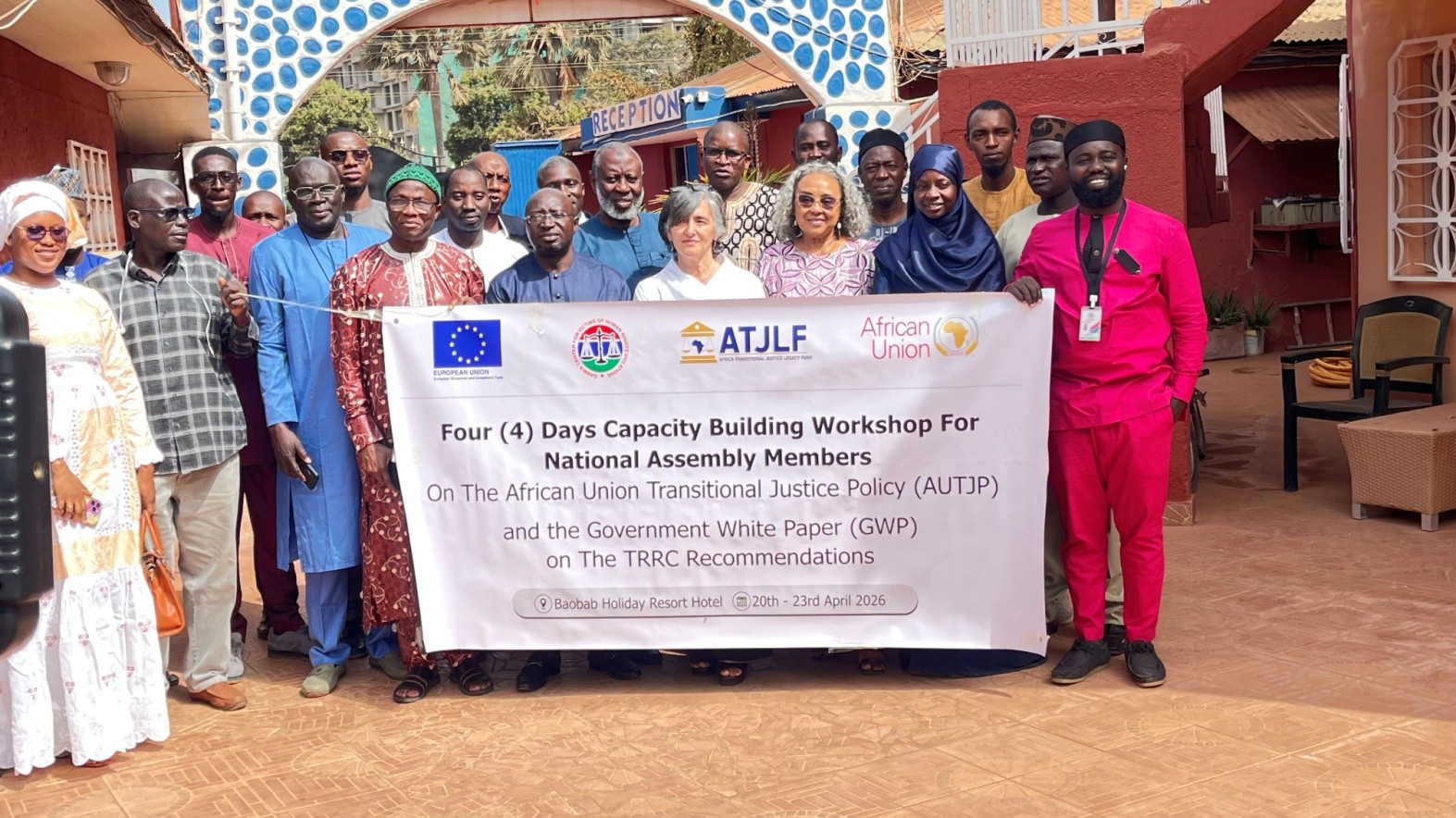
Speaking at the opening, Muhammed Sandeng described the workshop as a significant step in advancing justice and accountability in The Gambia’s post-authoritarian transition. He noted that the Victims’ Center, established in 2017 by survivors of the former regime of Yahya Jammeh, has grown to over 1,500 registered members.
He highlighted the Centre’s ongoing work in documenting human rights violations, conducting outreach and supporting victims through medical, educational and psychosocial services. Sandeng further revealed that the organisation secured a grant from the Africa Transitional Justice Legacy Fund under a joint European Union and African Union initiative to popularise the AUTJP and the government’s White Paper.
He said key activities already undertaken include translating the AU policy into major local languages, training staff and civil society organisations, and engaging communities through outreach campaigns.
While commending the government for establishing the Victims Reparations Commission and the Special Prosecutor’s Office, Sandeng called for increased funding for reparations and urged authorities to expedite forensic identification of remains linked to past abuses.
Also speaking, Yadicon Heribo Njie emphasised the critical role of lawmakers in ensuring accountability and effective implementation of the TRRC recommendations. She warned that delays risks undermining public trust, noting that many victims continue to suffer physical, psychological and economic hardships while awaiting justice.
“Reparations are not acts of charity but obligations of the state,” she stressed, calling for increased budgetary allocation to support victims.
For his part, Buba E.M. Jatta described the workshop as a crucial platform to align policy with practice. He noted that The Gambia is at a pivotal stage in its democratic transition, where the focus must shift from recommendations to concrete institutional reforms.
He urged NAMs to actively engage in legislative processes, oversight and budgetary approvals to ensure that transitional justice mechanisms are effectively implemented.
Delivering remarks on behalf of development partners, Immaculada Roca I Cortés said the workshop comes at a defining moment in the country’s journey toward accountability and reconciliation.
She acknowledged the progress made through the TRRC but stressed that “truth-telling alone is not enough,” adding that the real test lies in implementing recommendations and delivering tangible change for victims.
She reaffirmed the European Union’s commitment to supporting The Gambia’s transitional justice process, emphasising that sustainable peace must be built on accountability, inclusion and respect for human dignity.
The workshop is expected to deepen lawmakers’ understanding of their role in translating policy into action, ensuring that the promises of justice, reparations and institutional reform become a reality for victims and the nation at large.