Michaela Coel Just Reframed the Entire Love Story of ‘Mother Mary’
In Mother Mary, love doesn’t fracture in obvious ways. There are no clean breaks or singular betrayals to point to. Instead, what unfolds is something more disorienting, a relationship shaped less by what happens between two people and more by what they bring with them long before they ever meet. In an interview with Black… The post Michaela Coel Just Reframed the Entire Love Story of ‘Mother Mary’ appeared first on Black Girl Nerds.
 Black News
In Mother Mary, love doesn’t fracture in obvious ways. There are no clean breaks or singular betrayals to point to. Instead, what unfolds is something more disorienting, a relationship shaped less by what happens between two people and more by what they bring with them long before they ever meet. In an interview with Black Girl Nerds, Michaela Coel and Anne Hathaway discuss the film’s moments of fragility.
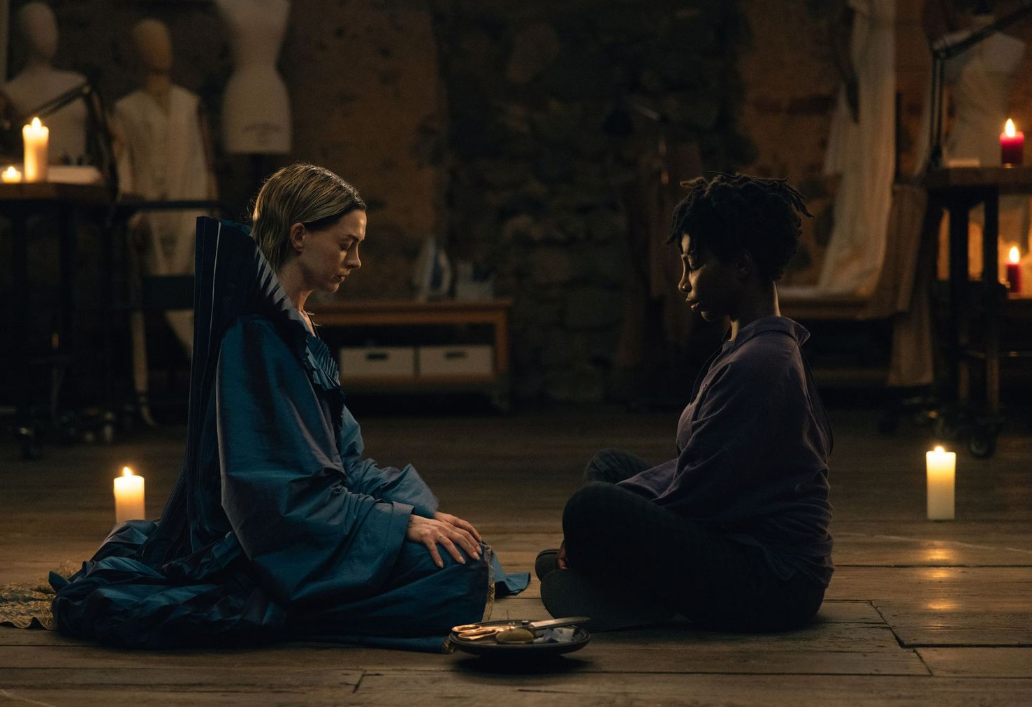
When asked about the “core wound” between her character Sam Anselm and Mother Mary, Michaela Coel doesn’t locate it in the relationship itself. She pushes the idea further back, into something more foundational and far more difficult to untangle. “Is the core wound ever between two people,” she asks, “or is the core wound from somewhere in both their childhoods?”
It’s a question that reframes the entire emotional architecture of the film. Because if the damage doesn’t originate in the relationship, then the relationship becomes something else entirely, a collision point for wounds that were already there.
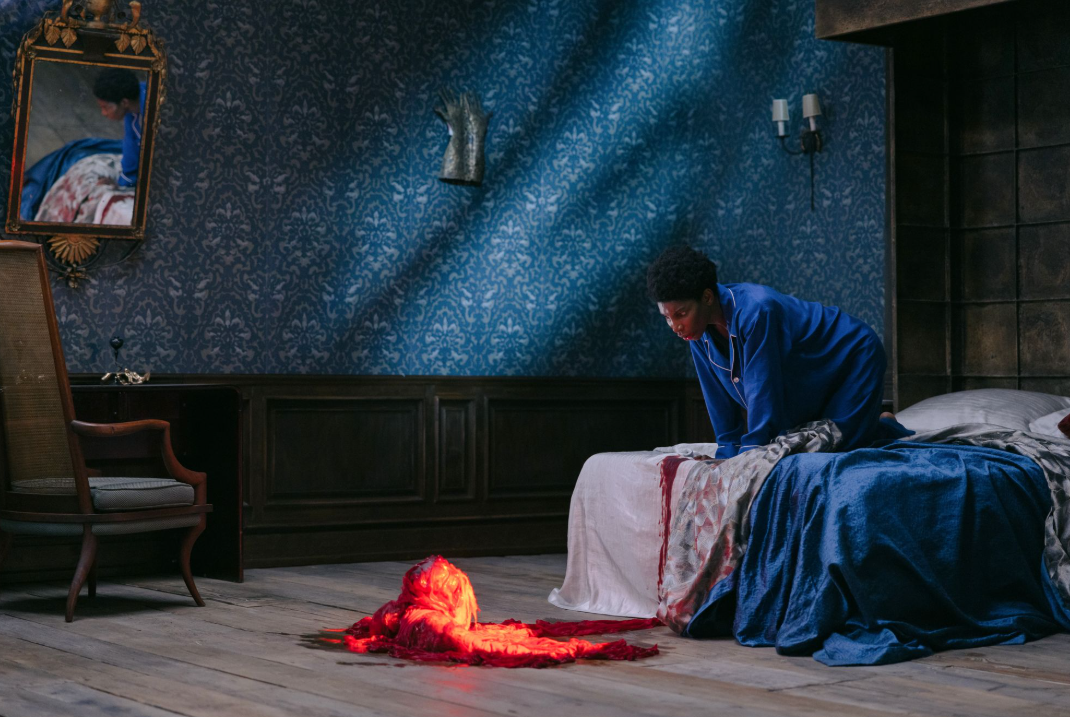
For Sam, that wound is instability. Coel points to a childhood marked by constant displacement, where safety was always temporary and never guaranteed. “She had to move around from home to home,” Coel explains,“ and just as she was about to feel safe, she was snatched from that home.” That kind of disruption doesn’t just disappear with time. It reshapes how a person understands love, security, and permanence.
So when Sam finds something resembling stability in Mother Mary, it isn’t casual or measured. It’s absolute. “She places all of her ideas of safety, of stability, of forever with this person,” Coel says, describing a connection that carries the weight of survival itself. But that level of emotional investment comes with a cost. When the relationship falters, it doesn’t just hurt, it destabilizes everything. “Sometimes that’s so intense,” she adds. “When that is snatched from you, your whole life kind of ends.”
That sense of emotional totality, where love becomes synonymous with safety, is what makes the relationship in Mother Mary feel both magnetic and precarious. It’s about dependence, and the quiet fear of losing the one thing that makes the world feel stable.

For Anne Hathaway, that dynamic isn’t one-sided. While the script may not explicitly map out her character’s past, Hathaway approached the role with the same understanding that emotional wounds rarely begin in adulthood. “I loved what you just said about it being rooted in childhood,” she tells Coel, acknowledging that both characters are shaped by histories we may never fully see.
In her view, the tragedy and the beauty of their relationship lies in its incompleteness. “They were each developing the ability to reach out to each other,” Hathaway says, “but hadn’t quite… they weren’t there yet.” It’s a relationship defined not by failure, but by distance, by the gap between wanting connection and actually knowing how to sustain it.
That tension is what gives Mother Mary its emotional texture. These are not characters who don’t care. They care deeply. But care alone isn’t enough when the tools for communication, trust, and vulnerability are still under construction.
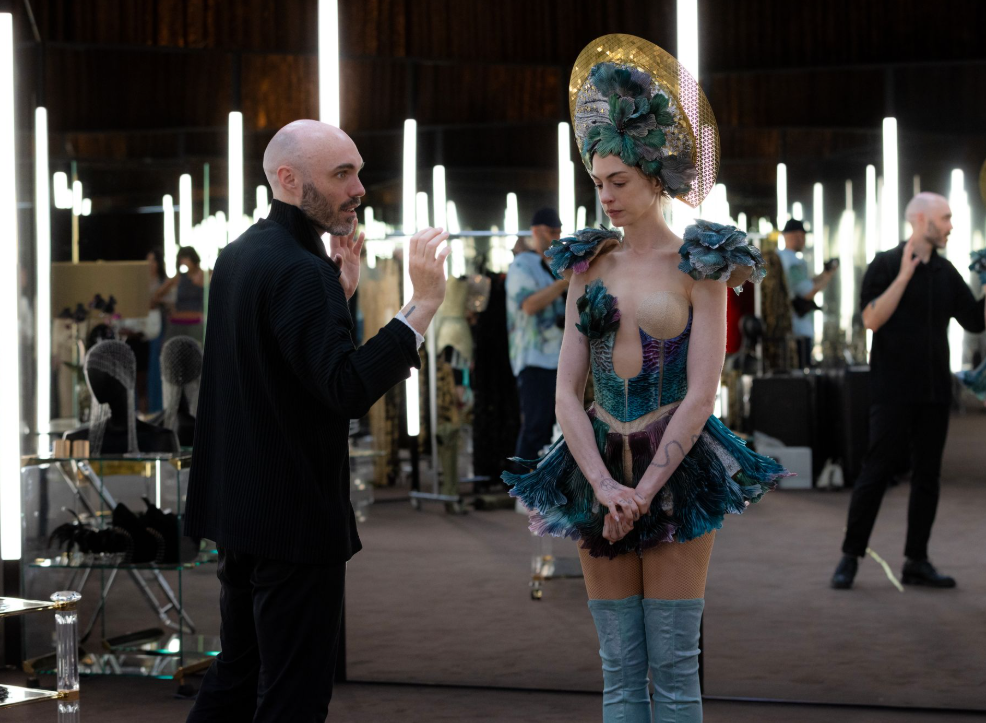
And under the direction of David Lowery, that emotional journey refuses to follow a straight path. “Whatever they experience in this film, it’s a step closer to each other,” Hathaway explains, before adding a caveat that defines the film’s tone. “But of course, it’s a David Lowery film, so one step is not just one step. It’s multidimensional.”
In other words, movement isn’t linear. The characters can feel like they’re growing closer and drifting apart at the same time, caught in a space where healing and hurt coexist. It’s disorienting, but it’s also honest. Real emotional growth rarely moves in a straight line.
What emerges from Coel and Hathaway’s reflections is a deeper understanding of what Mother Mary is actually exploring. The “core wound” isn’t something inflicted by one character onto the other. It’s something older, something carried. Their relationship becomes the place where those wounds are projected, tested, and, at times, intensified.
And that’s what makes it so compelling. Because in Mother Mary, love isn’t just about finding someone else. It’s about confronting the parts of yourself that were shaped long before they arrived.
Mother Mary hits theaters April 24th.
The post Michaela Coel Just Reframed the Entire Love Story of ‘Mother Mary’ appeared first on Black Girl Nerds.