Cape Town storm floods 26 informal settlements and damages more than 10 000 structures
More than 41 000 people have been affected by severe flooding in Cape Town as South Africa declares a national disaster after storms, heavy rain and wind batter multiple provinces
 Black News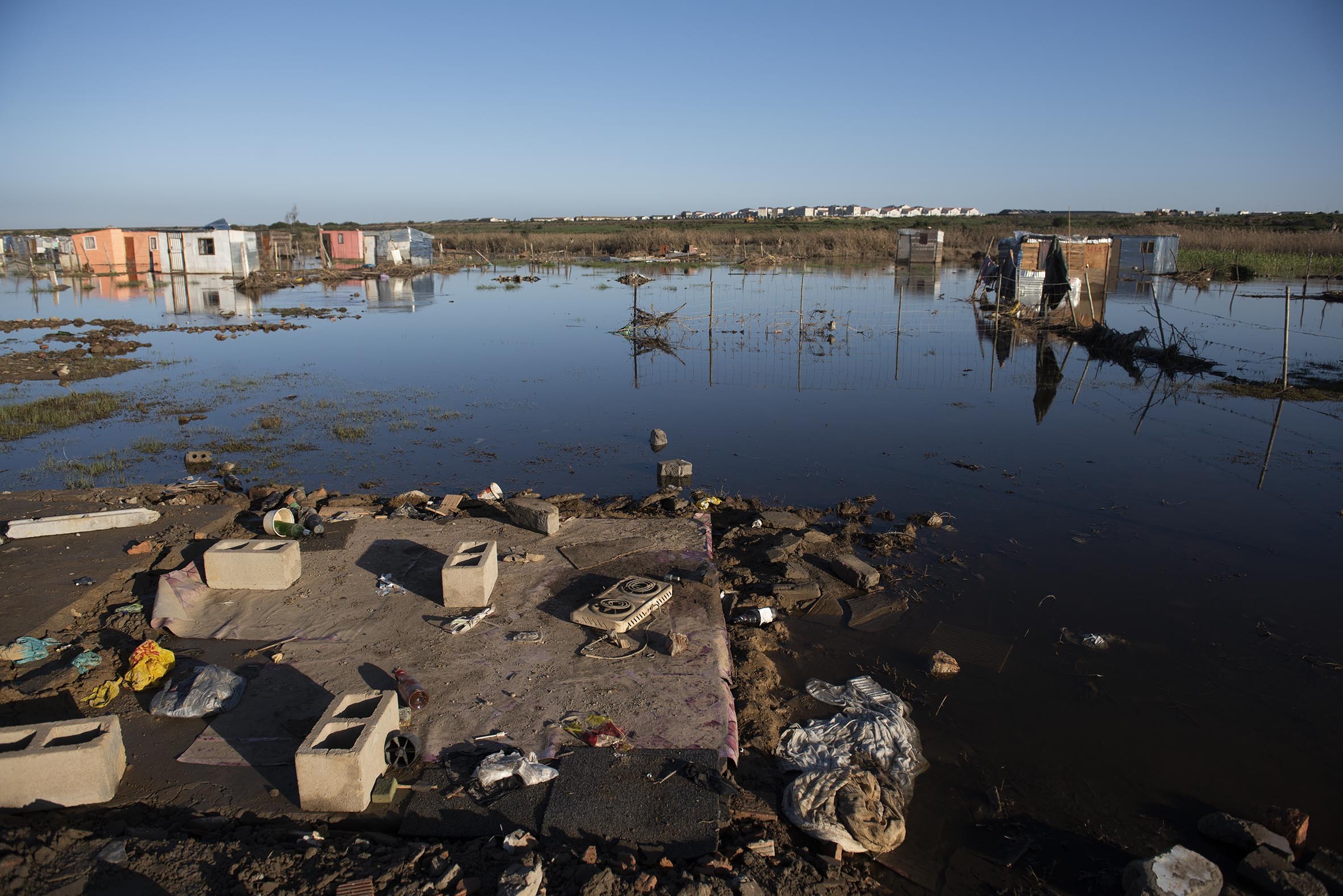
The Western Cape storm has triggered widespread flooding across Cape Town, inundating informal settlements, damaging infrastructure and affecting thousands of residents.
Charlotte Powell, the disaster risk management spokesperson for the City of Cape Town, said flooding had been reported across at least 26 informal settlements in the metro.
“Flooding has been reported in at least 26 informal areas around the city,” she said. “Assessments to date show that 10 703 structures have sustained weather-related impacts, affecting approximately 41 635 persons.”
Humanitarian relief partners were on the ground. “We are working closely with our humanitarian relief partners who have started assisting with meals and blankets in some of the affected areas — this relief will be extended as assessments are concluded,” she said.
Powell said damage assessments were being submitted to the South African Social Security Agency and the national department of human settlements to coordinate further assistance.
After assessing the “magnitude and severity” of the system and consultations with provincial disaster management centres and other organs of state, the National Disaster Management Centre (NDMC) has classified the severe weather as a national disaster.
Since 4 May, a combination of heavy rainfall, thunderstorms, damaging winds and snowfall has affected the Western Cape, Eastern Cape, Northern Cape, North West, Free State and Mpumalanga, prompting a coordinated national response.
NDMC head Dr Elias Sithole said the classification would allow the government to intensify coordination across all spheres of government and strengthen relief and recovery operations.
Authorities have confirmed multiple deaths linked to the severe weather, with reports suggesting the national death toll has risen to at least 10 as flooding and storm damage continue across several provinces.
In Cape Town, city officials said multiple roads across the metro were affected, with teams deployed inPhola Park, Fisantekraal, Bonteheuwel, Parow, Bellville and Hout Bay, among other areas. Electricity and emergency teams have been working continuously to restore services and clear debris.
Safety and Security MMC JP Smith said the city’s Disaster Risk Management Centre’s operations centre had been activated. “Our officers are doing duty at intersections, assisting where roads have been closed due to flooding or fallen trees and responding to calls for help,” Smith said.
He urged residents to remain cautious. “We are supporting other departments and lending a hand where possible. I want to encourage residents to stay indoors where possible, take extra precautions on the road if you have to go out and report incidents immediately.”
The city’s Public Emergency Communication Centre recorded a sharp rise in calls as conditions deteriorated.
Between 6am and 9.30am on Monday, more than 950 calls were received, with weather-related incidents including fallen trees, motor vehicle accidents and power failures dominating. Over the weekend, the centre logged 1 220 calls for assistance.
Officials also noted additional incidents unrelated to the storm, including assault and domestic violence cases, alongside road crashes.
Traffic and enforcement services have been operating at capacity, with officers responding to dozens of accidents and making hundreds of arrests and fines across the metro over the past week.
The city’s energy department warned that electricity infrastructure remained vulnerable as heavy rain and wind continued to affect the network.
“It is unsafe for our teams to carry out electricity work during heavy rain, strong winds or flooding,” said energy MMC Xanthea Limberg. “Electricity restoration will be undertaken as quickly as possible but only when conditions are safe.”
Residents have been urged to keep phones and backup power systems charged and avoid duplicating service requests.
The South African Weather Service (SAWS) issued a Level 8 warning for disruptive rainfall, covering Cape Town and surrounding mountainous and agricultural regions including Drakenstein, Stellenbosch, Breede Valley, Witzenberg and parts of Theewaterskloof.
The warning remains in place until at least Tuesday, with the SAWS cautioning that continued heavy rain could lead to flooding of formal and informal settlements, roads and bridges, as well as mudslides and fast-flowing rivers, posing a danger to life.
In response to the severe conditions, the Western Cape department of education confirmed that all schools in the province would close on Tuesday.
More than 200 schools had applied for closure before the decision was made.Several schools have reported storm damage.