Chapo Urges Citizens to Apply for Identity Cards
By Paul Fauvet Mecanhelas (MOZTIMES) - Mozambican President Daniel Chapo on Wednesday called on residents without personal documentation in Mecanhelas district, in the northern province of Niassa, to take advantage of the free civil registration campaign underway throughout the country, carried out by mobile brigades. The project, which expects to cover 7 million people, was […]
 Black News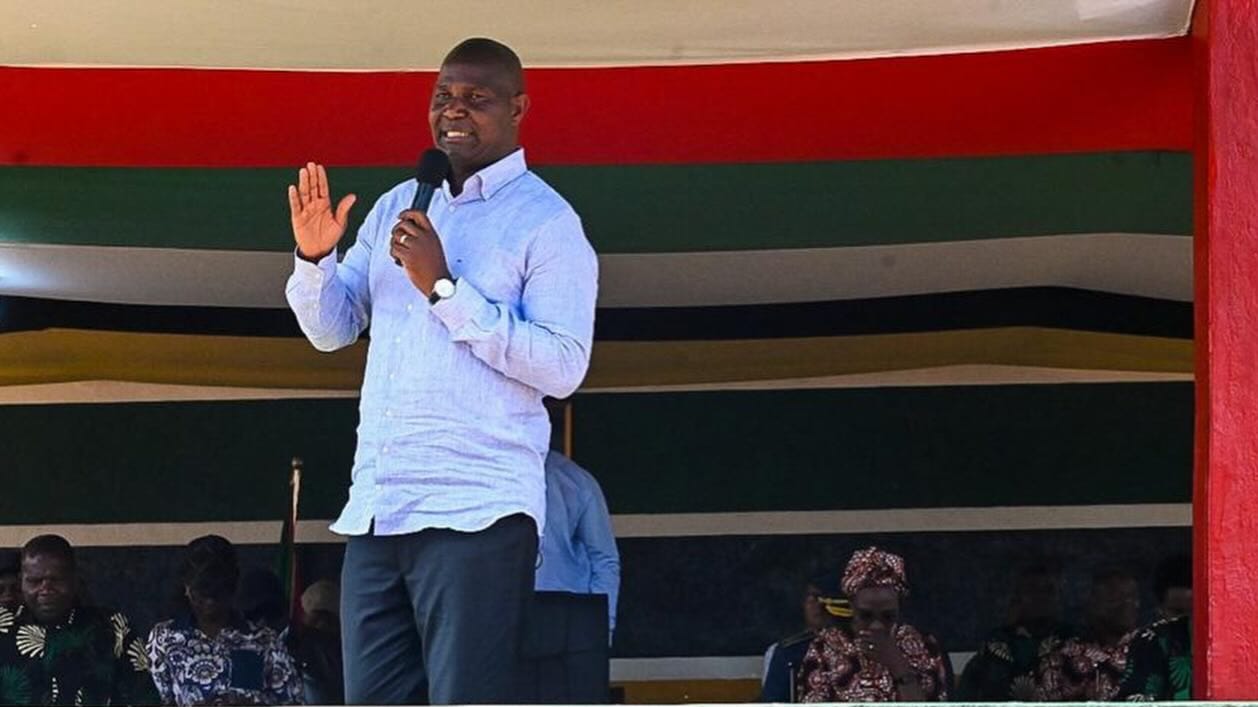
By Paul Fauvet
Mecanhelas (MOZTIMES) - Mozambican President Daniel Chapo on Wednesday called on residents without personal documentation in Mecanhelas district, in the northern province of Niassa, to take advantage of the free civil registration campaign underway throughout the country, carried out by mobile brigades.
The project, which expects to cover 7 million people, was launched last March and runs until December. It is being carried out by 500 mobile brigades, which travel to communities to carry out birth registration and the issuing of identification documents.
According to Chapo, speaking during a public rally held in the Mecanhelas district capital of Nsaca, as part of a three-day working visit to Niassa, “those who do not yet have a birth certificate or other document should take advantage of this campaign, because the service is being provided free of charge.”
Although the Mozambican state is now almost half a century old, huge numbers of Mozambicans do not possess personal identity cards.
In theory it is a legal obligation for adult Mozambicans to carry an ID card. In practice many do not, particularly in the rural areas. Frequently, the police demand to see ID cards, even though they know full well that many of their victims do not possess cards.
Identification problems used to be much worse. During the 1983 drive to expel the unemployed from the cities, known as “Operation Production”, citizens were expected to carry on their person three documents, an identity card, a resident’s card and a work card. Fortunately, this demented programme only lasted a few months, during which huge amounts of jet fuel were wasted in airlifting the unemployed (known as “unproductives”) from Maputo to Niassa, where they were expected to start new lives.
Identification is also a key issue in Mozambican elections. Voters are issued with voter cards, which have to be shown at the polling stations. Instead of using an identity card for voting purposes, an entirely new card was invented.
Worse still, the voter card was only valid for one electoral cycle – that is, for municipal elections one year, and presidential and parliamentary elections the next. After that, the card is completely useless and can be thrown away.
This means that the entire electorate has to be re-registered every five years. Someone who voted for the first time in the first multi-party elections in 1994, by now has held no fewer than seven voter cards.
This expensive operation was demanded by opposition parties who argued that, without new cards for every election, the ruling Frelimo Party would somehow cheat.
In Mecanhelas, Chapo said the government’s new measure is aimed at responding to the “critical deficit in birth registration and the high number of citizens without legal identification in the country.”
But there is no sign that the absurd voter card system will be scrapped, even though there is no good reason why an ID card cannot be used to identify voters at the polling stations.
During the Mecanhelas rally, Chapo handed over two ambulances and announced the construction of a new district hospital later this year, “as part of public investments aimed at strengthening social services, improving mobility and boosting local development.”
He said that the ambulances will reduce the problems that communities have been facing in transporting patients, especially pregnant women and critically ill patients, from administrative posts and remote locations. (PF)