China discovers faster shipping routes to Africa as $6.3bn trade surge signals new economic shift
China is expanding its maritime trade footprint across Africa through new direct shipping routes from key domestic ports, a move expected to streamline logistics and reinforce commercial ties ahead of planned tariff reductions in 2026.
 Black News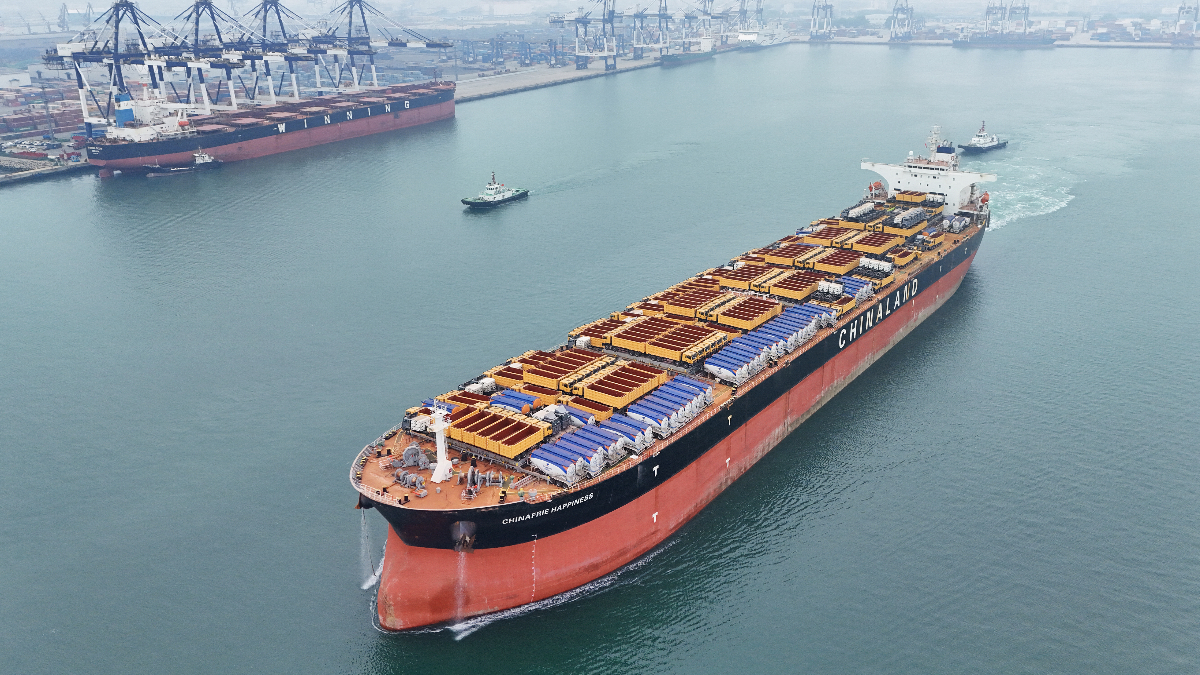
![This aerial photo taken on April 27, 2026 shows a container ship carrying Chinese-made engineering vehicles sailing from Yantai Port to Nigeria in Yantai, in China's eastern Shandong Province. [Photo by CN-STR / AFP via Getty Images]](https://ocdn.eu/pulscms/MDA_/8ad3b992dd77b0a48ba42a8ece2484cd.jpg)
China is expanding its maritime trade footprint across Africa through new direct shipping routes from key domestic ports, a move expected to streamline logistics and reinforce commercial ties ahead of planned tariff reductions in 2026.
- China is expanding direct shipping routes to Africa to improve trade efficiency and reduce logistics costs across key corridors.
- The move comes ahead of a planned zero-tariff policy for 53 African countries set to take effect in 2026.
- Major ports, including Qingdao, Yantai, and Tianjin, are reporting stronger export growth and faster transit times.
- The developments signal deeper trade integration between China and Africa, particularly in the industrial and technology sectors.
The development, reported by Global Times, comes as Beijing prepares to introduce zero-tariff access for 53 African countries with which it has diplomatic relations, effective 1 May 2026. The policy is positioned as part of a broader effort to deepen trade integration and improve market accessibility between China and African economies.
Several major Chinese ports have begun rolling out regular direct services to African destinations, cutting transit times and easing long-standing supply chain constraints. Authorities say the changes are aimed at improving efficiency for exporters and importers dealing in industrial goods, raw materials and manufactured products.
In eastern China, Qingdao recorded exports to Africa exceeding $6.37 billion in the first quarter of 2026, up more than 26% year-on-year. The port has seen particularly strong demand for machinery, electronics, and high-tech products, reflecting Africa’s growing import needs for industrial and technological goods.
Elsewhere, Yantai has expanded its network with new routes to both North and Southern Africa. The port reported a cargo surge of over 30% in the first quarter, with volumes surpassing 2 million tonnes for the first time, indicating rising utilisation of the new corridors.
In northern China, Tianjin has launched a direct container service to South Africa, reducing transit time by roughly 10 days and bringing the average shipping duration to about 40 days. The route is expected to lower logistics costs and improve predictability for businesses operating across the China-Africa trade corridor.
The expansion of shipping infrastructure aligns with Beijing’s wider trade strategy, which combines improved logistics connectivity with tariff liberalisation. Officials have framed the upcoming zero-tariff regime as a continuation of earlier policies granting full exemptions to least-developed countries, many of which are in Africa.
Analysts say the combined effect of faster shipping routes and reduced tariff barriers could further accelerate trade volumes, particularly in sectors such as manufacturing inputs, consumer goods and infrastructure-related equipment, where China-Africa exchange has been expanding steadily in recent years.