China’s biggest steelmaker eyes BHP mine after taking control of half of Guinea’s Simandou project
China’s biggest steelmaker is considering buying up to a quarter of one of BHP’s largest Australian iron-ore mines, months after securing control of the company operating half of Guinea’s Simandou project.
 Black News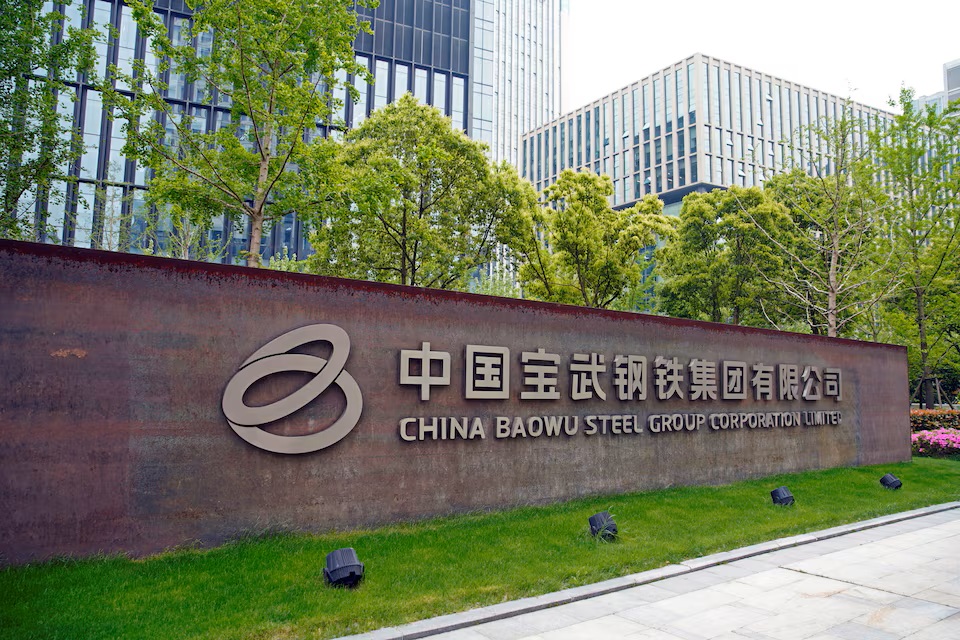

![China Baowu is considering a 15% to 25% interest in BHP’s Jimblebar iron-ore mine. [REUTERS/Aly Song]](https://ocdn.eu/pulscms/MDA_/89af62e9fedcb5b33ba803f2f2c7457d.jpg)
China’s biggest steelmaker is considering buying up to a quarter of one of BHP’s largest Australian iron-ore mines, months after securing control of the company operating half of Guinea’s Simandou project.
- China Baowu is considering acquiring between 15% and 25% of BHP’s Jimblebar iron-ore mine in Western Australia, Reuters reported.
- No offer has been announced, and neither company has confirmed that negotiations are under way.
- Baowu already controls the consortium operating Blocks 1 and 2 of Guinea’s Simandou project.
- The potential investment would give the world’s biggest steelmaker exposure to major iron-ore production in Africa and Australia.
China Baowu Steel Group is examining a possible acquisition of between 15% and 25% of the Jimblebar mine in Western Australia, two people briefed on the matter told Reuters.
Baowu has not announced an offer, while the possible price and structure of any investment remain unknown. BHP said it regularly considers options that could generate long-term value but remains committed to its Western Australian iron-ore business.
There is no certainty that Baowu’s interest will result in a transaction. The potential deal has a significant African intersection.
Baowu Resources, the steelmaker’s mining subsidiary, increased its ownership of Winning Consortium Simandou from 49% to 51% in January.
That gave it control of the consortium operating Blocks 1 and 2, the northern half of Guinea’s four-block Simandou development.
Two very different sources of iron ore
A Jimblebar investment would give Baowu exposure to an established Australian mine that produced approximately 62.5 million tonnes of iron ore during BHP’s 2026 financial year.
By comparison, Simandou has only recently entered commercial production after decades of delays, ownership changes and the construction of an entirely new railway and port system.
DON'T MISS THIS:Africa’s $23bn mine threatens Australia's dominance as China eyes new power base
The full Simandou development is expected to produce as much as 120 million tonnes annually when it reaches capacity. That figure covers all four blocks, not only the two controlled by the Baowu-led consortium.
Blocks 3 and 4 are being developed by Simfer, a partnership involving Rio Tinto, Chinese state-owned aluminium producer Chinalco and the Guinean government.
The two groups share the more than 600-kilometre railway and port infrastructure required to transport ore from south-eastern Guinea to the Atlantic coast.
Jimblebar and Simandou would therefore offer Baowu different advantages.
The Australian mine provides large-scale production from an established system of mines, railways and ports. Simandou provides access to one of the world’s most important new sources of high-grade iron ore, but production still has to be expanded gradually.
Why Simandou matters to China
China produces more steel than the rest of the world combined but depends heavily on imported iron ore, particularly from Australia and Brazil.
That dependence leaves Chinese steelmakers exposed to prices and supply decisions made by a relatively small number of international miners, including BHP, Rio Tinto, Fortescue and Brazil’s Vale.
DON'T MISS THIS: China receives first 200,000-tonne shipment from Africa’s largest untapped iron ore project
Simandou is intended to provide another major source. Its ore averages about 65% iron content, compared with lower grades found in some established mining regions.
Higher-grade ore can help steelmakers produce more steel from a given quantity of raw material and potentially reduce the coal and energy required during processing.
The project has consequently become central to Guinea’s development ambitions and China’s effort to diversify its mineral supply.
Simandou’s first export cargo left Guinea in late 2025. Shipments have since increased, although the project remains well below its planned full capacity.
Buying into a supplier
Baowu’s potential Jimblebar investment would also illustrate the unusual position of large Chinese steelmakers in the iron-ore market.
The company is both a major consumer of iron ore and an investor in businesses that produce it. An ownership interest can provide greater visibility over production, costs and long-term supply, even when the investor does not operate the mine.
DON'T MISS THIS: Guinea’s $23 billion Simandou iron ore project sees exports surge six months after first shipment
BHP owns 85% of Jimblebar. Japan’s Itochu and Mitsui hold the remaining 15% through joint-venture interests.
According to Reuters, any stake acquired by Baowu would come from BHP’s holding. A 15% sale would reduce BHP’s interest to 70%, while a 25% transaction would leave it with 60%.
The potential deal arrives as China attempts to obtain greater influence over the pricing and purchase of iron ore through the state-backed China Mineral Resources Group. Relations between the central buyer and major Australian suppliers have periodically been strained by disagreements over contract terms.
Baowu, however, already has experience investing alongside Australian mining groups. It formed an iron-ore joint venture with Rio Tinto in Western Australia in 2022.
An Australian investment would not diminish Baowu’s existing responsibilities at Simandou. The two assets are not competing transactions, and there is no evidence that the company intends to redirect money or management attention away from Guinea.
Instead, ownership in both operations could give Baowu exposure to two of the world’s most important iron-ore regions.