Confronting America’s history of violence against student protest
Through A Mirror, Darkly — In May 1970, two separate massacres at American college campuses saw deaths at the hands of the state. Naeem Mohaiemen’s new three-channel film memorialises the brutality.
 Black News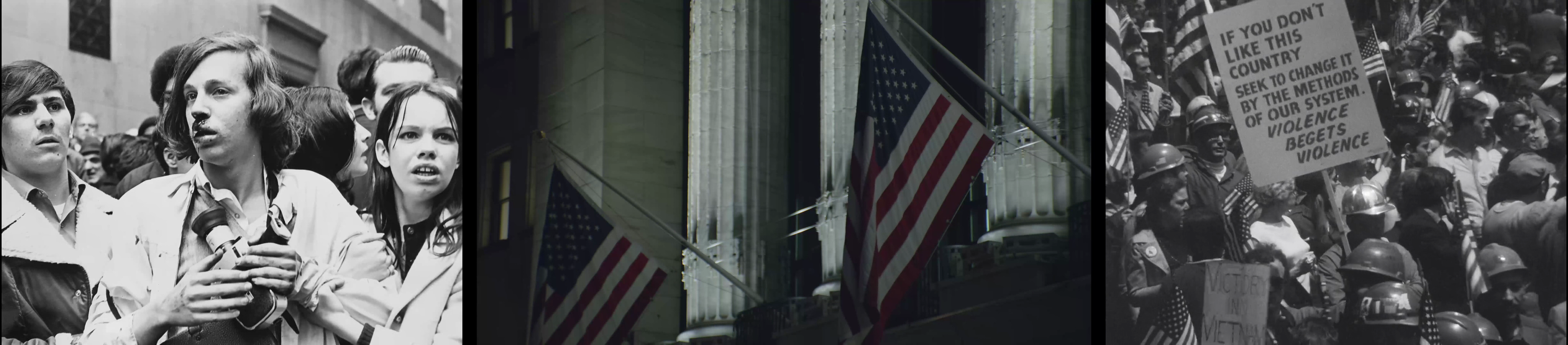
Through A Mirror, Darkly — In May 1970, two separate massacres at American college campuses saw deaths at the hands of the state. Naeem Mohaiemen’s new three-channel film memorialises the brutality.
History is written and rewritten, revised and erased, repackaged as myth and tropes to dominate collective consciousness and cultural memory. With the US debut of Through A Mirror, Darkly (2025), filmmaker Naeem Mohaiemen revisits a brutal chapter of American history all the more resonant today.
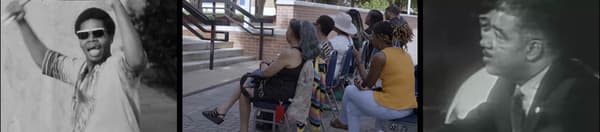
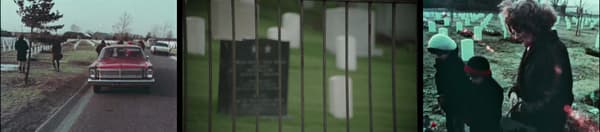
Now showing during the exhibition, Corinthians at the Wexner Center for the Arts in Columbus, Ohio, Through A Mirror, Darkly is a hypnotic chronicle of war, protest, and slaughter at two American college campuses in May 1970. The film contrasts two explosive back-to-back attacks: first on May 4, when the National Guard opened fire at Kent State University, killing four and wounding nine; and then on May 15, when local police gunned down two students at Jackson State College in Mississippi.
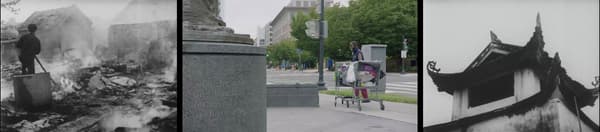
While the events at Kent State made national headlines, the killings at Jackson State, a historically Black college, largely disappeared from view. With Through A Mirror, Darkly, Mohaiemen brings these events back into view alongside scenes from the Vietnam War through the shared lens of memorialisation.
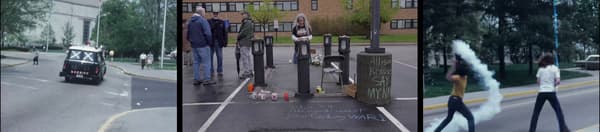
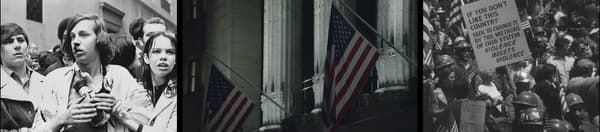
Corinthians 13:12, from which the film takes its name, recognises the impossibility of perceiving divine plans in full. We can only know in part, or rather parts – as the film’s three-channel format suggests – invoking the fragility of perception against the relentlessness of state sanctioned violence and collective trauma. Mohaiemen deftly weaves reportage, propaganda, entertainment, myth, contemporary and archival footage to stunning effect.
“In the film, the three channels are a little bit at war with each other,” Mohaiemen says. While the archival footage on outer screens hits in explosive bursts like rapid fire headlines setting the teletype ablaze, contemporary footage in the centre screen unfolds across “long, slow shots where nothing happens”. The tension is explicit, sometimes frenetic, chaos simmering amid the wealth of quick Super 8 and 16mm clips, spliced to perfection.
The language of the past echoes in the present day, a fracture in American life that lies at its core: the extrajudicial execution of those deemed an enemy of the state. Media is used to manufacture consent, offering endless reels of reactionary disinformation against students practicing their constitutional right to protest. “To generate fear, scapegoating, paranoia, the justification for certain kinds of persecution or silencing, the surface onto which you project the fears is important,” Mohaiemen explains.
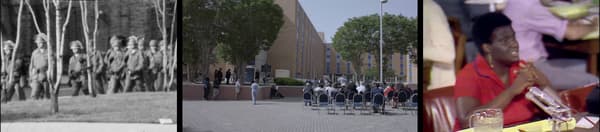
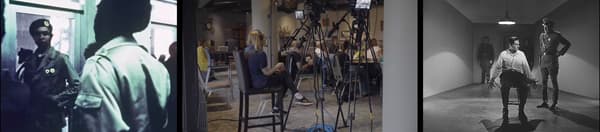
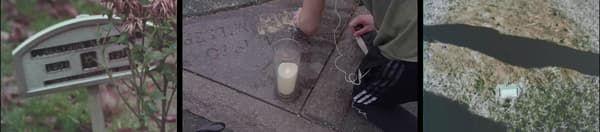
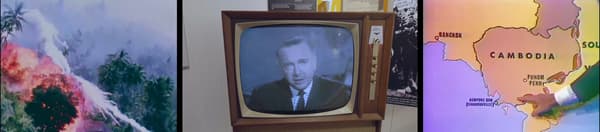
“In 1970, part of that surface was the American campus, and the strongest fear was that students were becoming communist. At the time, the visible campus populations were predominantly white,” he continues. “Today, the world is represented within campuses in a way it absolutely was not in 1970. The demographics of the present have made a different kind of scapegoating easier. The Red Scare does not work in the same way, but questions of loyalty to a project of a Euro-American being – who doesn’t fit, whose ways don’t fit, who are new arrivals – abound.”
Naeem Mohaiemen: Corinthians is on view through May 24, 2026, at the Wexner Center for the Arts in Columbus, Ohio.
Miss Rosen is a freelance arts and photography writer, follow her on X.
Buy your copy of Huck 83 here.
Enjoyed this article? Follow Huck on Instagram for more from the cutting edge of sport, music and counterculture.
Support stories like this by becoming a member of Club Huck.