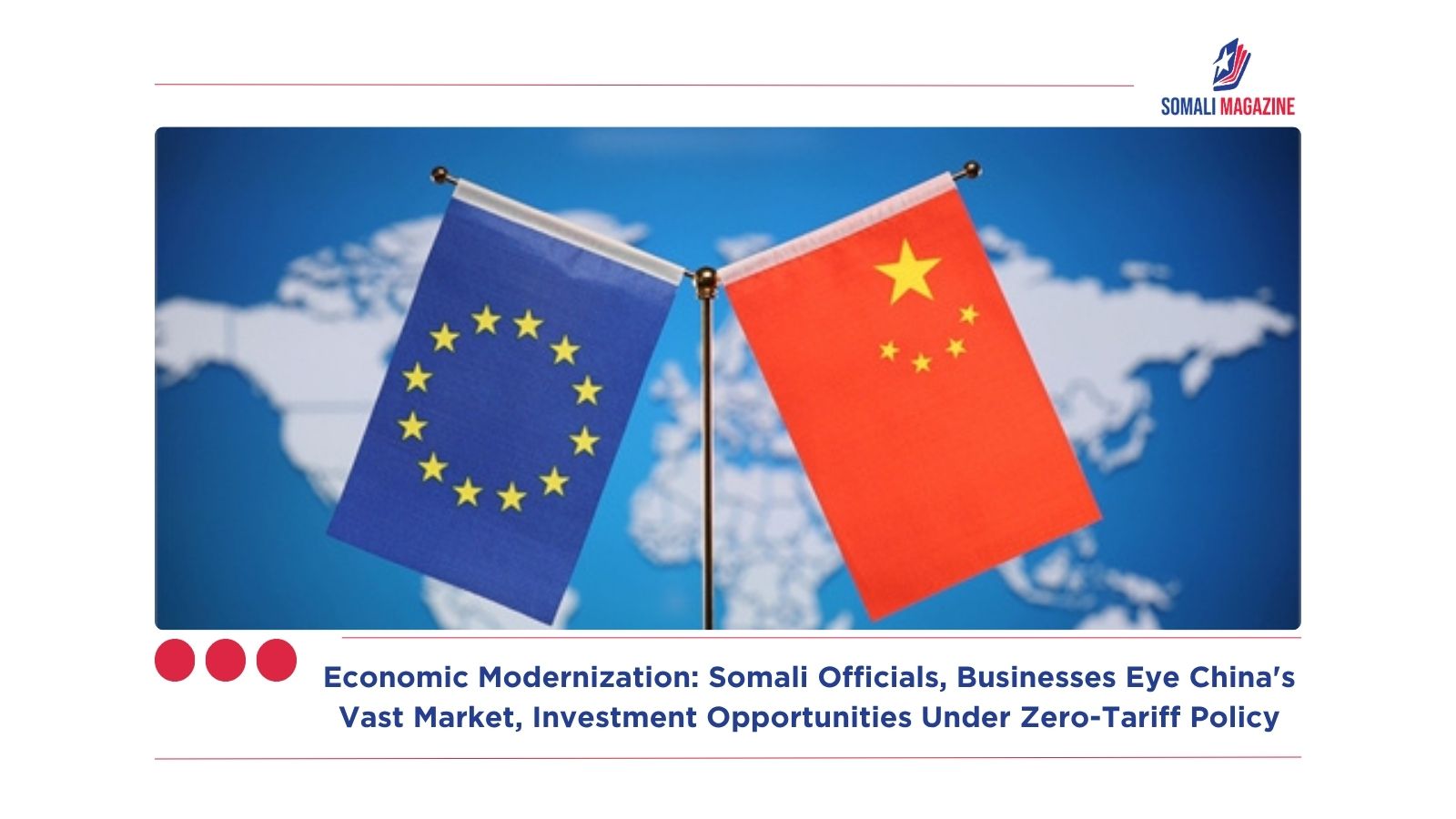
Somali officials, businesses eye China’s vast market, investment opportunities under zero-tariff policy following a high-profile industrialization forum in Beijing, marking a transformative milestone for the Horn of Africa’s trade landscape. The unilateral trade framework, which took effect on May 1, 2026, grants complete duty-free access to all 53 African nations maintaining diplomatic ties with Beijing, eliminating customs duties across 100 percent of tariff categories. At the Somalia Industrialization and Special Economic Zones High-Level Forum, Minister of Commerce and Industry Gamal Mohamed Hassan emphasized that the policy serves as an incredible catalyst to accelerate bilateral engagement and help local enterprises export higher value-added products directly to the world’s second-largest economy. By removing complex, indirect trade routes that previously relied on third-party nations, central planners are laying a standardized foundation to integrate the domestic built environment into massive global supply chains.
The historic trade shift arrives at a critical juncture for Somalia’s maritime and agricultural sectors, which serve as the nation’s primary employment engines. With the continent’s longest mainland coastline, the country boasts an abundance of untapped marine resources—including premium catches of tuna, mackerel, and lobster—that perfectly match the enormous demand of Chinese consumer markets. However, local trade experts and private sector operators caution that tariff elimination alone cannot guarantee an immediate boom without parallel regional infrastructure development. At the Mogadishu fish market, industry leaders noted that limited cold storage, insufficient motorized vessels, and rudimentary logistics frameworks have historically constrained year-round production. To capitalize fully on the duty-free window, the Federal Government is prioritizing strategic investments in port facilities and cold-chain infrastructure to meet strict international quality control benchmarks.
-
Trade Integration: Total bilateral trade between the two nations reached 1.027 billion dollars in 2025, providing a sturdy foundation for expanded commercial relations.
-
Complementary Shipments: While China primarily exports construction machinery and telecommunications equipment to Somalia, it imports premium raw commodities like leather, gum, and gemstones.
-
Investment Pathways: Prominent business figures, including infrastructure developers, emphasize that adopting Chinese engineering technology is vital to constructing the roads and bridges required for export logistics.
The unfolding commercial alignment represents a deep commitment to reinforcing strategic cooperation and building mutual wealth over the long term. Hodan Osman Abdi, the Somali Ambassador to China, stated that the zero-tariff framework provides an unprecedented avenue for ordinary farmers and coastal fishermen to elevate household incomes and escape localized economic pressures. This economic push is further complemented by grassroots civic milestones, including the recent opening of the Somalia Diaspora Centre in Mogadishu, which was completed with direct assistance from the Chinese government to foster foreign direct investment. As technical committees work to align regulatory oversight and streamline direct shipping corridors, the zero-tariff policy, set to run through April 2028, stands as a definitive marker for the future of democratic economic governance and sustainable blue economy initiatives across East Africa.


 Black News