Egypt launches an ambitious $15 billion plan to build a farm in the desert and an artificial river
The president of Egypt, Abdel Fattah el-Sisi, has launched the country's ambitious New Delta agriculture project, a large-scale desert restoration effort aimed at increasing domestic food production, reducing dependence on imports, and creating over two million new jobs.
 Black News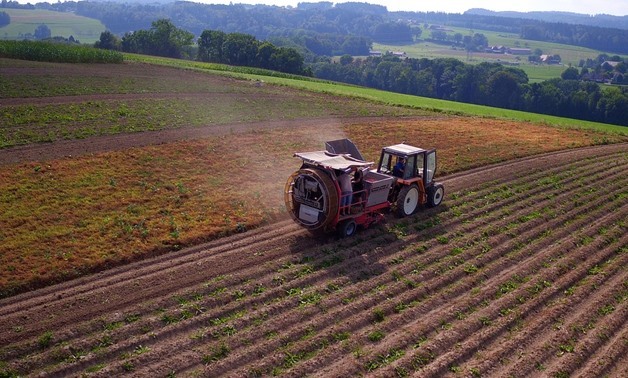

The president of Egypt, Abdel Fattah el-Sisi, has launched the country's ambitious New Delta agriculture project, a large-scale desert restoration effort aimed at increasing domestic food production, reducing dependence on imports, and creating over two million new jobs.
- Egypt launched the New Delta agriculture project to boost domestic food production and reduce reliance on imports.
- The project aims to reclaim 2.2 million feddans of desert, increasing Egypt's cultivated land by nearly 15%.
- Innovative irrigation uses treated drainage water transported via extensive canal and pumping systems.
- Over $15 billion has already been invested in infrastructure like grain storage, industrial zones, and transportation networks.
The launch coincided with the 2026 wheat harvest on newly farmed land west of the Nile Delta, demonstrating success in what Egyptian officials characterize as the country's largest land reclamation effort to date.
Once completed, the project is projected to cover 2.2 million feddans (about 9,000 square kilometers), increasing Egypt's total cultivated land by almost 15%, the National News reports.
The project focuses on growing strategic commodities like wheat and corn, as well as vegetables and export-oriented produce like olives and figs, as Egypt strives to lessen its reliance on expensive food imports and relieve strain on foreign exchange reserves.
President Sisi announced at the gathering that around 800 billion Egyptian pounds ($15.1 billion) have already been invested in the project.
Funding has been allocated to land preparation, grain storage facilities, industrial zones, and large road networks connecting reclaimed desert territory to the Nile Valley and key ports.
An important aspect of the project is its innovative irrigation system.
Hany Sweilem, Egypt's Water Resources Minister, revealed that agricultural drainage water from the western Nile Delta is treated at the El Hammam facility on the Mediterranean coast.
The factory processes up to 7.5 million cubic meters of water each day, which is then sent down a 170-kilometer canal backed by 13 pumping stations to irrigate desert agriculture.
To meet the entire 2.2 million-feddan aim, a second, shorter track with an additional set of sizable pumping stations is planned to increase flows.
DON'T MISS THIS: Egypt secures $1.5bn financing deal as Middle East tensions threaten food supplies
This energy-intensive process facilitates the transport of water from low-lying drainage canals to elevated desert plateaux.
According to Egyptian officials, the New Delta initiative is intended to increase national food security in the aftermath of global shocks such as COVID-19 and Russia's invasion of Ukraine, as well as to assist in fulfilling the needs of a growing population.
However, some have questioned the project's long-term viability, citing high energy demands, water-use issues, and concerns about the military's growing role in administering key state development projects.
Despite this, the government believes that New Delta would help Egypt become a stronger agricultural exporter and a more self-sufficient economy.